- contact@scarhandpainting.com

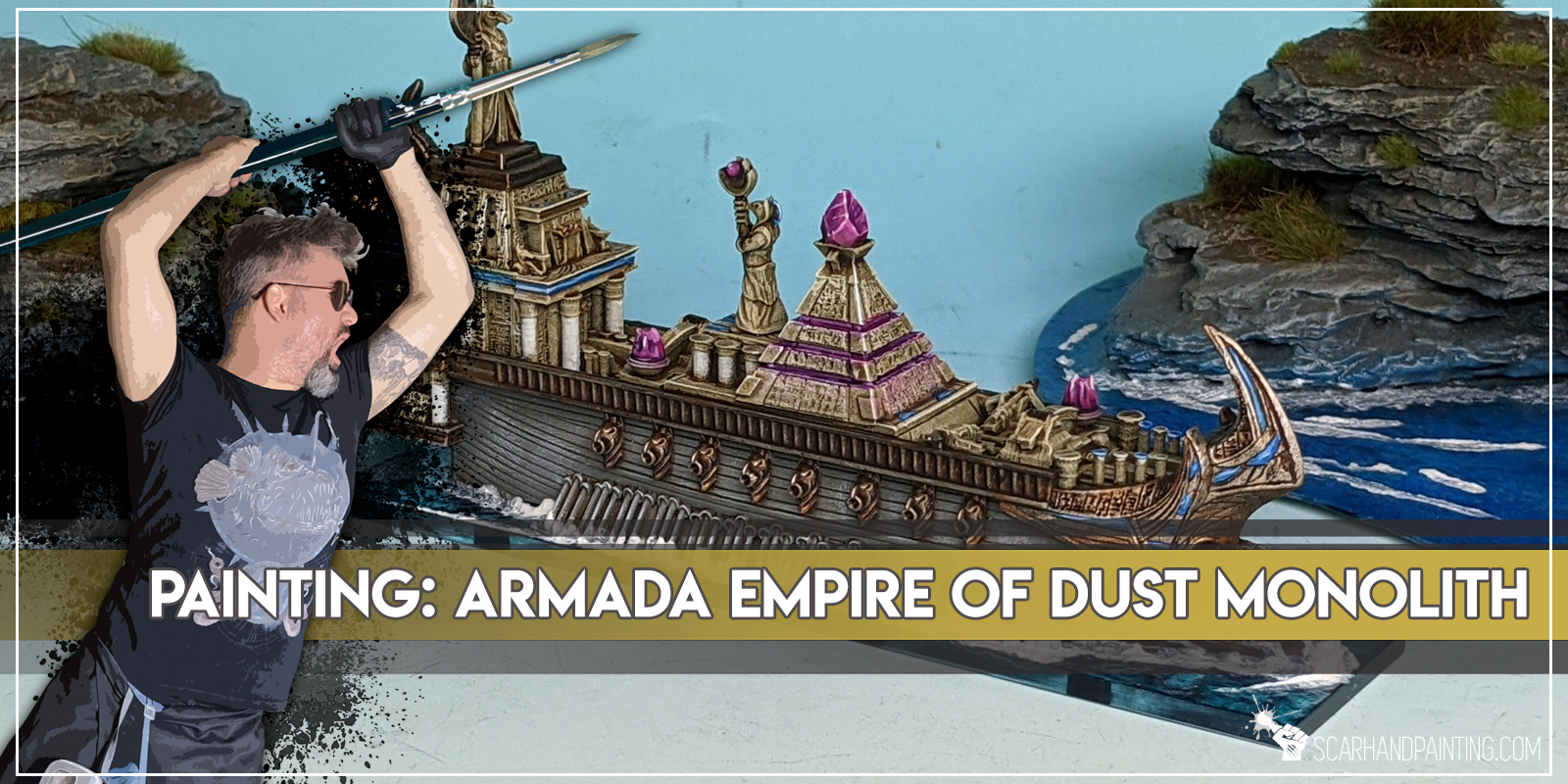
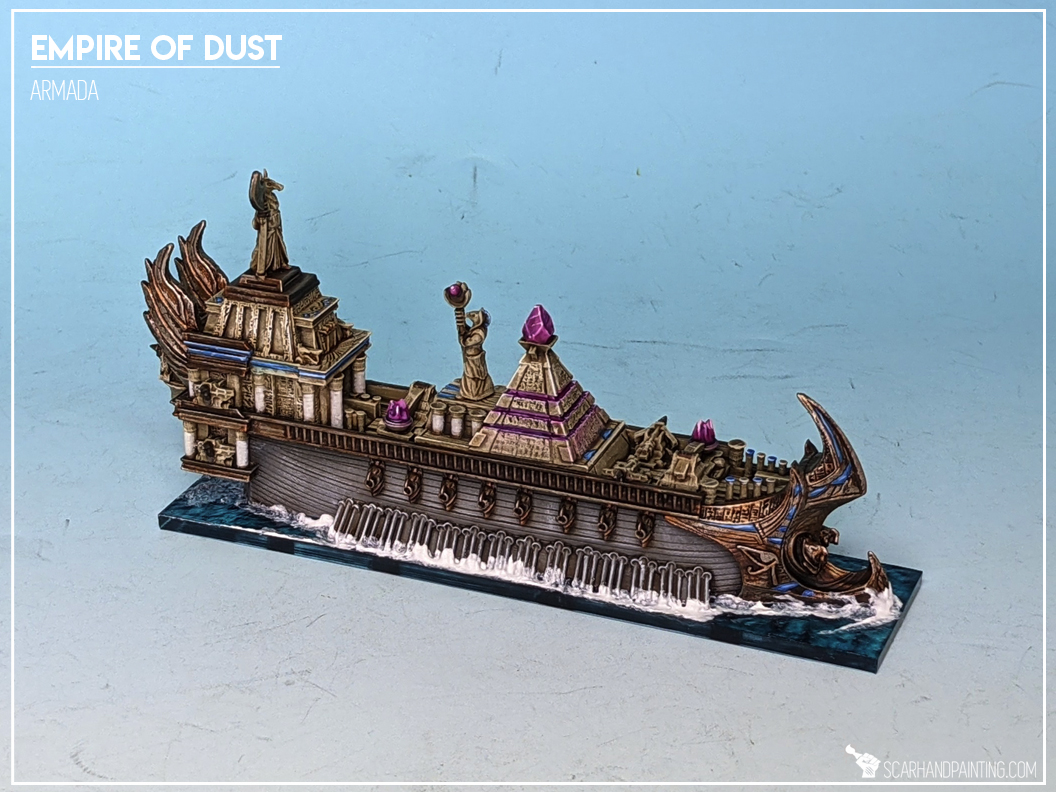
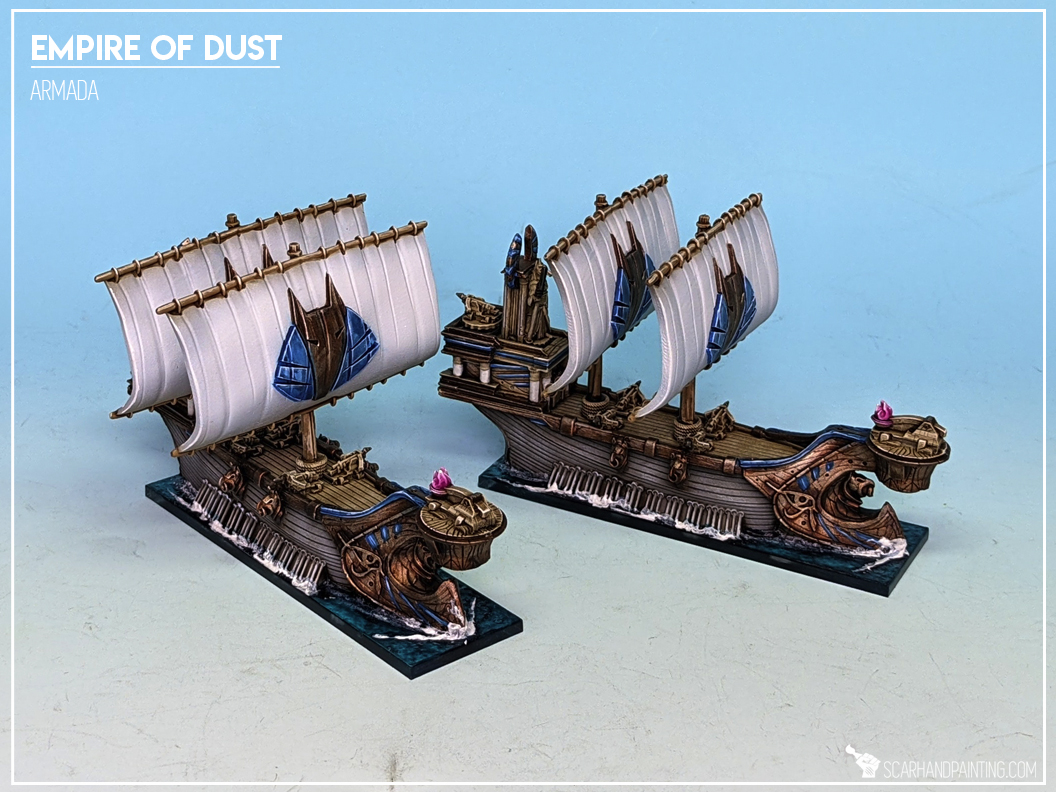
Welcome to Painting Empire of Dust Monolith tutorial. Here I will present to you a Step-by-step of an easy and fast painting process for Mantic Games Empire of Dust Monolith as can be seen in Gallery: Armada Empire of Dust.
Before we start, some notes:

Step one: Undercoat
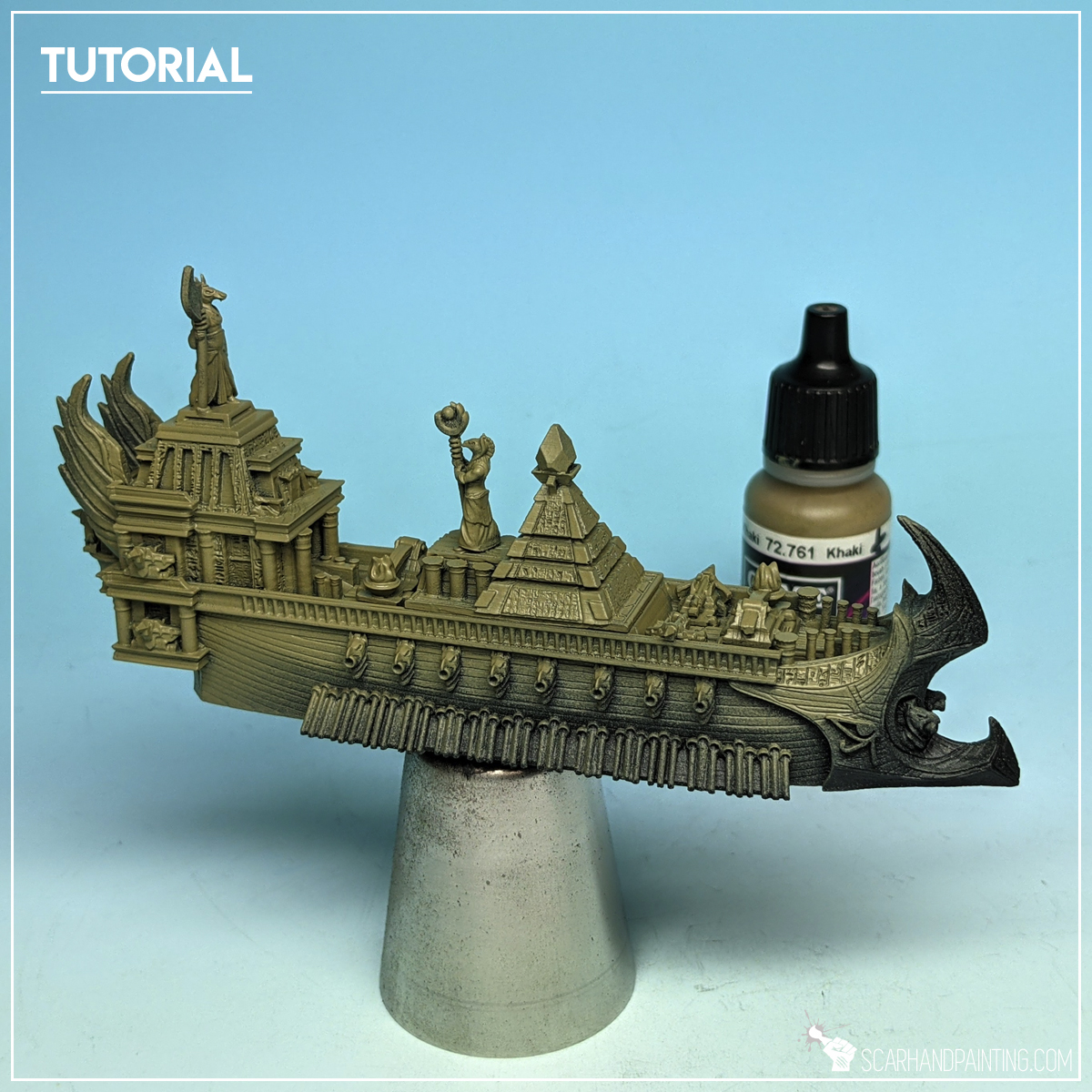
I started with a thorough layer of Games Workshop Chaos Black spray.
Step two: Deck
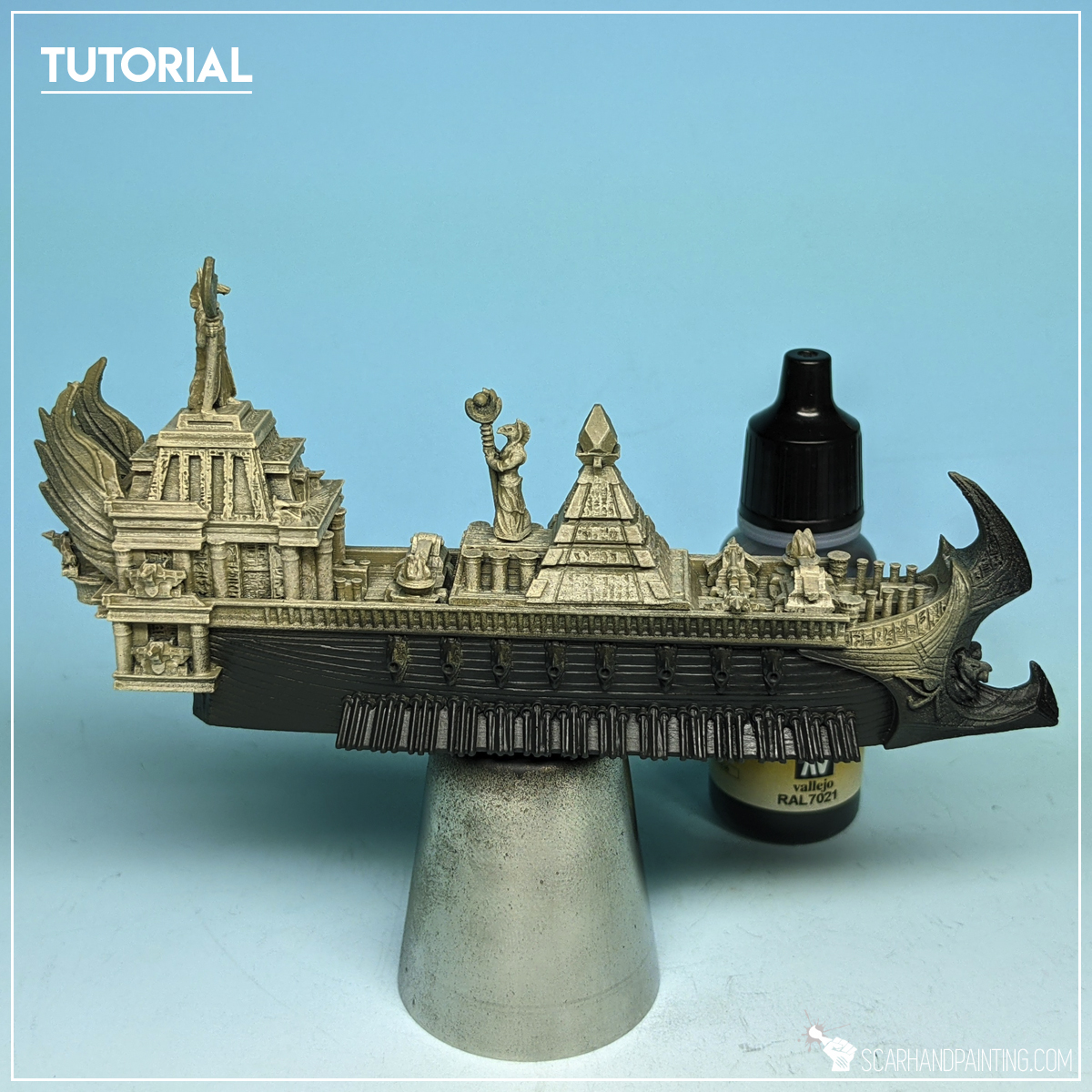
I airbrushed Vallejo Khaki (air) over main deck and all top structures. I then flatbrushed GW Flayed One Flesh on top of Khaki layer.
Step three: Broadside
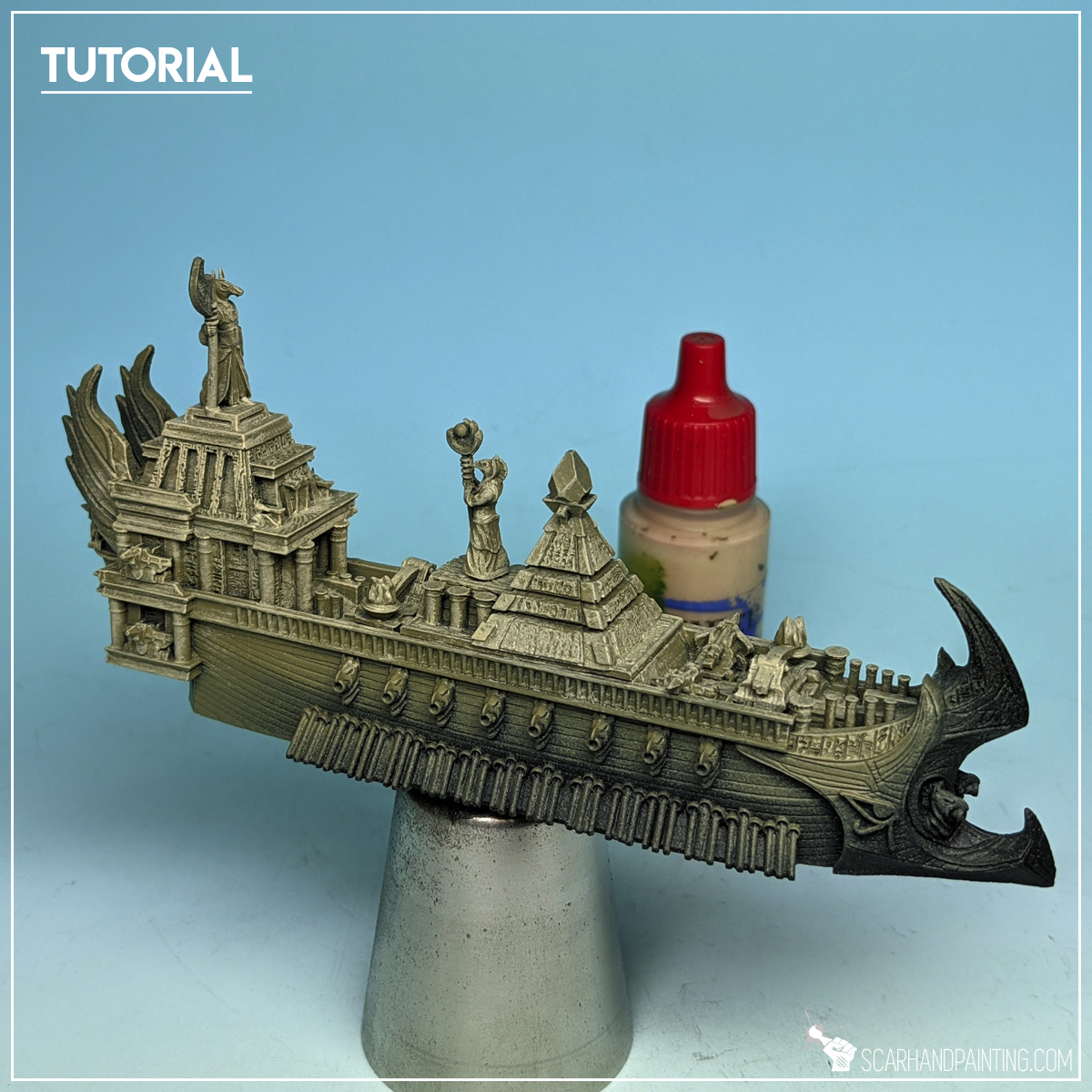
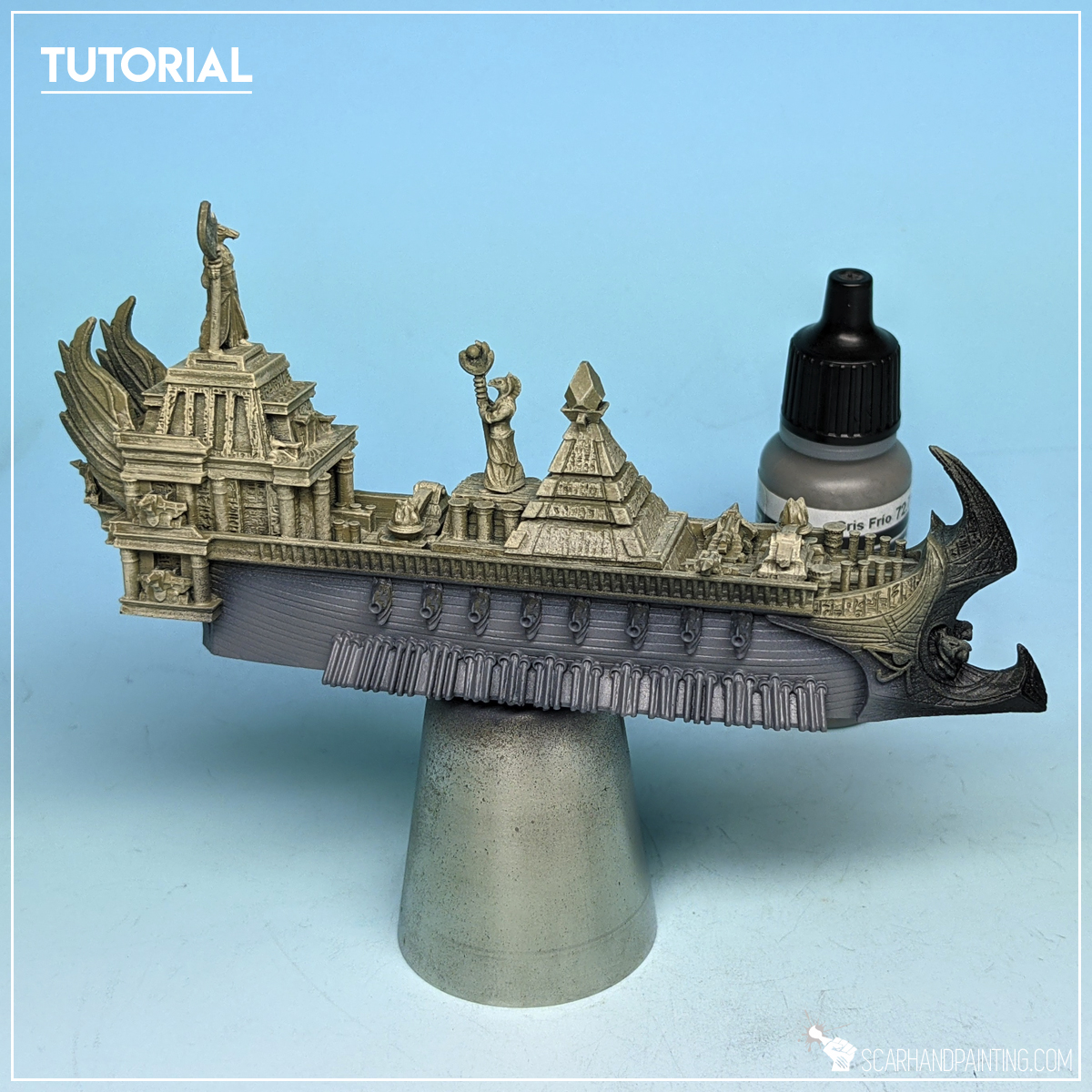
I airbrushed Vallejo Panzer Dark Grey (air), followed by a layer of Vallejo Cold Grey (air).
Step four: Gold
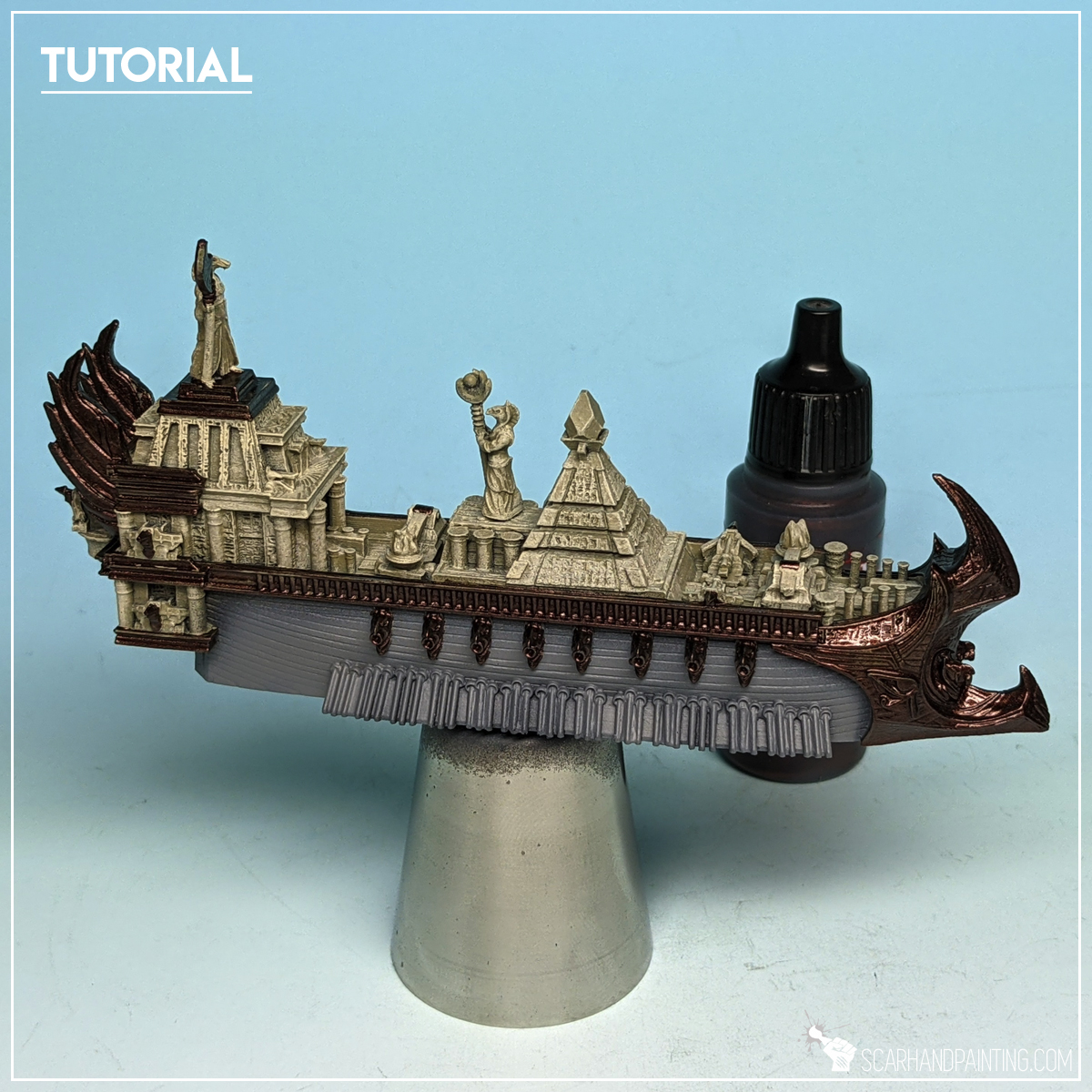
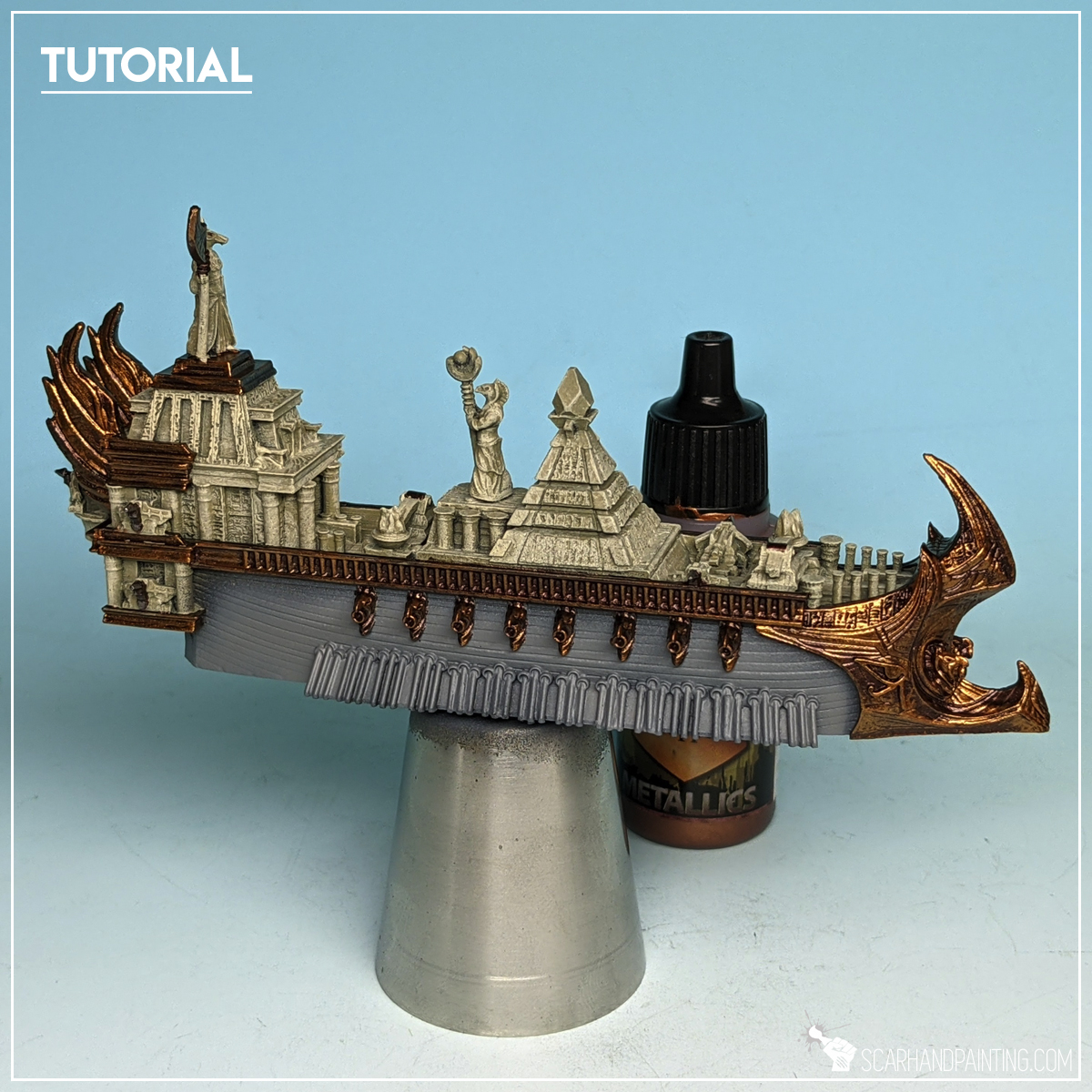
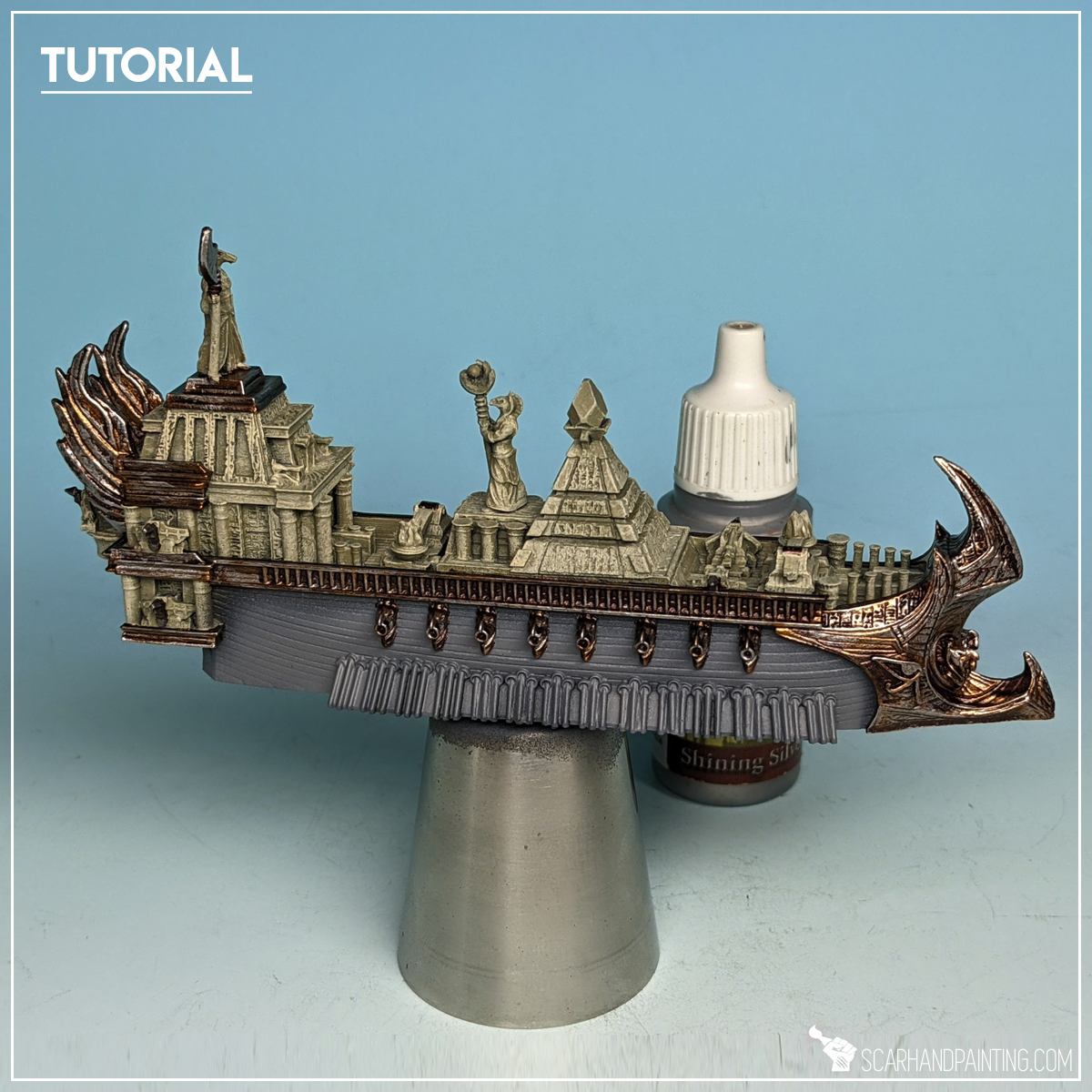
I then painted front and side ornaments, plus some additional detail with GW Warplock Bronze, followed by a solid flatbrush of P3 Molten Bronze and a highlight of Army Painter Shining Metal.
Step five: Wash
I then applied a lot of wash mix of Army Painter Strong Tone Ink 1:1 Army Painter Soft Tone Ink.
(If you followed my other tutorials you know at this point that the mixture is one of my very best friends in all painting.)

Step six: Main highlights
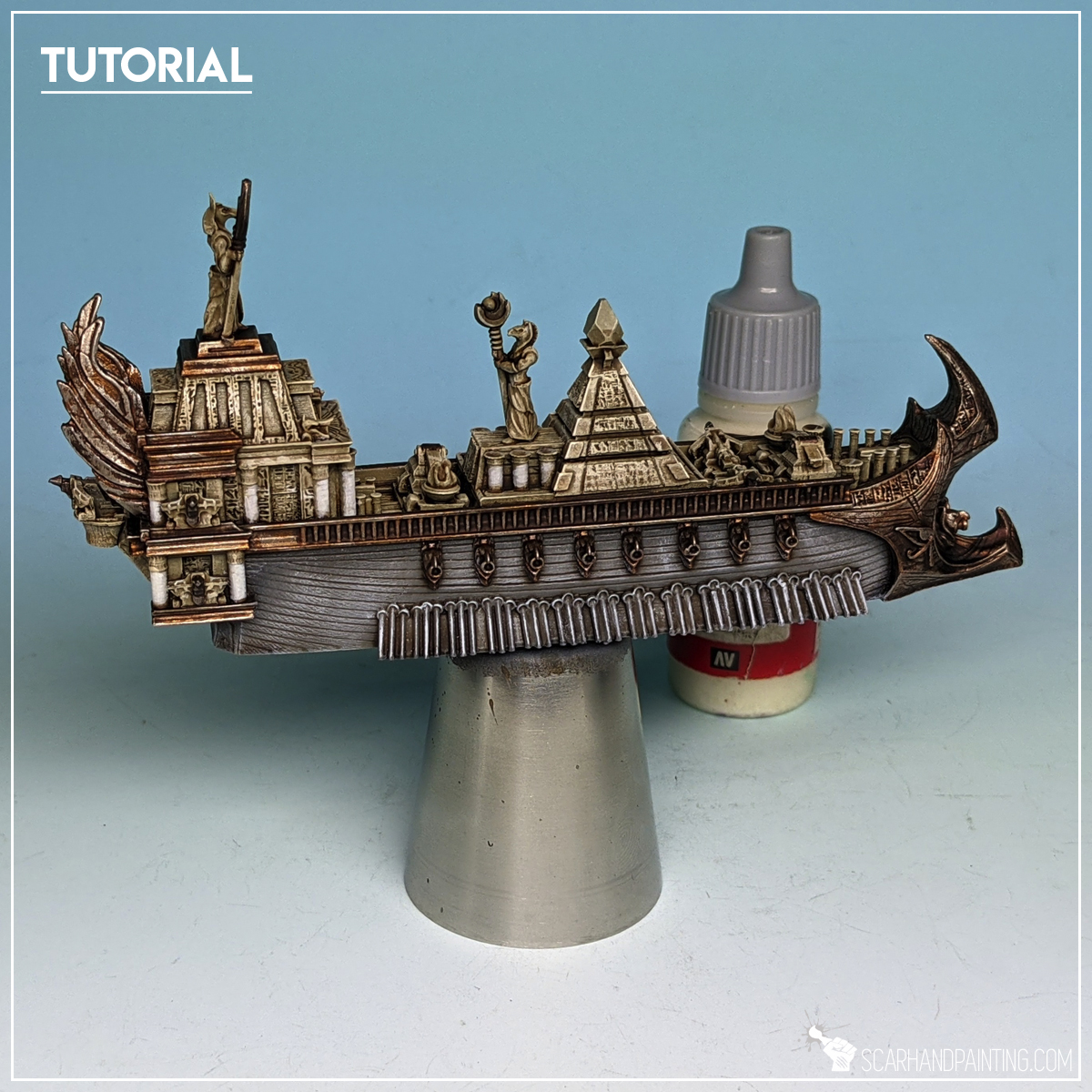
Once wash was dry I drybrushed broadsides with Vallejo Medium Sea Grey and then with Vallejo Ghost Grey. (I forgot to take pics). I then flatbrushed deck and top structure elements with GW Flayed One Flesh and edge highlighted with Vallejo Off White.

Step seven: Blue
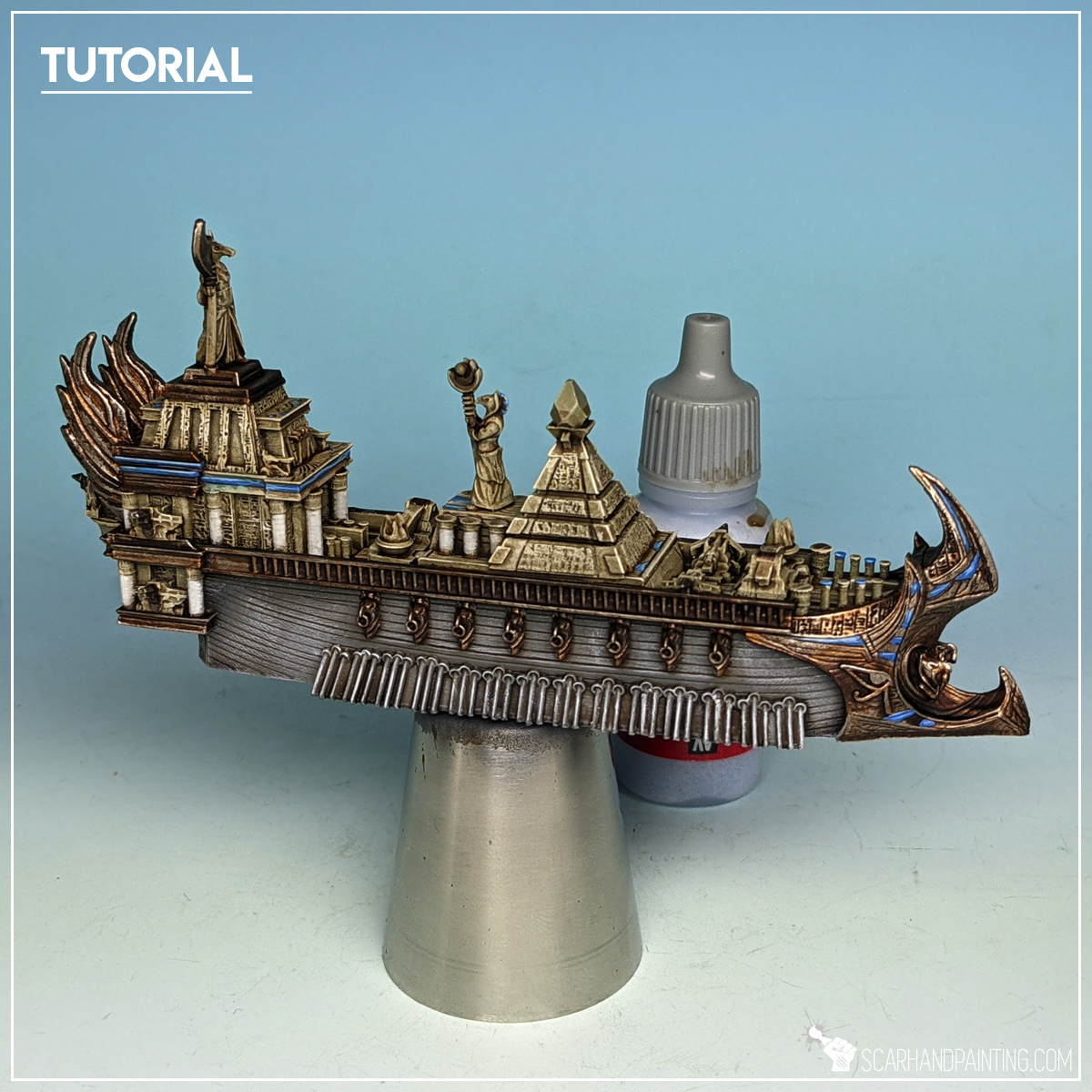
I added accents of blue by manually painting chosen elements with Vallejo Magic Blue (air). I then highlighted with Vallejo Electric Blue, followed with Vallejo Glacier Blue. Furthermore I applied a wash layer of GW Guilliman Blue (glaze). Finally I added points of focus and thin highlights with Vallejo Glacier Blue.


Step Eight: Purple/Pink
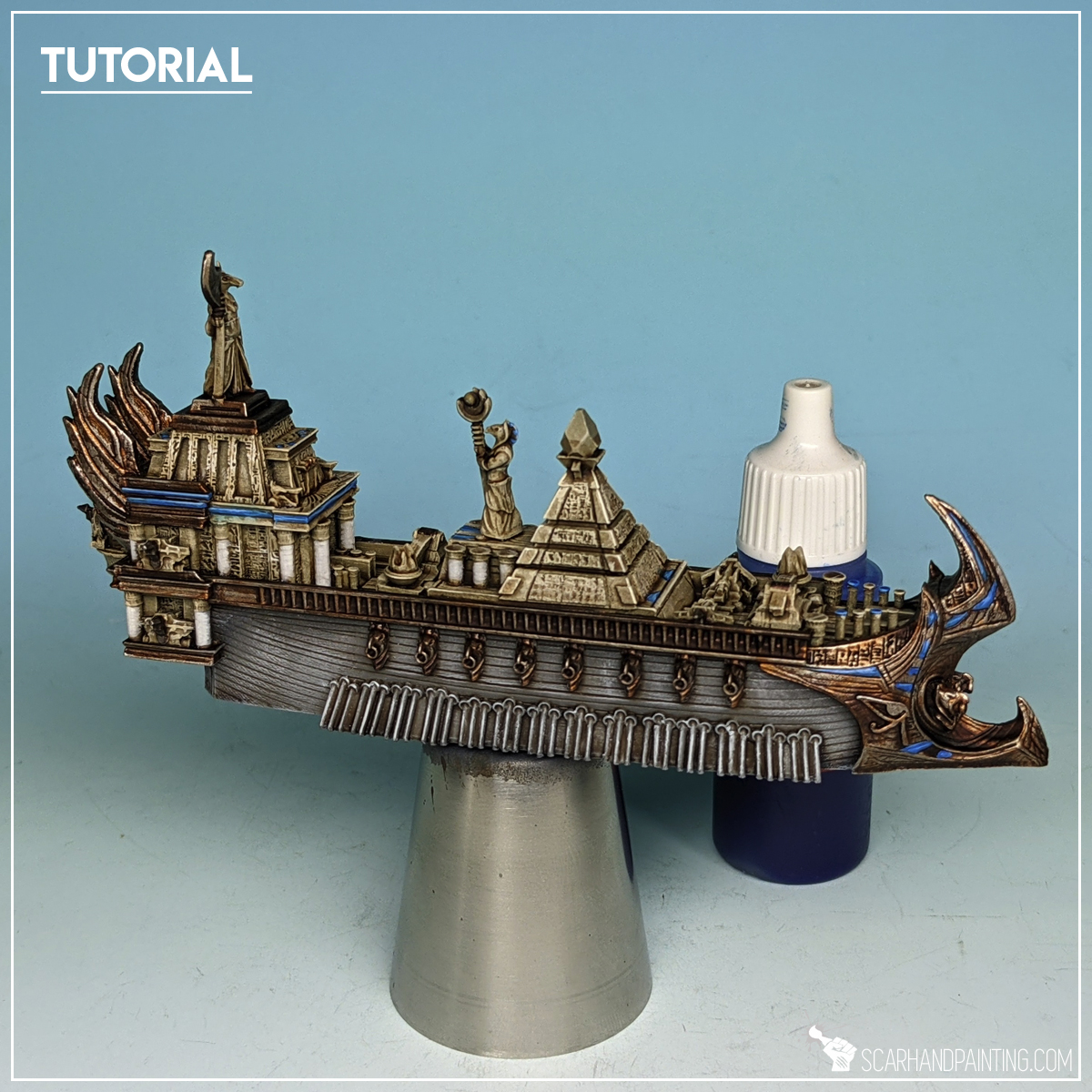
I applied Vallejo Warlock Purple onto chosen areas, including top gem, piramid inner lines and catapult flames. I then applied couple successive highlights with different mixes of Vallejo Warlock Purple and Vallejo Off White. With few highlights made with pure Vallejo Off White I moved to glaze Army Painter Purple Tone Ink into few areas of choice. This was contained mostly to top gem and recesses in catapult flames (and around).
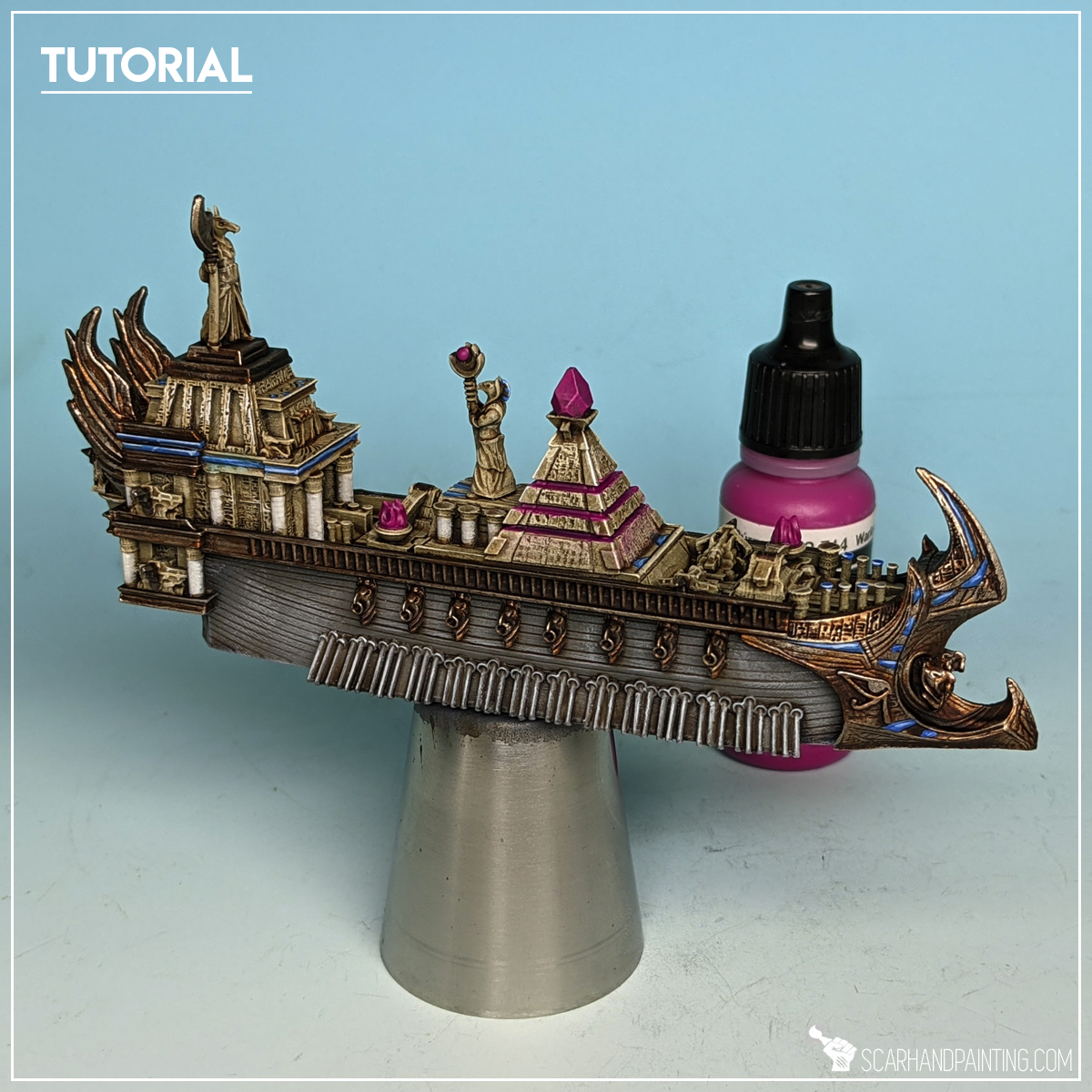
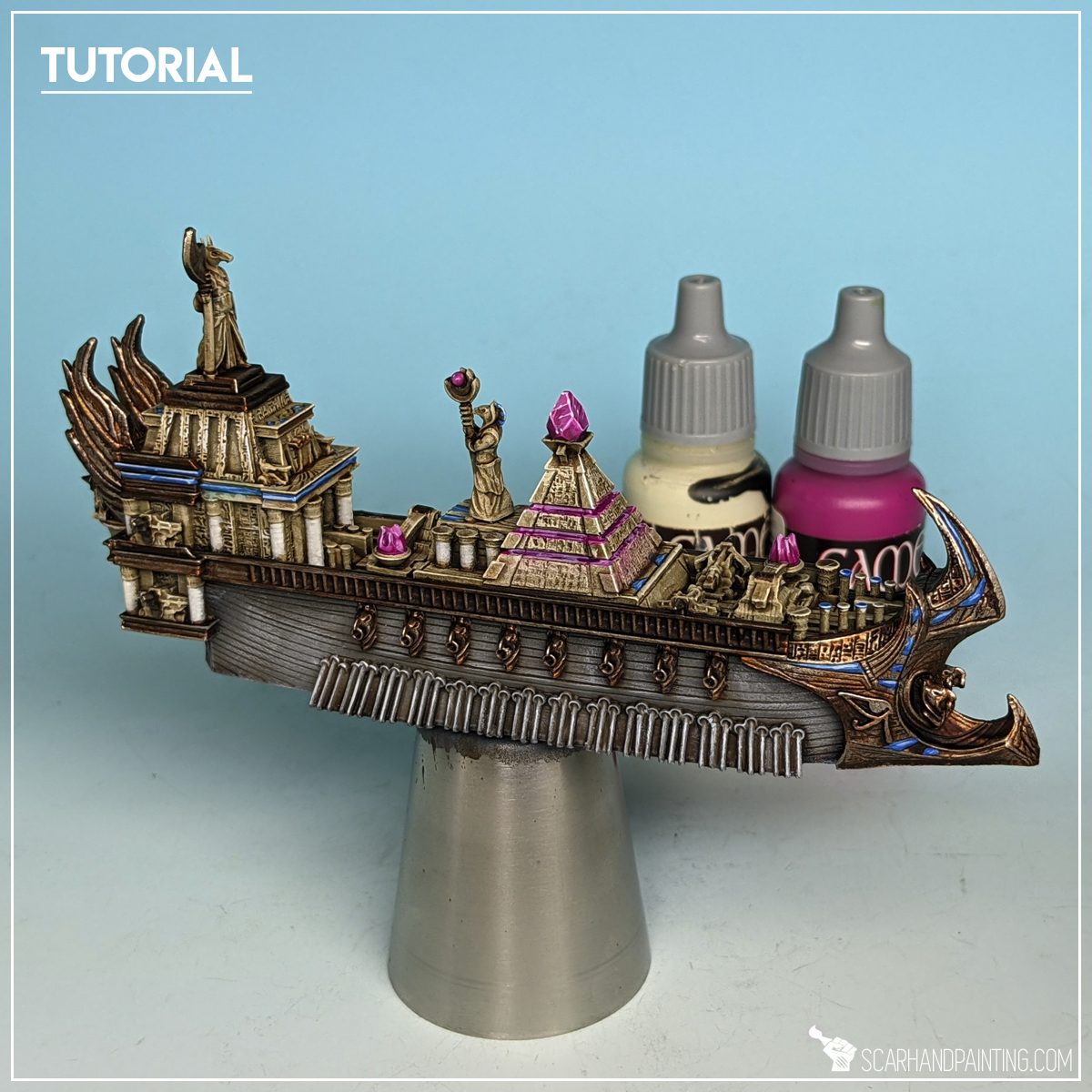
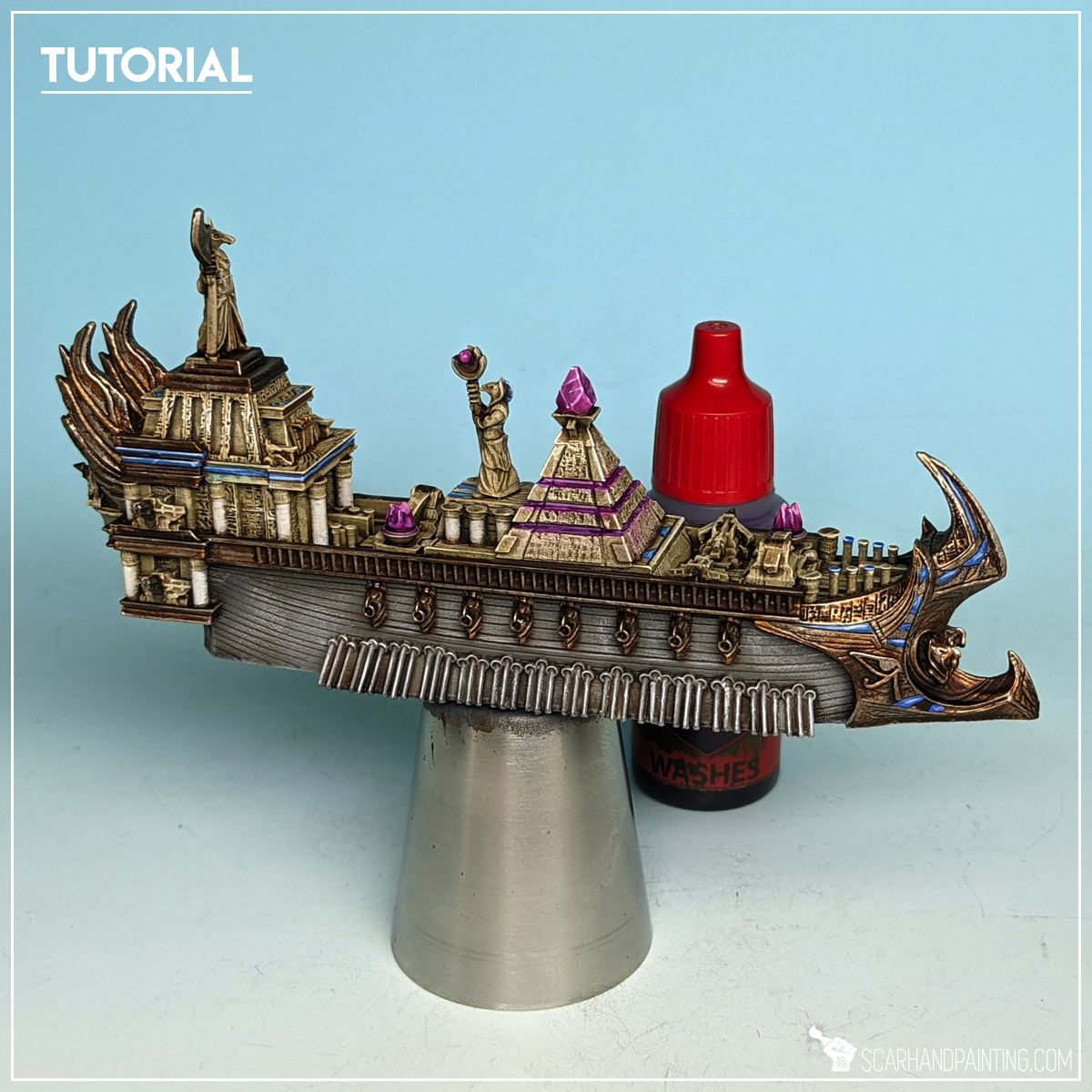
Such prepared miniature I airbrushed with two coats of Vallejo Polyurethane Matt Varnish and mounted on a base, following Tutorial: KoW Armada Water Bases.
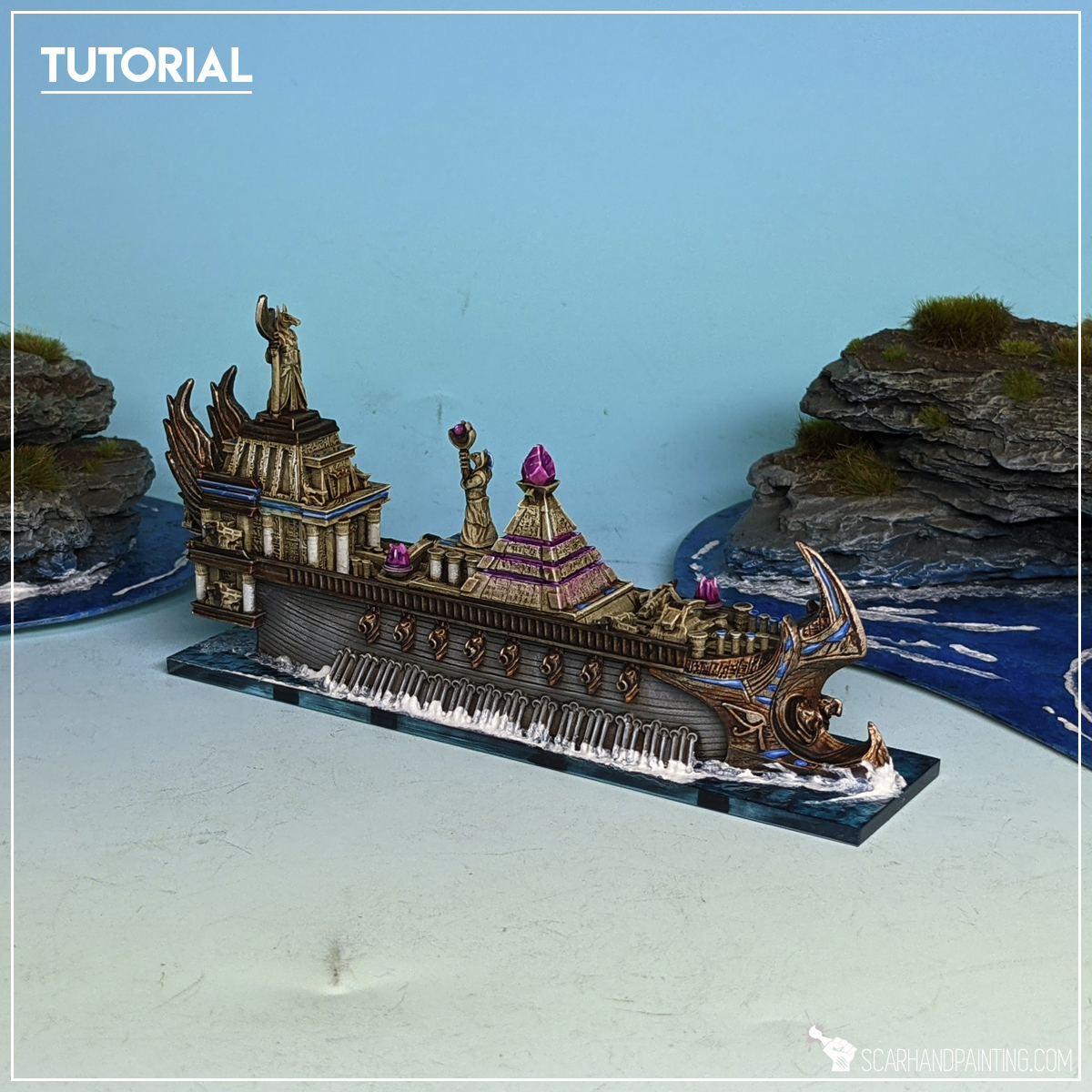

I hope you find this tutorial interesting. Be sure to let me know your thoughts in the comments below or via Facebook or Instagram. I would also appreciate if you considered sharing this content with your friends, who might find it useful. Finally if you are looking for a professional miniatures painting service be sure to contact me with this contact form. I always reply within 24 hours, after which please check out your spam folder.

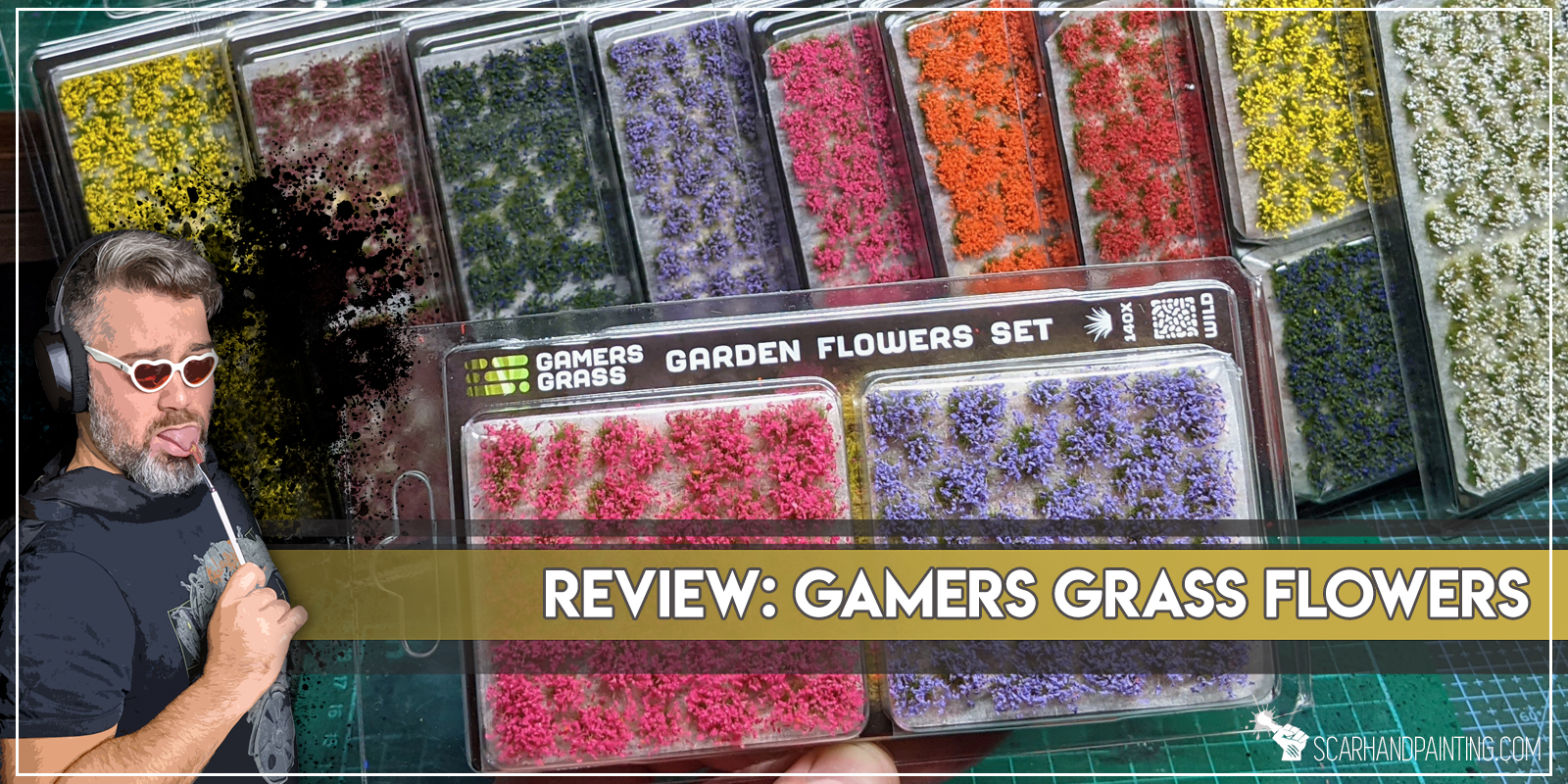

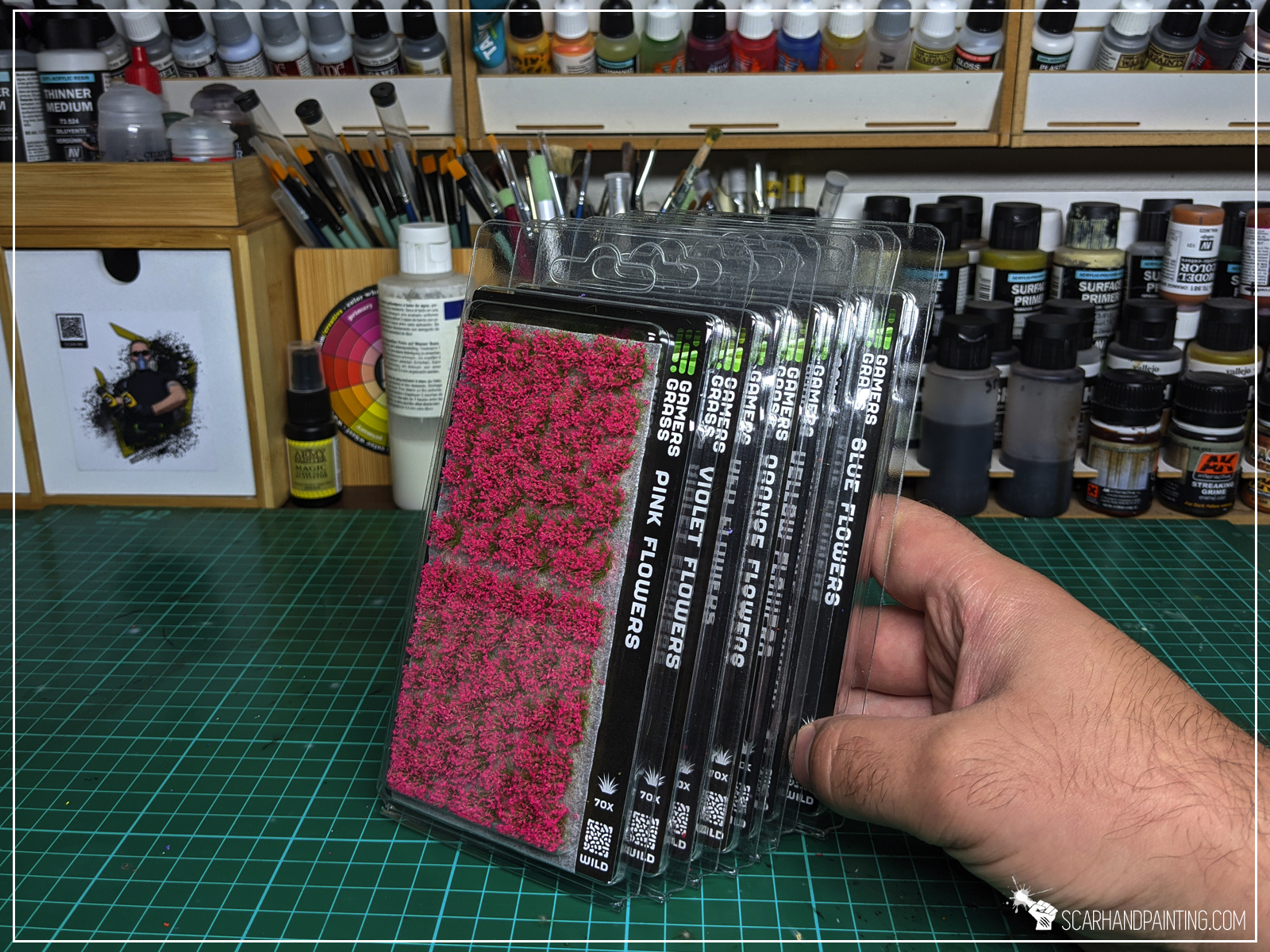
Gamers Grass – is a Portuguese company producing a wide range of high quality basing accessories. For me Gamers Grass is a trustworthy, go to supplier of everything basing related. If you hadn’t had an opportunity to get to know their range, I recommend this article: Review: Gamers Grass Tufts. Now, all that introduction done, allow me to share my excitement over a new series of products: Flowers.
Painting miniatures is my hobby, but is also my job. Good quality tools and products used for modeling can save a lot of time (and nerves). This is why I strive to use only the very best stuff. I’ve been working with Gamers Grass range for quite some time now and can honestly say they meet my high standards.
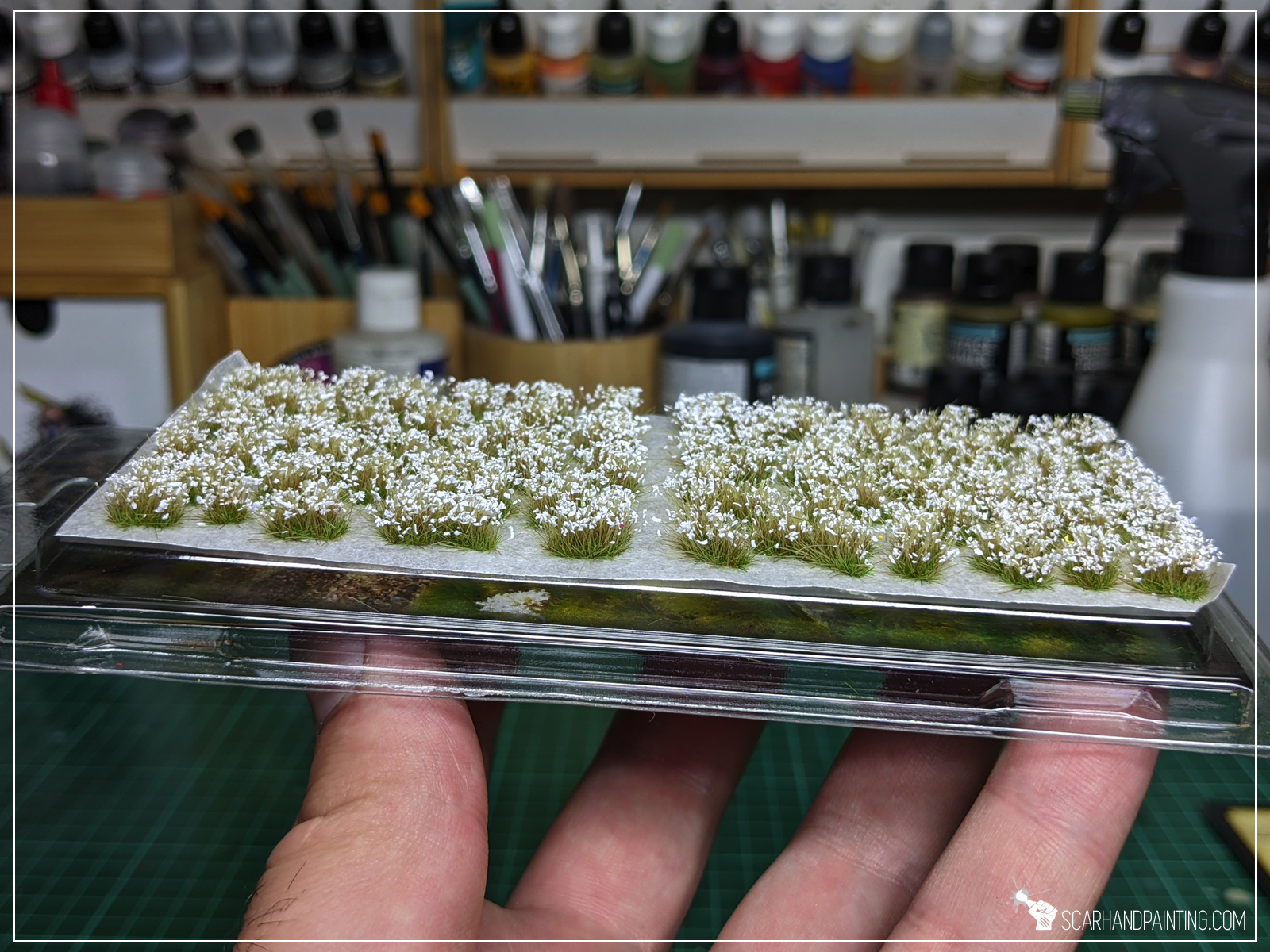

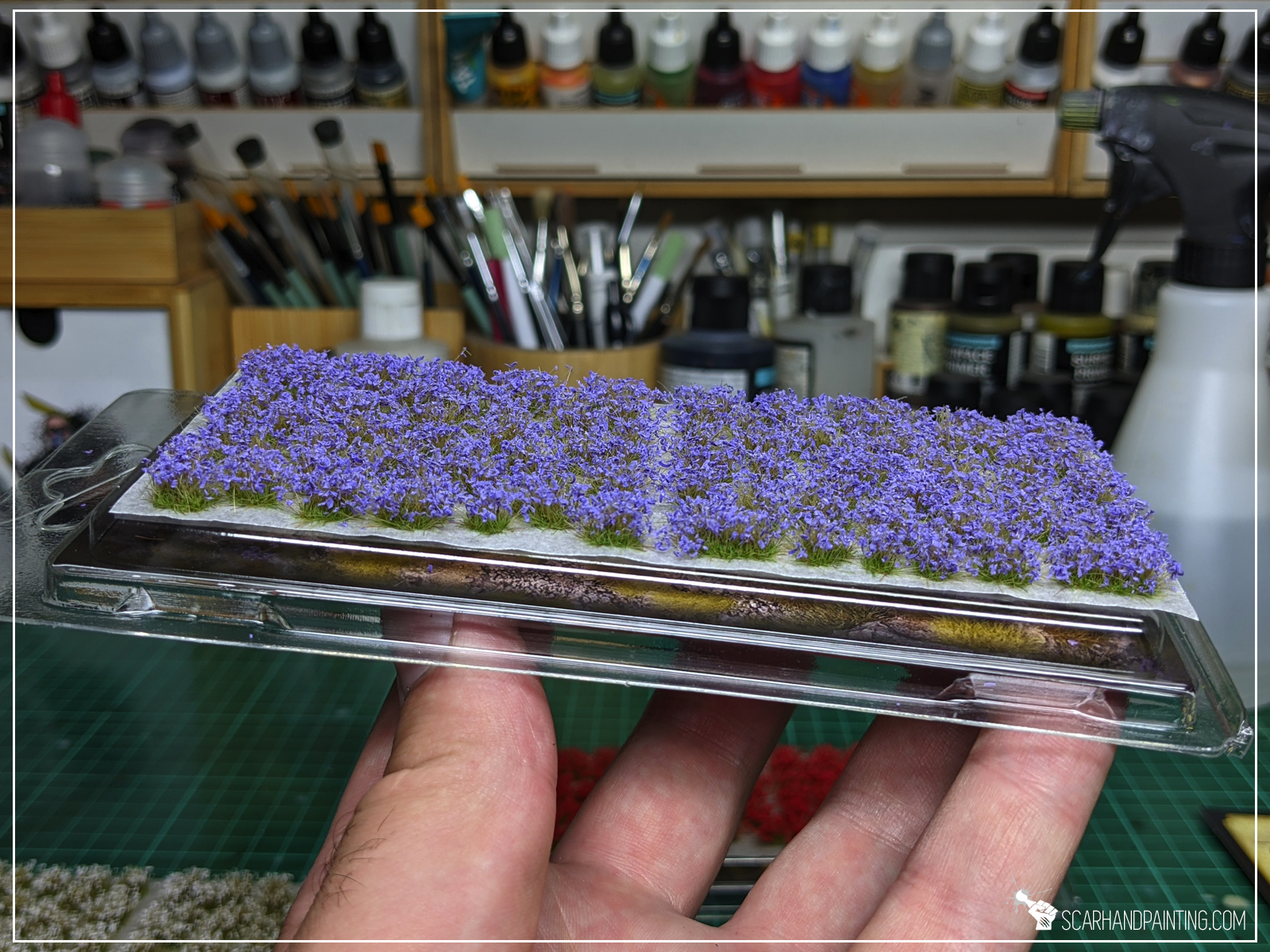


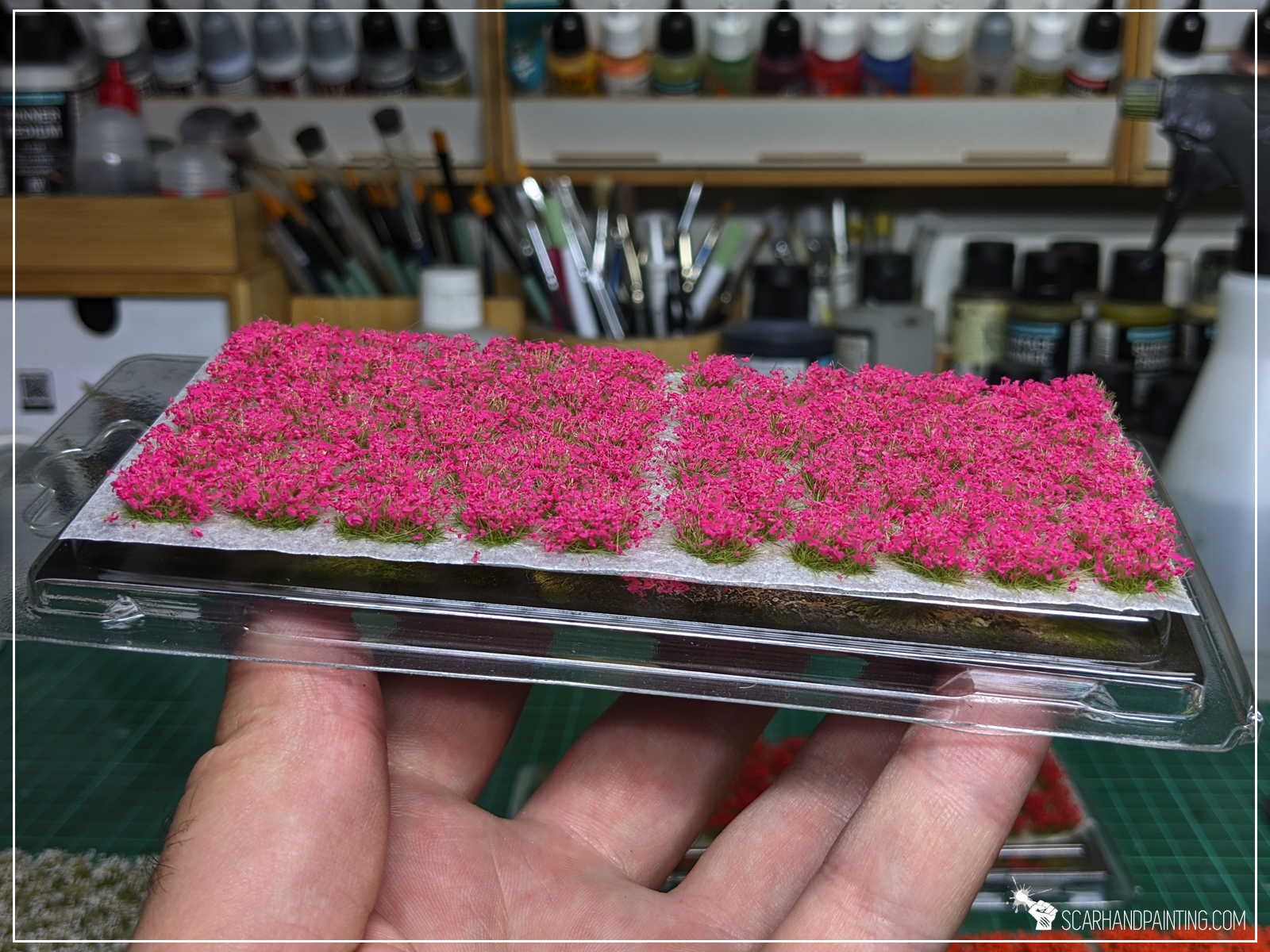
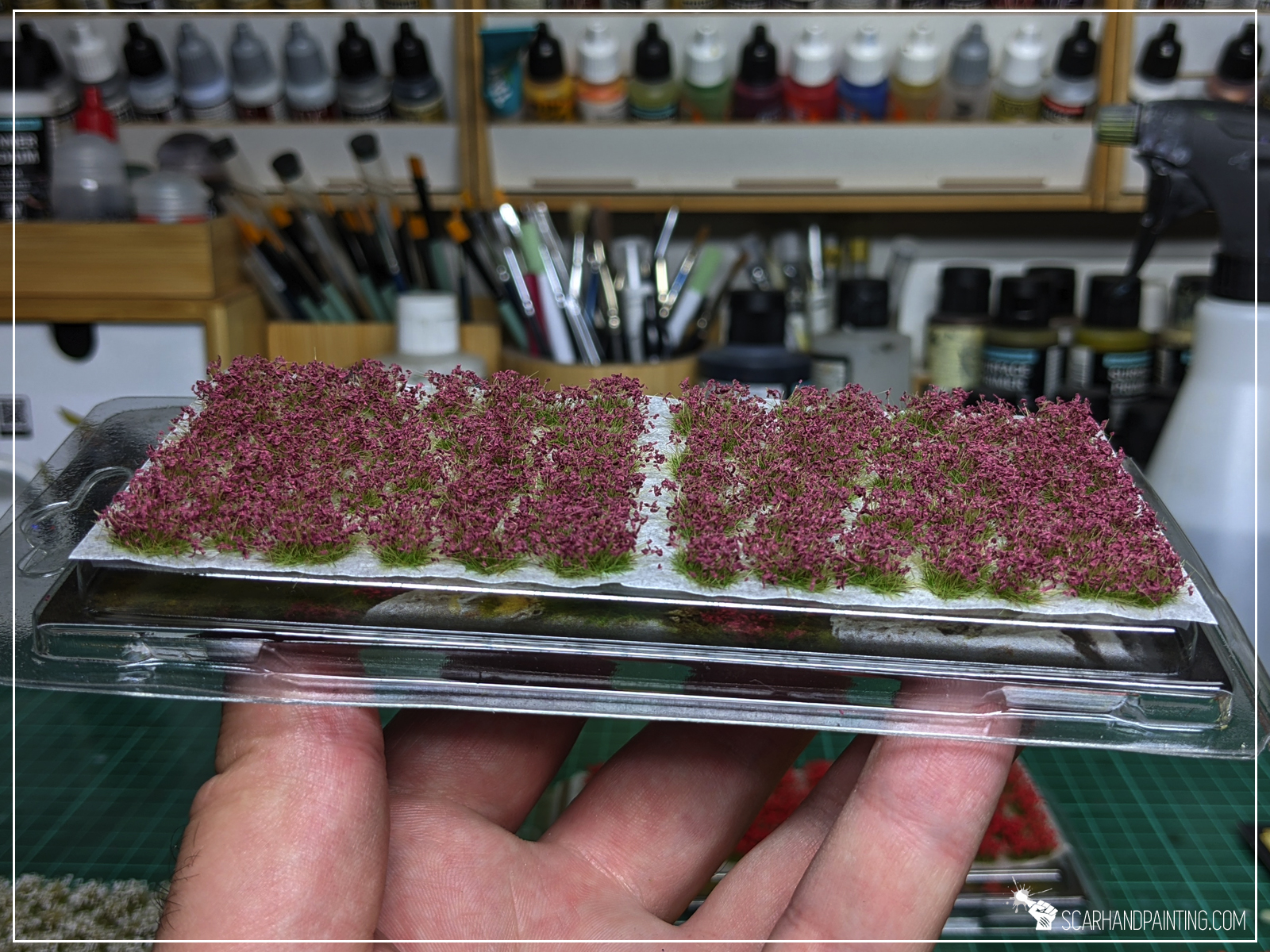
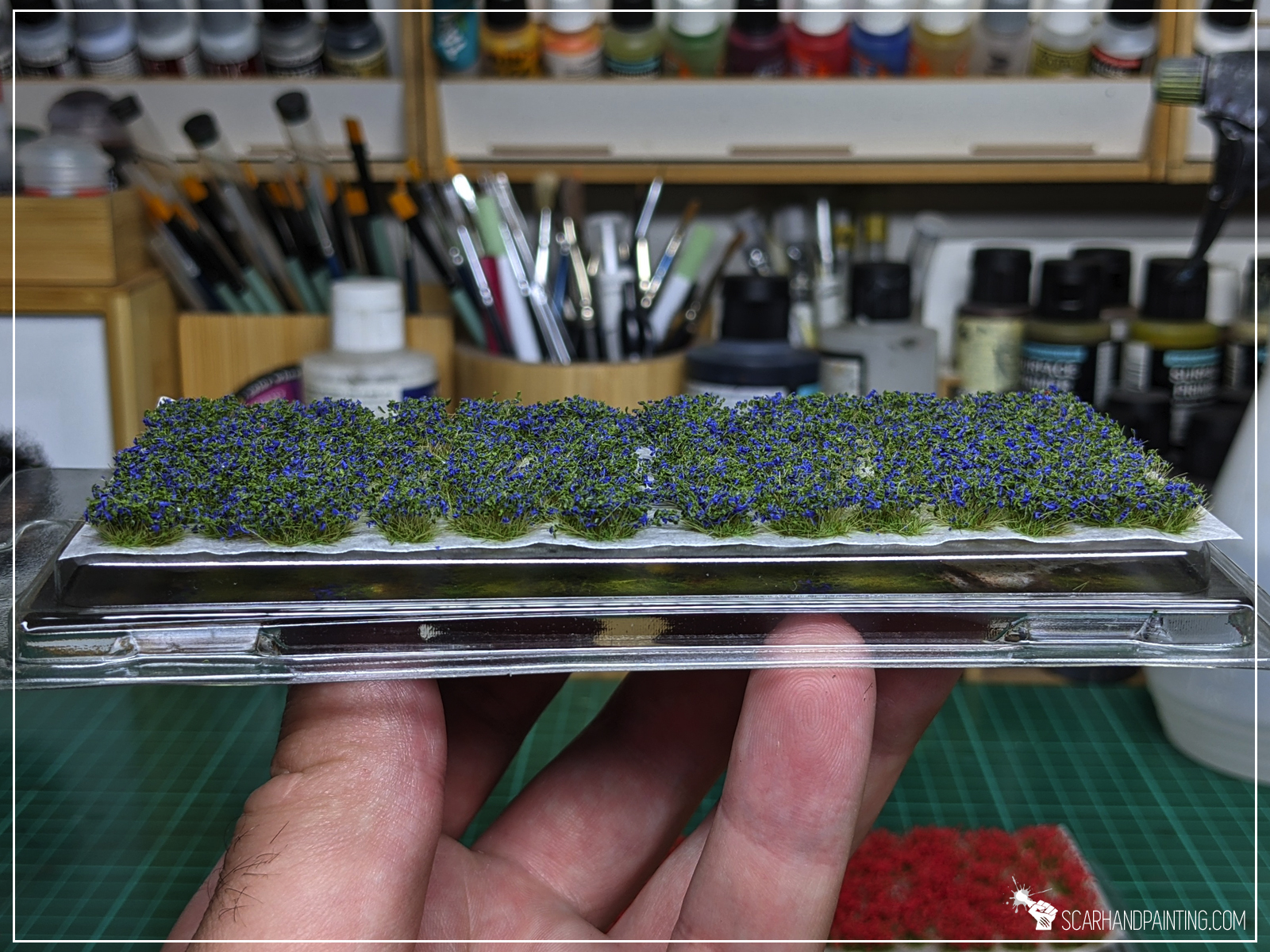
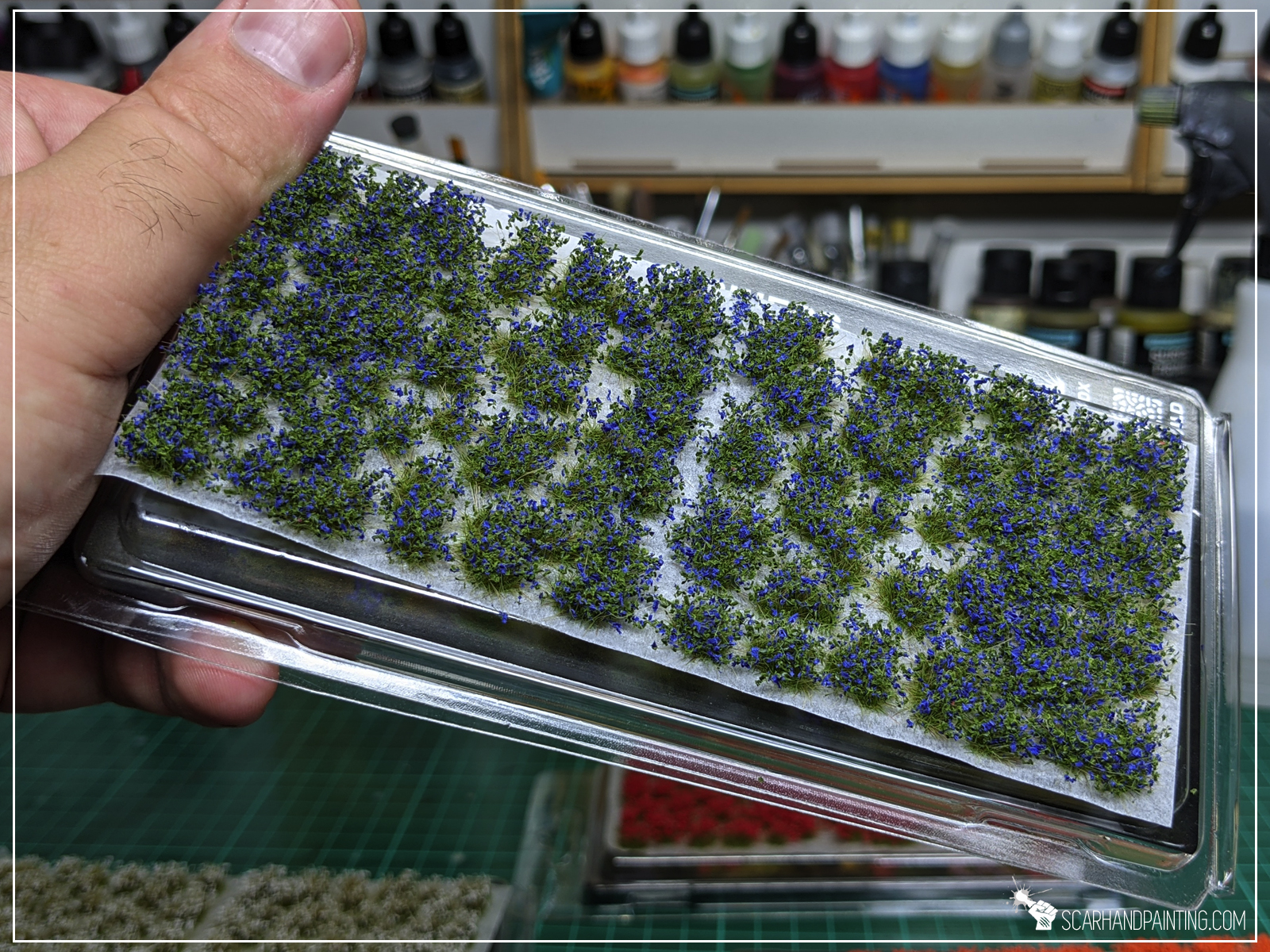
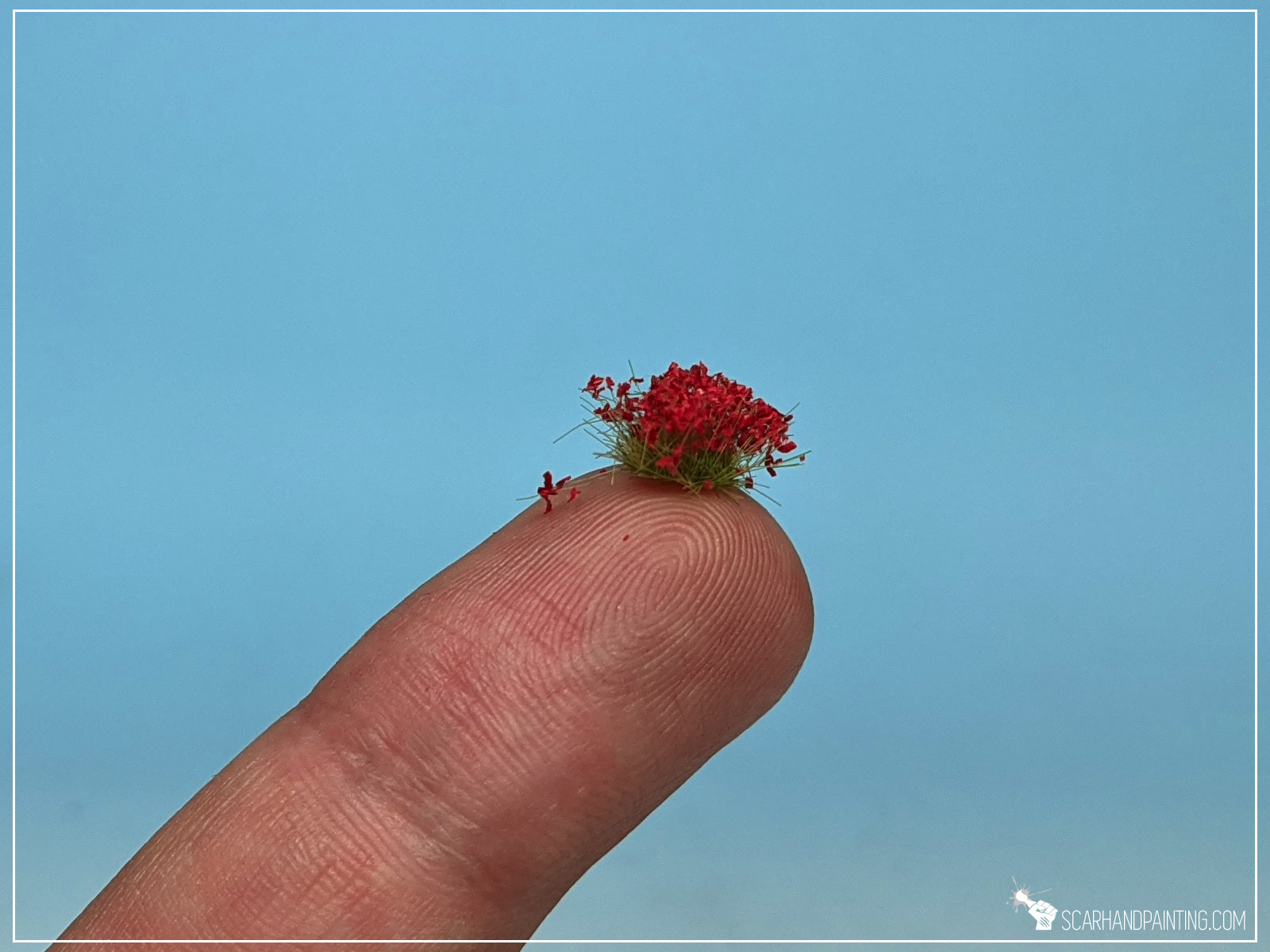
Flower beds are precisely shaped with base being thinner in a natural way. Not many stray stalks protrude out of the main body. These are all done very precisely. The bottom is covered with a strong adhesive, capable of sticking into a variety of surfaces. I have no negative feedback to give about these. Most importantly, due to a more natural shape and no powdering Gamers Grass flowers present themselves much better than competition. Just see below:
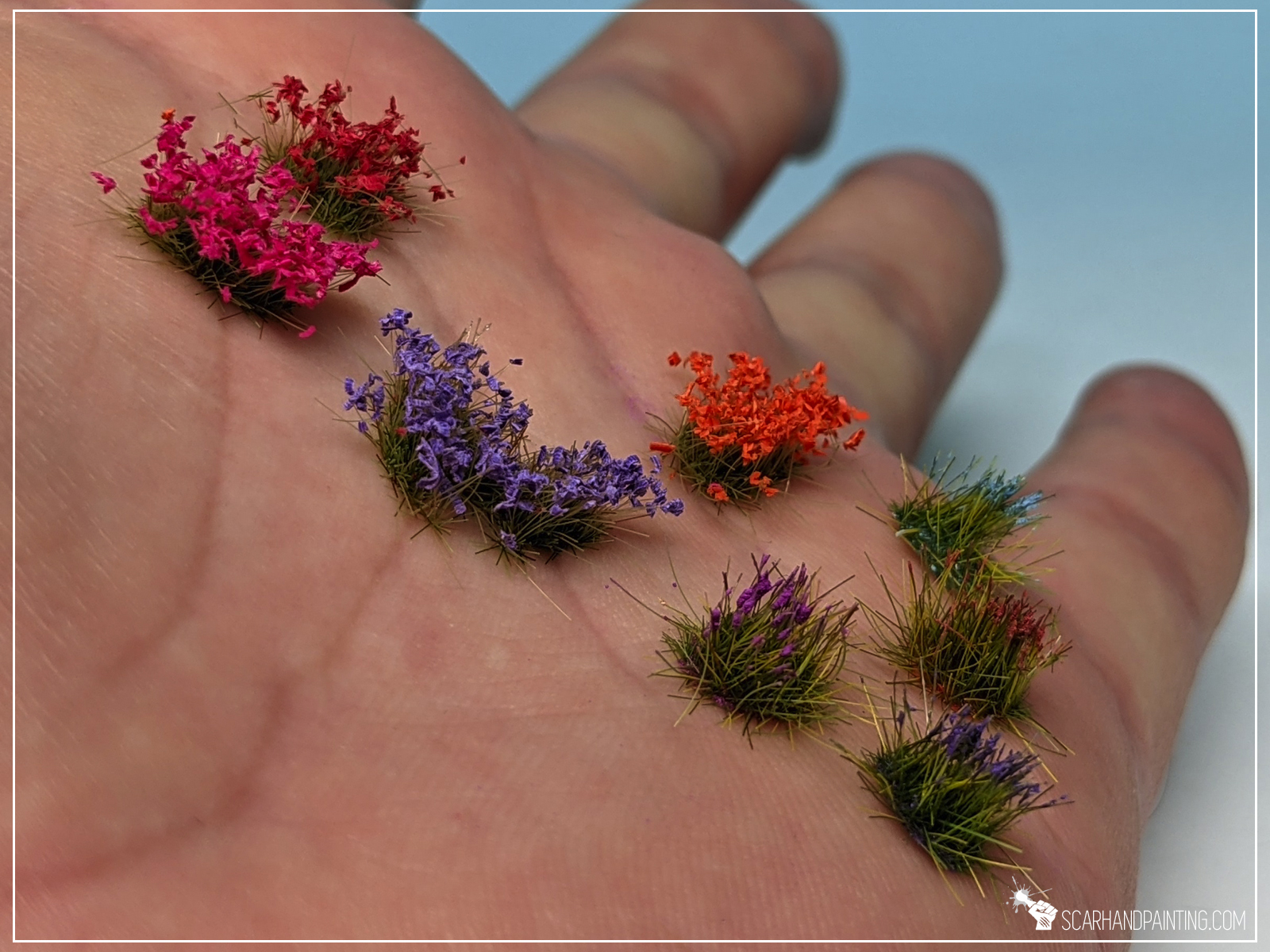
Visually Gamers Grass Flowers present themselves great. A palette of colors to choose from, some strong, some a bit pastele, makes the range fit into all variety of projects and styles. There’s also a variety of shapes which makes flowers look more natural.
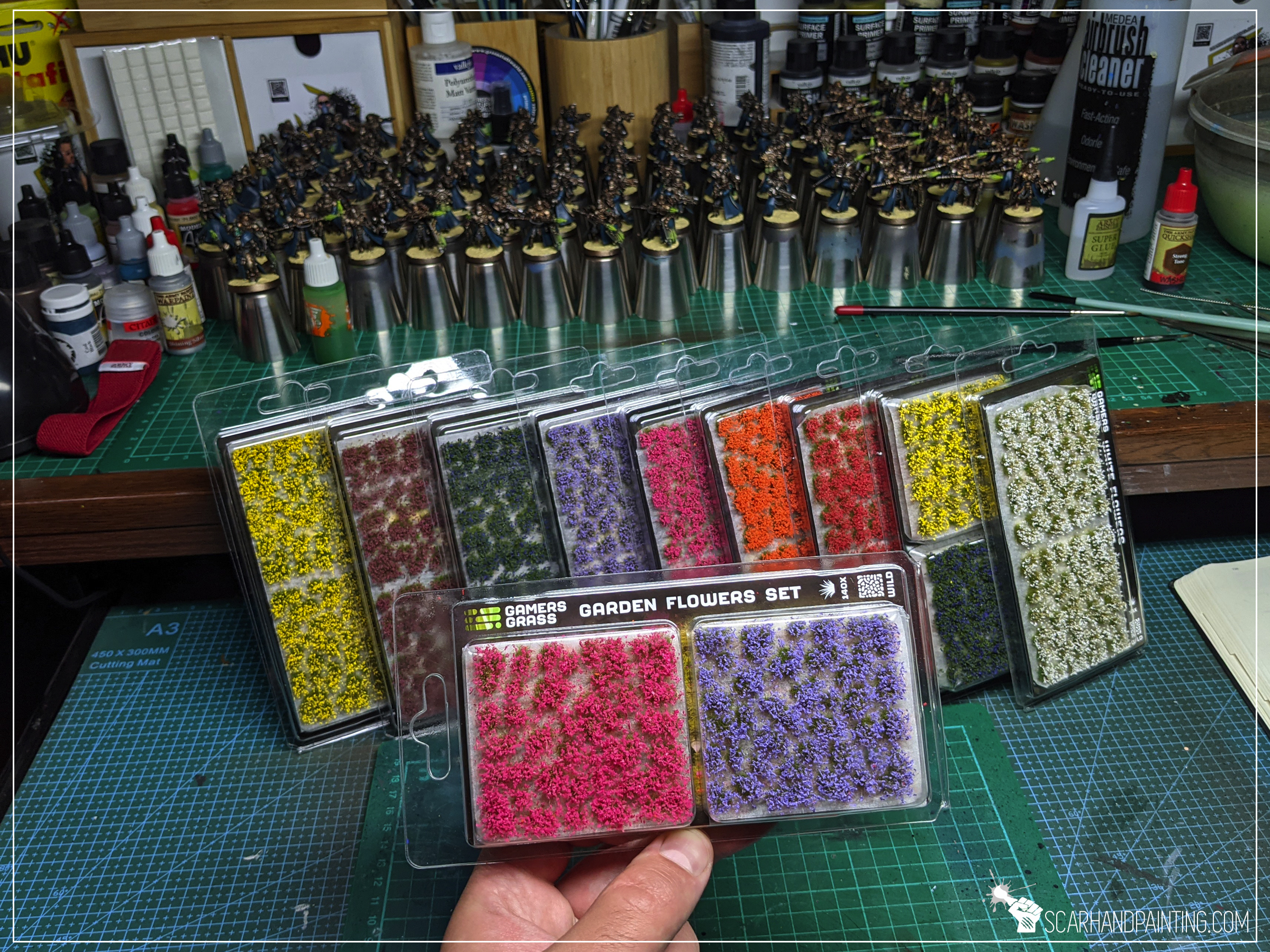
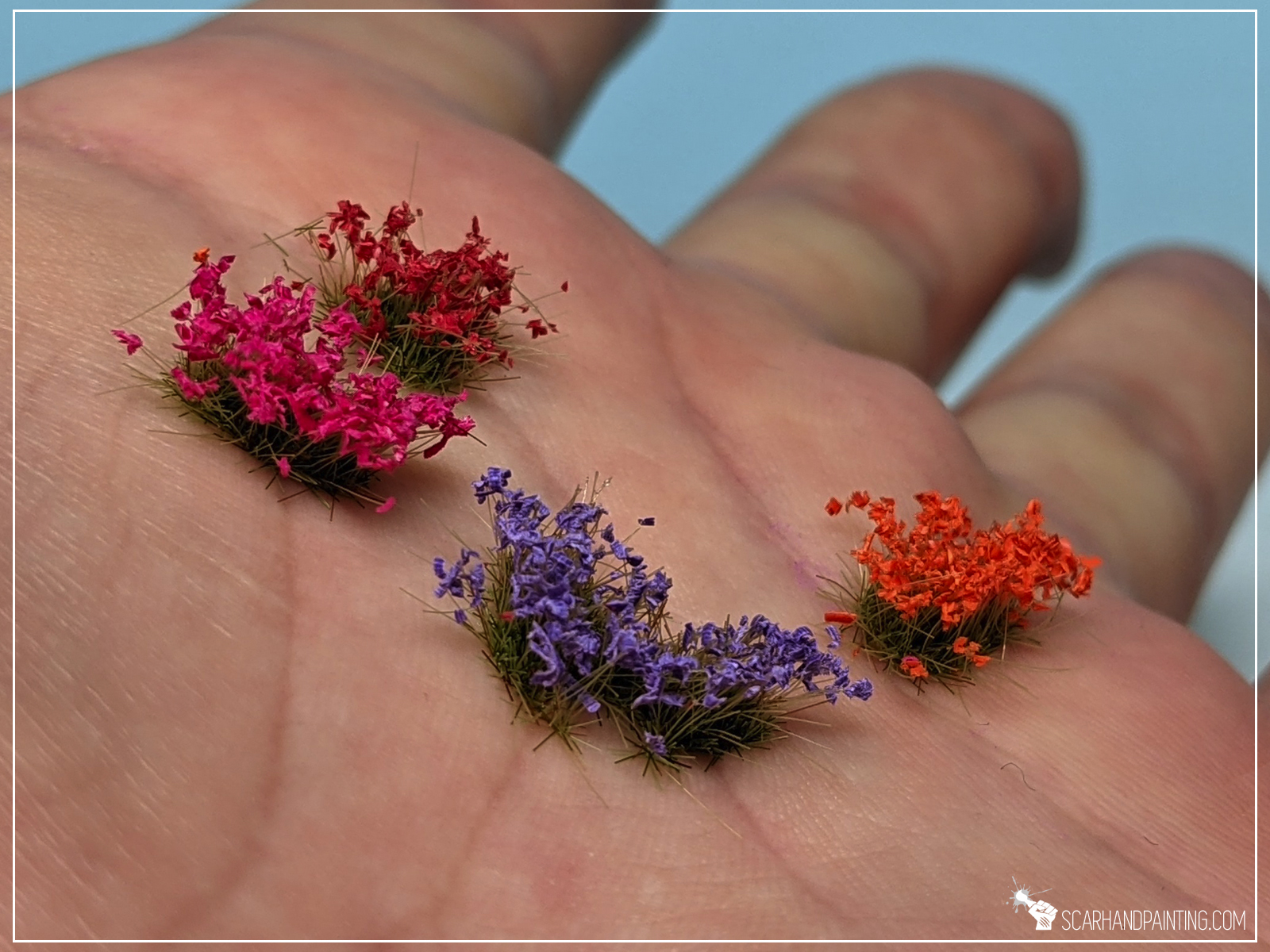
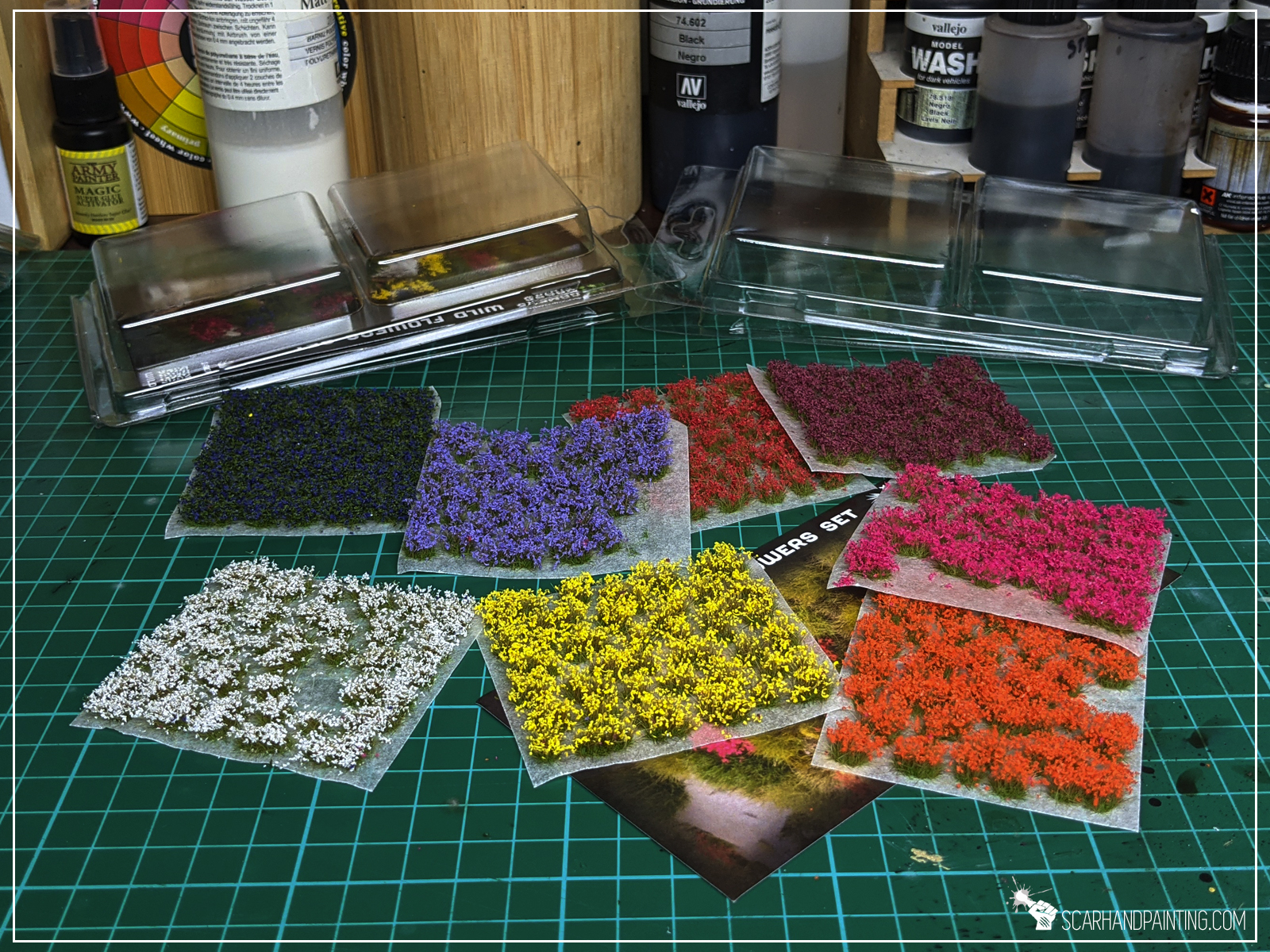
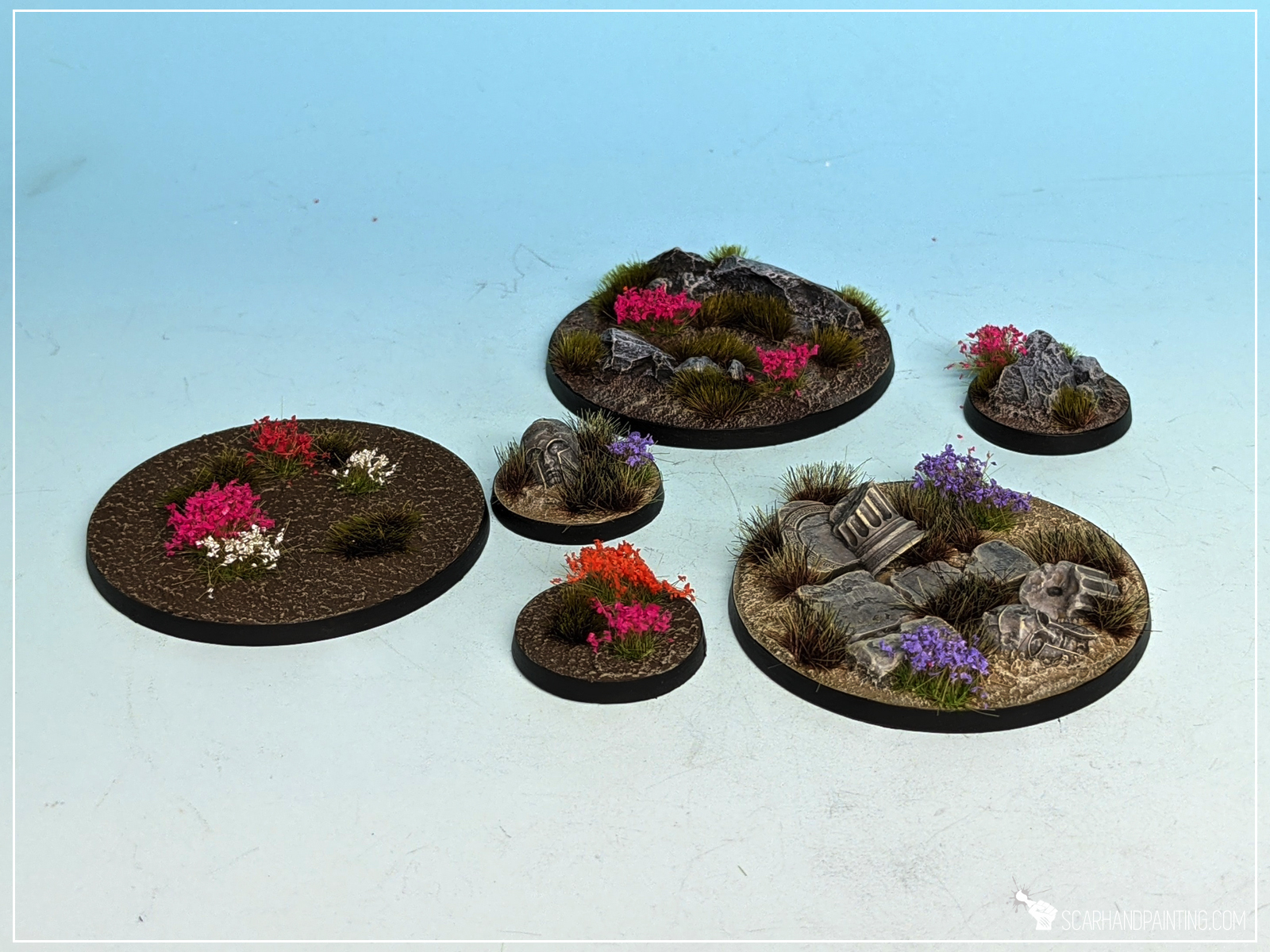
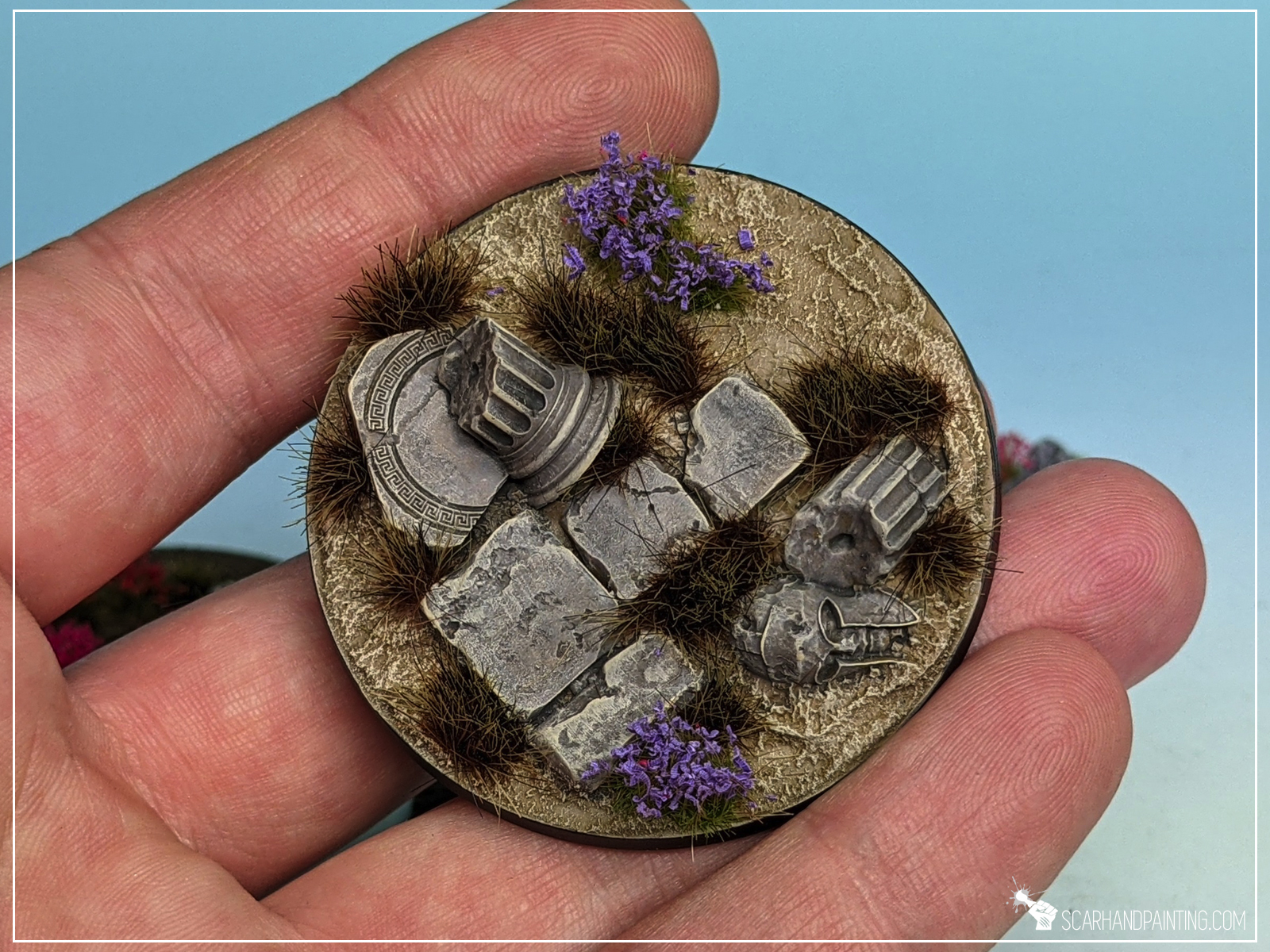
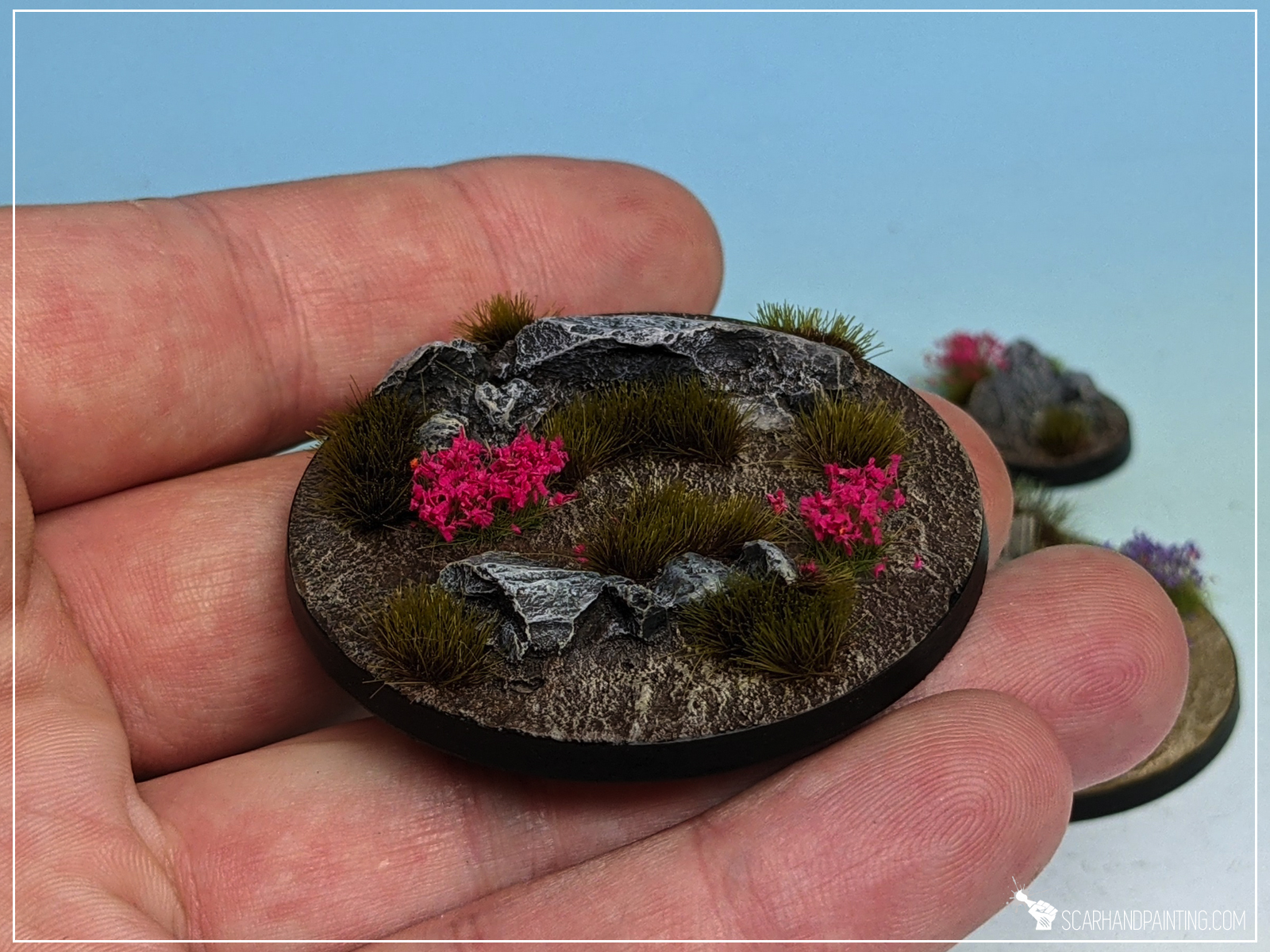
All flowers types are user friendly and there’s no quality difference between particular colors . There’s a clear separation between every piece on the sheet. Glue is strong and sticks to a range of different surfaces. There’s not many stray hair that require removal after application onto a base. Once used, flowers hold their shape nicely. Joy to work with. Additionally they come in two formats, one being four different colors packed into a single blister. This is a great way to get a lot of variety in a single cheap purchase, or a cool anniversary bouquet for your partner!
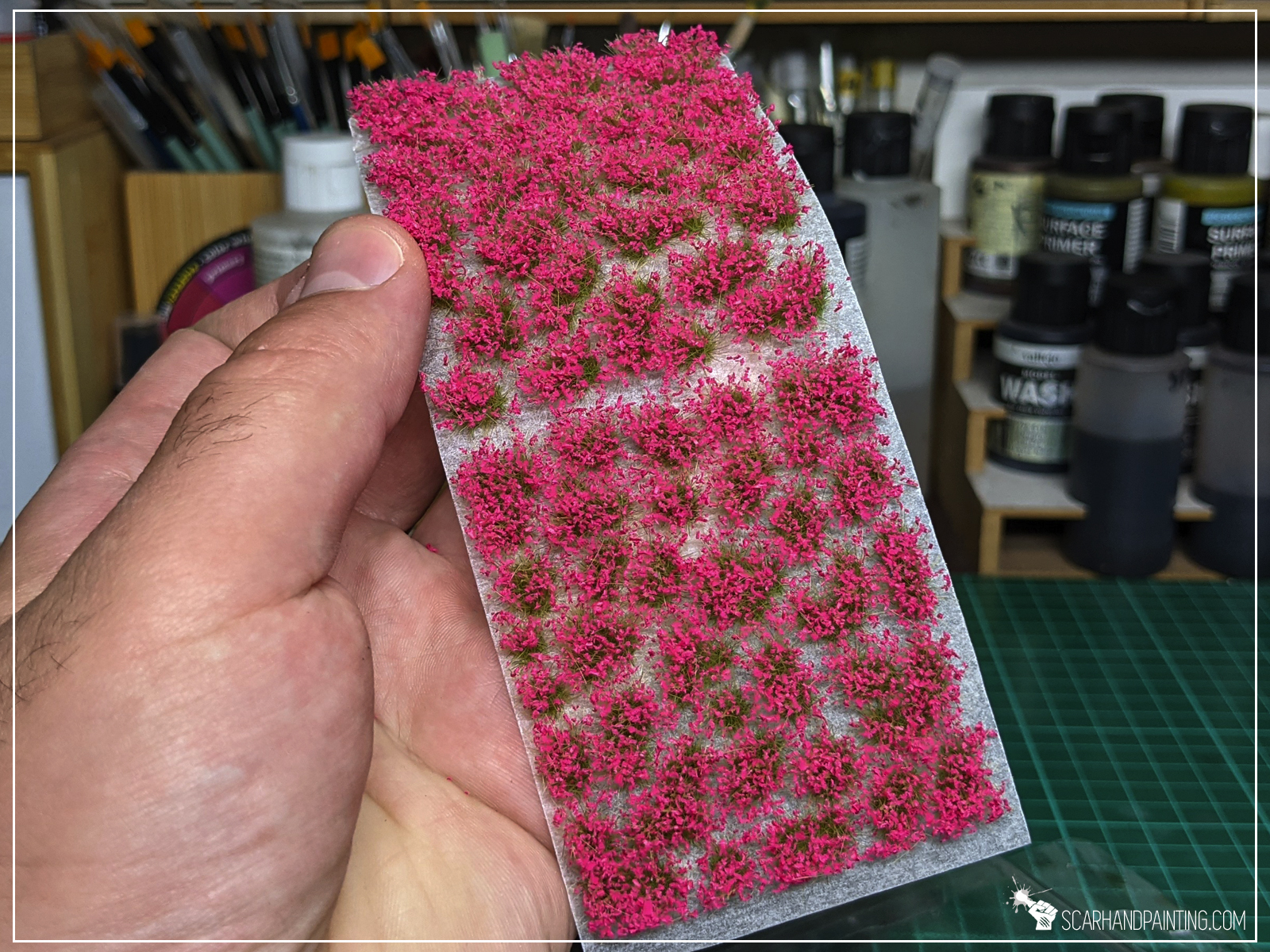

I generally don’t expect modelling flowers to make a good impression. This is because usually they are messy and not very user friendly, dragging other beds out of the sheet alongside them, leaving powder everywhere etc. That being said, the Gamers Grass Flowers are awesome. Easy and Fun to use, clean, well shaped. Just awesome.

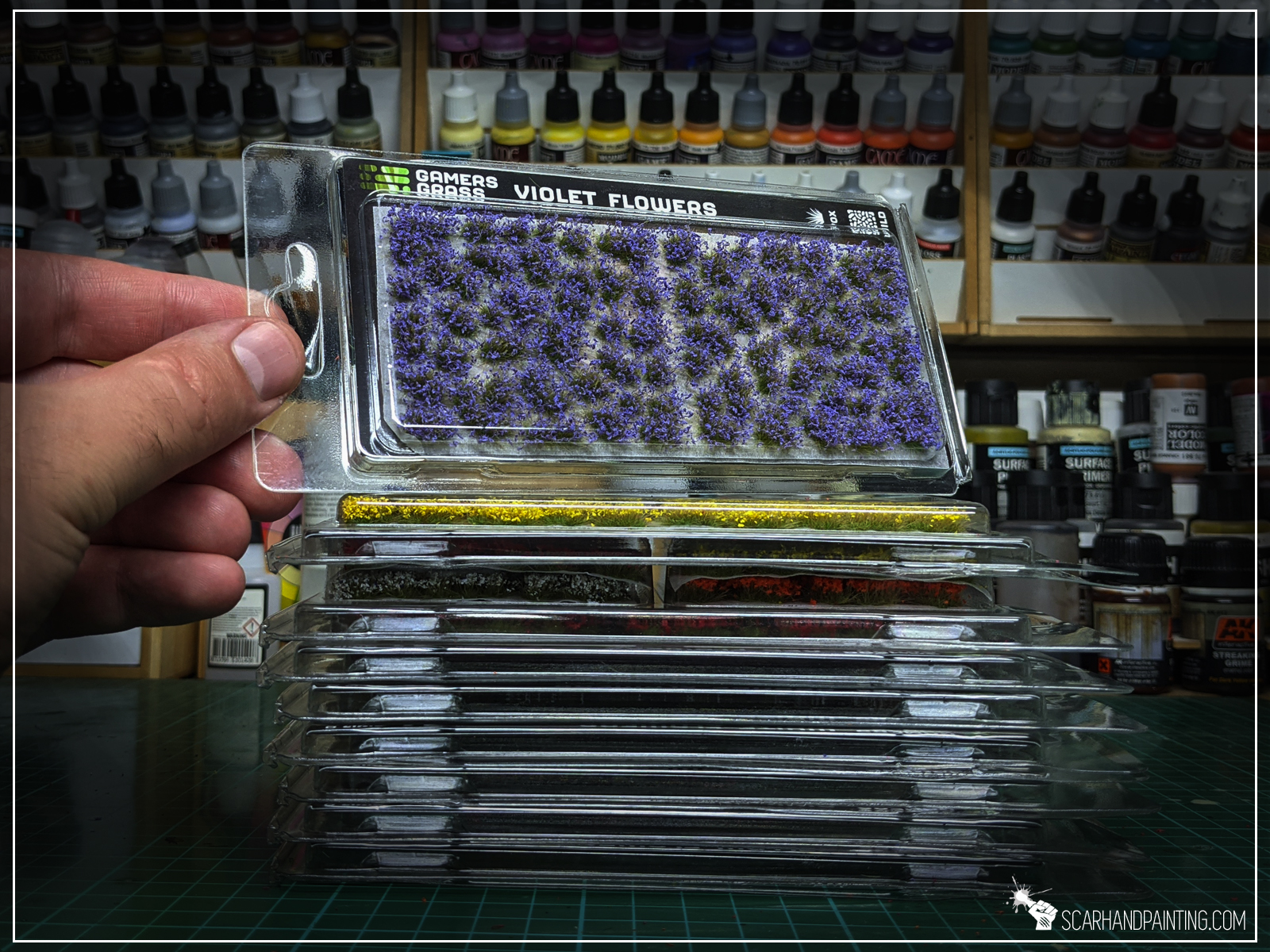
Time to take in the price factor. I’ve done quick research and here’s how it looks like against immediate competition:
It seems that Gamers Grass is the more expensive, even though not that much.
To sum things up: I have tested about a dozen different suppliers in the past few years and compared to competitors, the Gamers Grass Flowers stand out both in quality and functionality. Visuals are great, range is wide. Price might use a tweak, but in my opinion the product is totally worth the extra. Also due to reality we now live in, more suppliers will probably increase their pricing throughout the year. Call me a sucker and a fanboy of the Gamers Grass range, but for me price is not a decisive factor when compared to such high quality!
What’s your opinion? Does quality top price or vice versa? Let me know in the comments 😉

You can order through Gamers Grass official store, or try out your luck in a local hobby store. To make things easier for you, Gamers Grass prepared this awesome Store Locator.
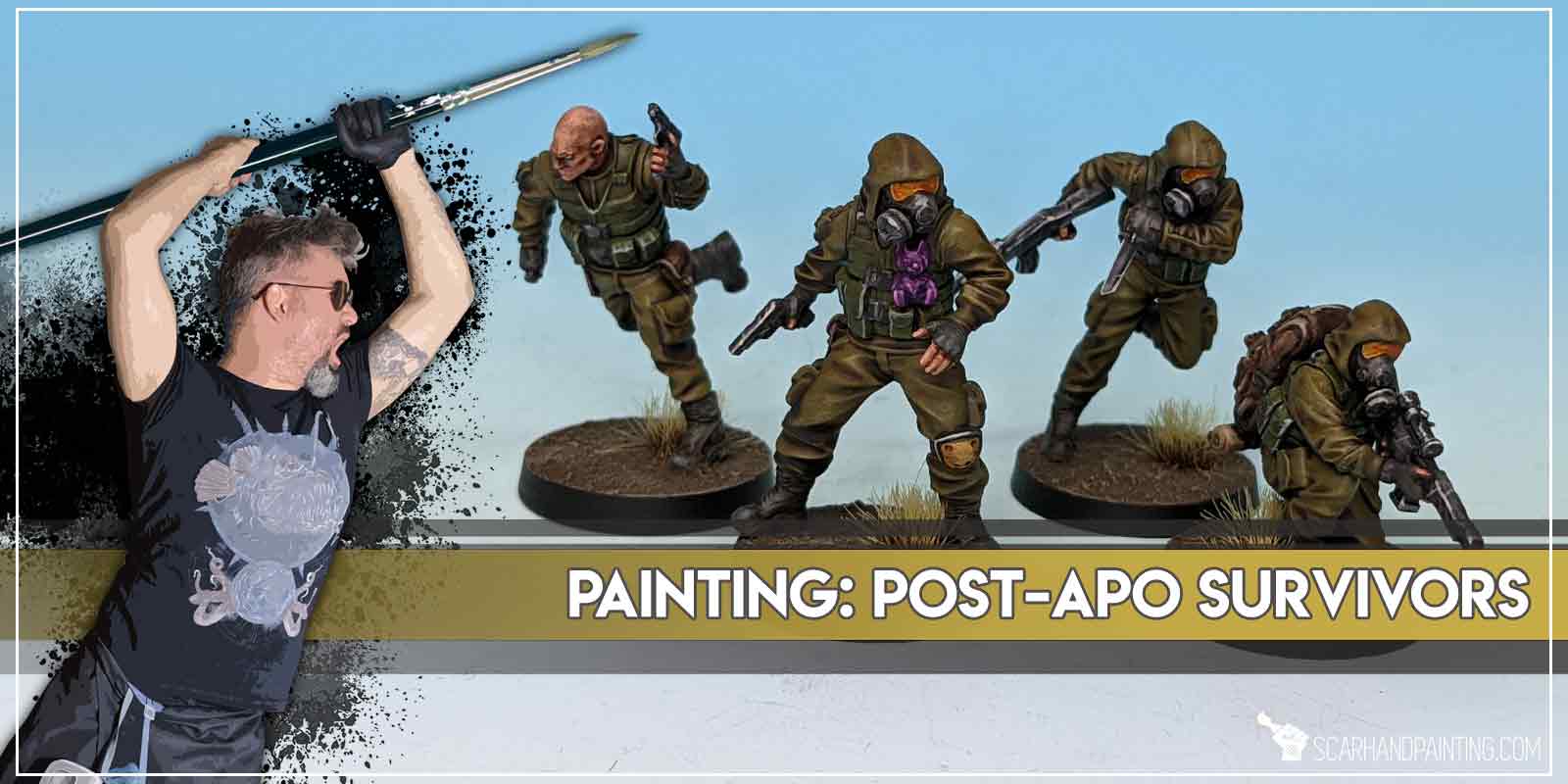
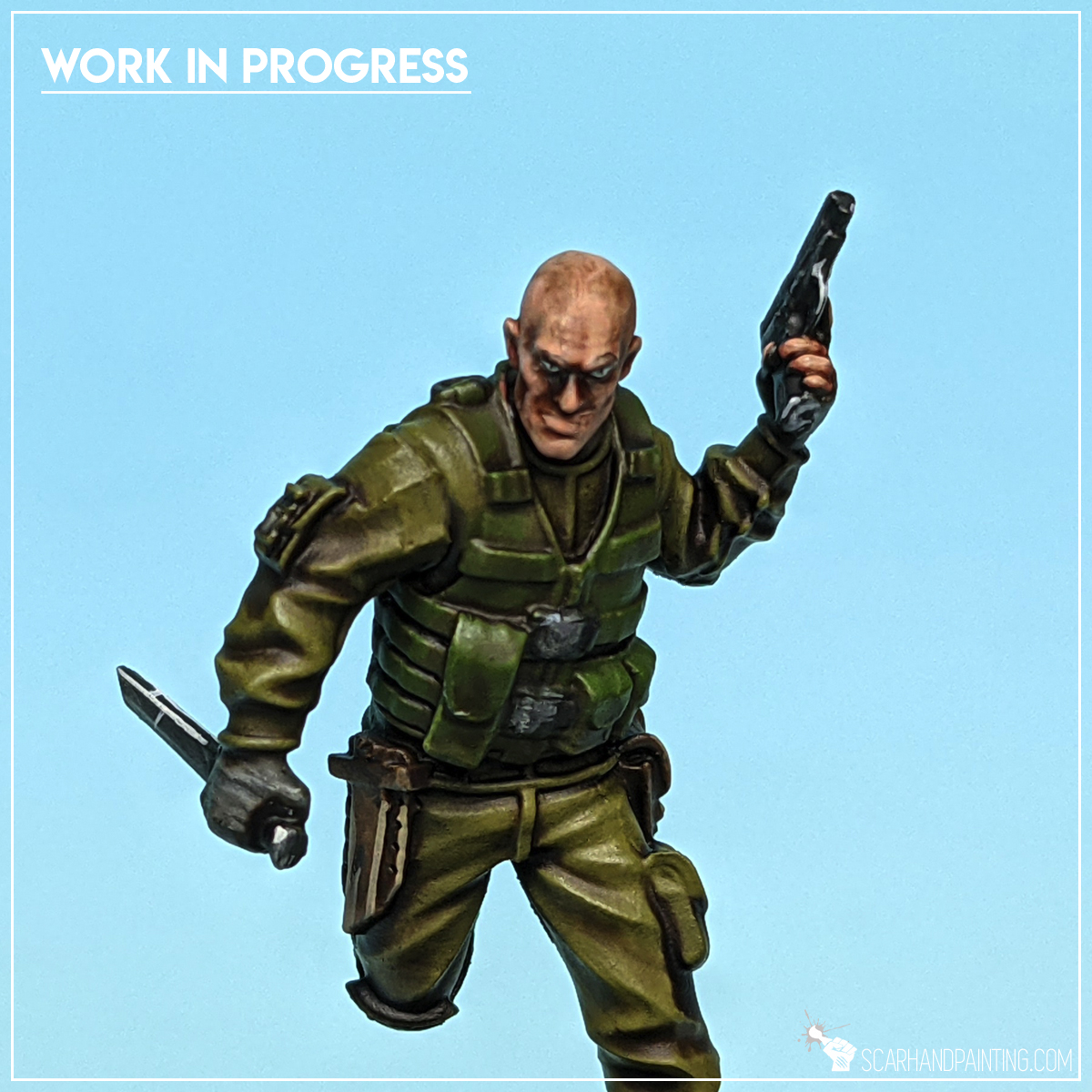
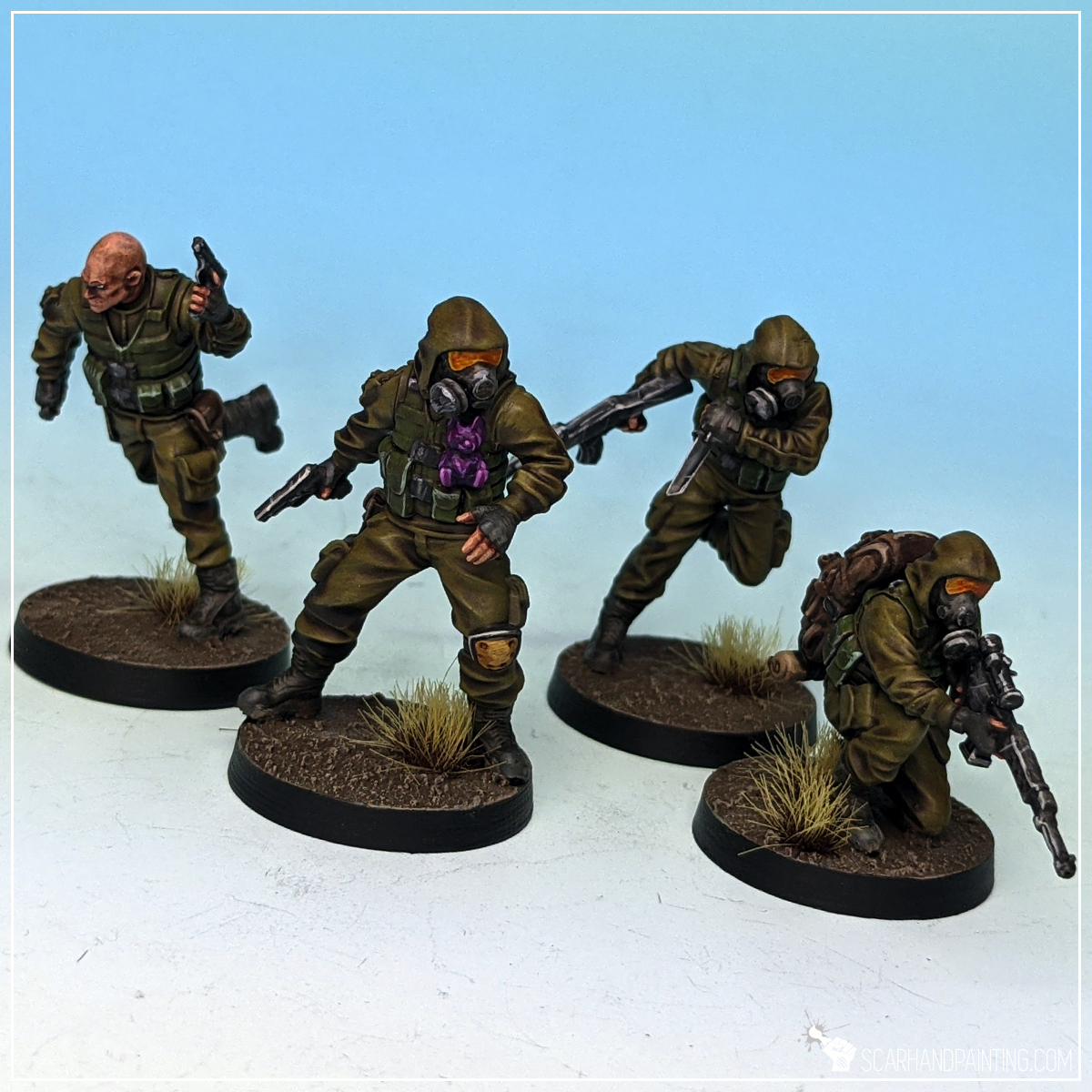
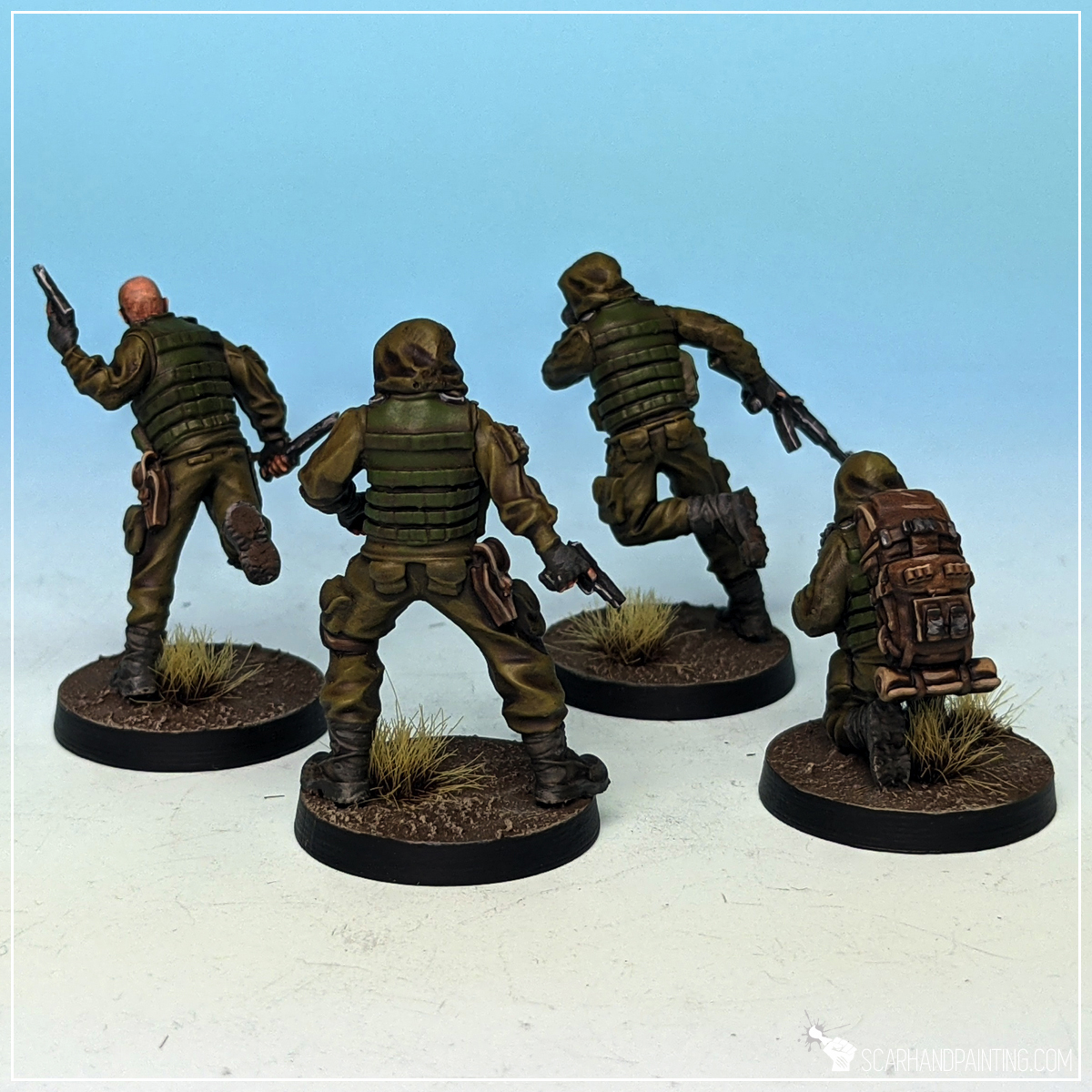
Welcome to Painting Road to Survival Stalkers tutorial. Here I will present to you a Step-by-step of an easy and fast painting process for Orzol Studio’s Stalkers team from the Post-apo Survivors Kickstarter.
Before we start, some notes:
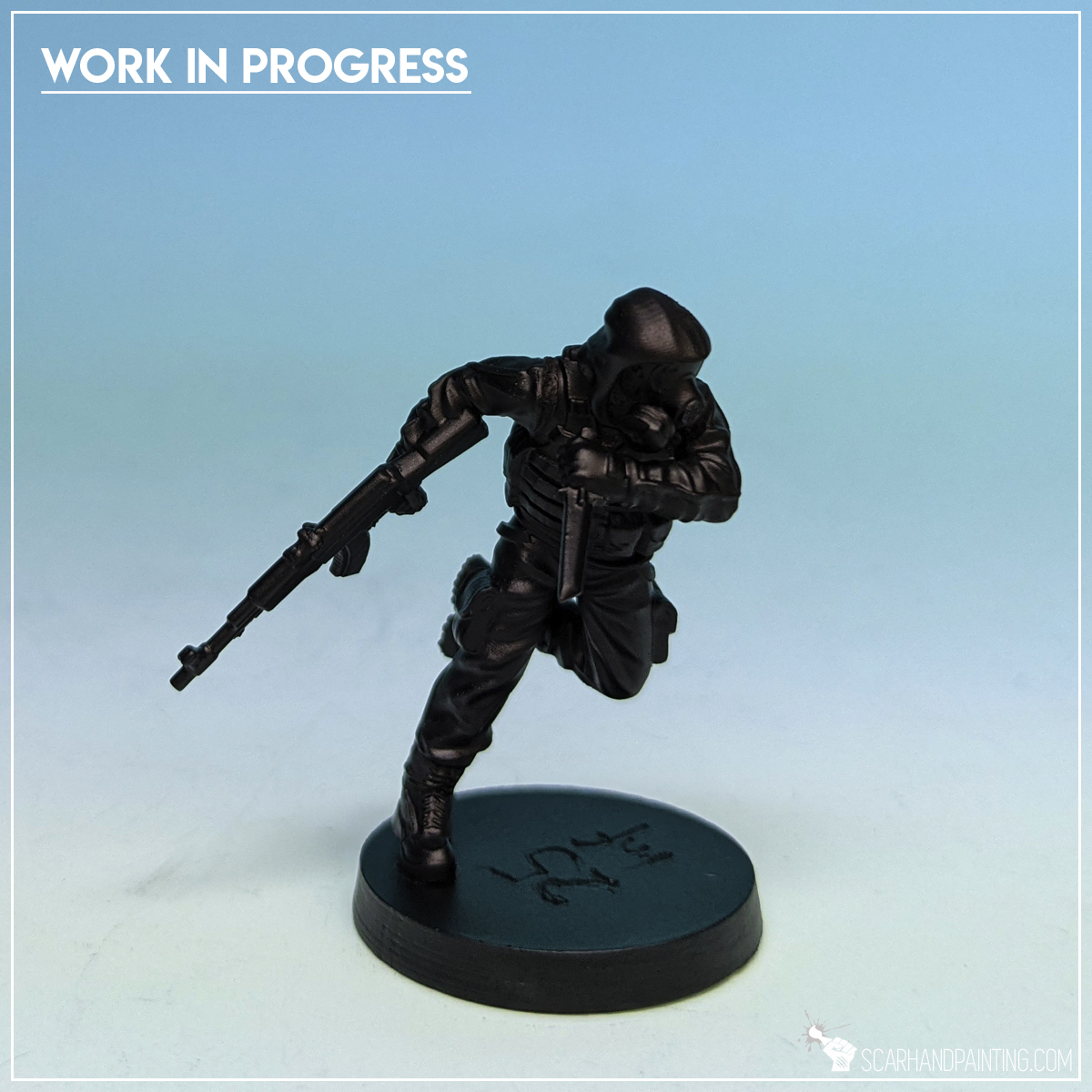
Step one: Undercoat
I applied a strong layer of Citadel Chaos Black spray. I prefer spray over manual application, but this is just a personal preference. Any matt black undercoat will do, as long as it’s thorough.
Step two: Uniform
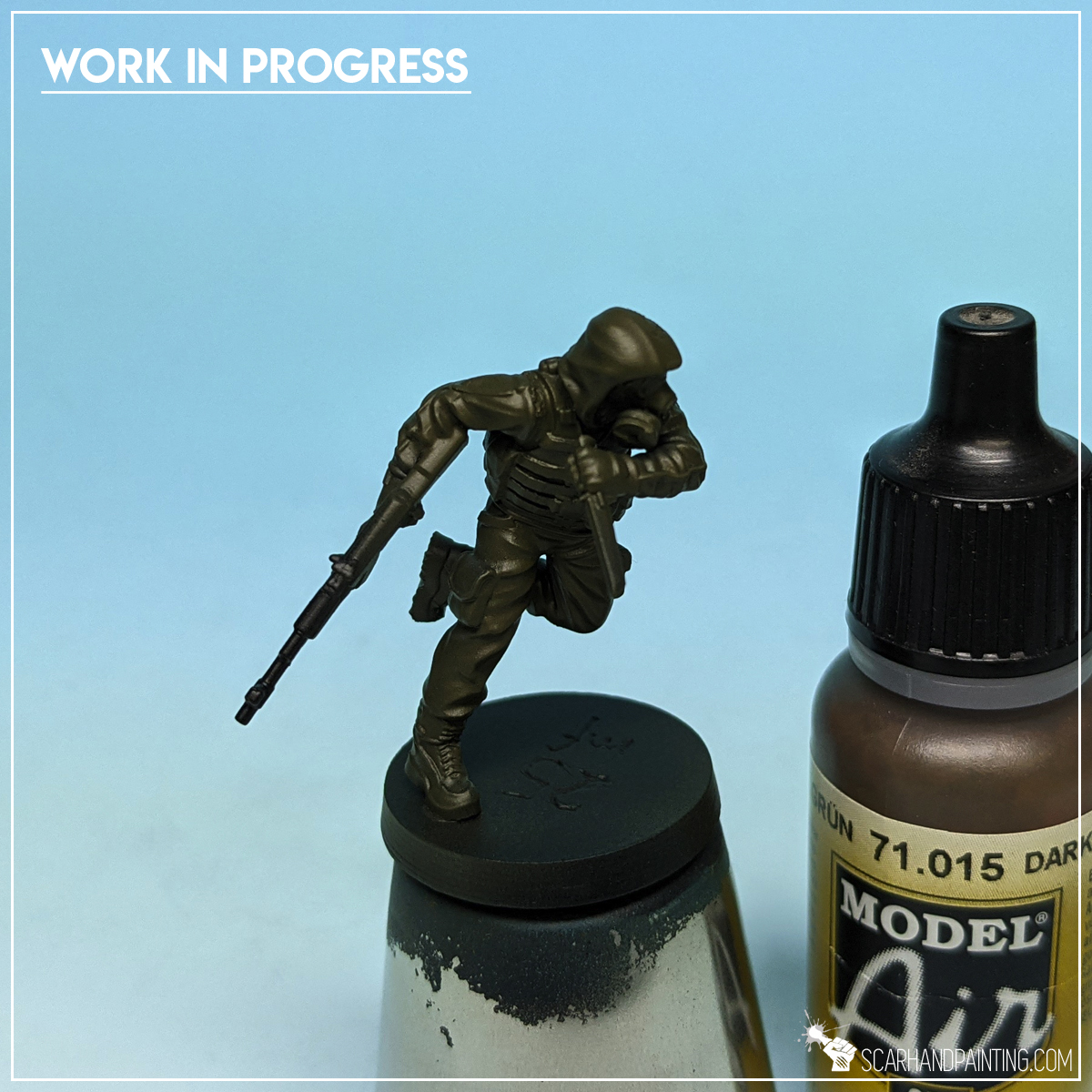
I started by applying a strong layer of Vallejo Dark Green RLM71 (air) onto entire uniform. I used an airbrush for this, but it is not necessary. This layer might as well be applied manually, but might take few runs to look smooth and solid. Although boots, weapons and other detail got painted alongside the uniform, it’s not a problem. If you switch to manual painting you don’t have to worry about messing these up at this stage of paint job.
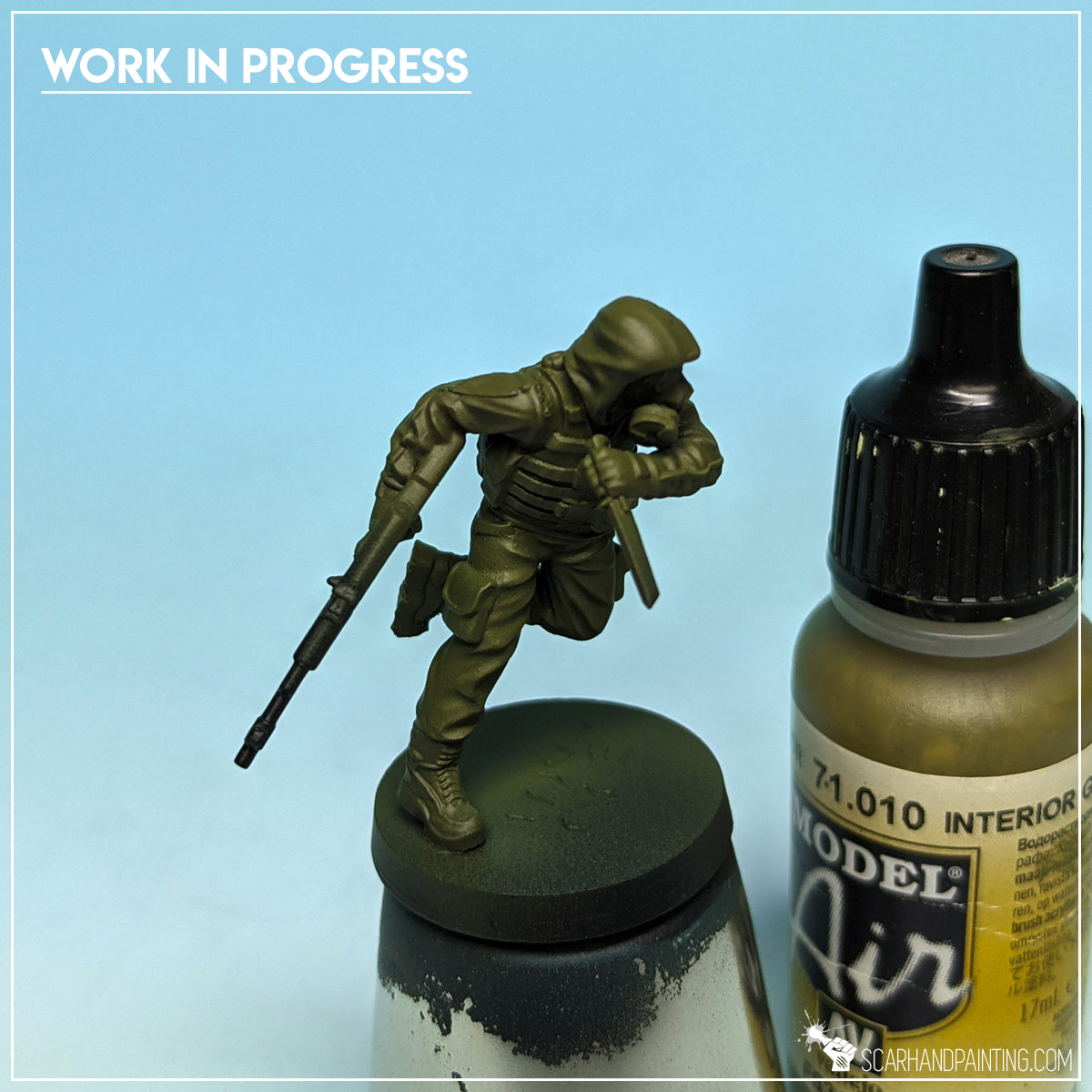
Next I airbrushed Vallejo Interior Green (air) over previous layer. Similarly to Dark Green this one can be done manually and follows same philosophy.
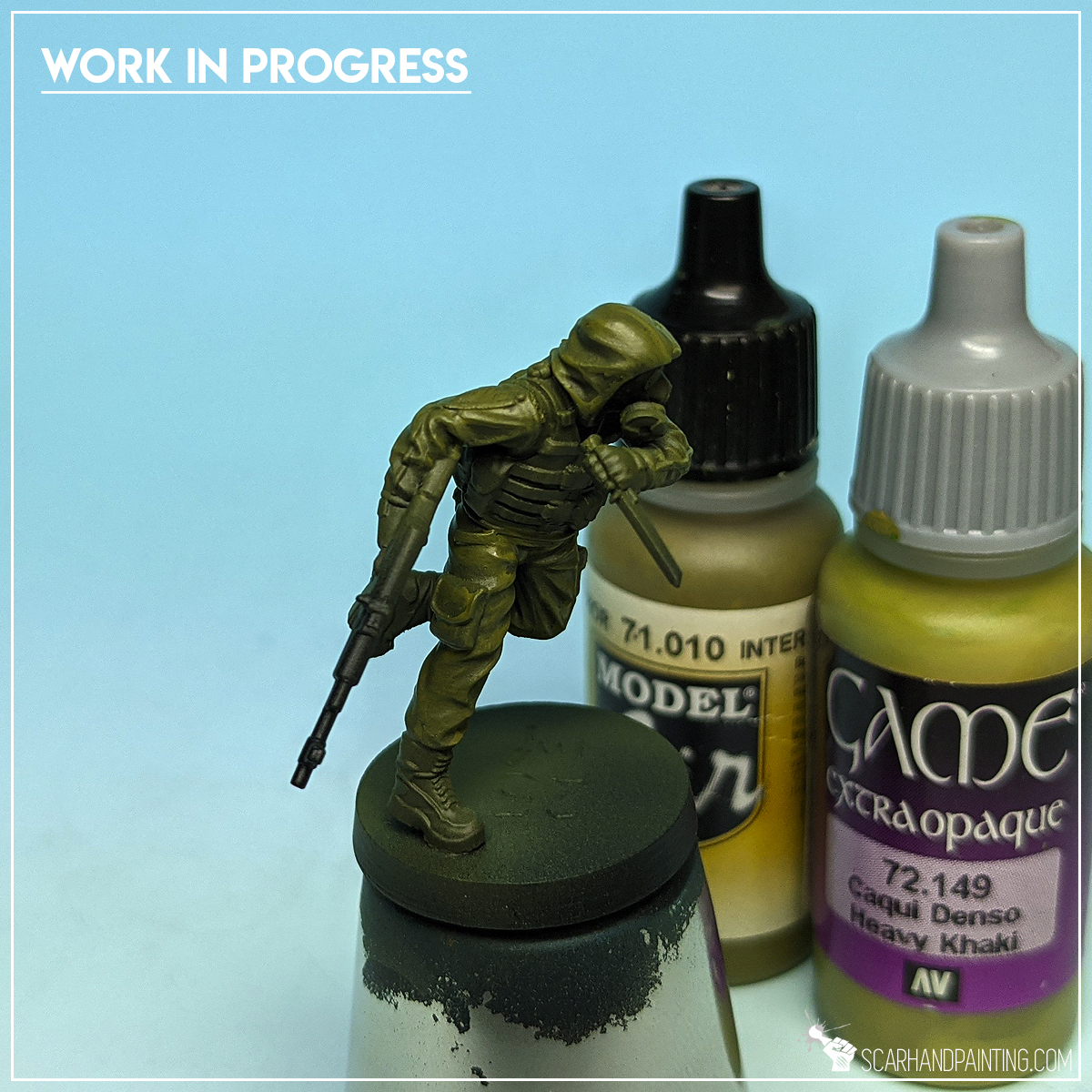
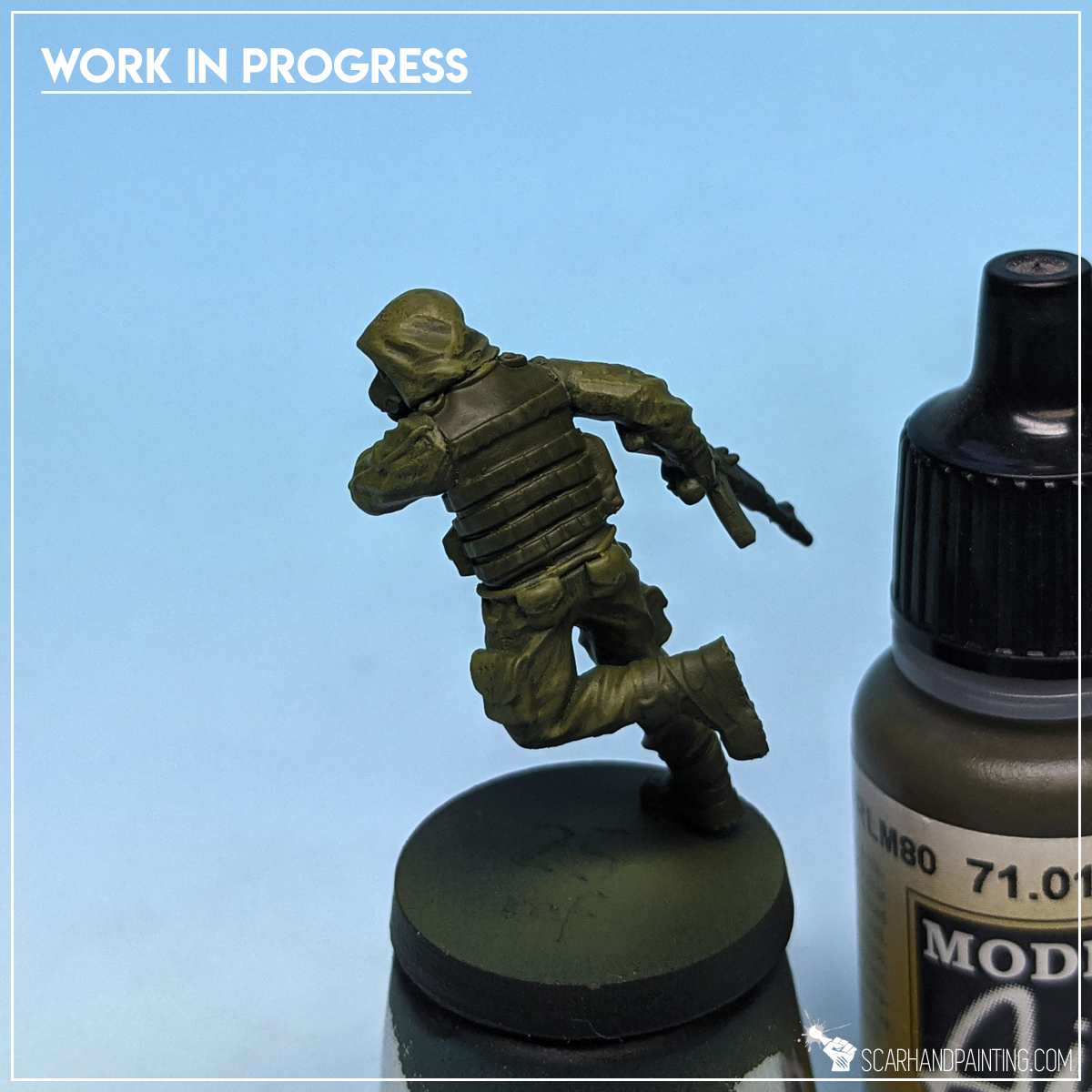
I switched to manual painting and with a basecoat size brush, flatbrushed a mix of Vallejo Interior Green (air) 1:1 Vallejo Heavy Khaki over the miniature. I then used a more precise brush and highlighted some edges with the same color mix.
Step three: Vest
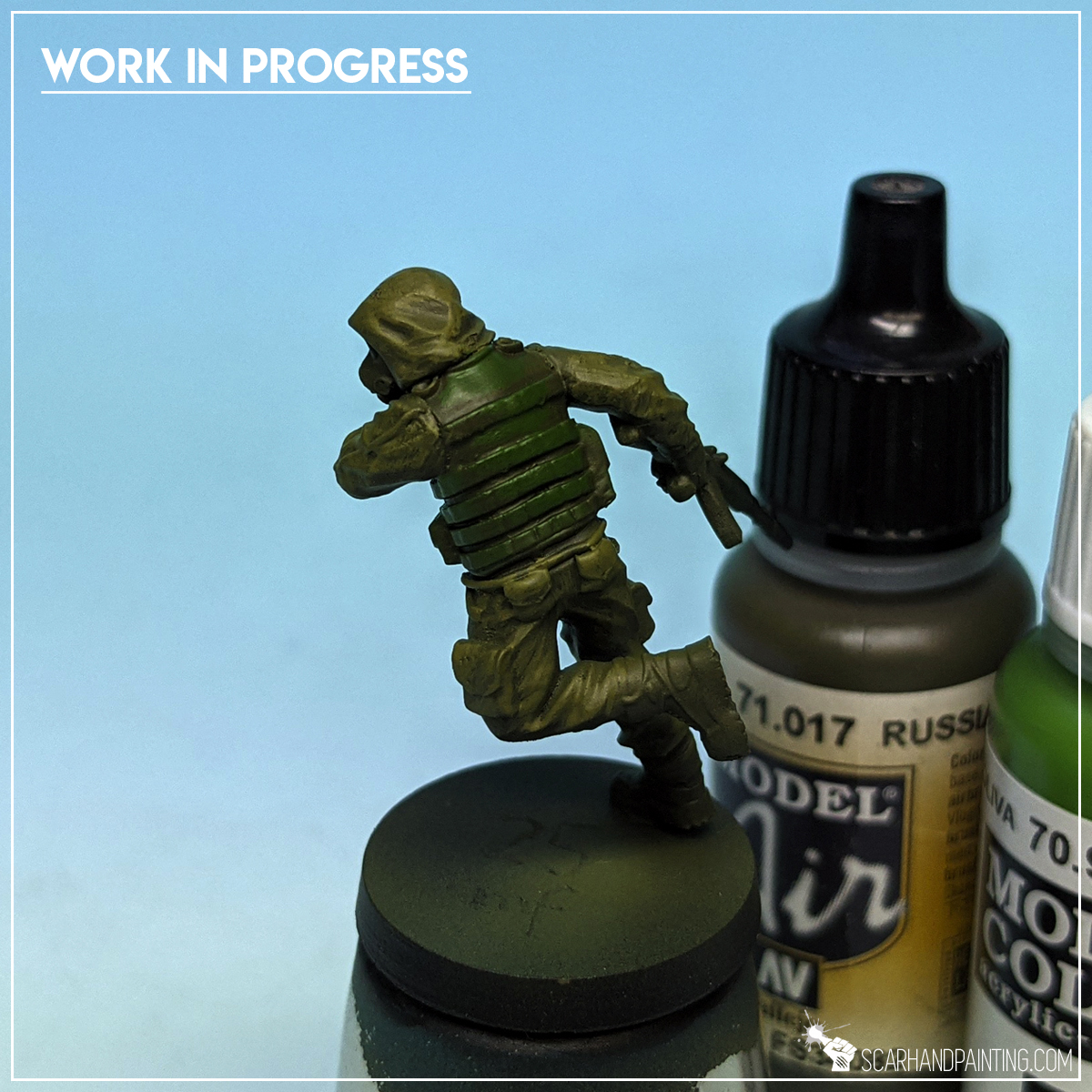
With a solid color underneath a single layer of Vallejo Russian Green (air) was enough to provide a smooth base for the vest. The key was to avoid messing up all the bright uniform around. Because of that I outlined the vest with a precise brush and only then switched for a larger brush to gain speed.
Next I flatbrushed a mix of Vallejo Russian Green 1:1 Vallejo Olive Green over previous layer. This provided nice thickness, something the upcoming Wash will work good on.
Step four: Boots, Gloves, Mask
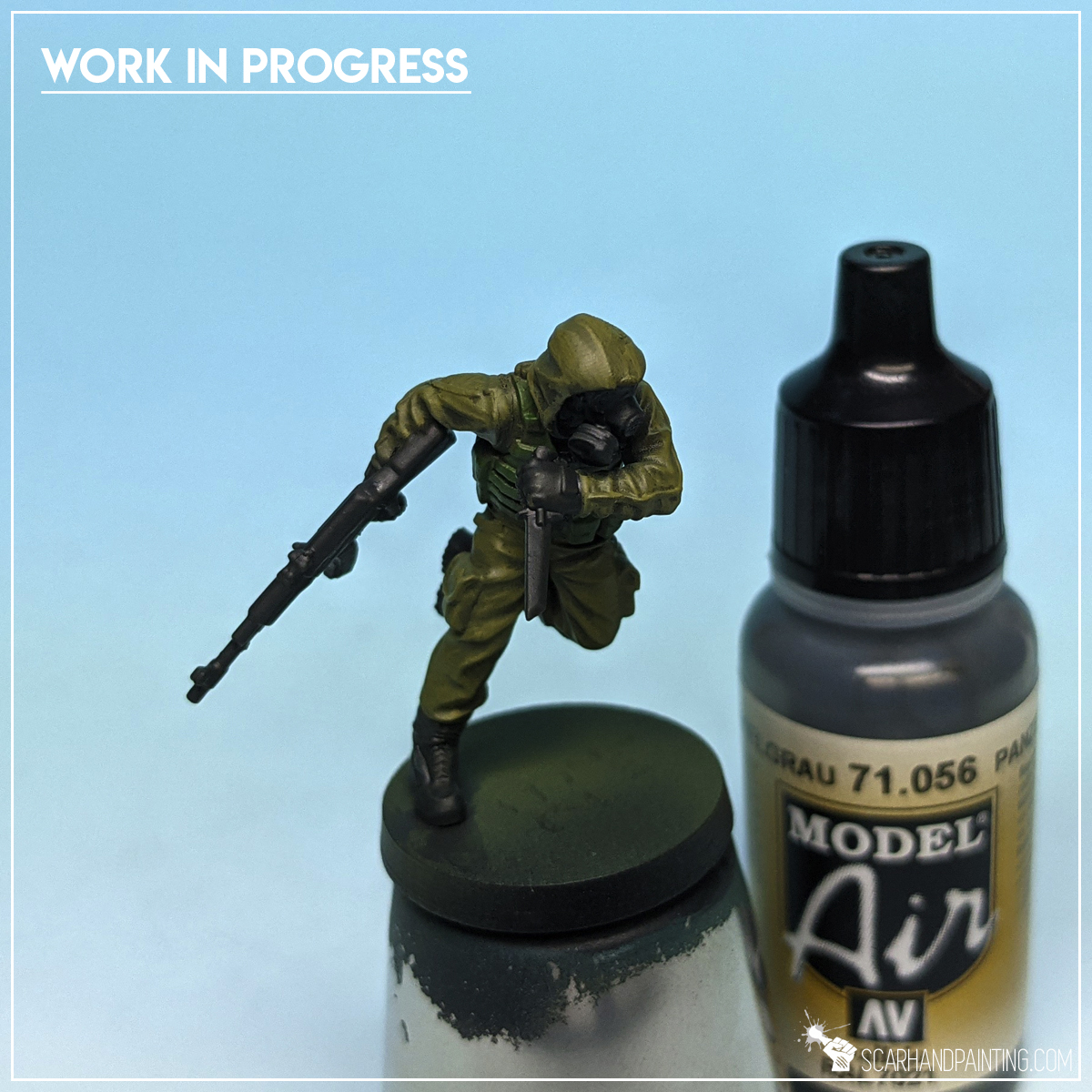
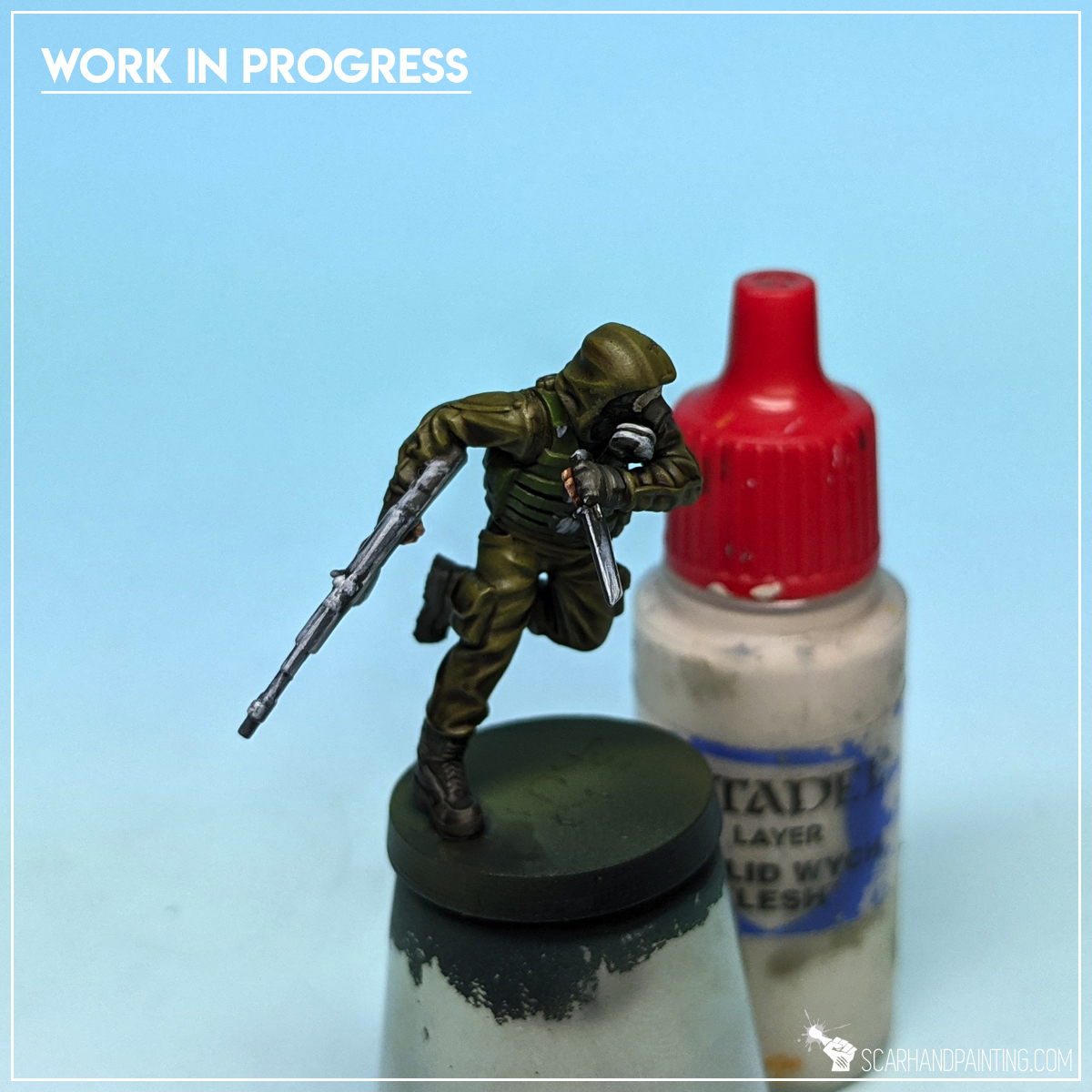
Using a small brush I applied a strong, precise layer of Vallejo Panzer Dark Grey (air) onto boots, mask, gloves, weapons and buckles.
I then switched to Vallejo Medium Sea Grey, thinned it down with medium and applied a somehow misty, irregular layer over Panzer Dark Grey, leaving spots of previous color visible. I deliberately left weapons and buckles be for the time being.

Step five: Brown wash
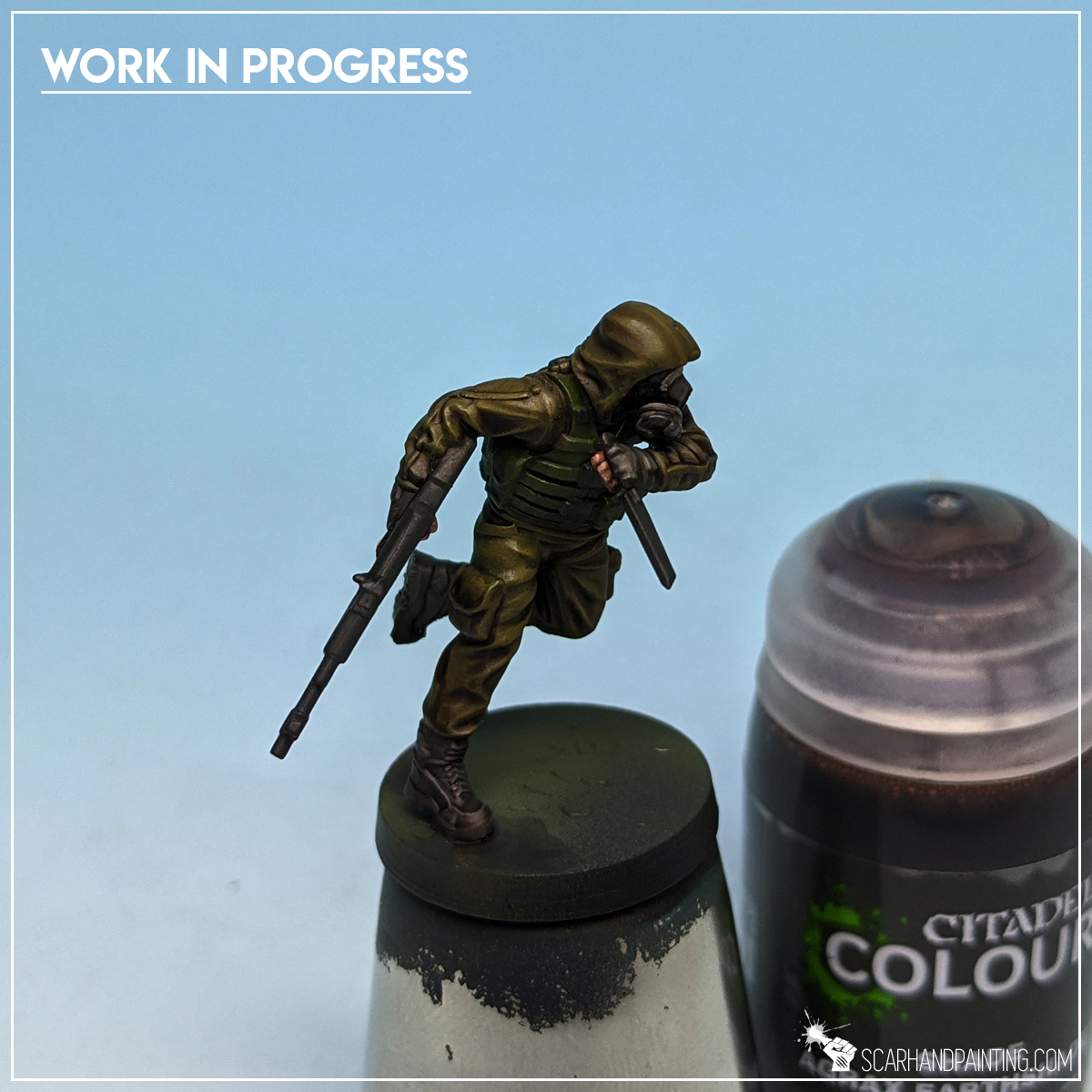
Using a large, soft brush I applied a lot of Games Workshop Agrax Earthshade onto entire miniature. After a while I used a clean precise brush to strip some of the paint from areas where too much pigmentation covered all the detail. I left the miniature to dry after that.
Step six: Weapons
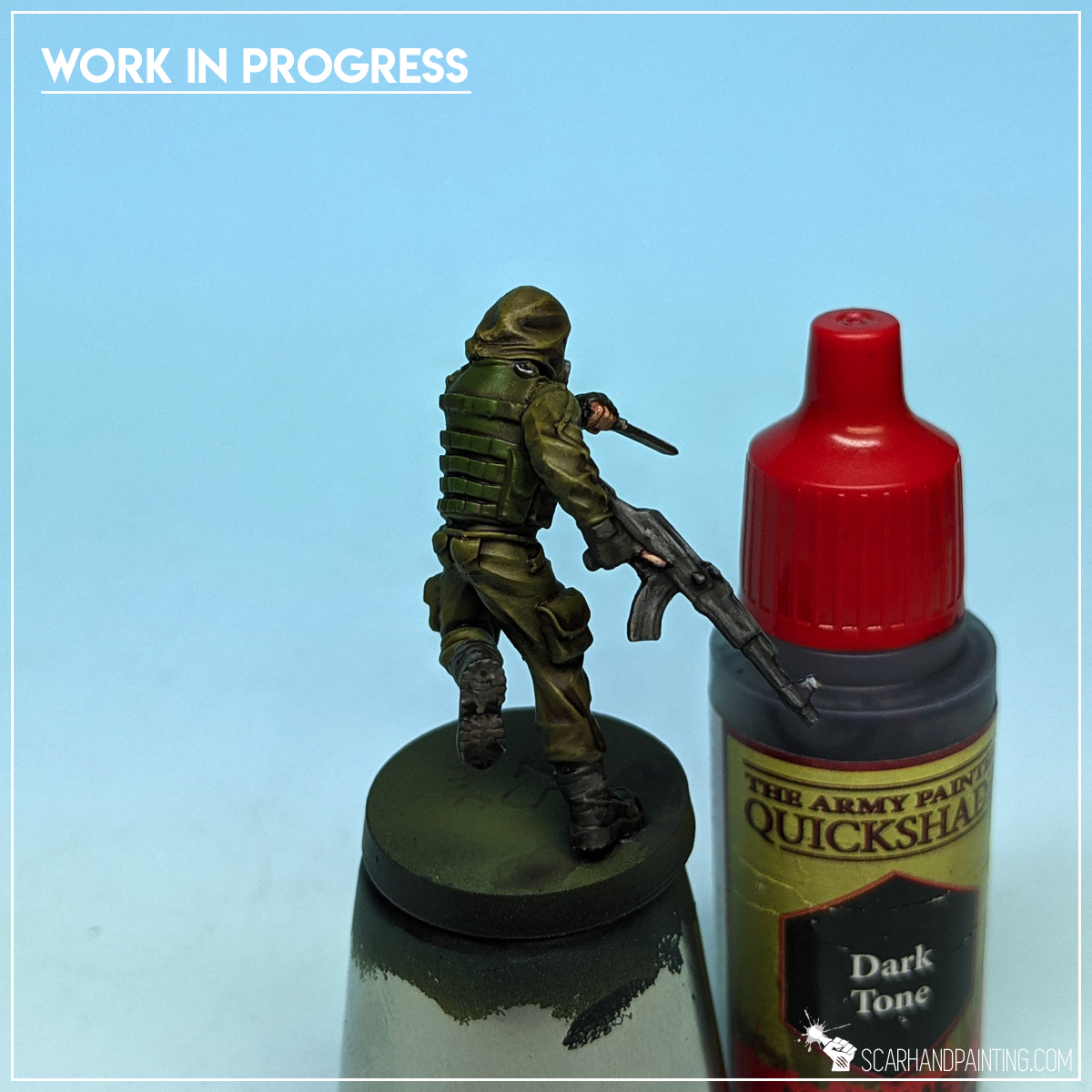
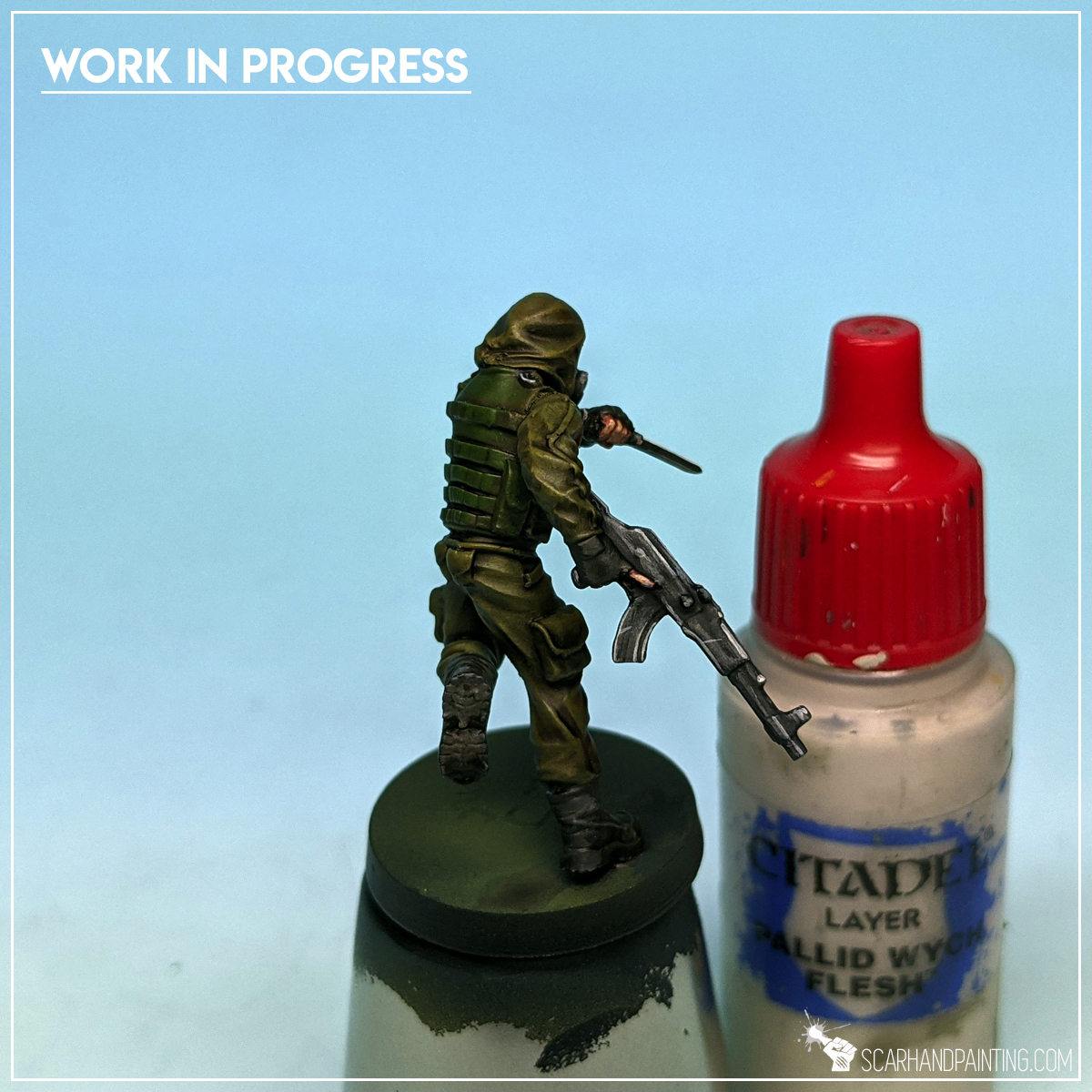
I applied a partially translucent layer of thinned down Vallejo Wolf Grey (air) onto weapons and buckles. I moved a brush alongside blade and barrel, trying to leave pigmentation on the edges.
I then highlighted weapons with Games Workshop Pallid Wych Flesh. Mostly on the edges and with no dillution.
I then followed up by applying Army Painter Dark Tone Ink. Similar to Agrax, I let the paint flow then removed the excess and let the thing dry.
Finally I edge highlighted with Games Workshop Pallid Wych Flesh. This time around I included gas mask filter plus added few scratches here and there.

Step seven: Skin & Eyes
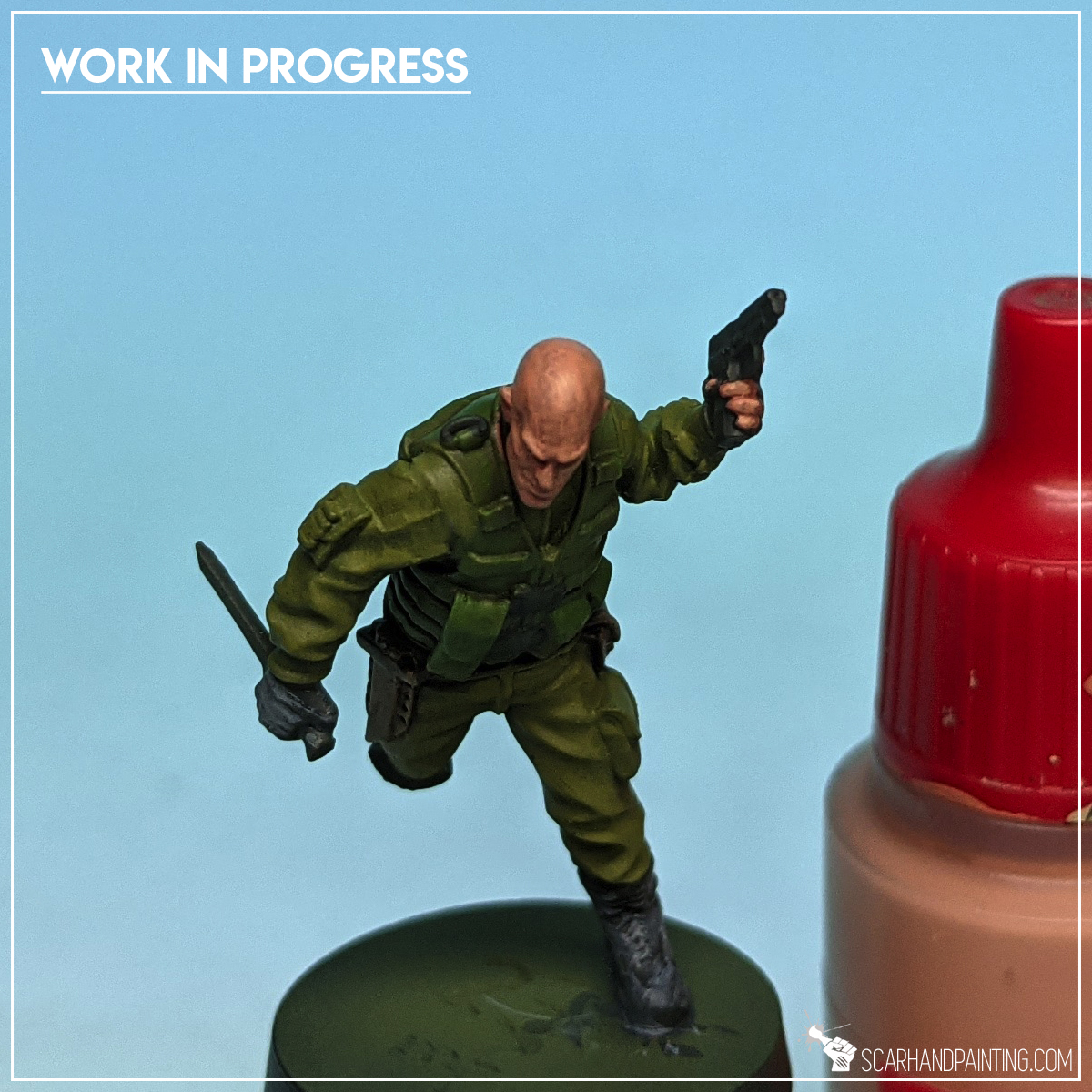
I started painting skin by applying a solid layer of slightly thinned down Vallejo Tan. This layer had to be precise and I avoided going out of line and messing up paintjob around it. I deliberately started painting skin before applying Agrax Earthshade Wash from previous tutorial so that any corrections could be done much easier, if required.
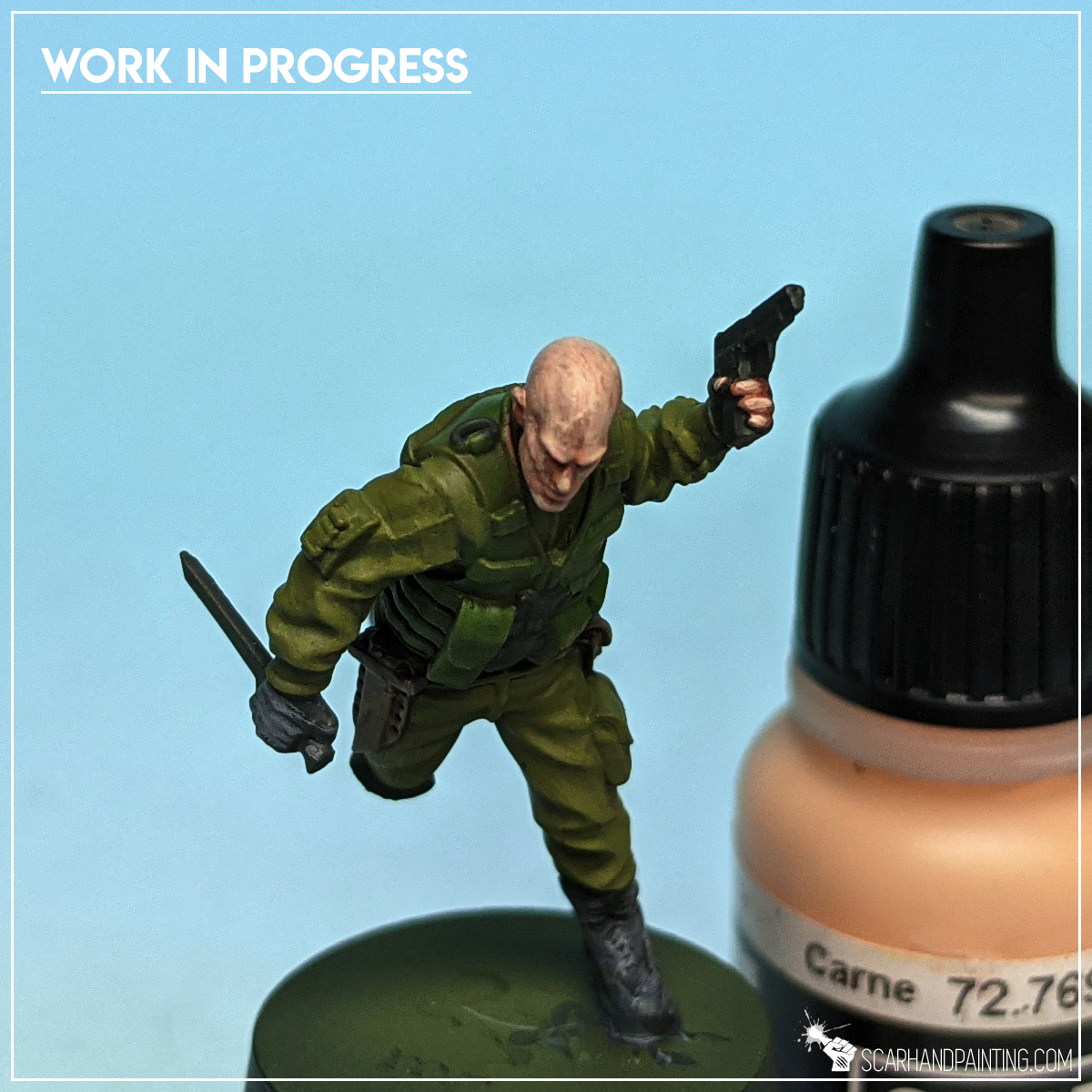
I then applied Games Workshop Dwarf Flesh onto previous layer. Same premise, except I left just a bit of Tan visible in the recesses.
Next I highlighted skin with Vallejo Flesh (air), which due to it’s consistency produces a partially translucent effect. I then re-applied Flesh on top of the head, cheeks and nose.
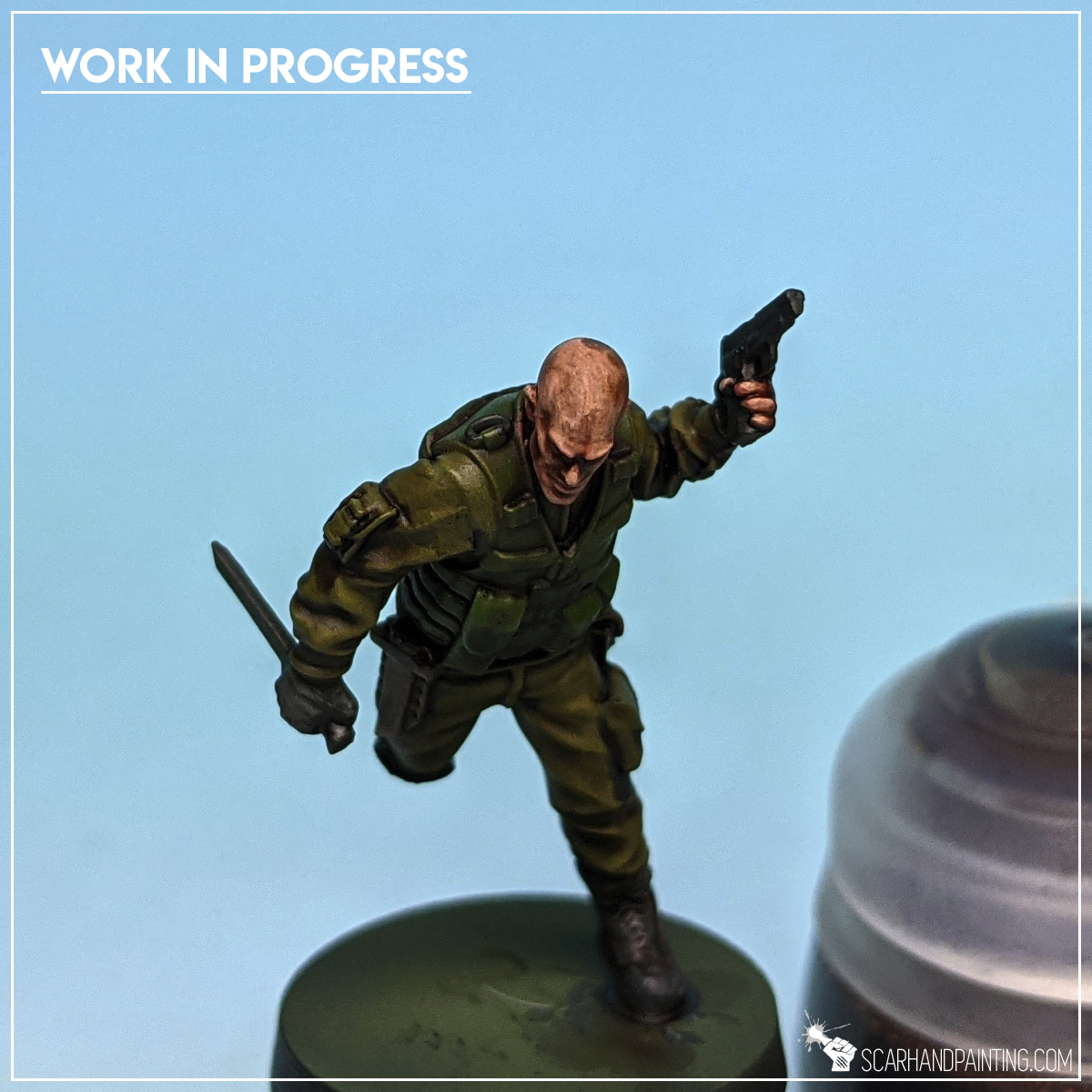
I followed up with Agrax Earthshade wash (done at Step five: Brown wash).
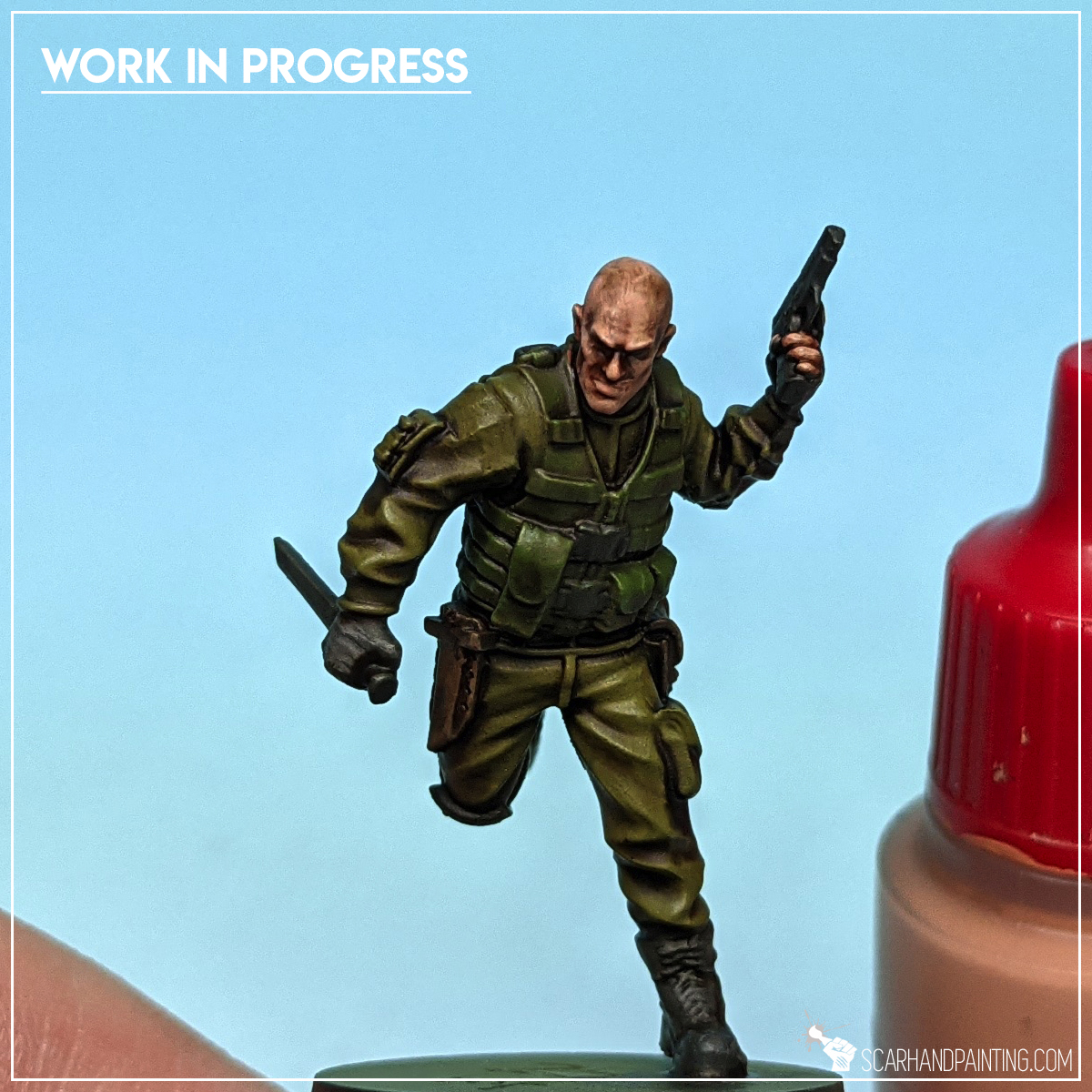
Finally I highlighted with Games Workshop Dwarf Flesh. I also blended some of the Dwarf Flesh over wash made stains on top of the head.
Painting eyes is a topic on it’s own and I’m not trying to write a book here, so I used a simple method of a single white line followed by a black dot in the middle. Any necessary corrections can be done to your heart’s content by painting over and over till good results are produced.
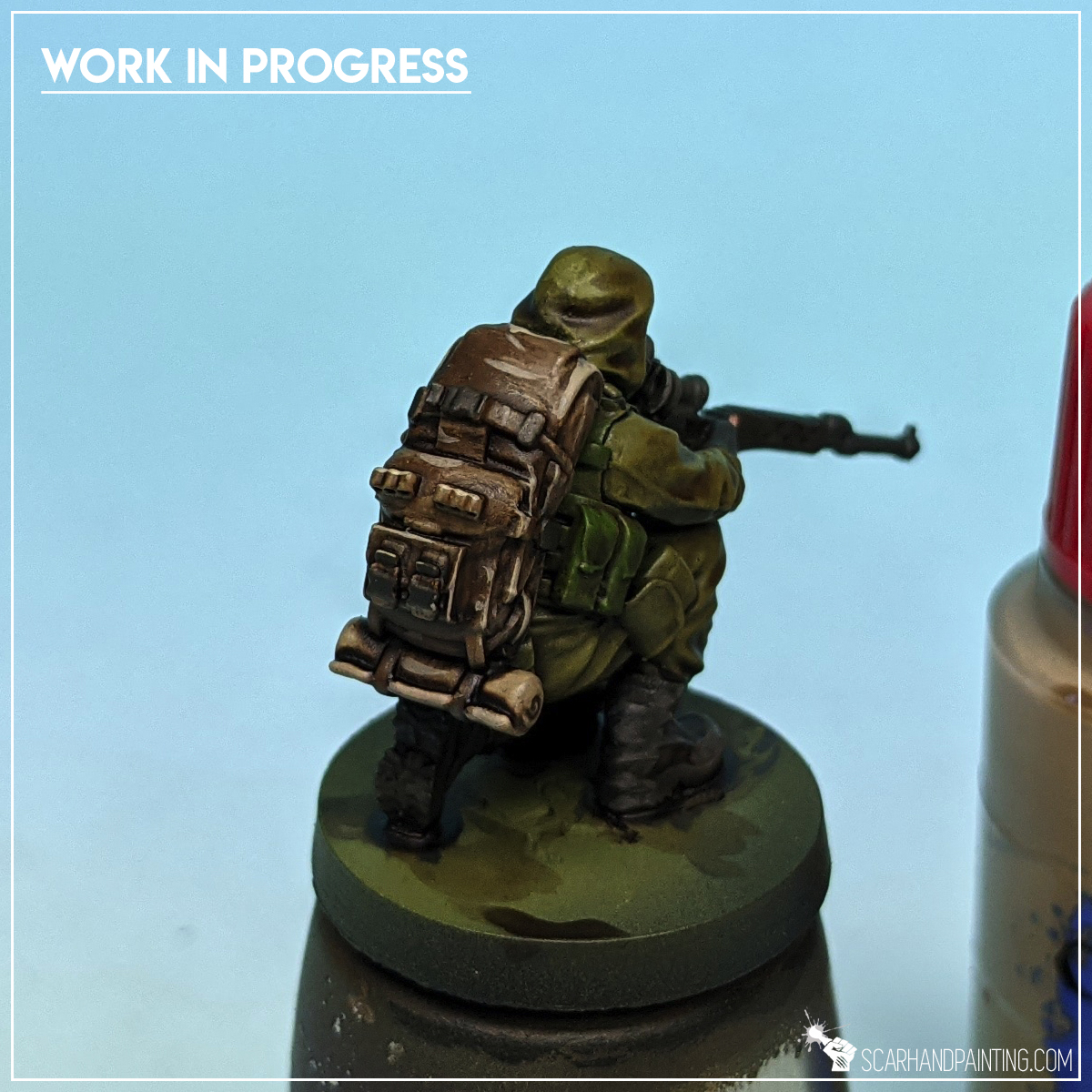
Step eight: Backpack & Holsters
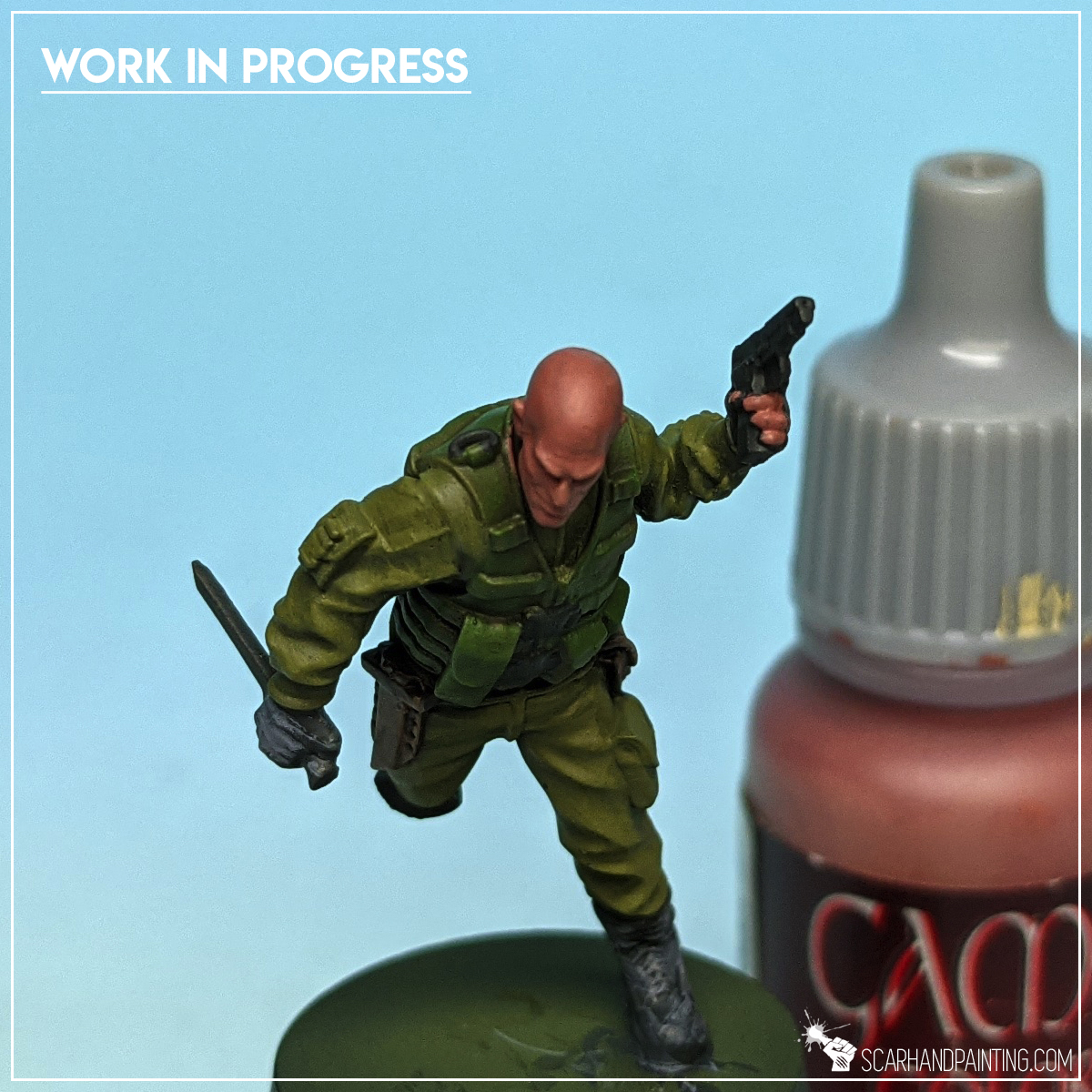
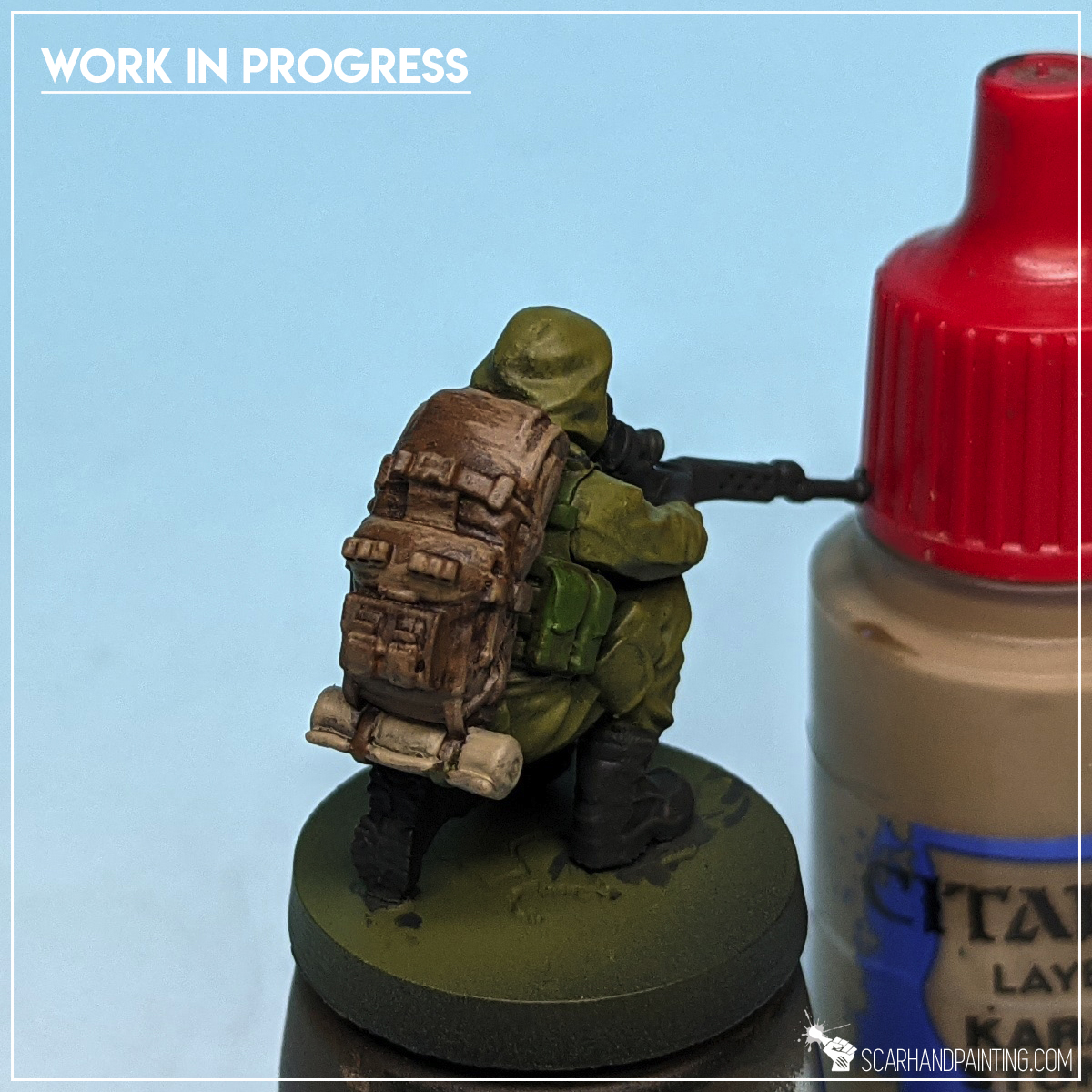
I started with a strong layer of Vallejo Charred Brown (air), ensuring not to leave a mess on top of any previous layer around the backpack.
I then flatbrushed Vallejo Beasty Brown over Charred Brown. No thinning, just paint straight from a bottle and onto a palette before application.
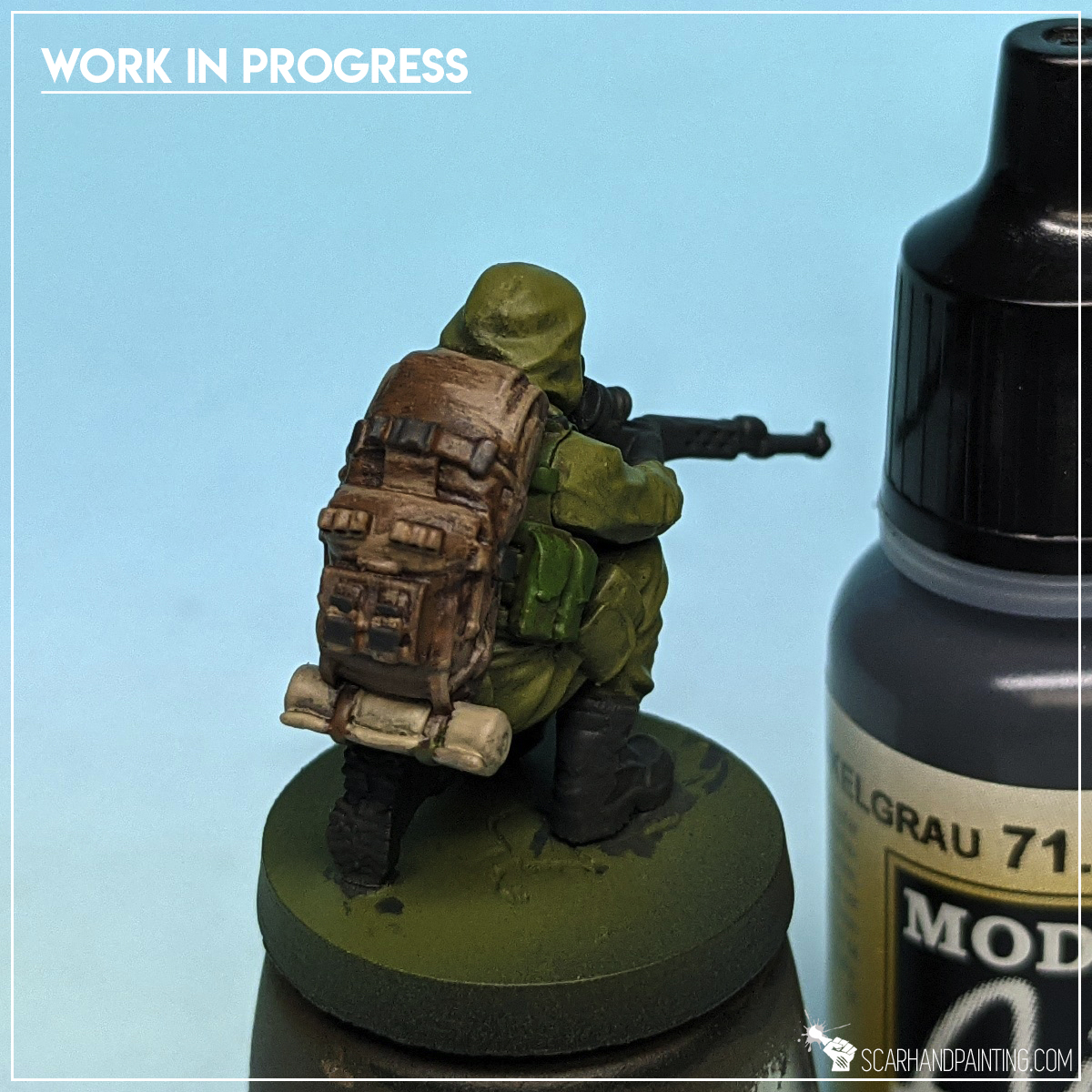
I used Games Workshop Karak Stone for gritty highlights plus painted a blanket strapped at the bottom of the backpack.
I then switched to Vallejo Panzer Dark Grey (air) and re-painted all the buckles grey.
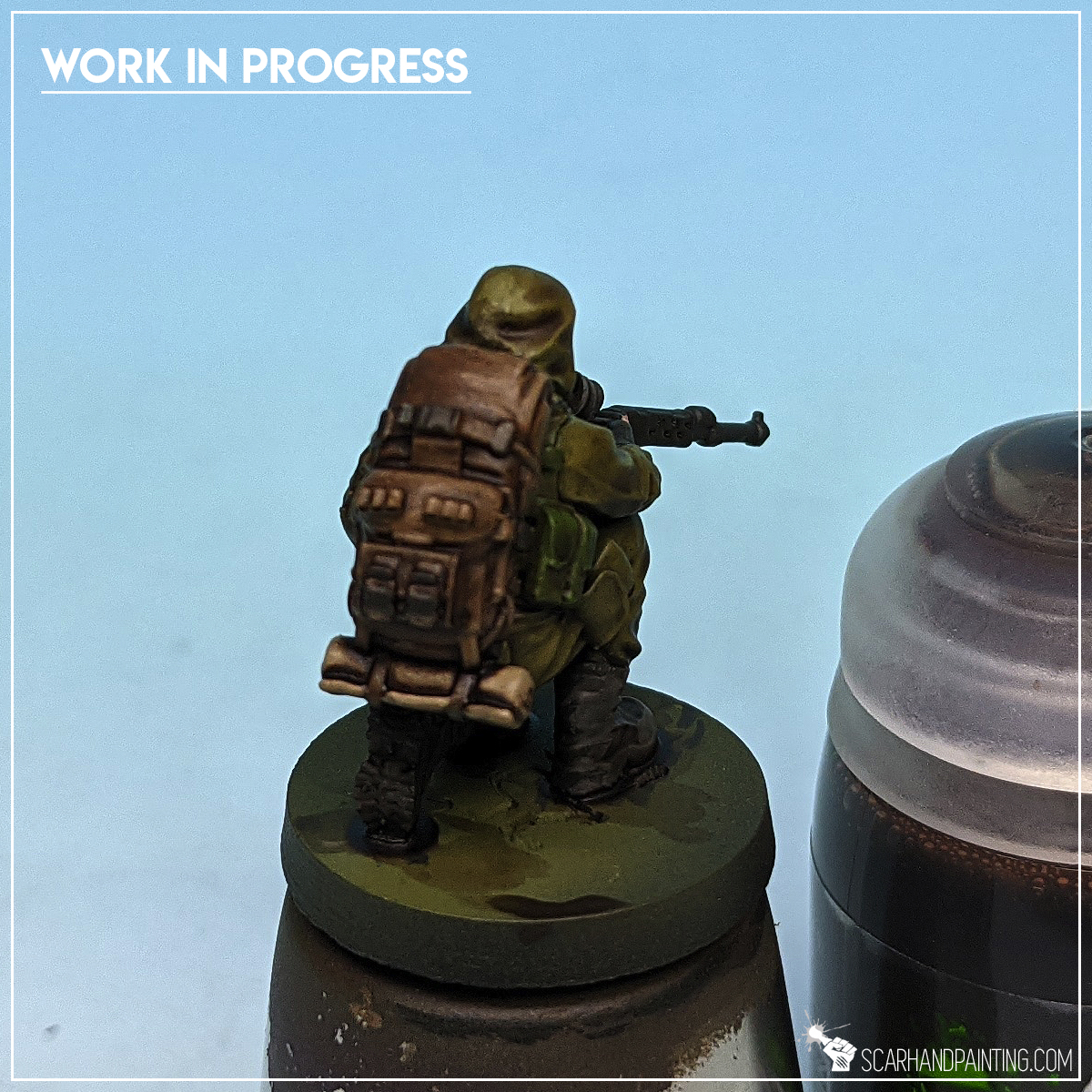
Agrax Earthshade wash followed (done at Step five: Brown wash).
Finally I applied a highlight of Games Workshop Karak Stone onto the edges and middle areas.


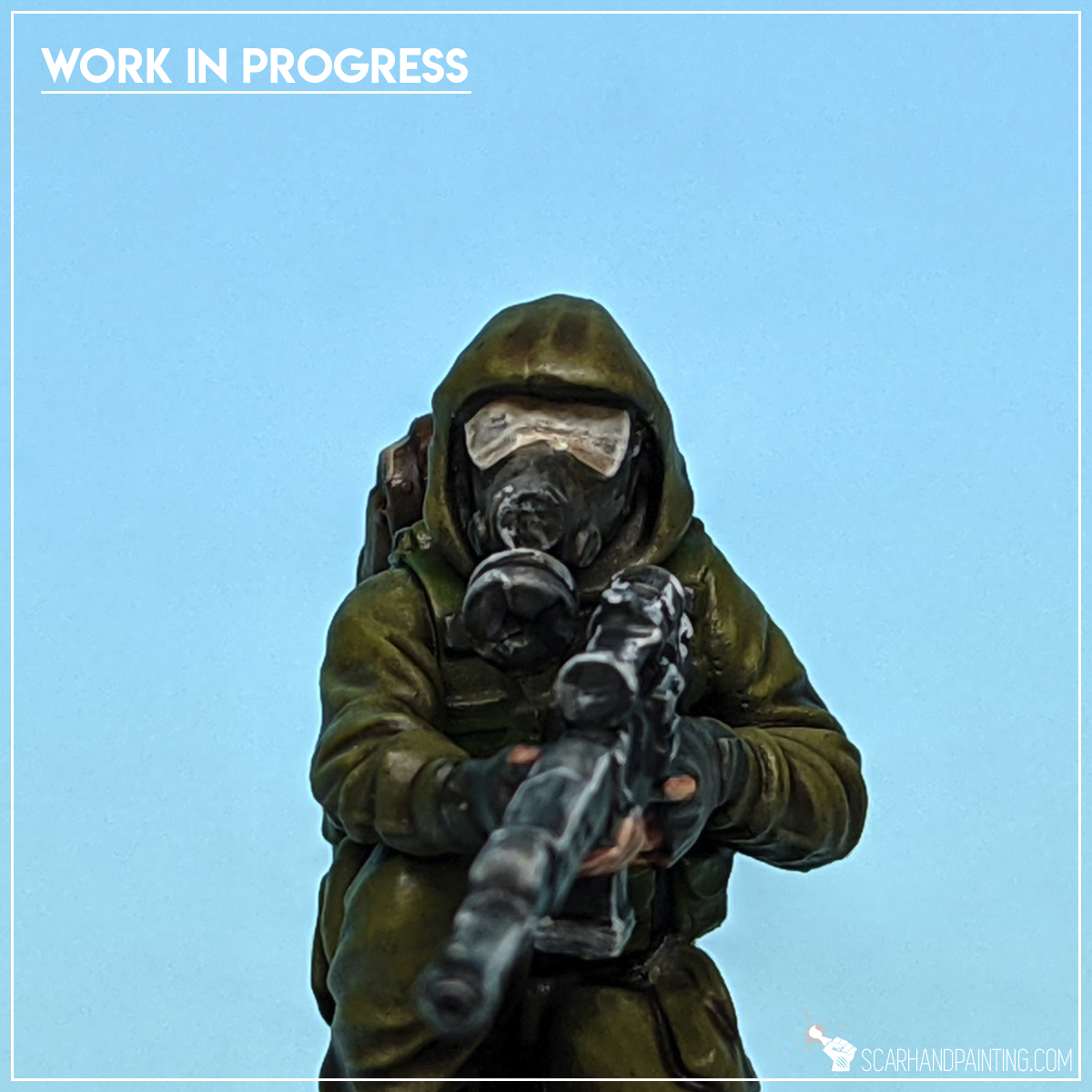
Step nine: Mask Visor
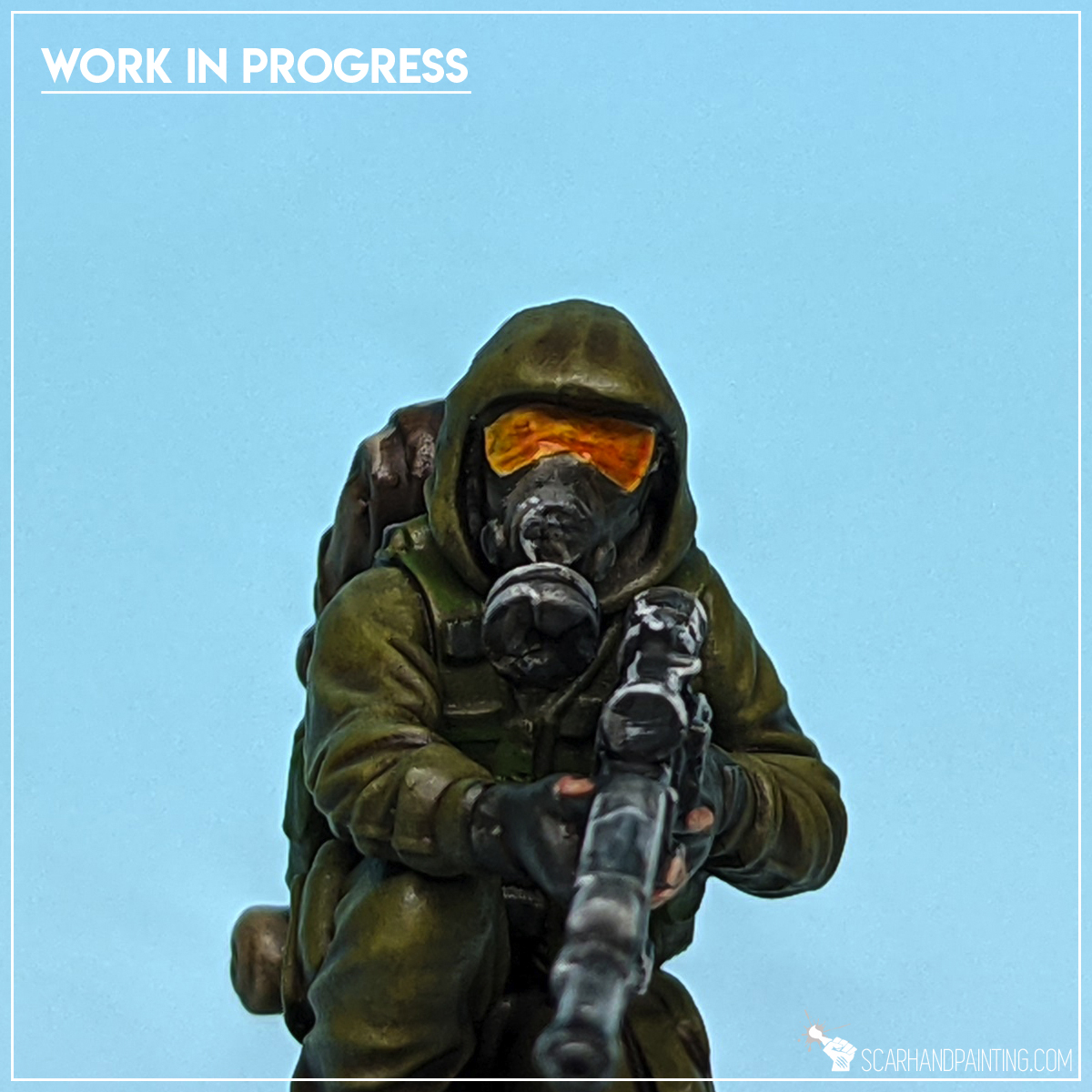
I tried to keep this one extra simple. Started with a gritty, messy layer of Games Workshop Pallid Wych Flesh. No need to be overly precise, nor smooth. The more irregular, diverse the visor looks now, the better the end result.
I then applied slightly thinned down Vallejo Hot Orange (air). Once dry I applied another layer of the same stuff. Done.
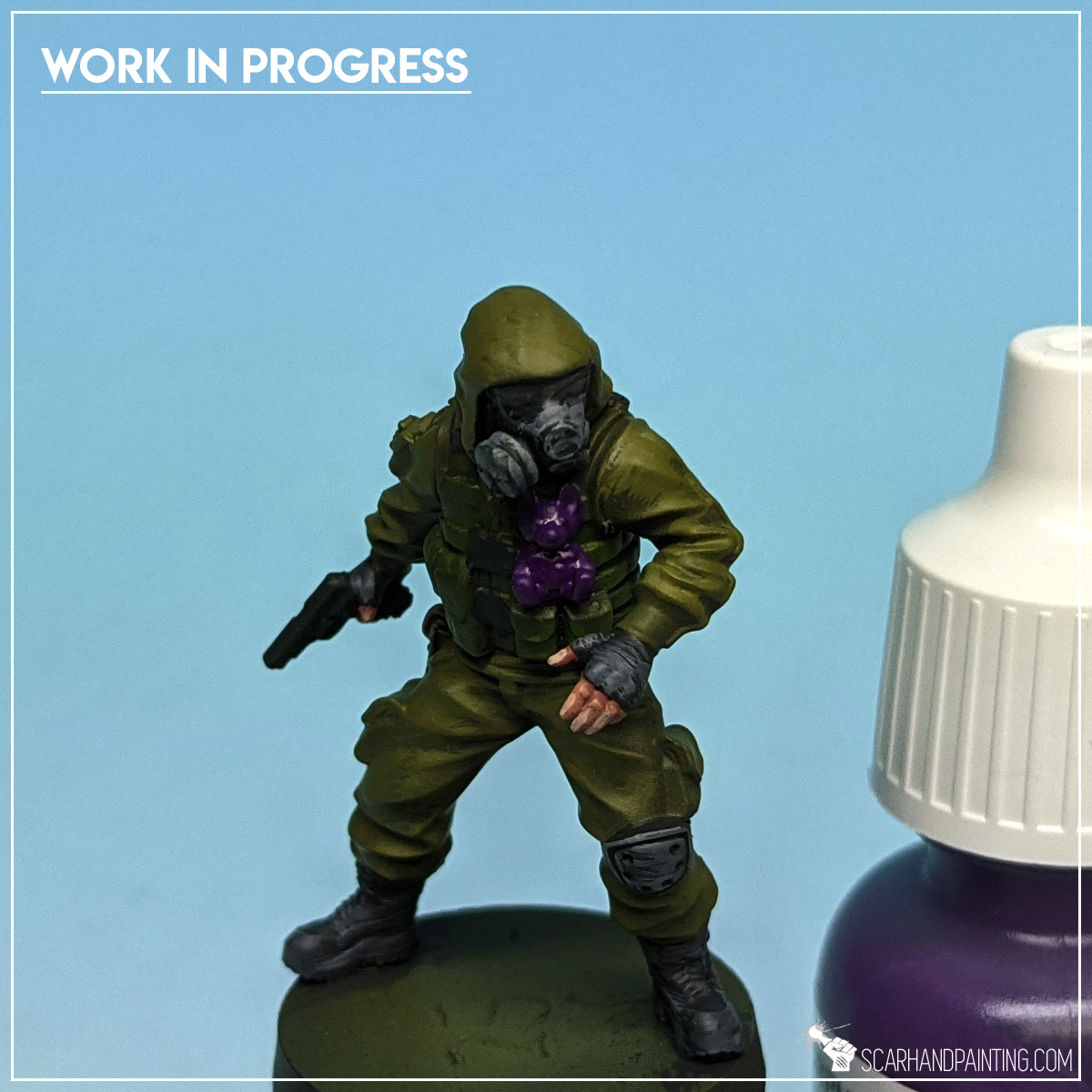
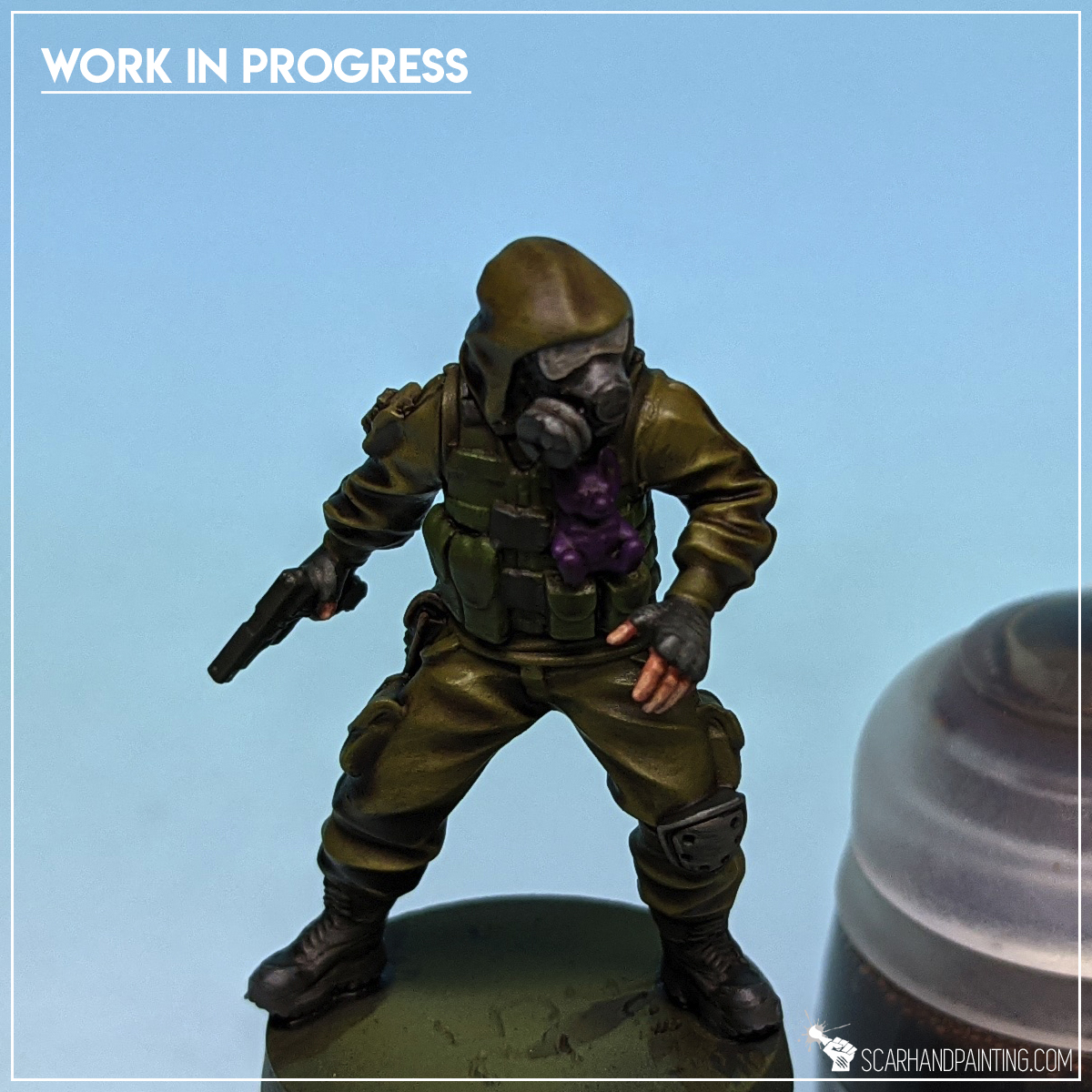
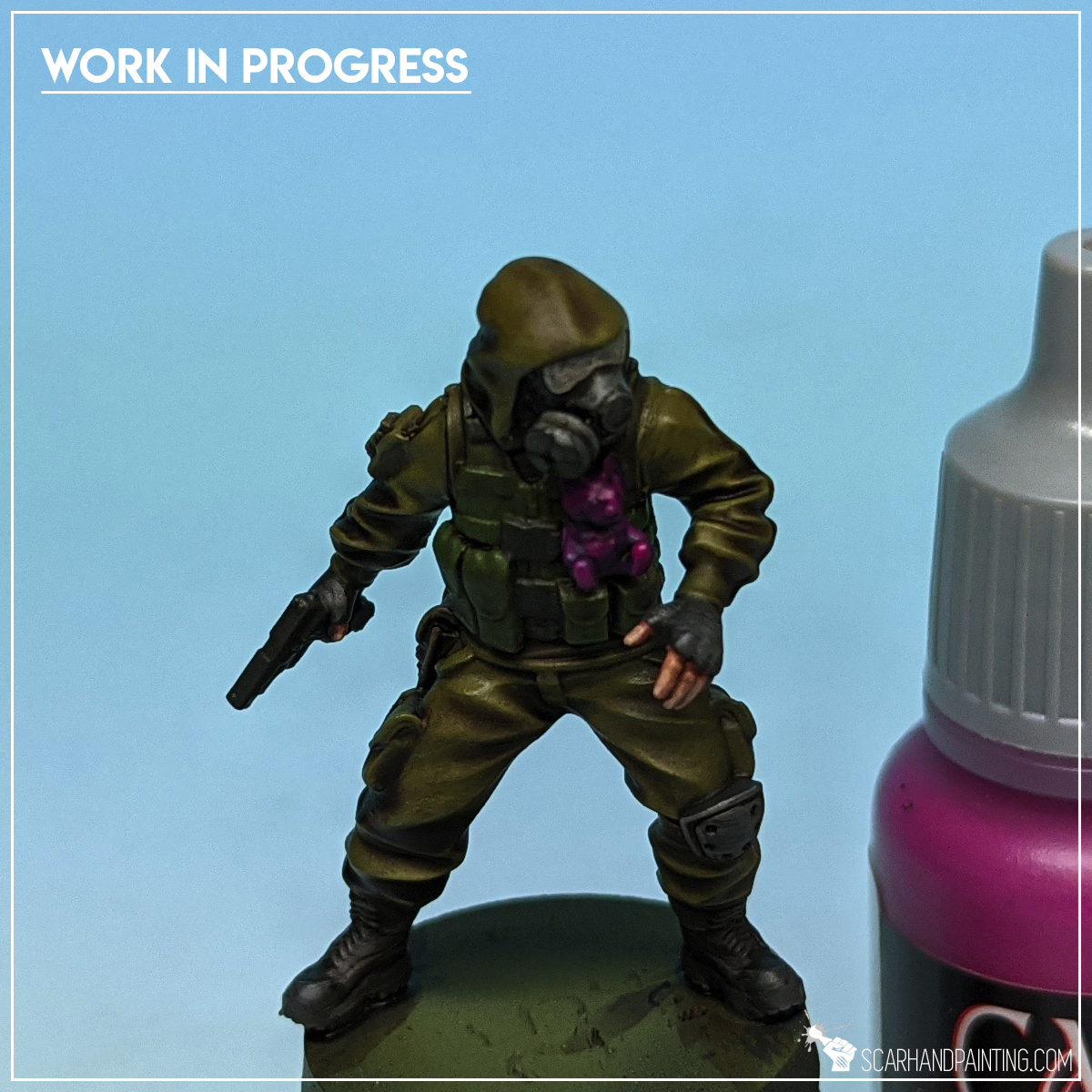
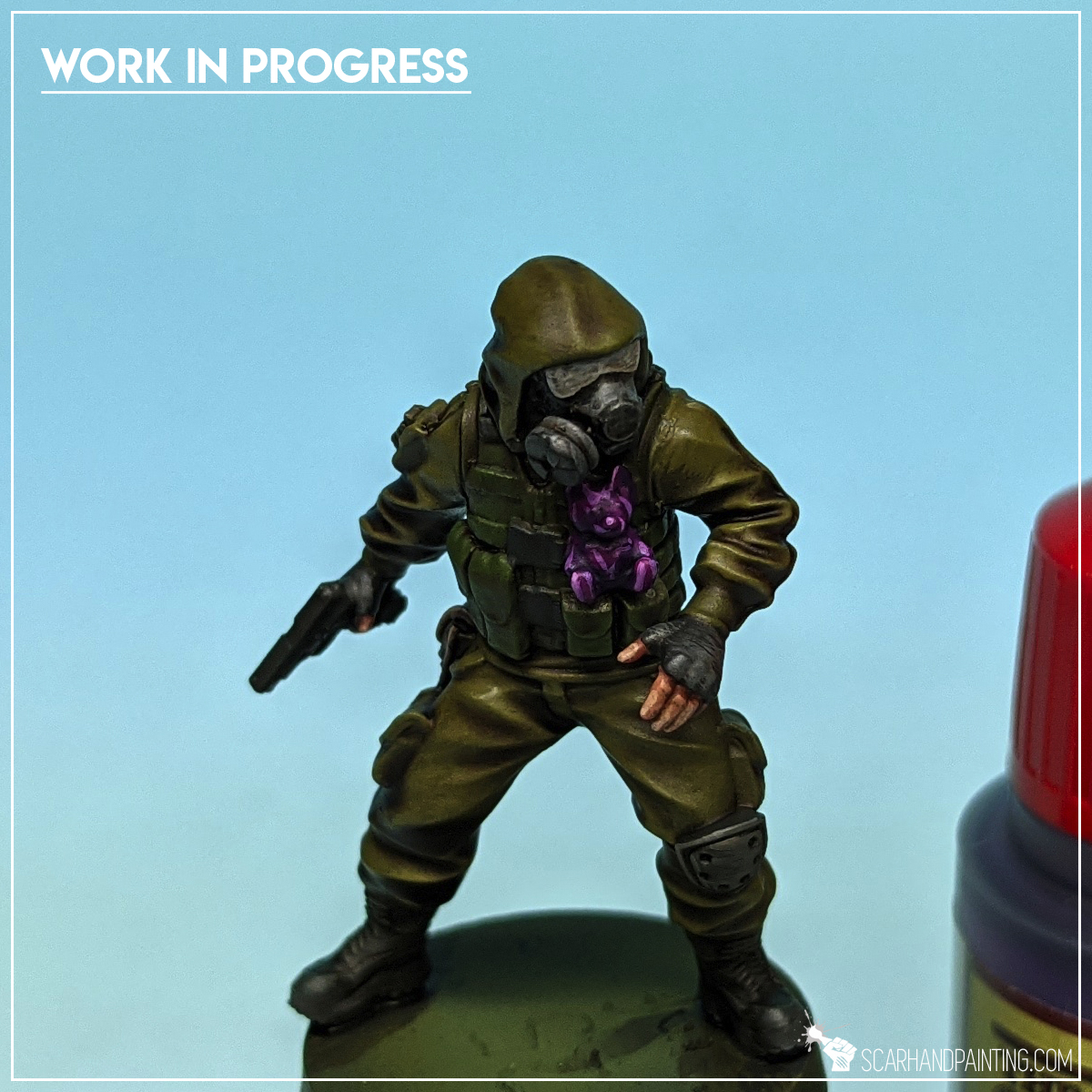
Step ten: Teddy Bear
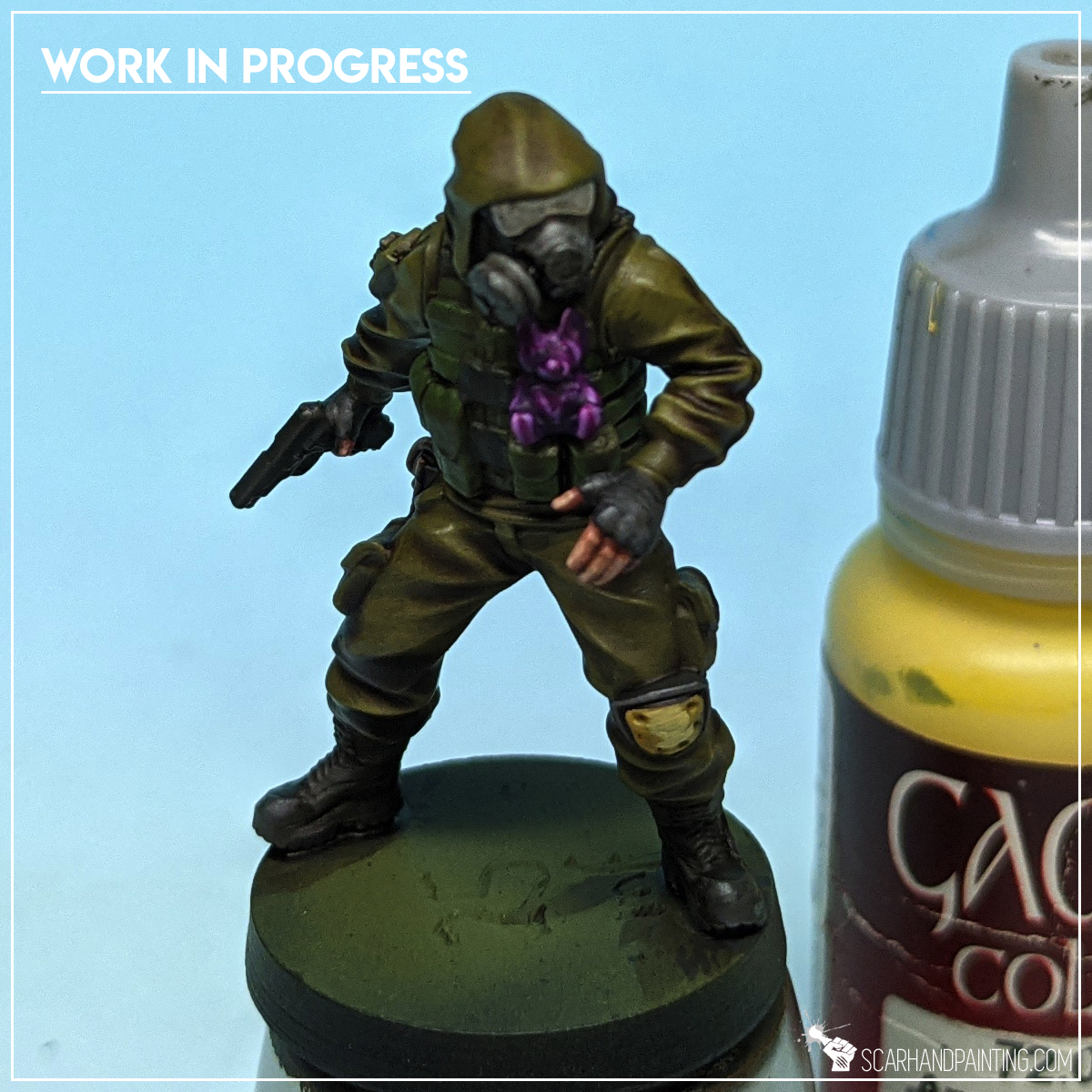
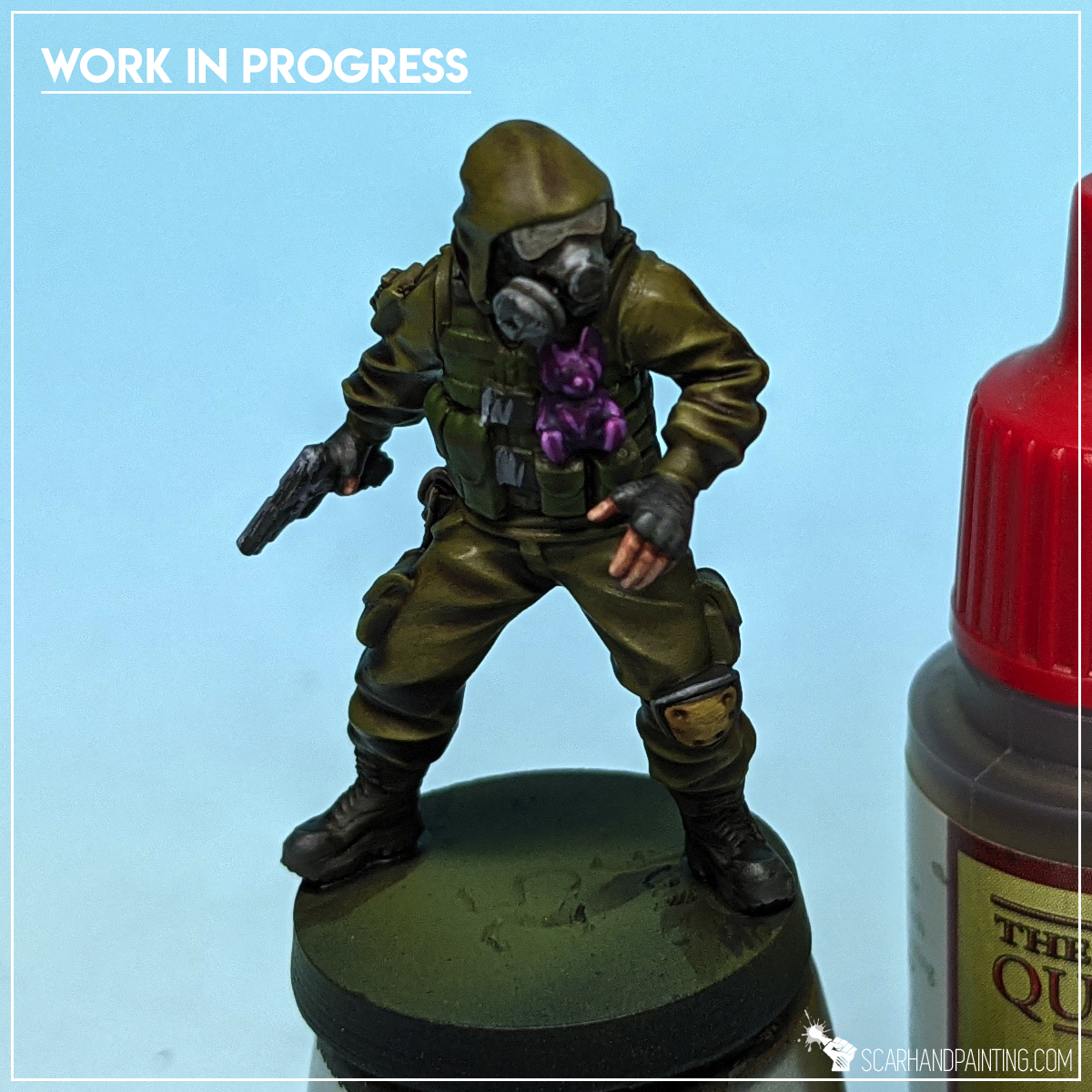
This one is such a cool detail. I decided to go purple/pink to make it stand out. I started with a solid layer of Vallejo Royal Purple.
I then applied Games Workshop Agrax Earthshade wash (done at Step five: Brown wash).
Once wash dried, I highlighted most exposed areas of the bear with Vallejo Warlord Purple.
I then used Vallejo Squid Pink for final highlight, applying dots and lines on top of most exposed areas.
To bring all layers together I applied a strong layer of Army Painter Purple Tone Ink.

Step eleven: Yellow Kneepad
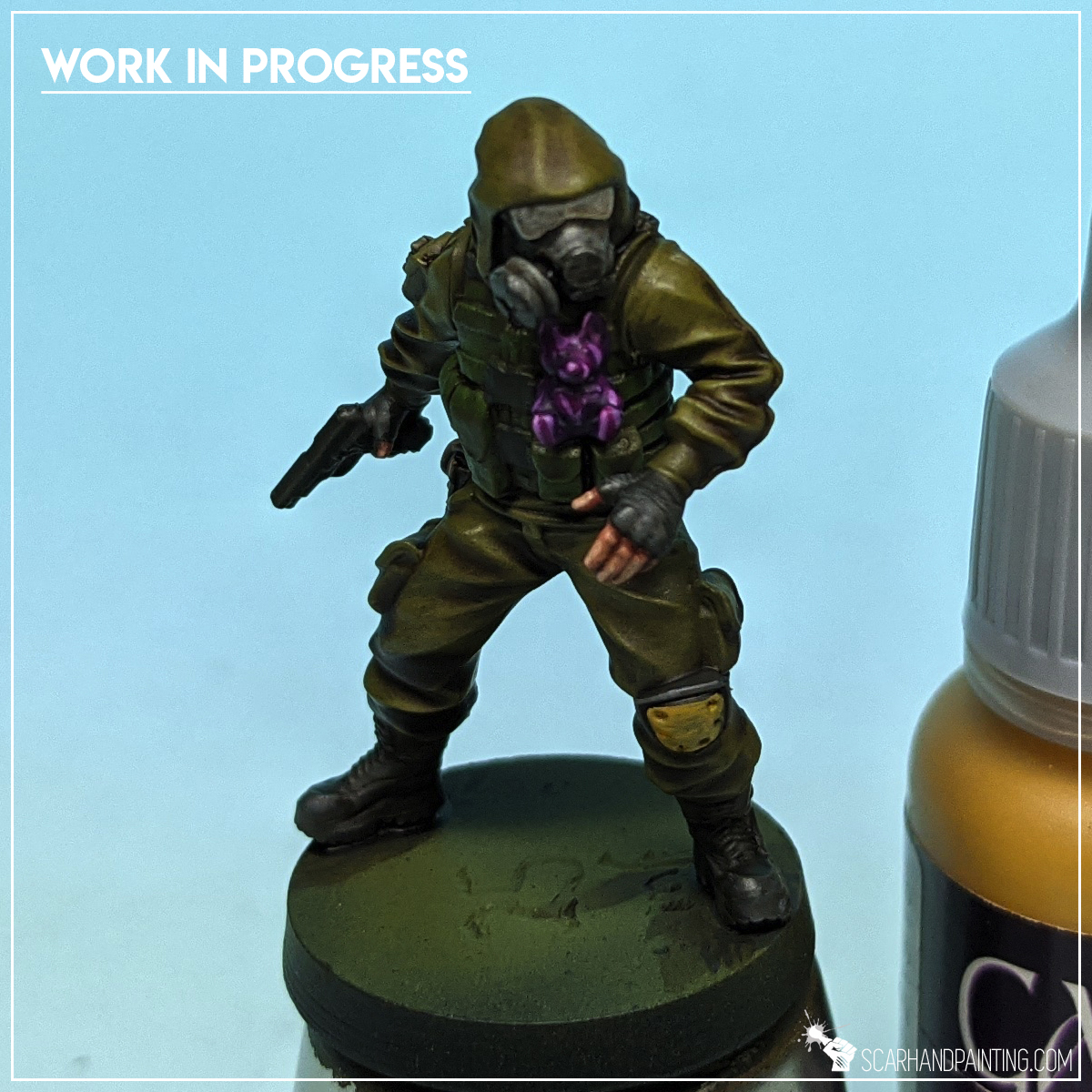
Once again I decided for a feature to stand out. I started with a strong, precise layer of Vallejo Heavy Goldbrown.
I then applied an irregular highlight of Vallejo Pale Yellow.
Finally I washed it with Army Painter Soft Tone Ink, which brought both layers together and made the knee pad look darker and used thoroughly.
Step twelve: Basing
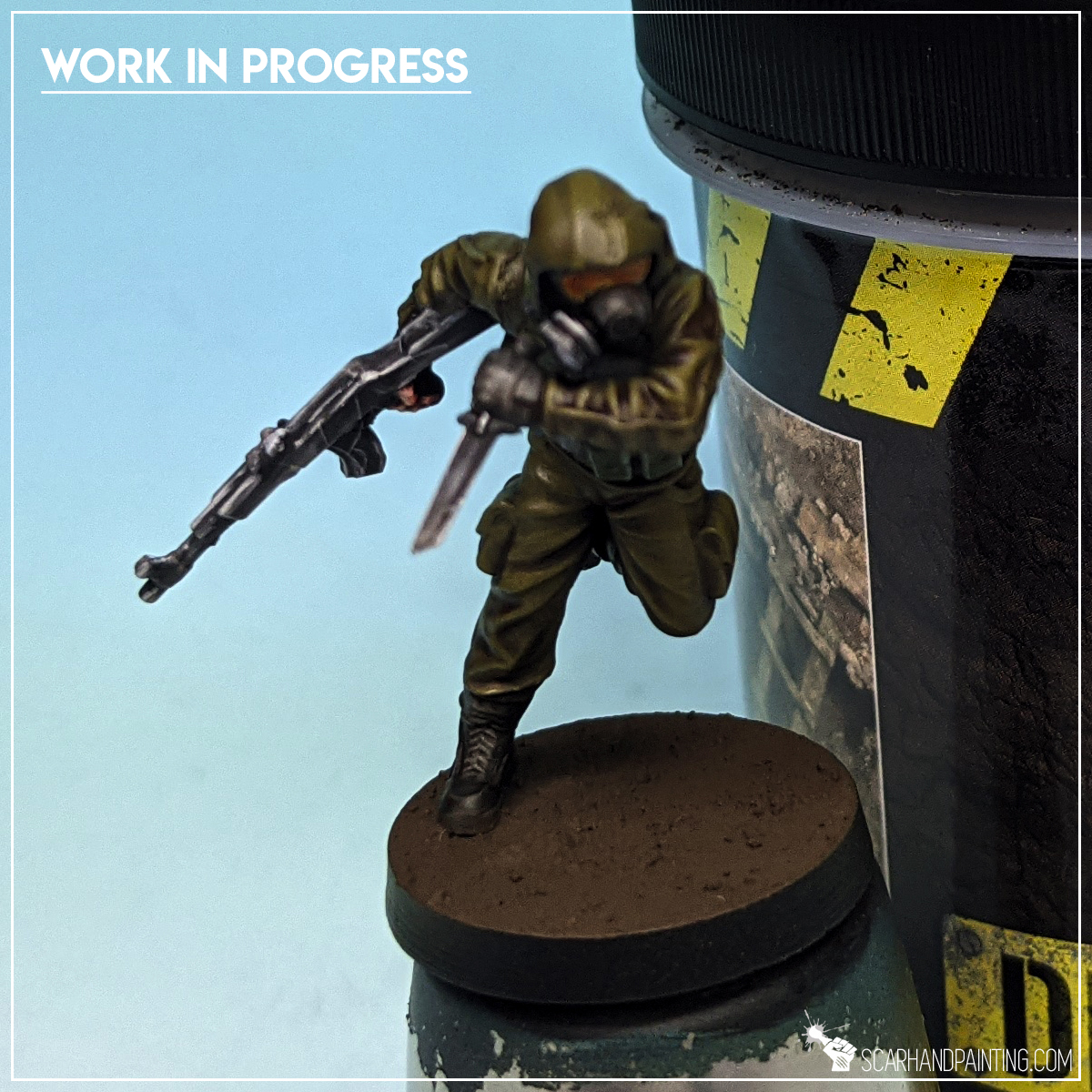
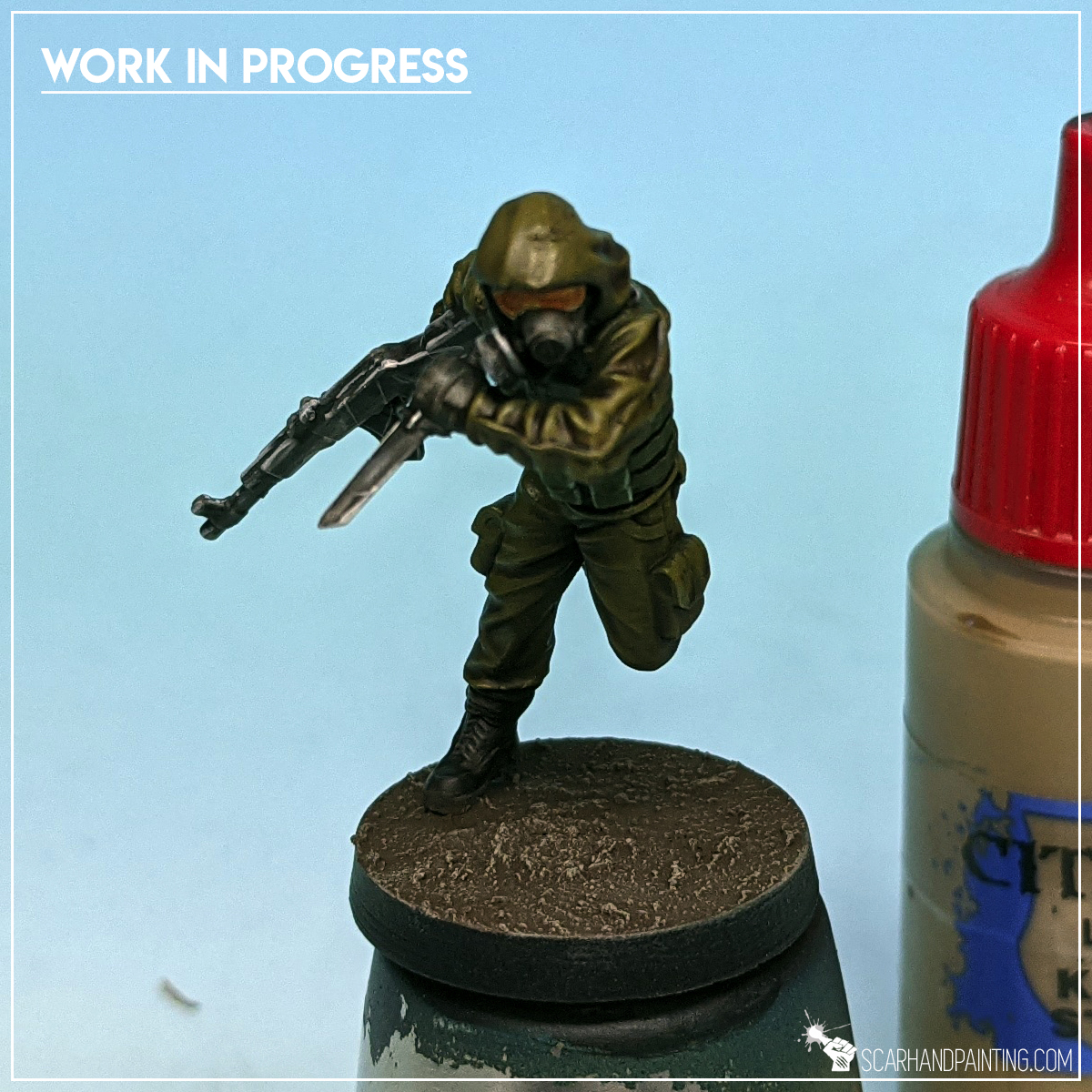
Time to finish the paint job with a proper looking base. For this purpose I decided to go with something easy to follow. One texture, one highlight and one tuft type for extra detail. I started with a large flat brush, applying a thick layer of AK Interactive Dark Earth texture. You can switch to any dark texture like for example Games Workshop Stirland Mud. I just prefer AK’s one because I find it easier to apply.
Once dry I drybrushed Dark Earth with Games Workshop Karak Stone.
Finally I glued an Army Painter Wasteland Tuft and re-painted base’s edge black afterwards.

I hope you find this tutorial interesting. Be sure to let me know your thoughts in the comments below or via Facebook.or Instagram. I would also appreciate if you considered sharing this content with your friends, who might find it useful. Finally if you are looking for a professional miniatures painting service be sure to contact me with this contact form. I always reply within 24 hours, after which please check out your spam folder.

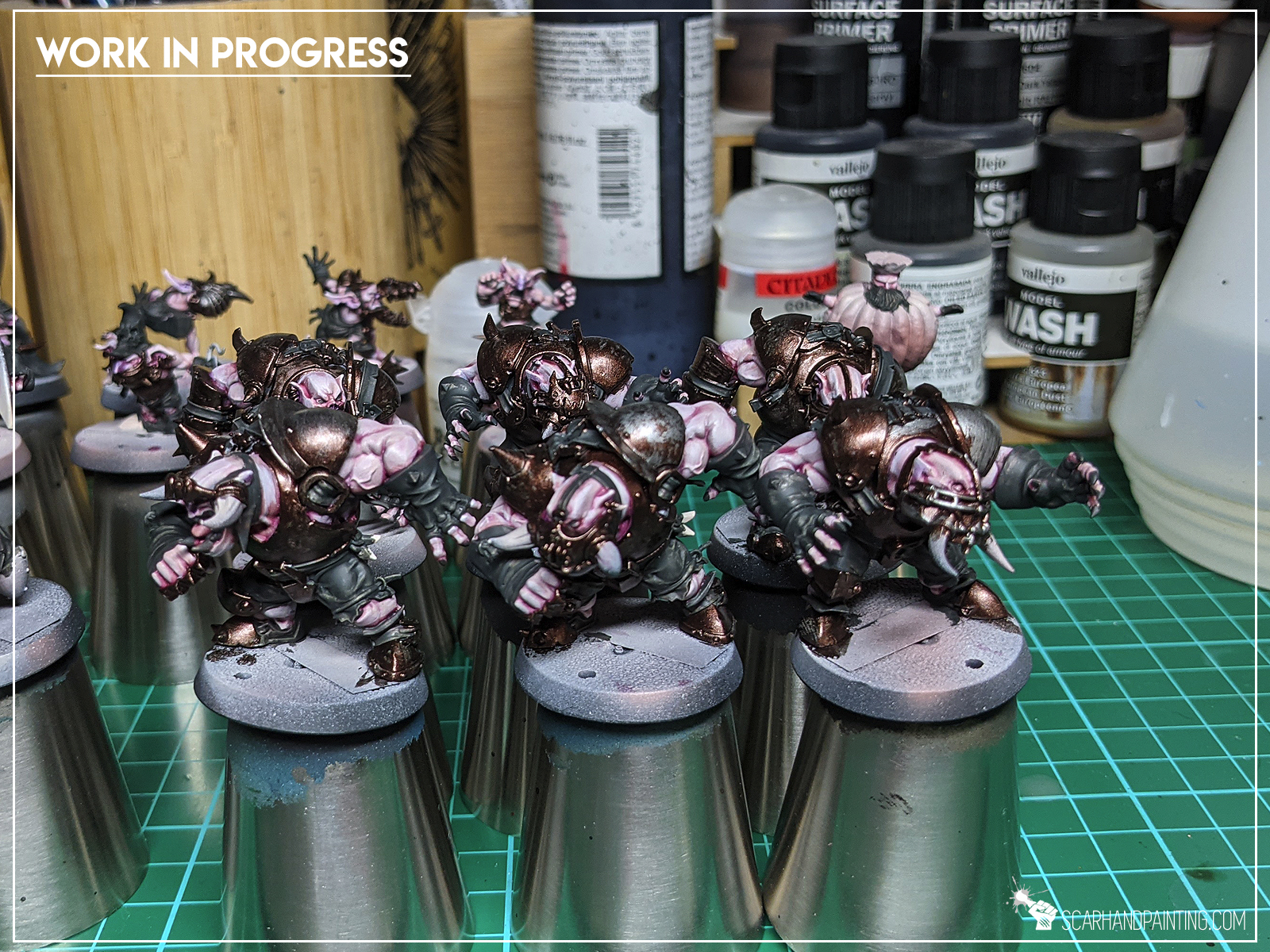
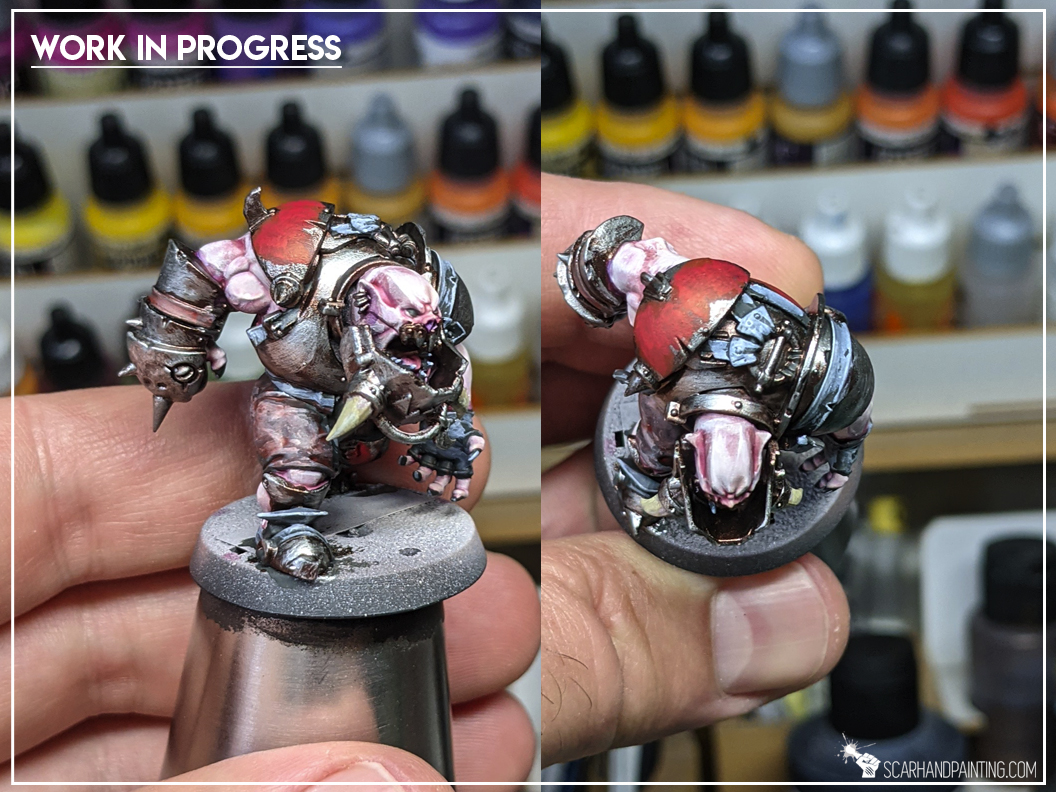
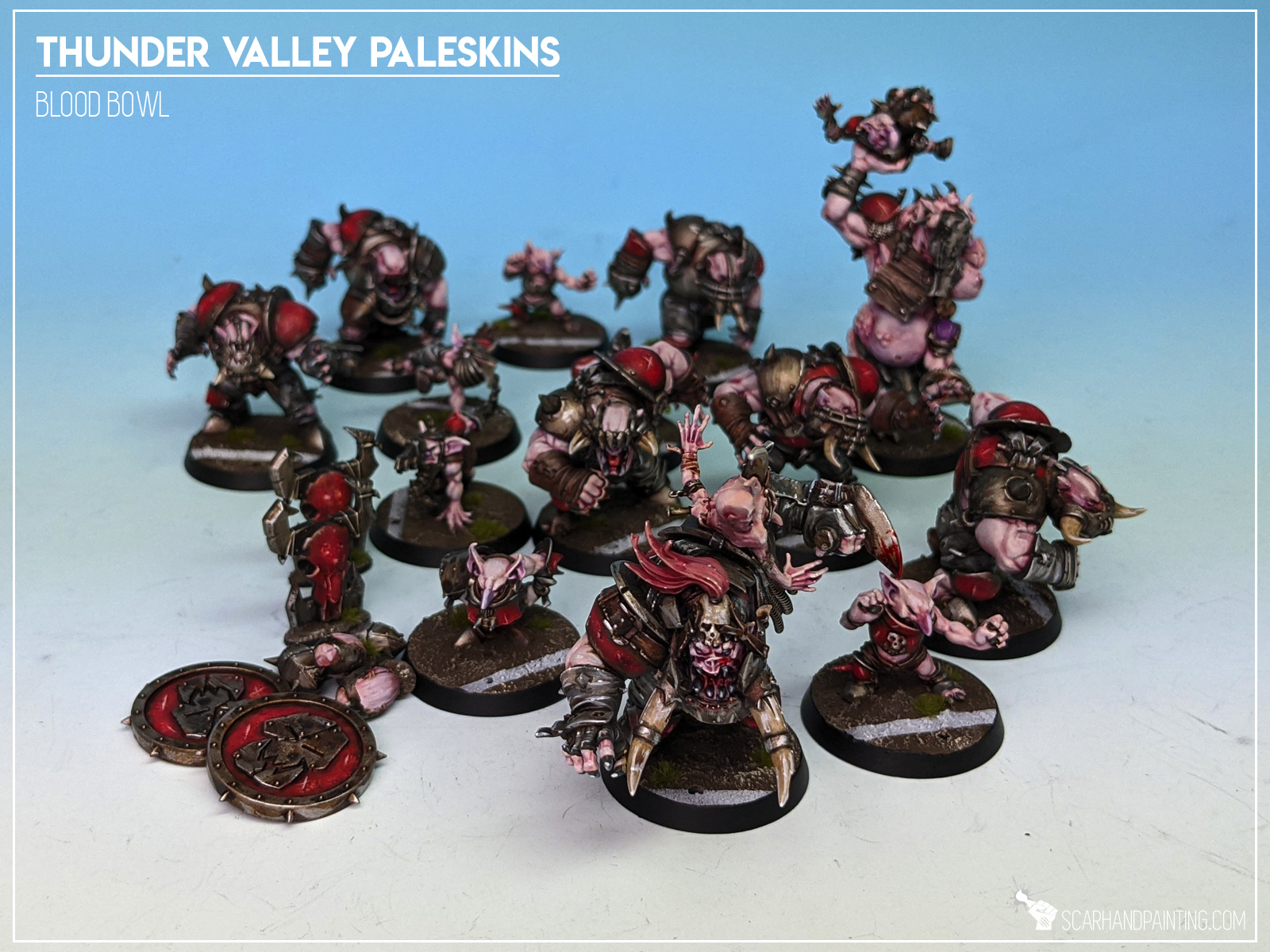
Here are some Colour Recipes for Blood Bowl Black Orcs team from Gallery: Thunder Valley Paleskins. Please take note that this is a simple colour scheme, not covering multiple overlapping layers and blends in between, that lead to the final product. It is supposed to be used as guideline not a step-by-step.
PALE skin:
Mix: Tan (val) 1:3:3 Flesh (val a), Squid Pink (val a), *
Flesh (val a), *
Pale Flesh (val a), *
Mix: Volupus Pink (gw) 1:5 Glaze Medium (gw),
Mix: Volupus Pink (gw) 1:5:1 Glaze Medium (gw), Purple Tone Ink (ap), deep lines
Mix: Volupus Pink (gw) 1:5:1 Glaze Medium (gw), Red Tone Ink (ap), deep lines
Pale Flesh (val), l&p
METAL armour:
Warplock Bronze (gw),
Gun Metal (ap),
Shining Silver (ap), l&p
Mix Strong Tone Ink (ap) 1:1 Soft Tone Ink (ap),
Shining Silver (ap), l&p
RED armour:
Red Terracotta (val), stpl
Flat Red (val), stpl
Strong Tone Ink (ap),
Orange Fire (val), stpl
Flat Red (val), bl
BROWN belts & strips:
Red Terracotta (val),
Pallid Wych Flesh (gw), flbr
Off White (val), l&p
Mix: Scorched Brown (val) 1:1:1 Dark Fleshtone (val), Medium,
Mix: Strong Tone Ink (ap) 1:1 Soft Tone Ink (ap),
GREY clothes:
Panzer DK. Grey (val),
Fenrisian Grey (gw), flbr
Pallid Wych Flesh (gw), l&p
Strong Tone Ink (ap),
Off White (val), l&p
BASES:
Dark Earth (ak texture),
Karak Stone (gw), drbr
Flayed One Flesh (gw), flbr
l&p – lines and points,
p – points,
dl – deep lining,
bl – blend,
gl – glaze,
drbr – drybrush,
fltbr – flatbrush,
lobr – loaded brush,
stpl – stippling,
*Airbrushed (with multiple layers and mixes)
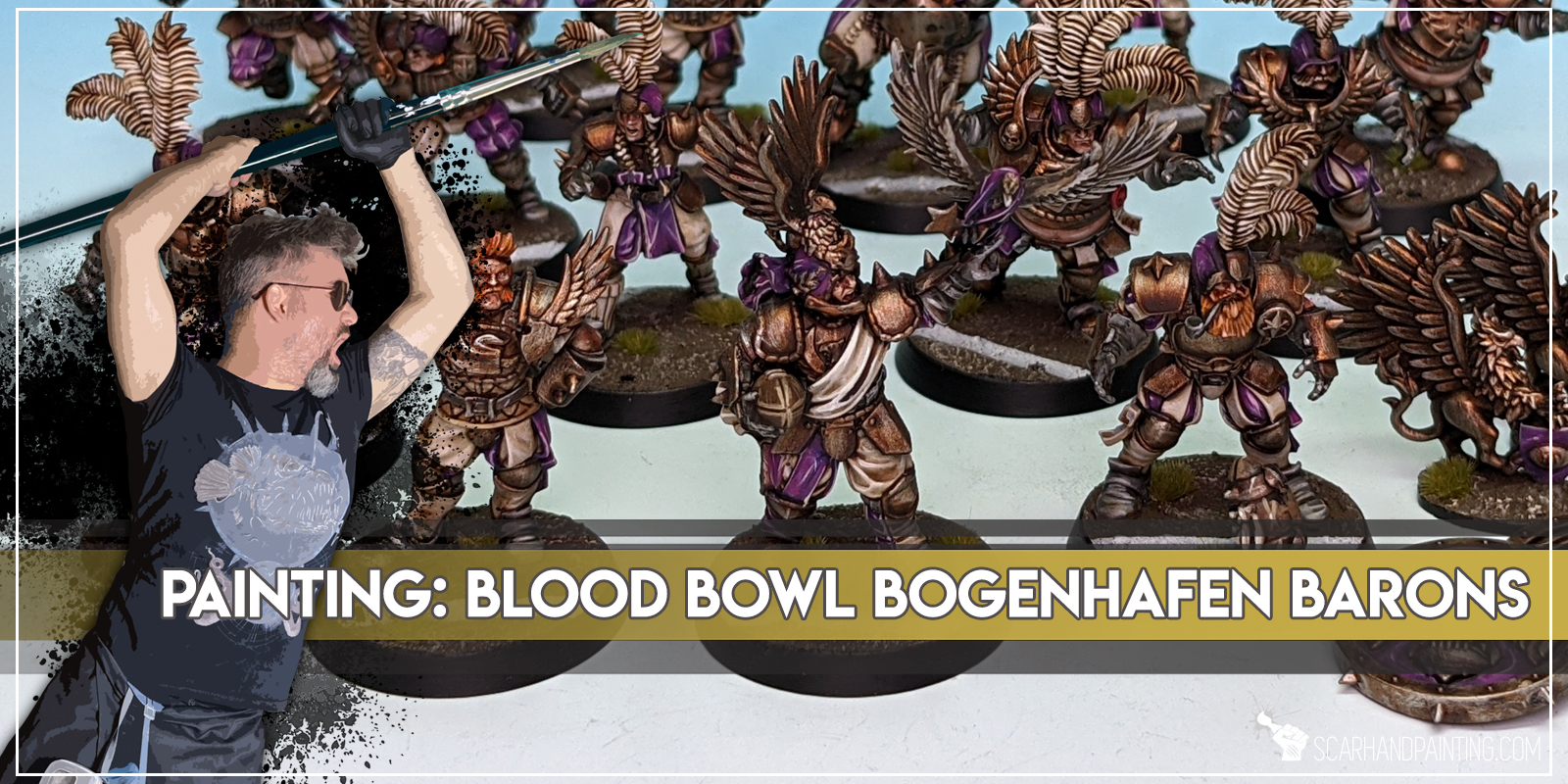
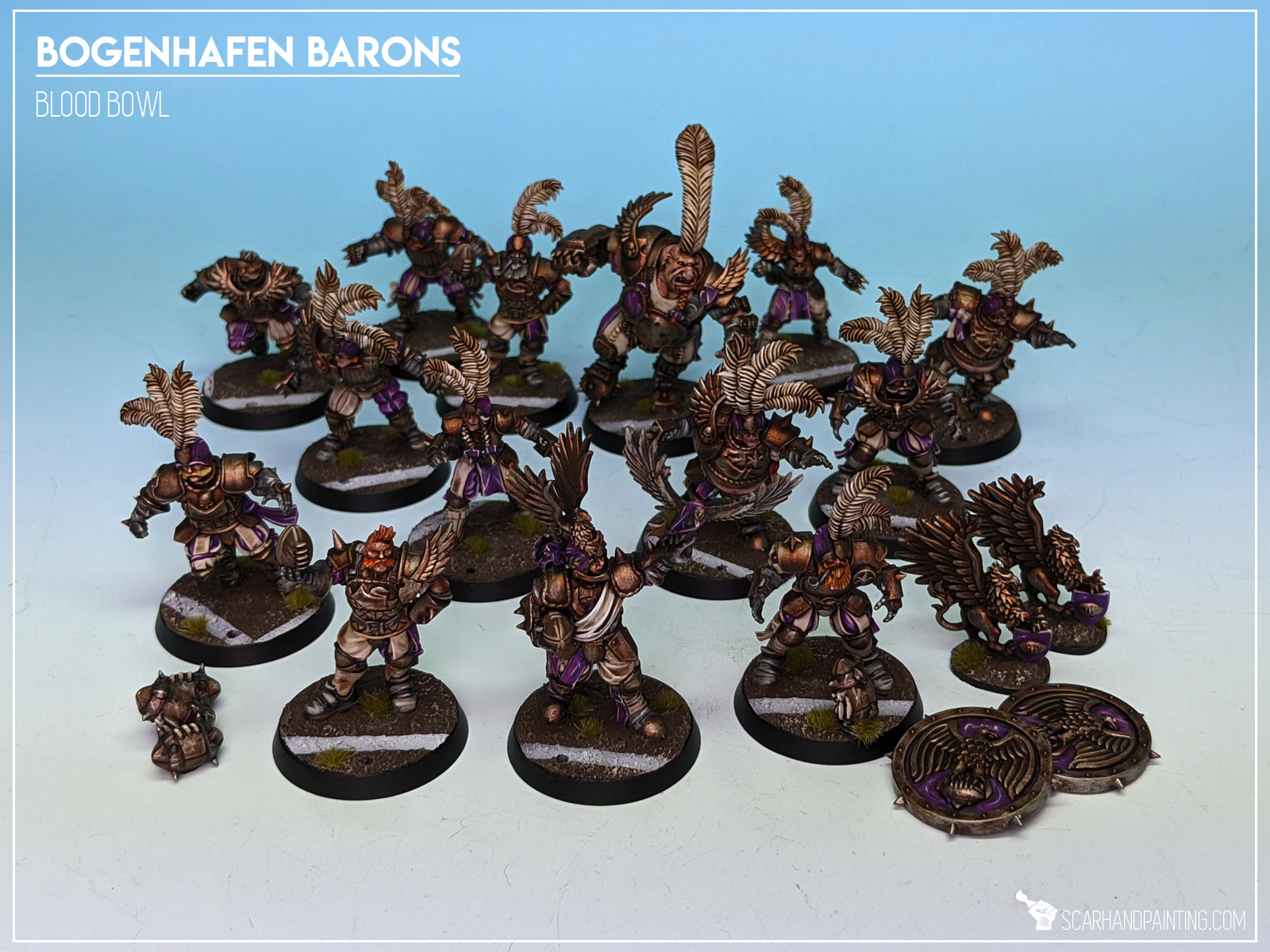
Welcome to Painting Blood Bowl Bogenhafen Barons tutorial. Here I will present to you a Step-by-step of an easy and fast painting process for Games Workshop Bogenhafen Barons as can be seen in Gallery: Bogenhafen Barons.
Before we start, some notes:
Step one: Undercoat
I started with a thorough layer of Games Workshop Chaos Black spray. This is a standard procedure for me. Chaos Black spray is my go to choice when it comes to undercoat.
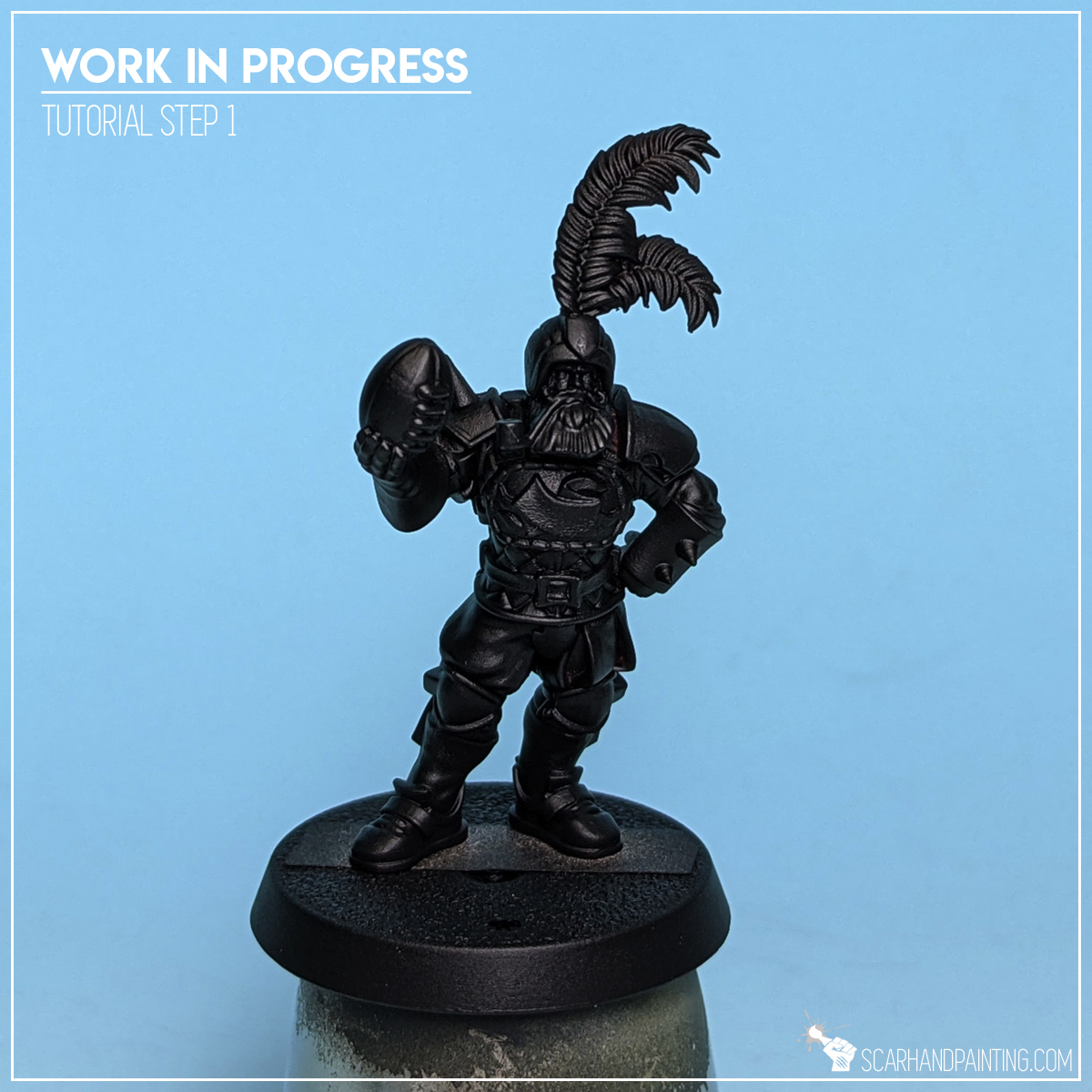
Step two: Cream
I started by airbrushing Vallejo Bonewhite (air) all over feathers and clothes of the miniature, not caring if I mess up everything around. Paint was applied straight out of bottle, no dilution. I then moved to GW Pale Wych Flesh and
Flatbrushed it over previous layer. This layer was meant to build volume of paint and just a bit of highlight for the color, so that further ahead Wash could do a better job.

Step three: Grey
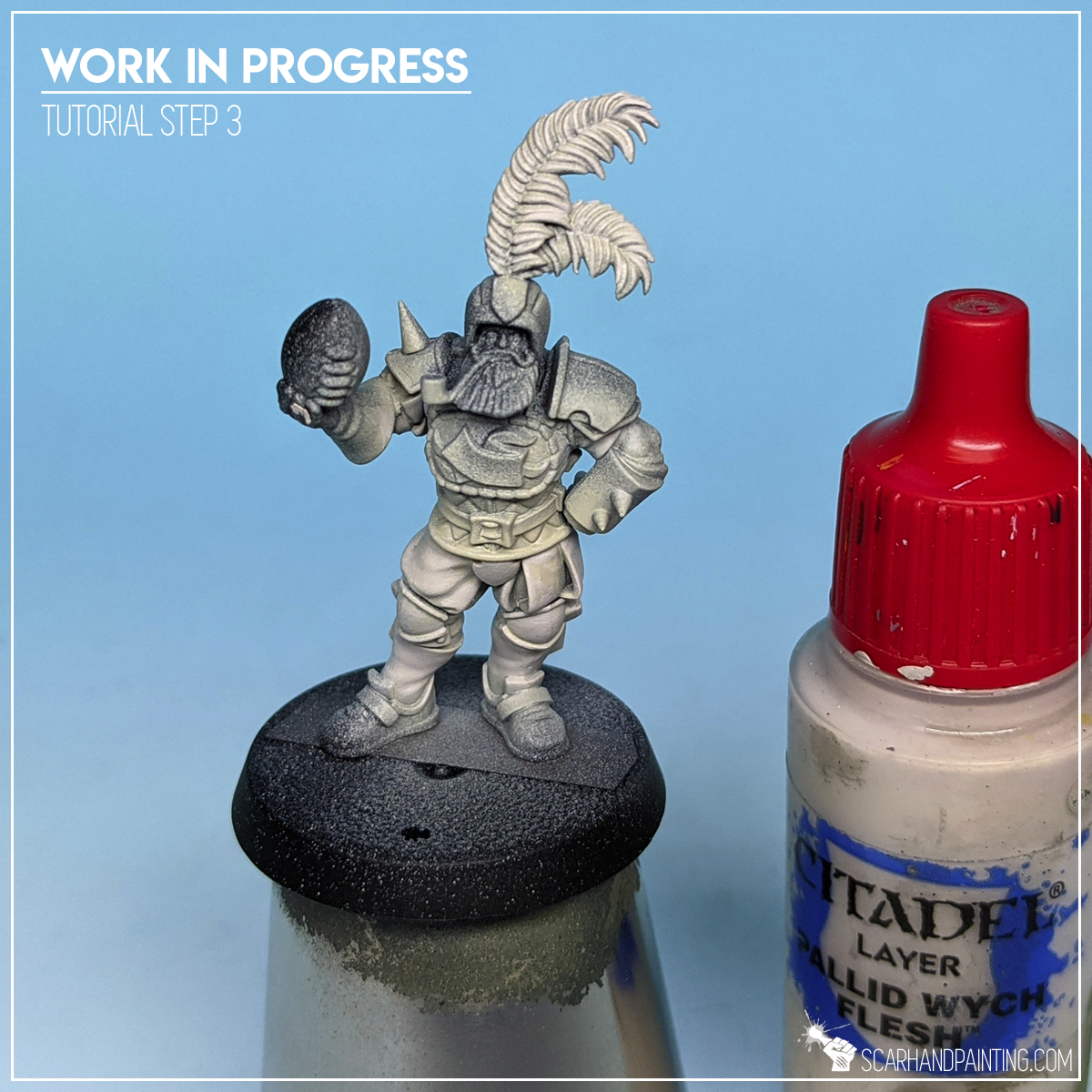
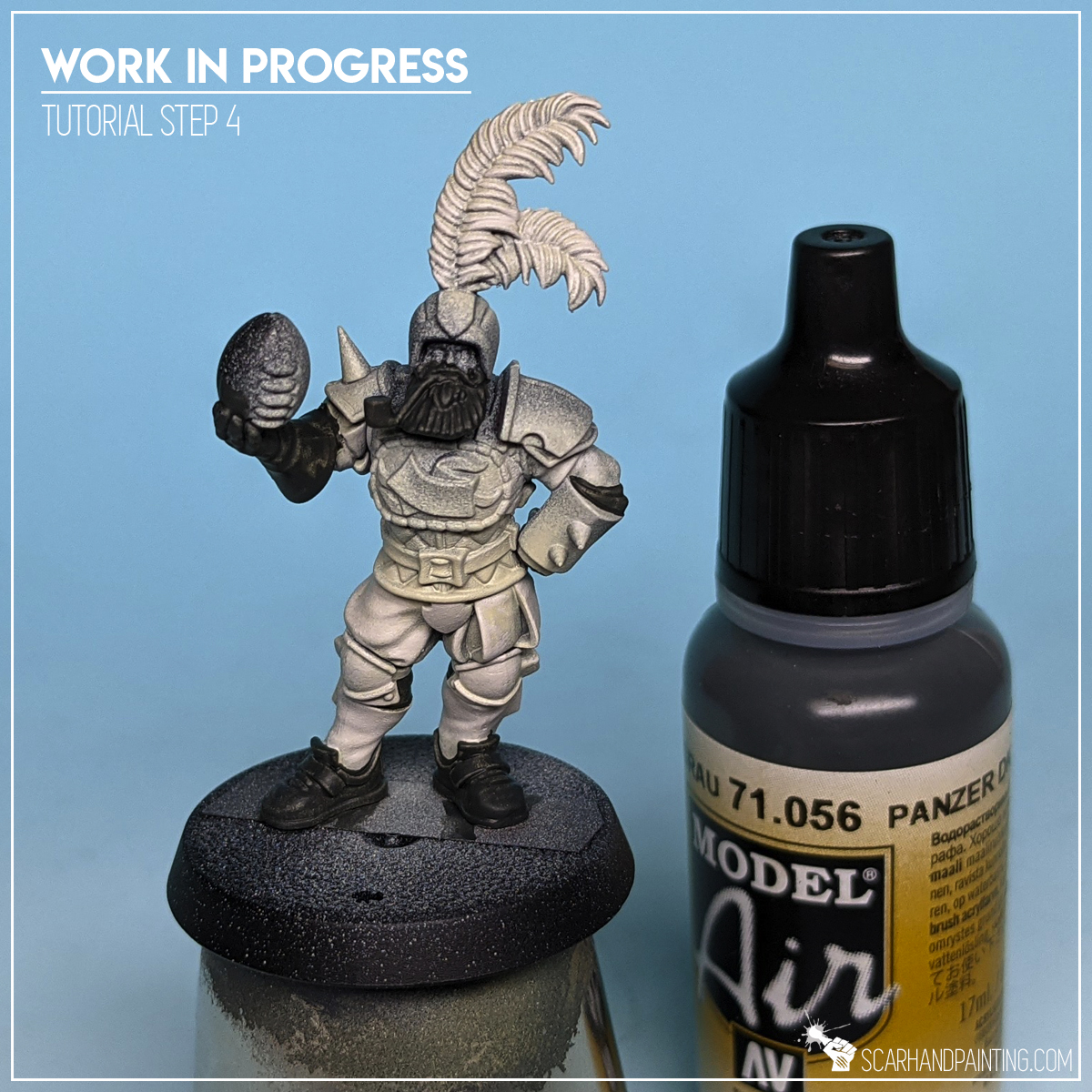
I applied Vallejo Air Panzer Dark Grey (air) manually, with natural dilution (air series). This paint is easy to control which helped me keep the layer precise. The color wasn’t strong but this layer didn’t had to. It was meant to prepare a background for future highlights of dark black-to-brown elements. Next I used slightly diluted Vallejo Glacier Blue and flatbrushed it over previous layer. Finally I applied few highlights with GW Pale Wych Flesh.

Step four: Skin
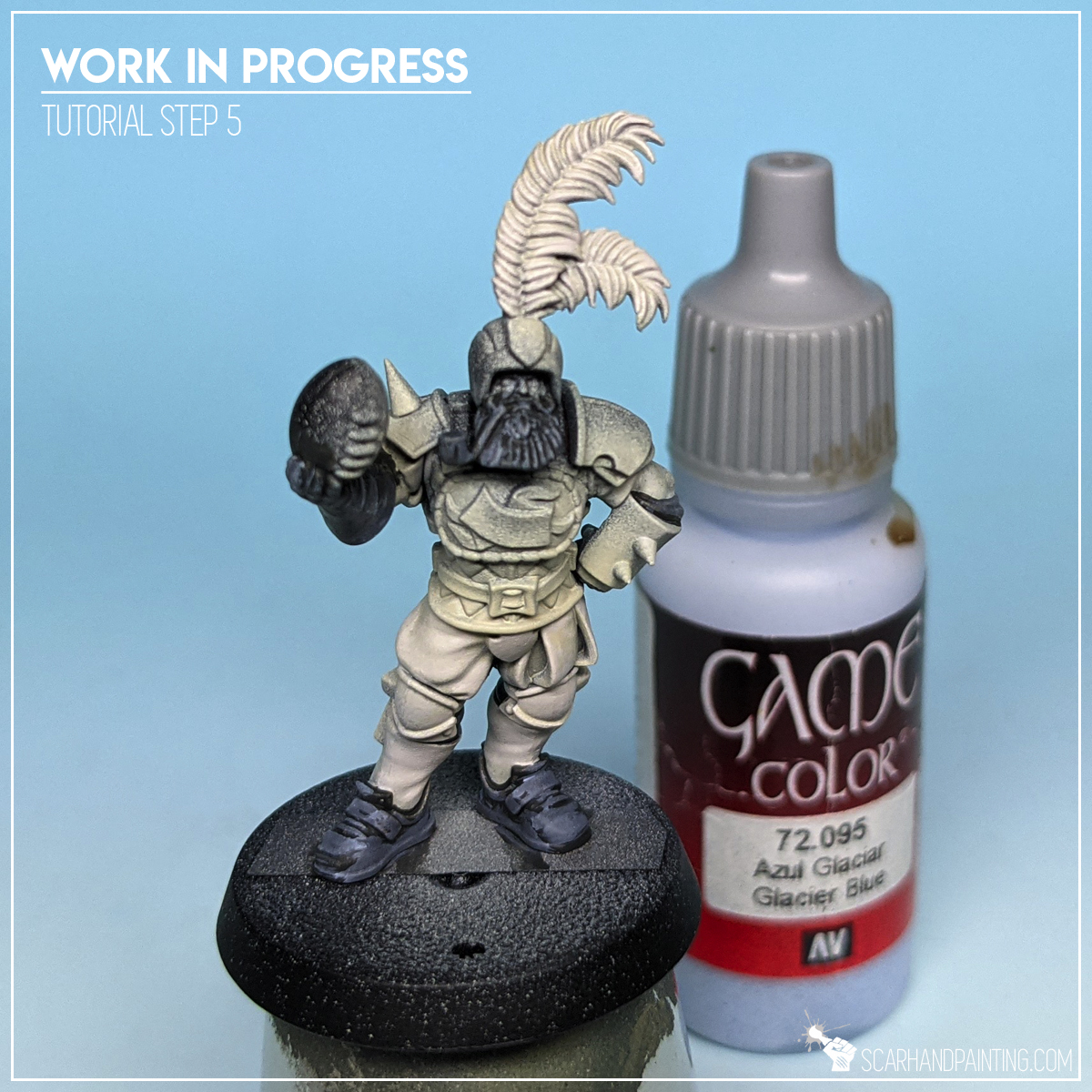
I begun painting skin with Vallejo Tan by applying a thin layer and concentrating on filling recesses. I added another thin layer on large flat areas to provide a solid color. Next I switched to GW Dwarf Flesh covered previous layer using flatbrush technique. Final highlights were made with Vallejo Flesh (air). I used the paint straight out of the bottle and applied it on the edges and on top of flat areas.

Step five: Browns
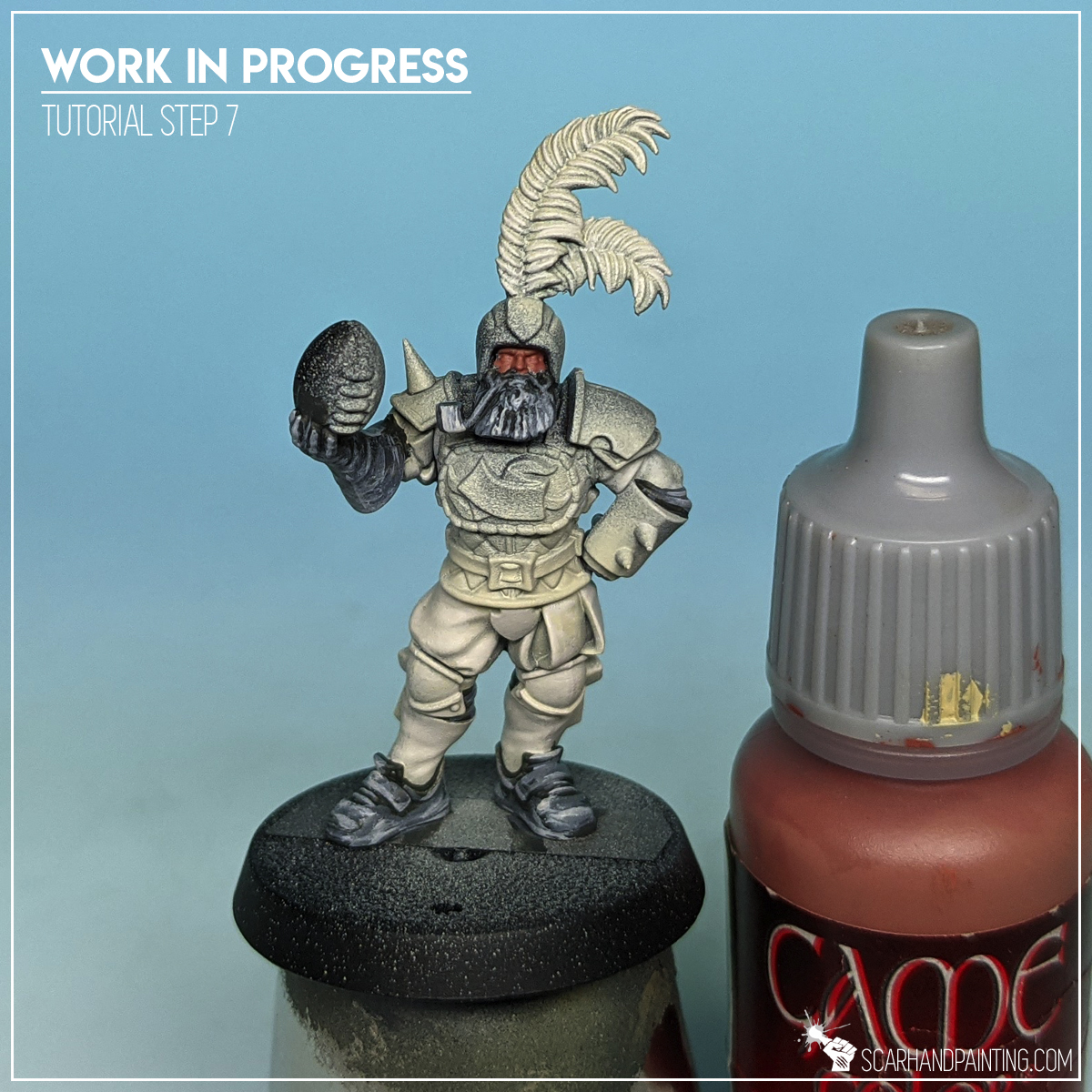
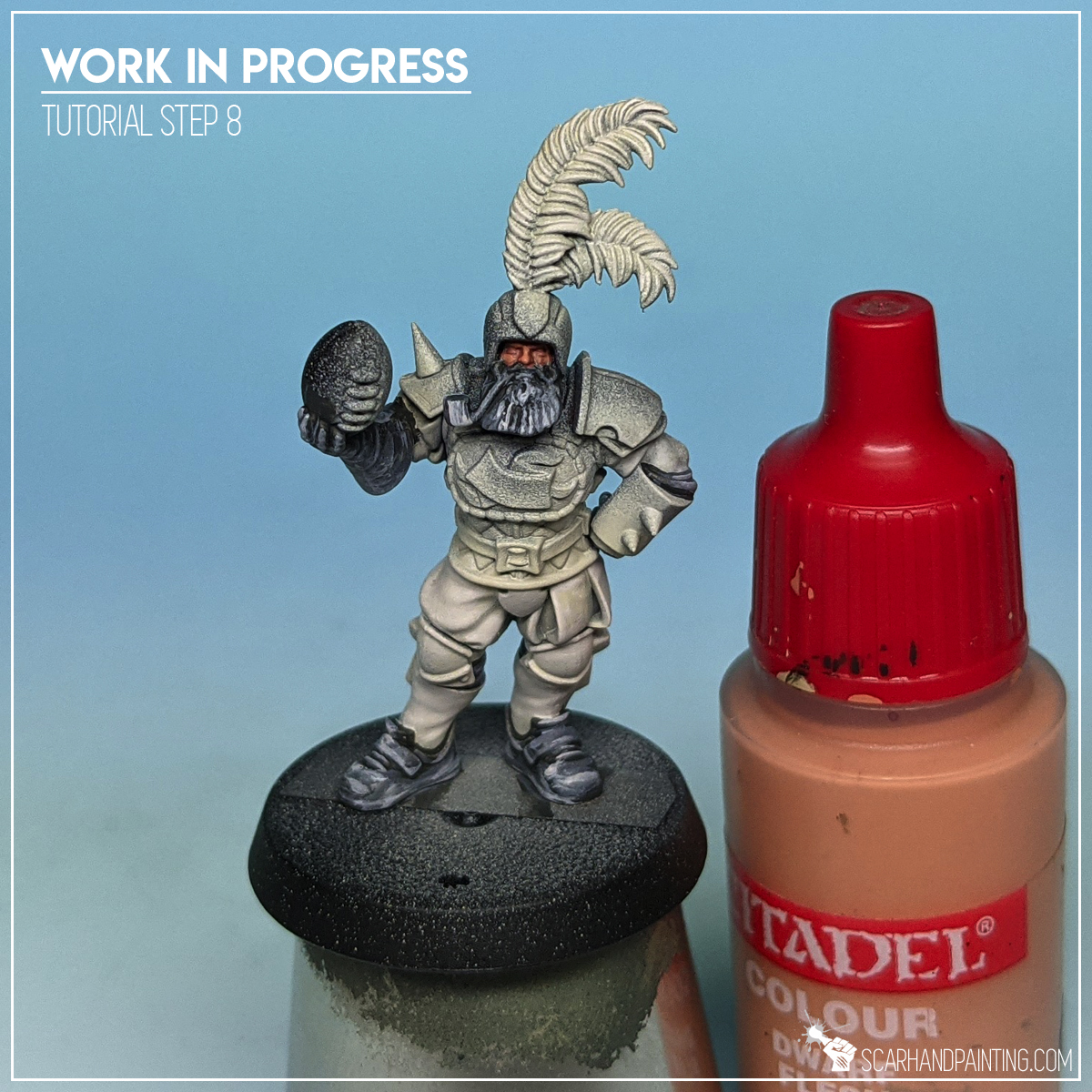
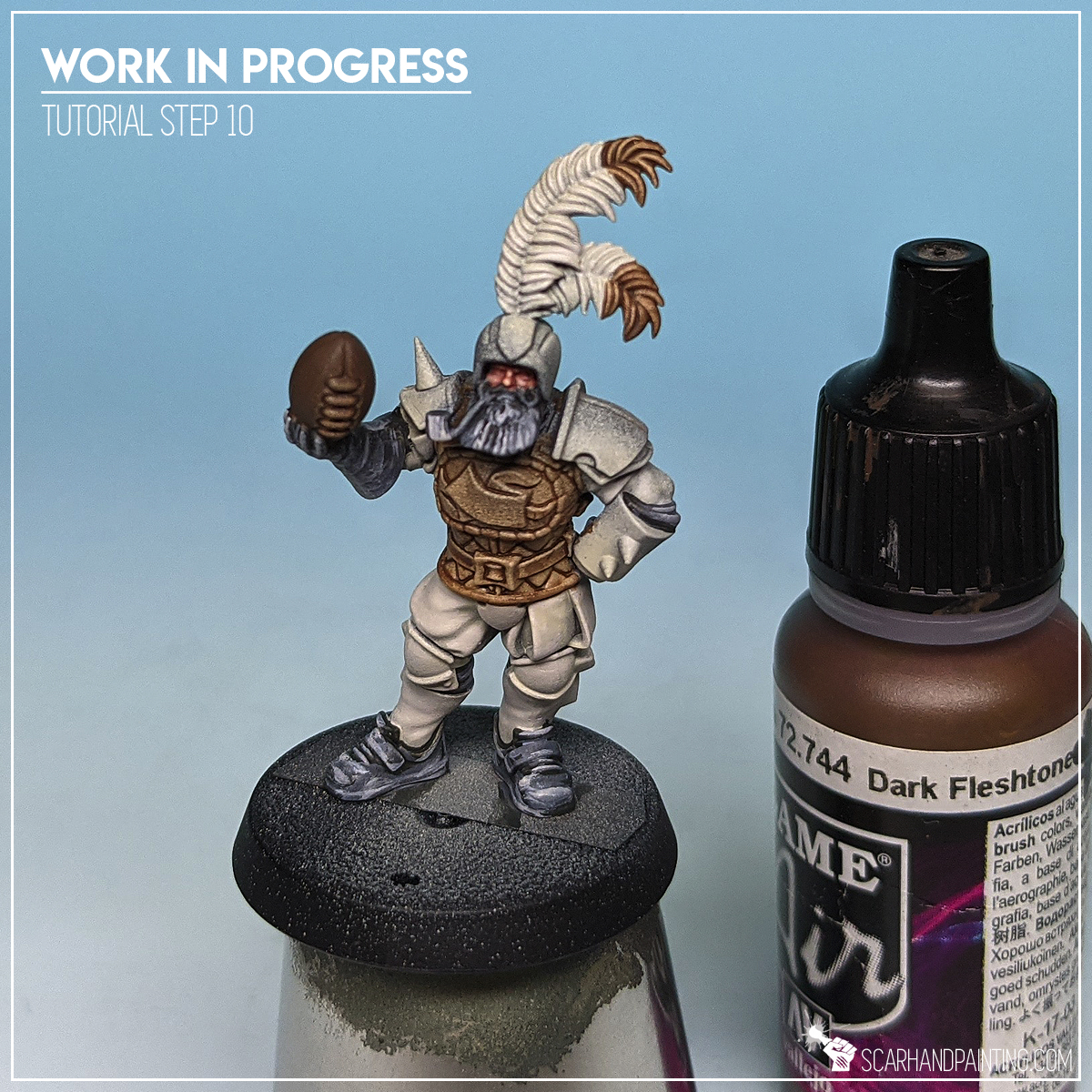
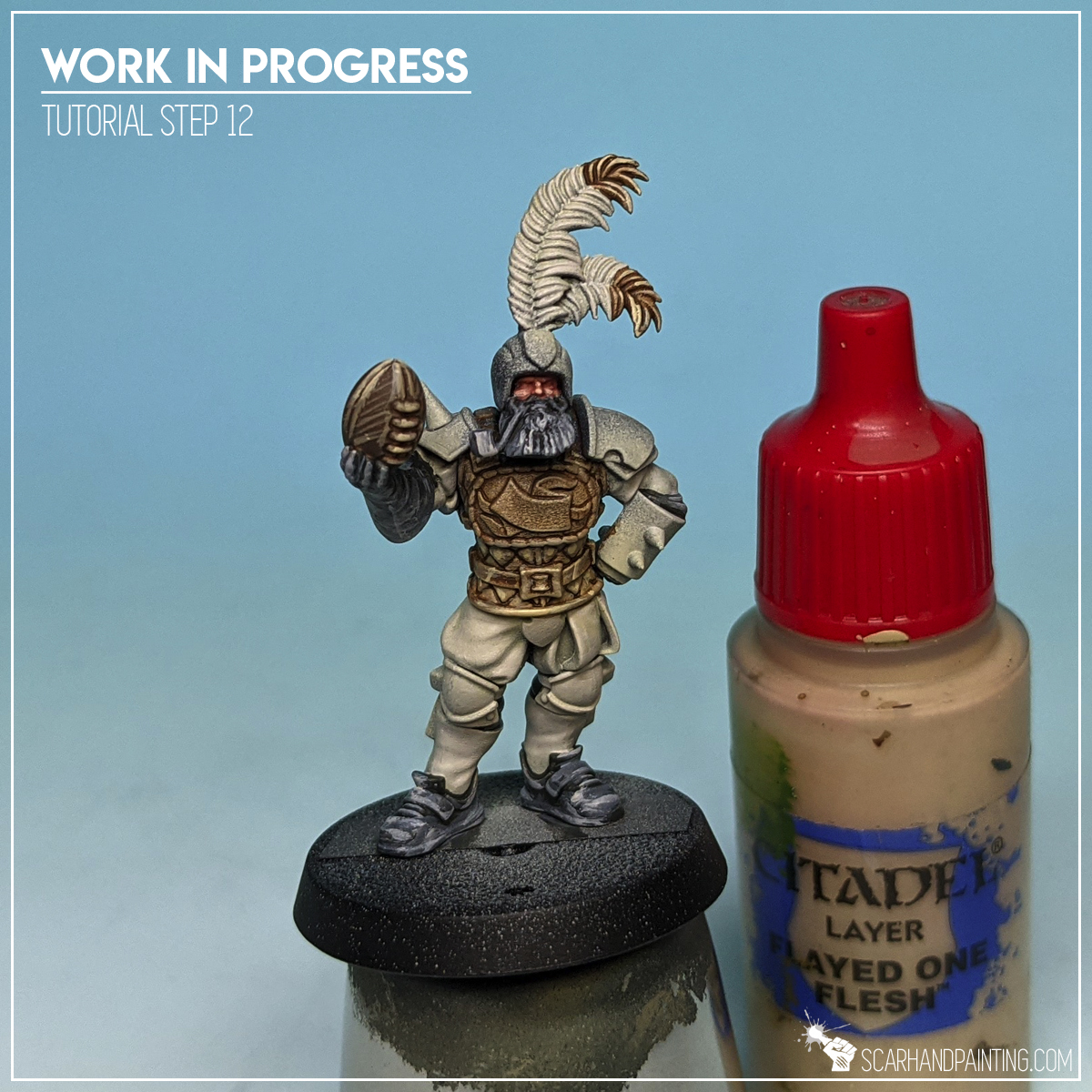
I took on Browns by manually applying Vallejo Dark Fleshtone (air) onto everything to-be-brown. Natural air series dilution allowed me to control the paint and avoid messing up other layers. I then switched to GW Karak Stone and Flayed One Flesh for classic highlights. Just few lines and dots on the edges and in center areas.

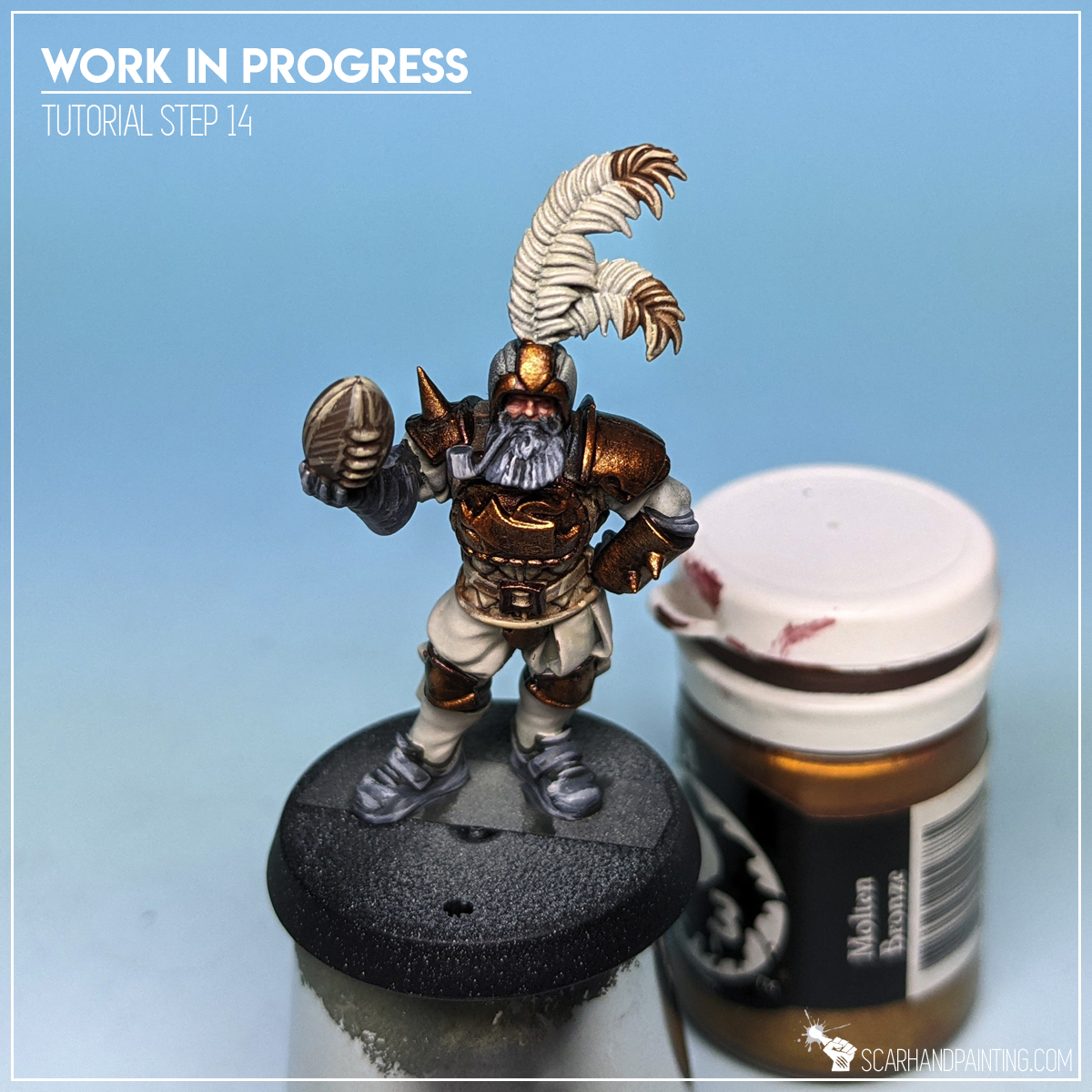
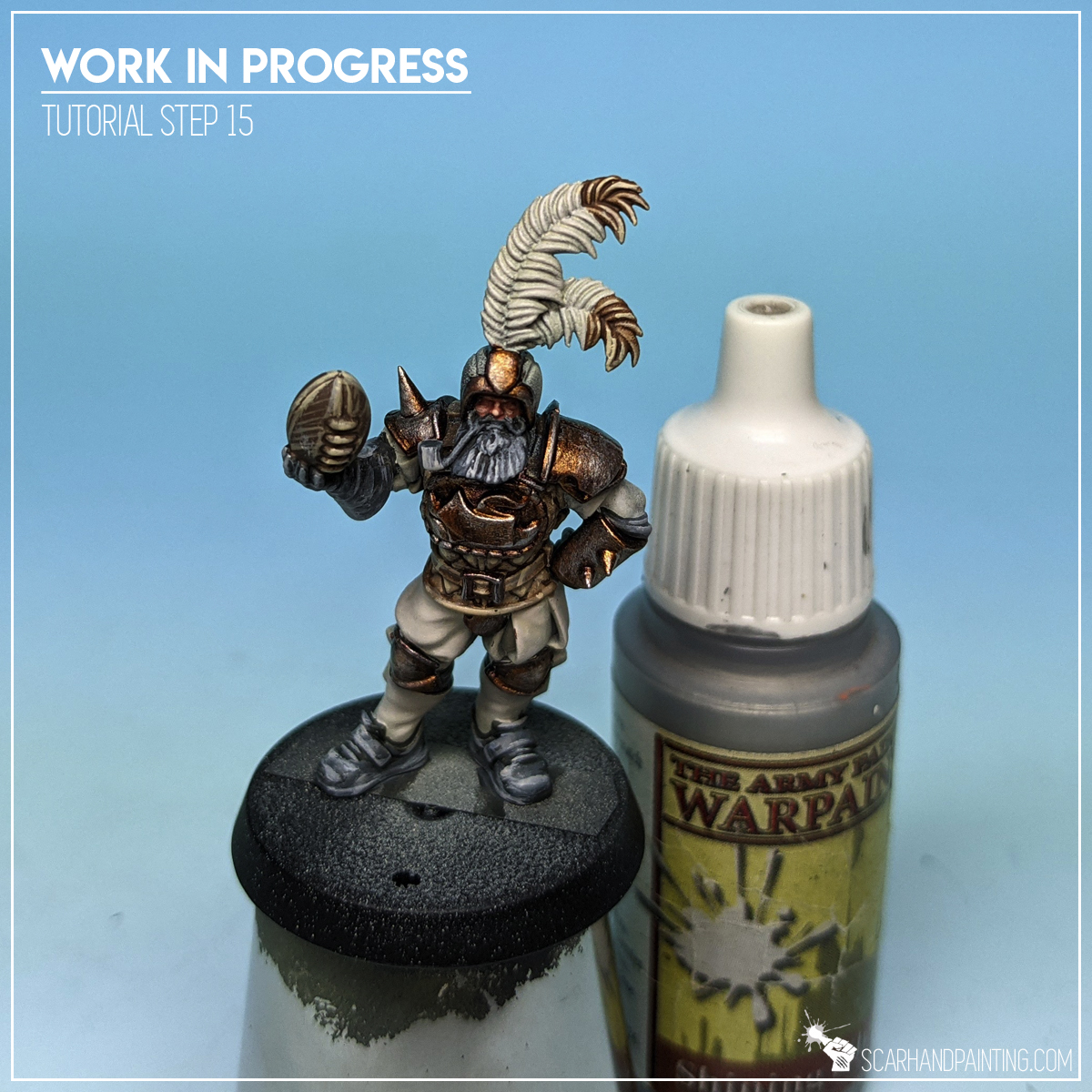
Step six: Metal
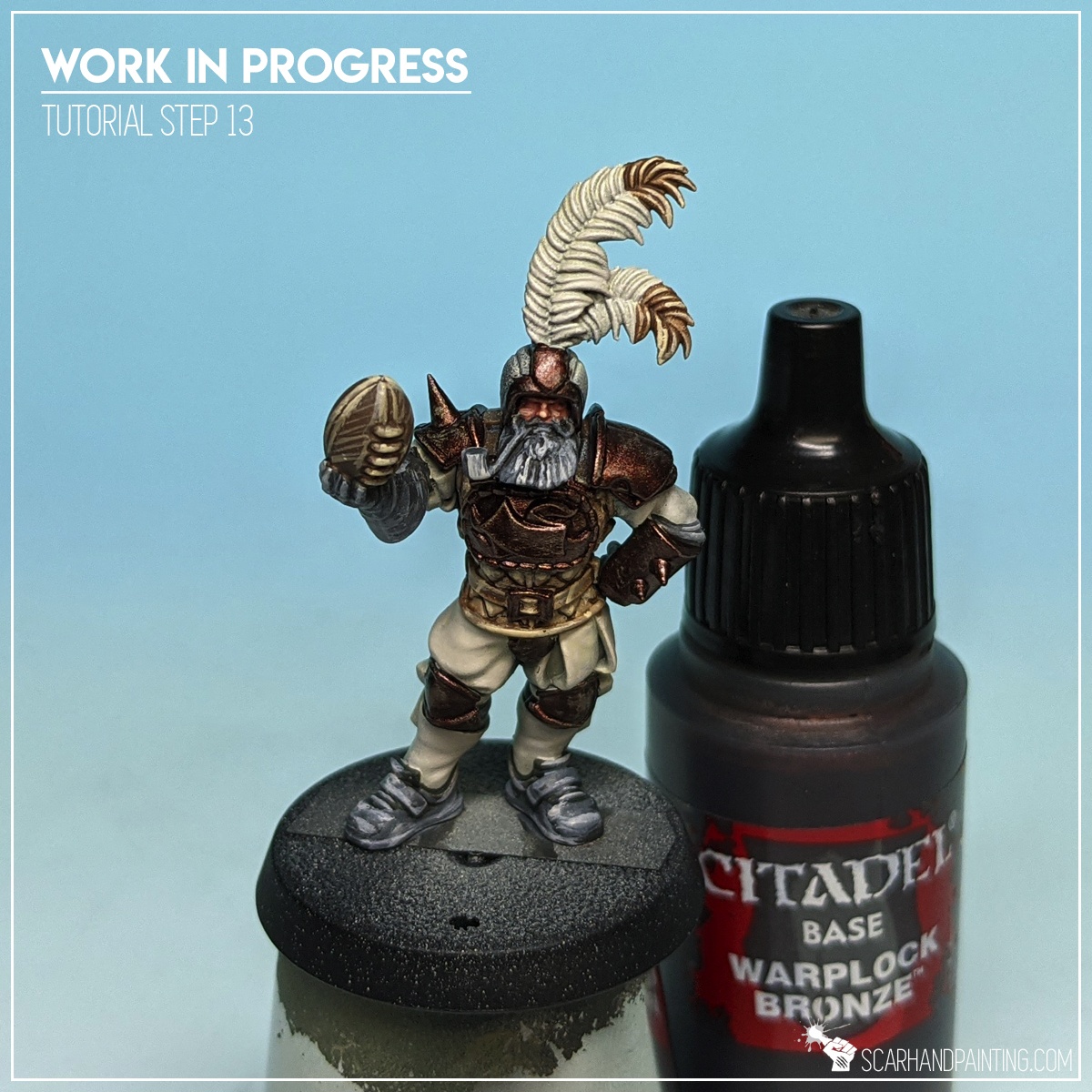
I started metal with GW Warplock Bronze, applying a thinned down layer on top of armor pieces. I then moved to P3 Molten Bronze for flatbrushed highlights. Finally I applied few highlights with AP Shining Silver.
Step seven: Violet
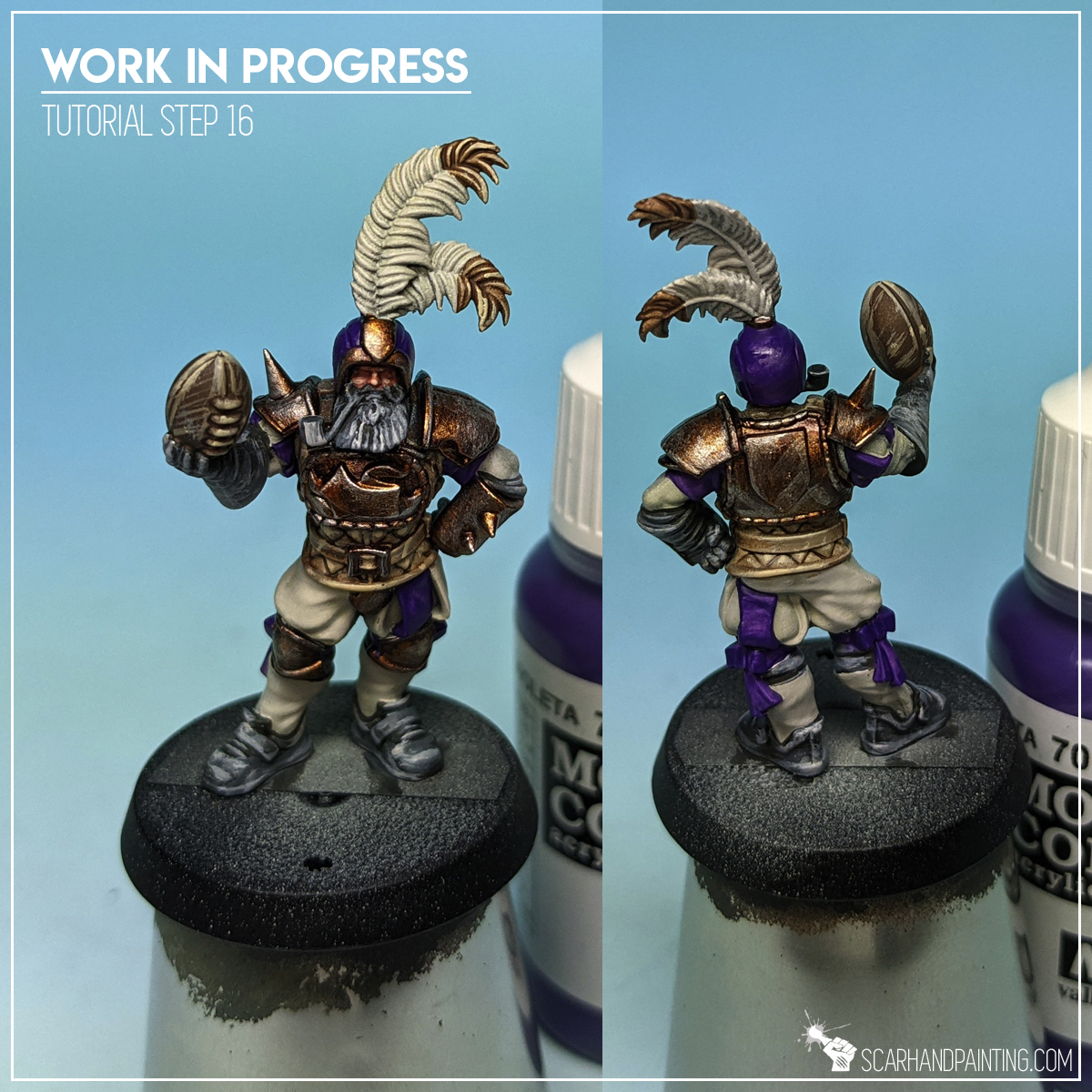
I applied a layer of Vallejo Violet on chosen parts of clothes and decorations. This was the last layer before wash so I ensured it didn’t leave a mess on top of previous elements. At this point of the paint job, anything could still be corrected with minimum effort, and I done so accordingly.
Step eight: Wash
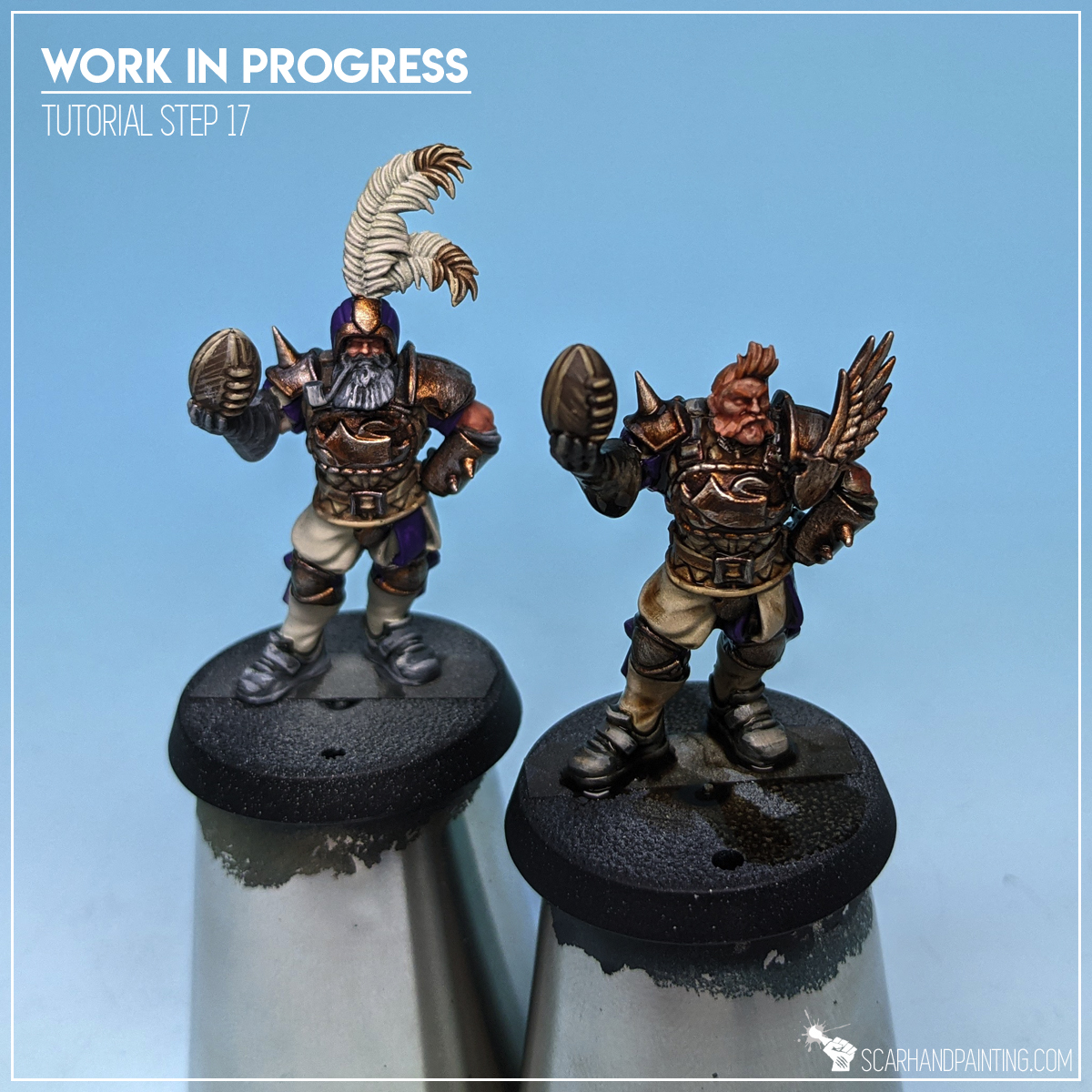
This is where magic always happens. I applied a wet layer of AP Strong Tone Ink mixed with a tiny bit of Matt Varnish, onto entire miniature. I then ensured to remove any excess paint, from where detail got completely covered by pigmentation, with a clean brush.
Step nine: Highlights
Once wash dried up, I applied highlights of GW Pale Wych Flesh. Edge highlights, points of focus and lines in the middle areas for everything not metal or skin. I also applied a strongly thinned down layer of Pale Wych Flesh on top of Purple clothes creating a somehow mist-like effect.

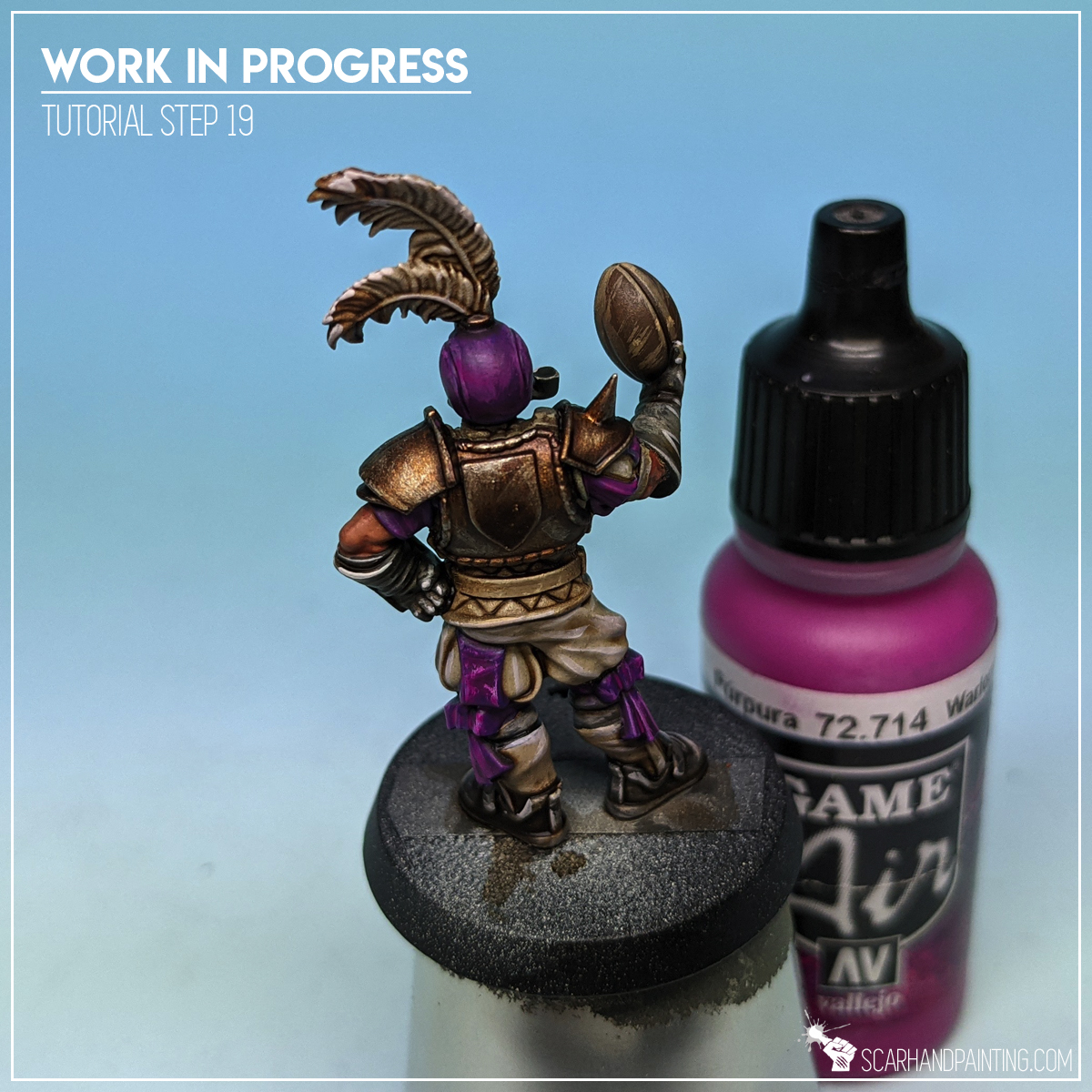
Step ten: Purple
I then got back to violet (now more of a purple) and blended a layer of Vallejo Warlord Purple (air) on top of it. Air series does not require any thinning, but I added a bit of medium to leave texture difference visible underneath. With a strong and vibrant color I moved to Vallejo Pale Flesh for both an edge highlight and some random lines. I used this opportunity to add few dots and lines on top of skin, thus providing a final highlight.
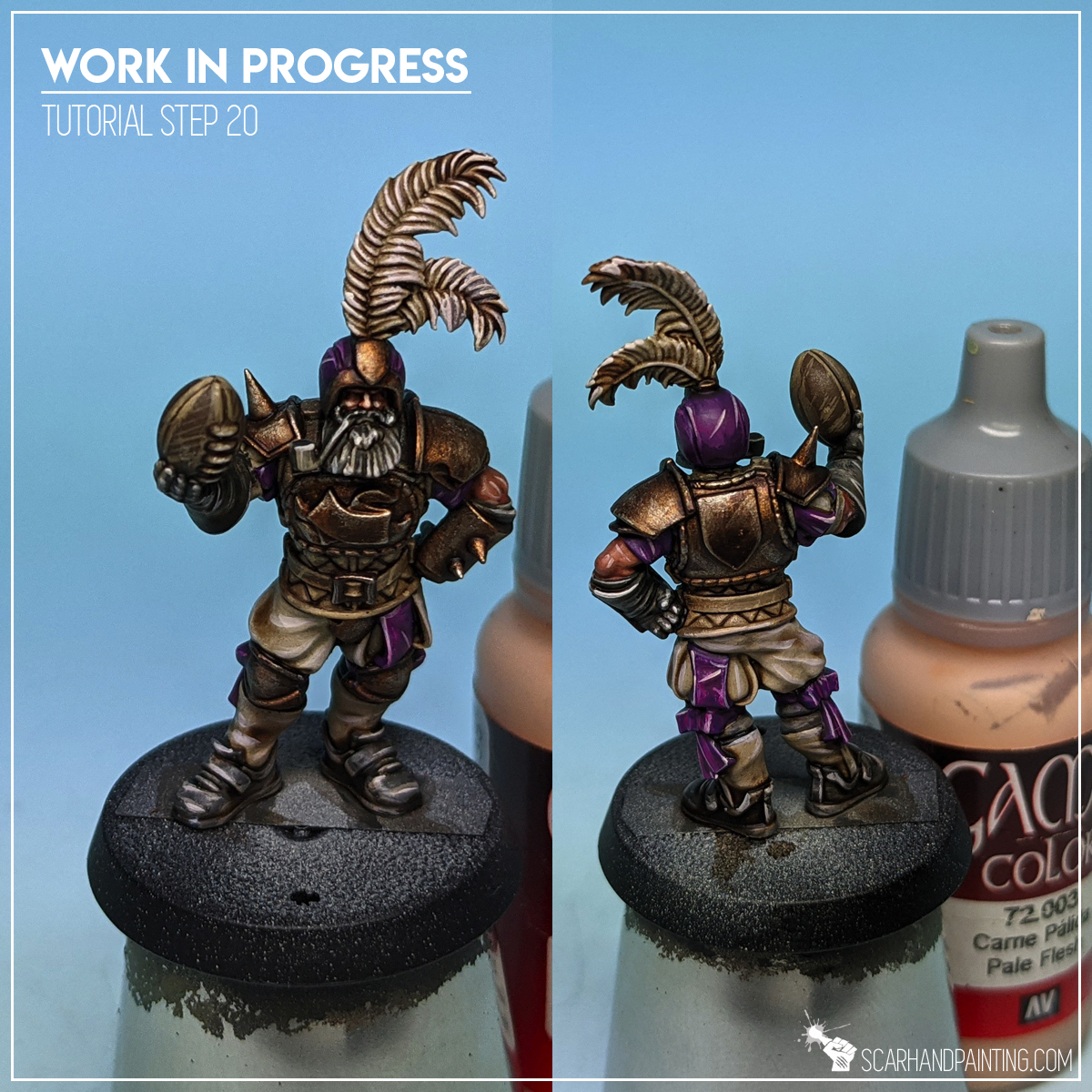
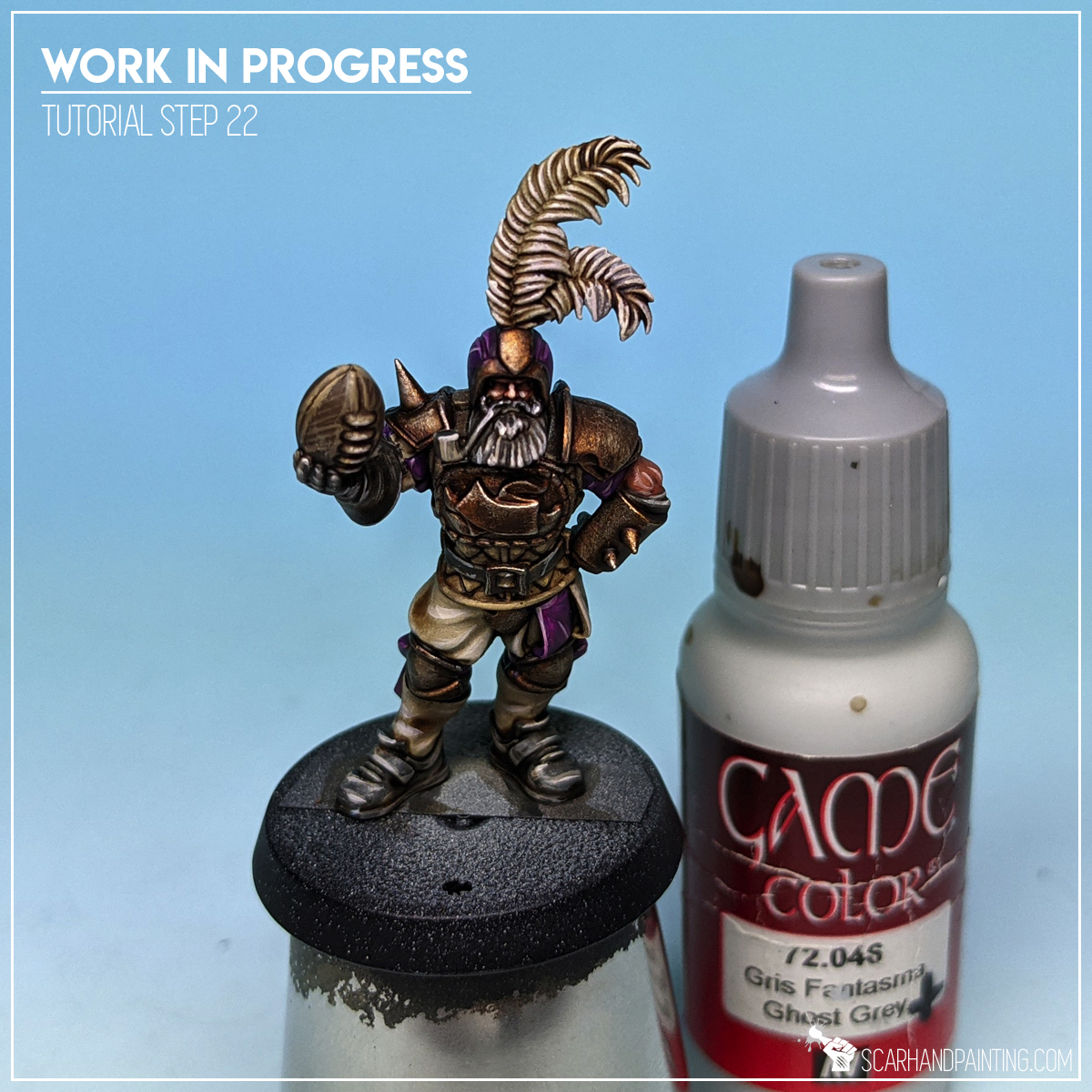
Step eleven: Grey
Finally I painted belts and straps with thinned Vallejo Panzer Dark Grey (air) with previous layers being barely visible from underneath. It was then highlighted with Vallejo Ghost Grey to add contrast and keep it in line with rest of greys on the miniature.

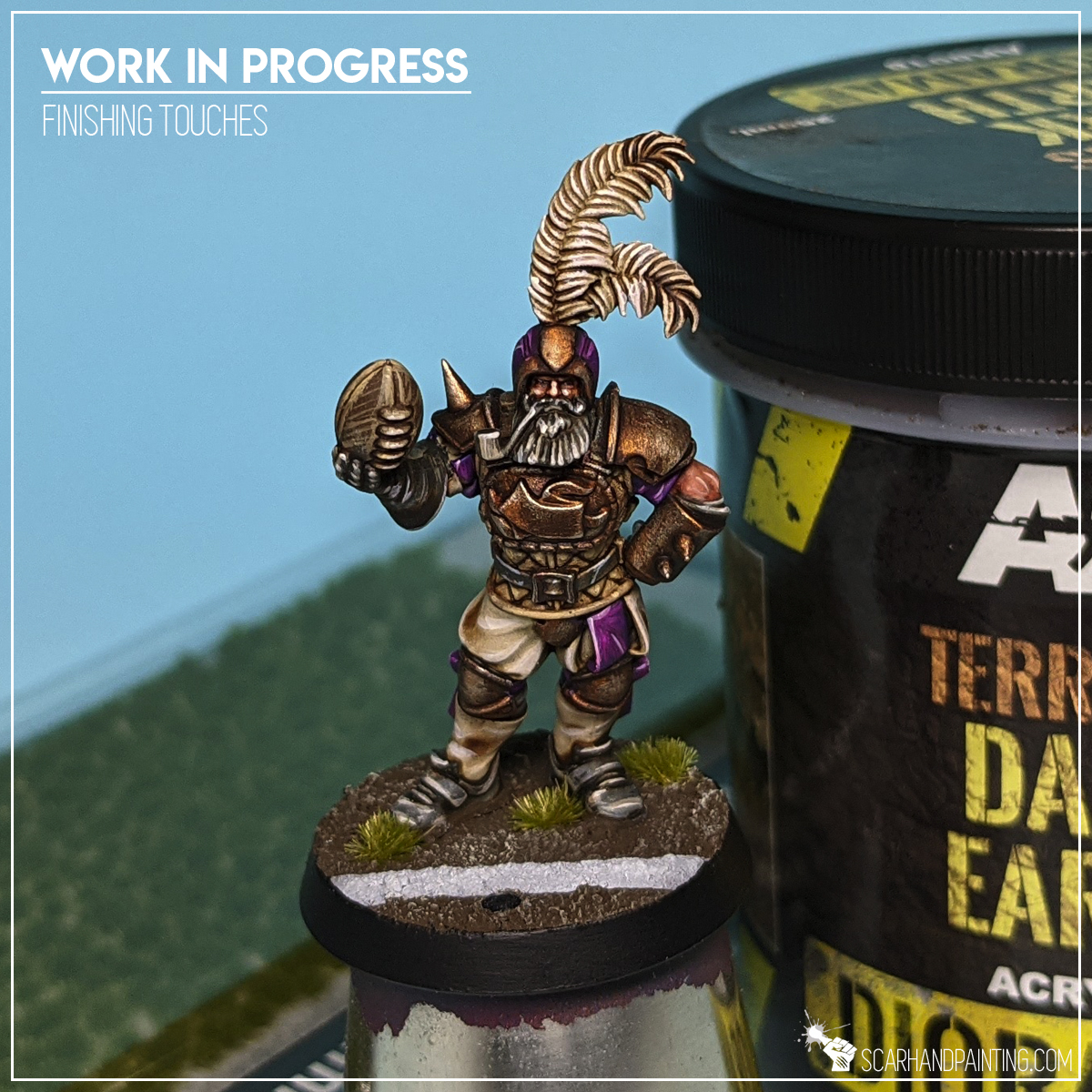
Step twelve: Basing
Basing was made using AK Interactive Dark Earth texture, followed with a single layer drybrush of Games Workshop Karak Stone. I then airbrushed a line of pure white using a masking tape to protect the rest of the base (and miniature). Few Gamers Grass tufts and pure black edge later the job was done.

I hope you find this tutorial interesting. Be sure to let me know your thoughts in the comments below or via Facebook.or Instagram. I would also appreciate if you considered sharing this content with your friends, who might find it useful. Finally if you are looking for a professional miniatures painting service be sure to contact me with this contact form. I always reply within 24 hours, after which please check out your spam folder.
Here are some Colour Recipes for Kings of War: Armada Empire of Dust from Gallery: Armada Empire of Dust. Please take note that this is a simple colour scheme, not covering multiple overlapping layers and blends in between, that lead to the final product. It is supposed to be used as guideline not a step-by-step.

GREY hulls:
Panzer Dark Grey (val), *
Cold Grey (val), *
Mix: Strong Tone Ink (ap) 1:1 Soft Tone Ink (ap),
Medium Sea Grey (val), drbr
Ghost Grey (val), drbr
BRIGHT BROWN decks:
Khaki (val), *
Flayed One Flesh (gw), flbr
Mix: Strong Tone Ink (ap) 1:1 Soft Tone Ink (ap),
Flayed One Flesh (gw), l&p

WHITE sails:
Khaki (val), *
Wolf Grey (val), *
White (val), *
GOLD ornaments:
Tin Bitz (gw),
Molten Bronze (p3), flbr
Shining Metal (ap), l&p
Mix: Strong Tone Ink (ap) 1:1 Soft Tone Ink (ap),
Shining Metal (ap), l&p
BLUE ornaments:
Magic Blue (val),
Electric Blue (val), flbr
Glacier Blue (val), l&p
Blue Tone Ink (ap),
Glacier Blue (val), l&p
PINK Flames:
Warlord Purple (val),
Mix: Warlord Purple (val) 2:1 Off White (val), flbr
Off White (val), l&p
Purple Tone Ink (ap), wash

l&p – lines and points,
p – points,
dl – deep lining,
bl – blend,
gl – glaze,
drbr – drybrush,
fltbr – flatbrush,
lobr – loaded brush,
stpl – stippling,
*Airbrushed (with multiple layers and mixes)
Welcome to Painting KoW Armada Dwarf Fleet tutorial. Here I will present to you a Step-by-step of an easy and fast painting process for Mantic’s Armada Dwarfs as can be seen in Gallery: Armada Dwarfs.

Before we start, some notes:
Step one: Undercoat
I started with a thorough layer of Games Workshop Chaos Black spray. This is a standard procedure for me. Chaos Black spray is my go to choice when it comes to undercoat.

Step two: Armor
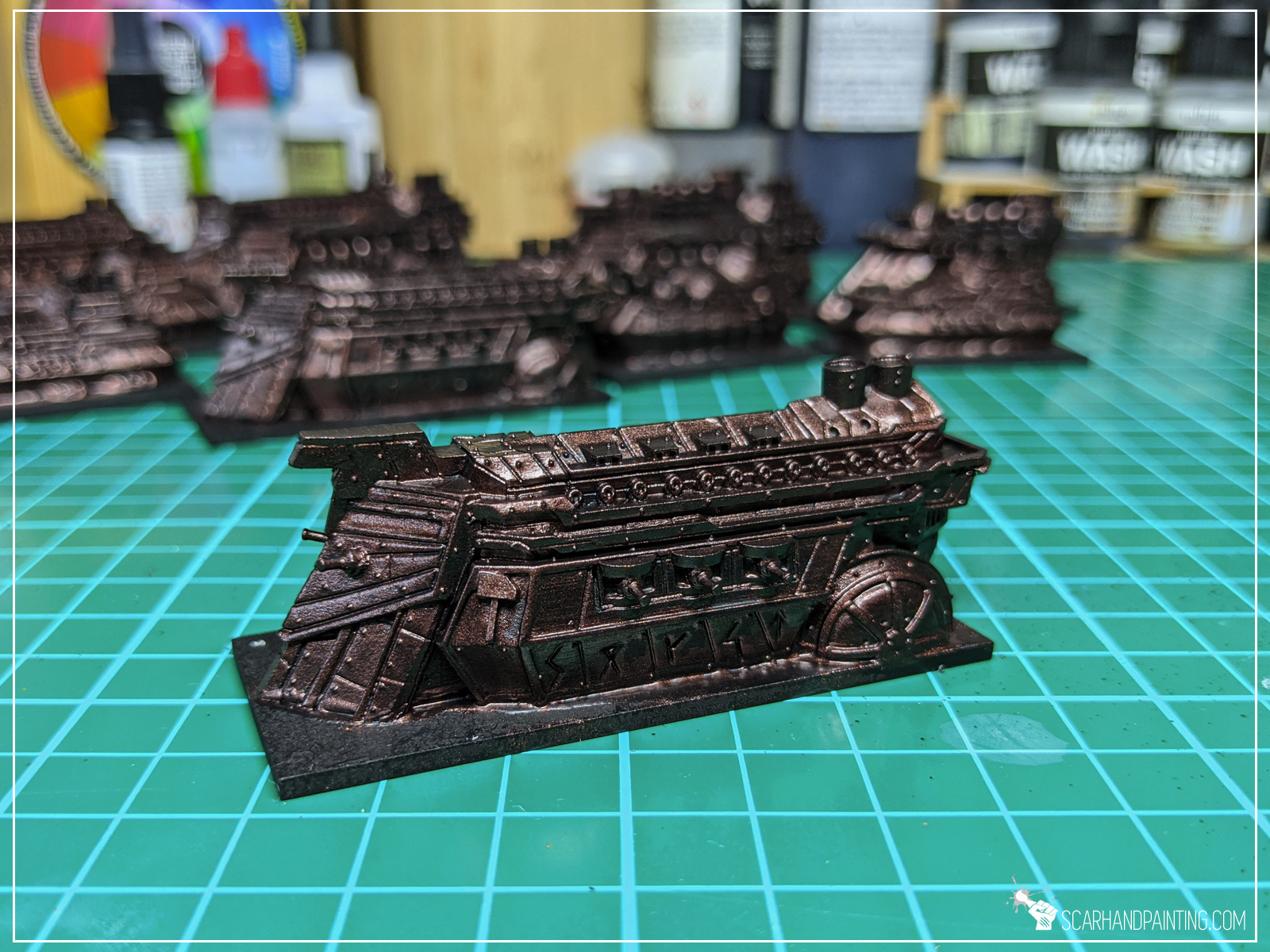
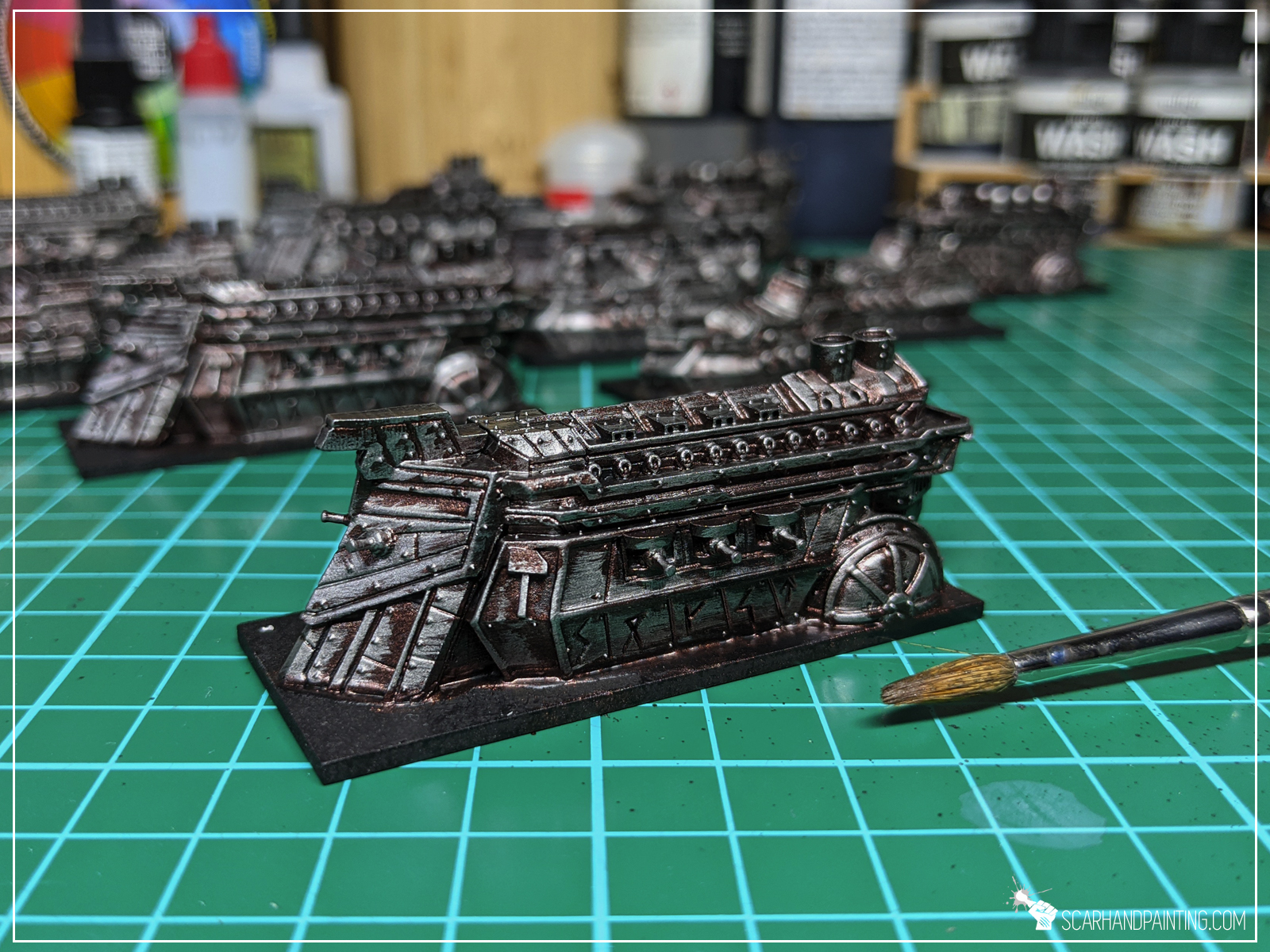
I painted entire ship with slightly thinned Games Workshop Warplock Bronze. Once Warplock Bronze dried I flatbrushed entire miniature with Army Painter Gun Metal followed by another flatbrush, this time Army Painter Shining Silver. Finally I painted few elements with P3 Blighted Gold.


Step three: Red
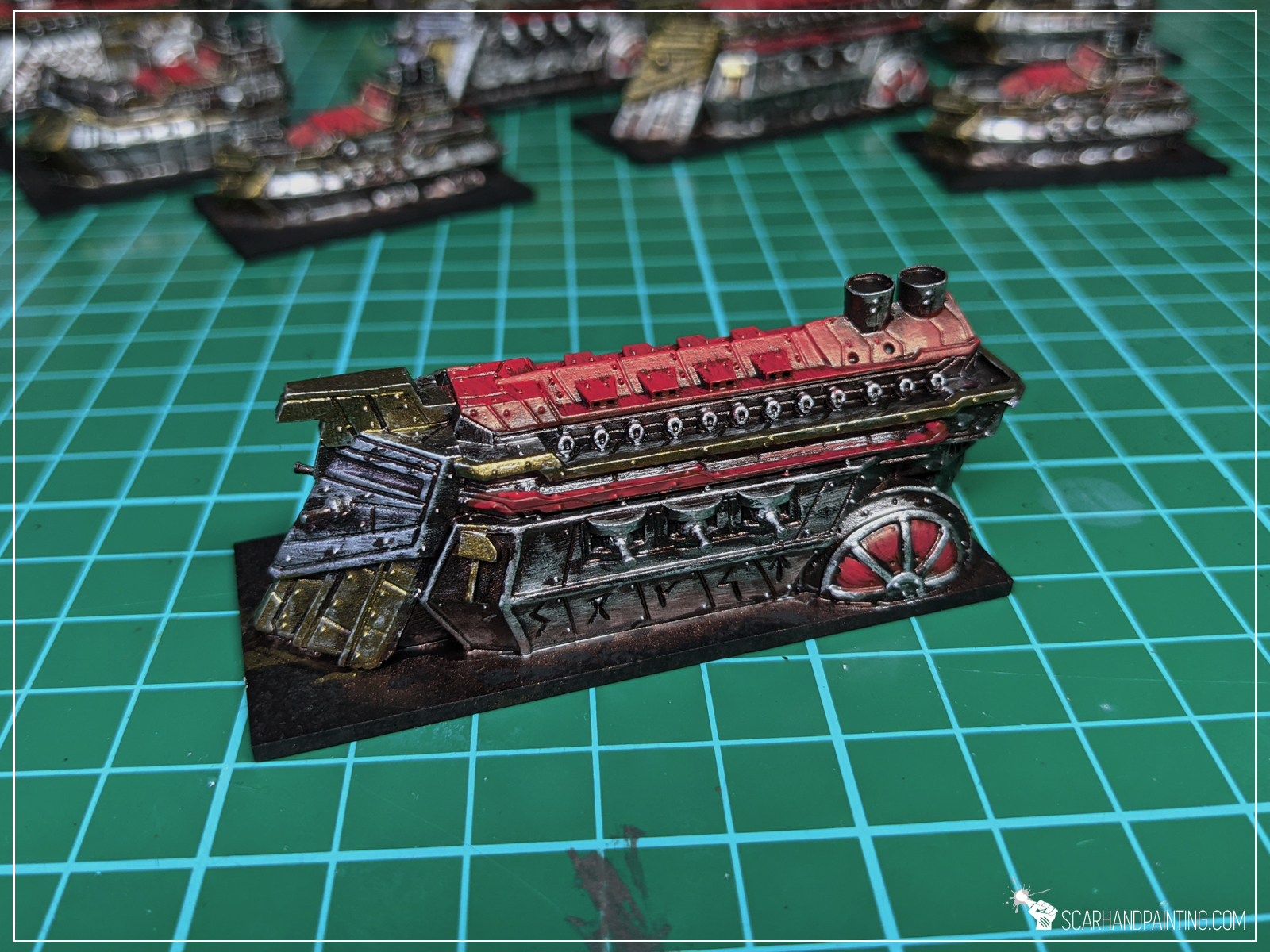
Next I added some color to the ship by painting roof and side balcony elements with Vallejo Burnt Red which was in turn highlighted with a single layer of Vallejo Flat Red.
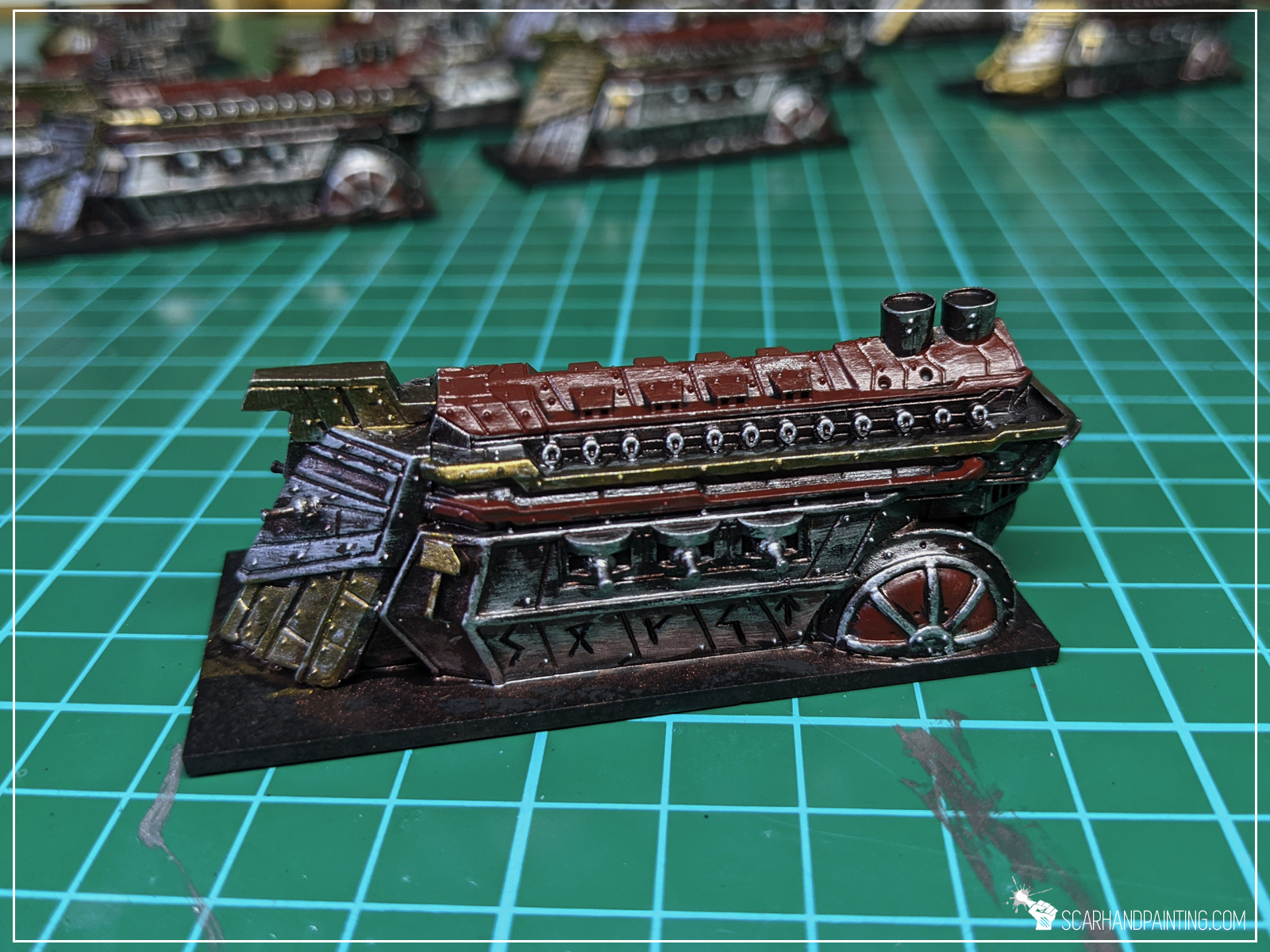
Step four: Wash
I richly applied Army Painter Strong Tone Ink onto entire miniature. The paint might be glossy depending on particular pot you got. I recommend adding just a bit of Matt Varnish before use.

Step five: Highlights
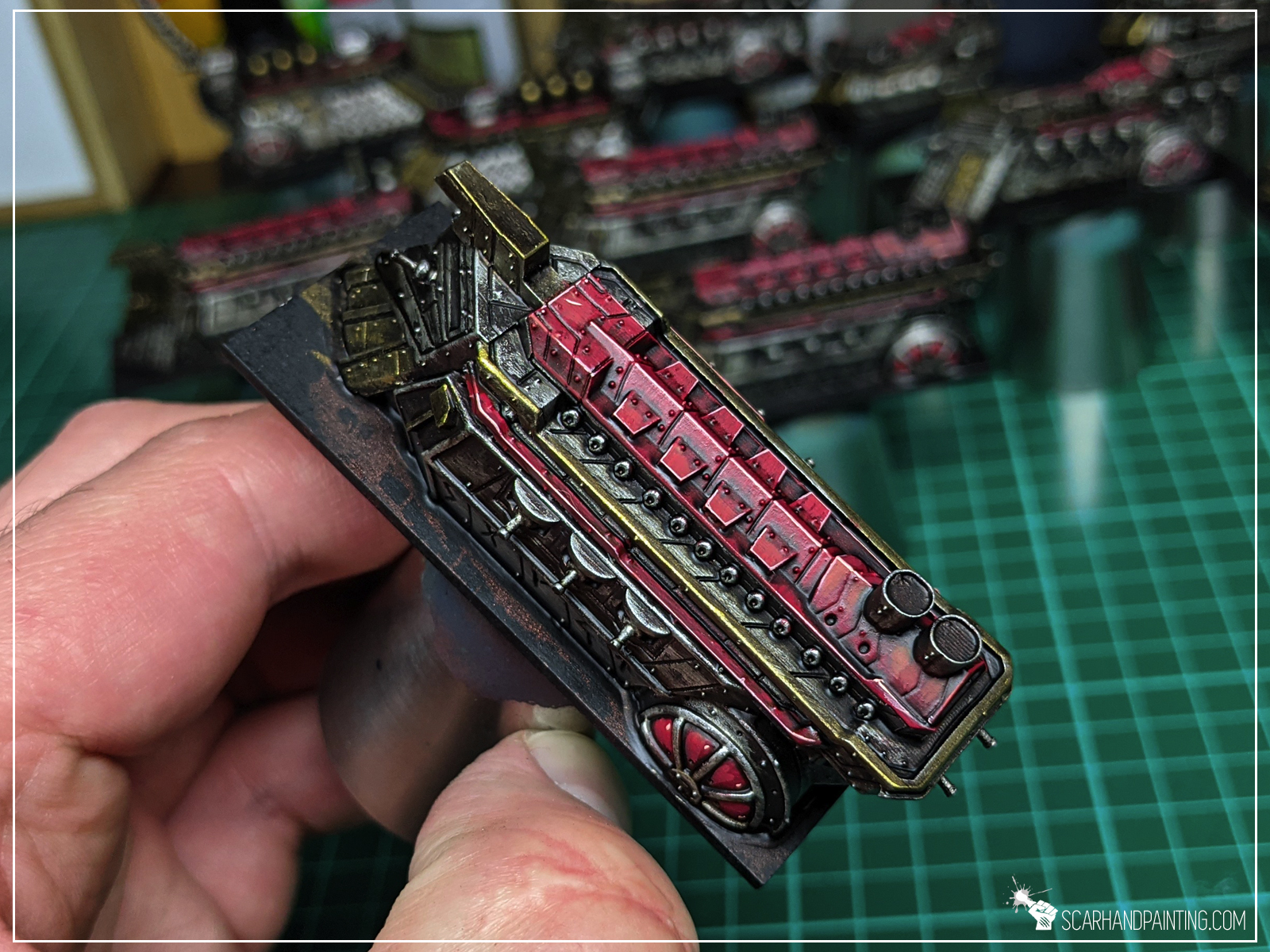
With wash dried out nicely I applied a layer of Vallejo Flat Red in most exposed red areas. I then followed with edge highlights and few lines/dots of Games Workshop Lugganath Orange. I then done the same for gold except I used GW Auric Armour Gold. For silver I went back to Army Painter Shining Silver, highlighting few exposed spots and edges.
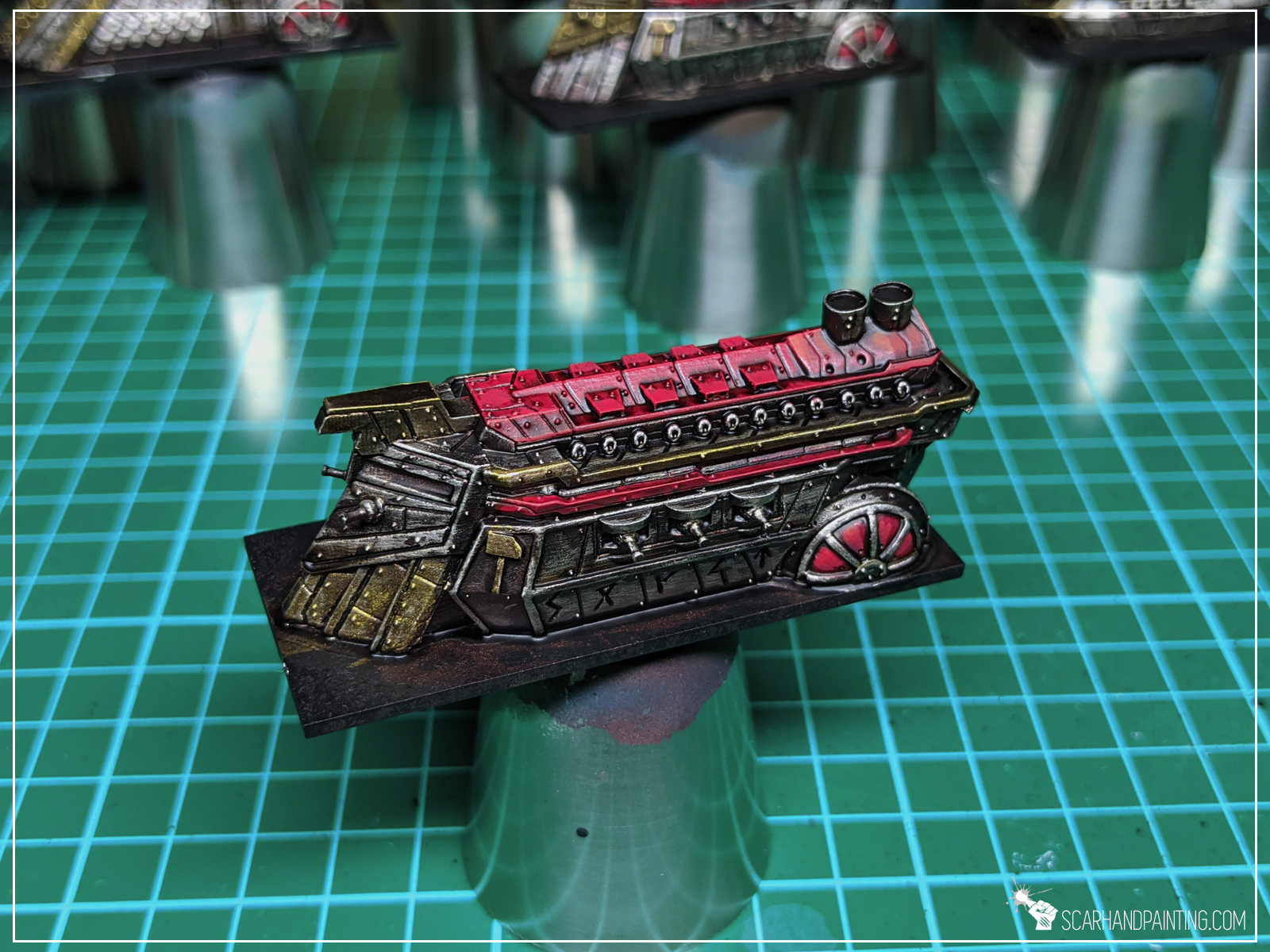
Step six: Front slots
I decided to add additional touch to the front of the ship, by painting two frontal slots blue. I done this by applying a layer of thinned GW Fenrisian Grey and then a wash of GW Contrast Ultramarines Blue.
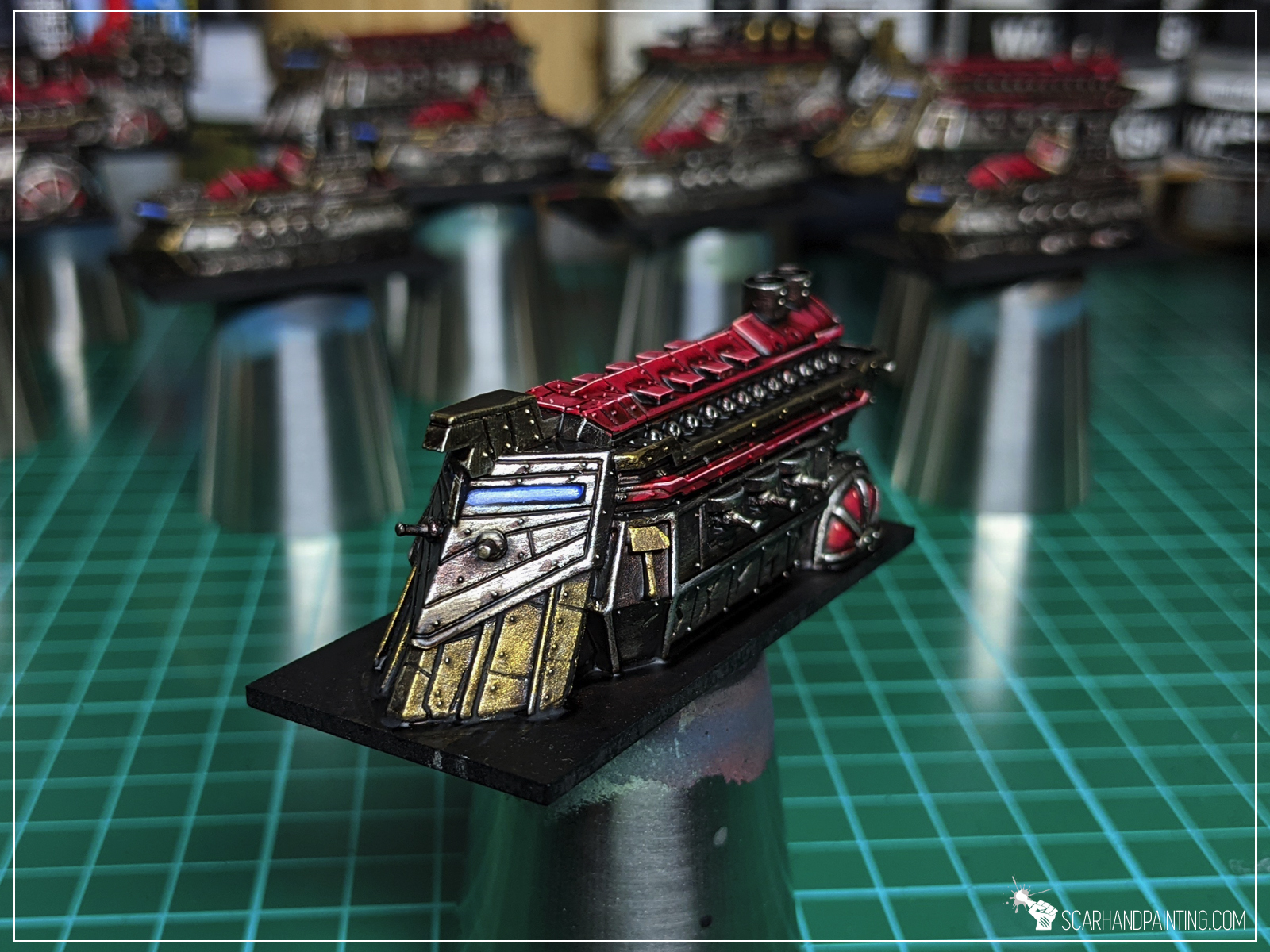
Step seven: Basing
In simple terms I followed my own tutorial for Armada Basing, that you may find HERE, except I used standard hdf bases painted with a single layer of Vallejo UK Mediteranean Blue, followed by standard AK Interactive Pacific Blue, AK Interactive Water Effect and AK Interactive Water Foam textures.


I hope you find this tutorial interesting. Be sure to let me know your thoughts in the comments below or via Facebook. I would also appreciate if you considered sharing this content to any groups or forums, where it might help someone paint their miniatures. Scarhandpainting is not just about professional miniatures painting service. I do my best to provide interesting tutorials and share my experience with other hobbyists.
Here are some Colour Recipes for Infinity Haqqislam from Gallery: Quapu Khalqi. Please take note that this is a simple colour scheme, not covering multiple overlapping layers and blends in between, that lead to the final product. It is supposed to be used as guideline not a step-by-step.
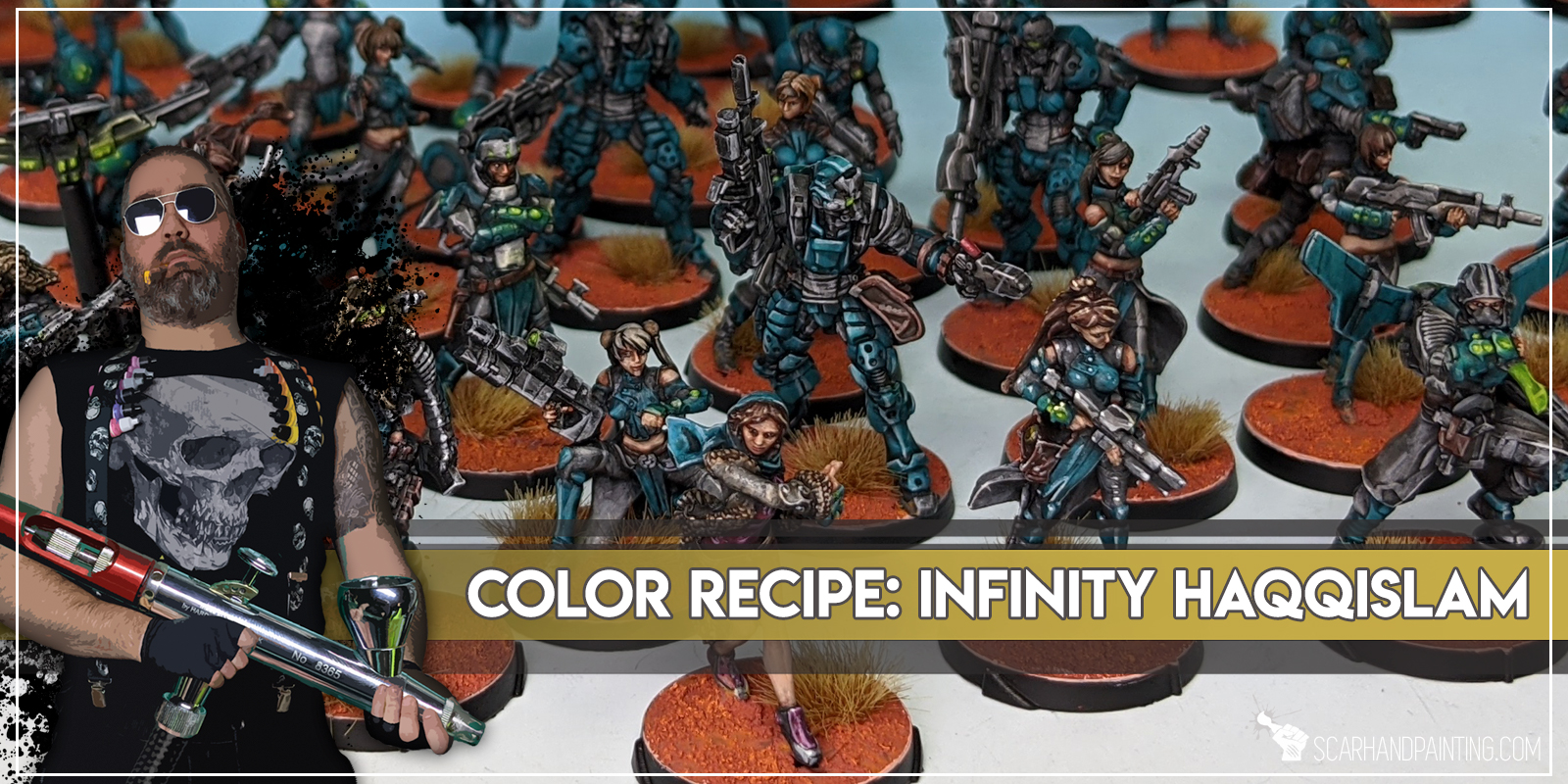
BLACK/GREY outfits & weapons:
Black Undercoat,Panzer DK Grey (Val),
Panzer DK Grey (Val a), *
Barely Grey (Val a), *
Wolf Grey (val a), flbr
Pallid Wych Flesh (GW), l&p
Dark Tone Ink (AP), wash
Pale Wych Flesh (GW), l&p
Off White (Val), p

TURQUOISE armor:
Coal Black (P3),
Hydra Turquoise (AP), flbrMix Hydra Turquise (AP) 5:1 Pale Wych Flesh
GW), flbr
Arcane Blue (P3), l&p
Coelia Greenshade (GW), wash
Pale Wych Flesh (GW), l&p
Off White (Val), p
SKIN:
Carne Marron Tan (Val), Flow
Dwarf Skin (Val a),
Flesh (Val a), l&p
Mix Strong Tone Ink (AP) 1:1 Soft Tone Ink (AP),
Flesh (Val a), l&p
Pale Flesh (Val), l&p
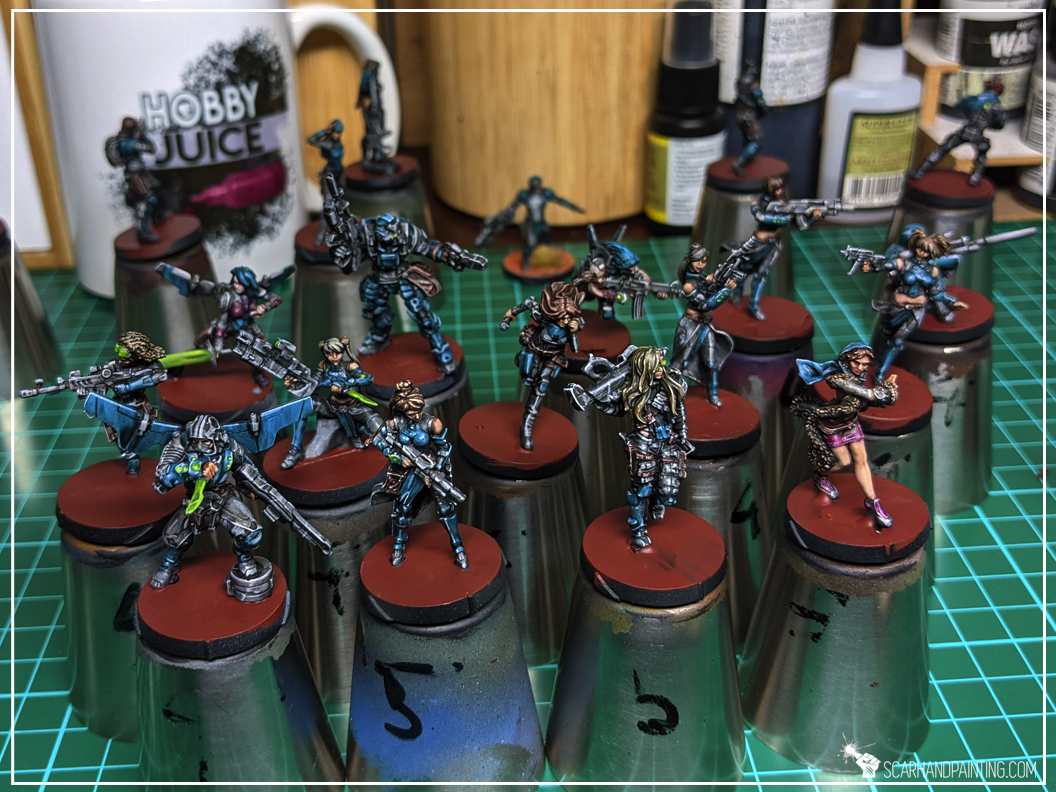
BROWN elements:
Black/Grey outfits base,
Mix Hull Red (Val a) + Soft Tone Ink (AP), blend
Karak Stone (GW), l&p
Flayed One Flesh (GW), l&p
GREEN osl:
Olive Green (Val),
Duck Egg Green (Val a), * / standard
Pale Wych Flesh (GW),
Light Livery Green (Val a),
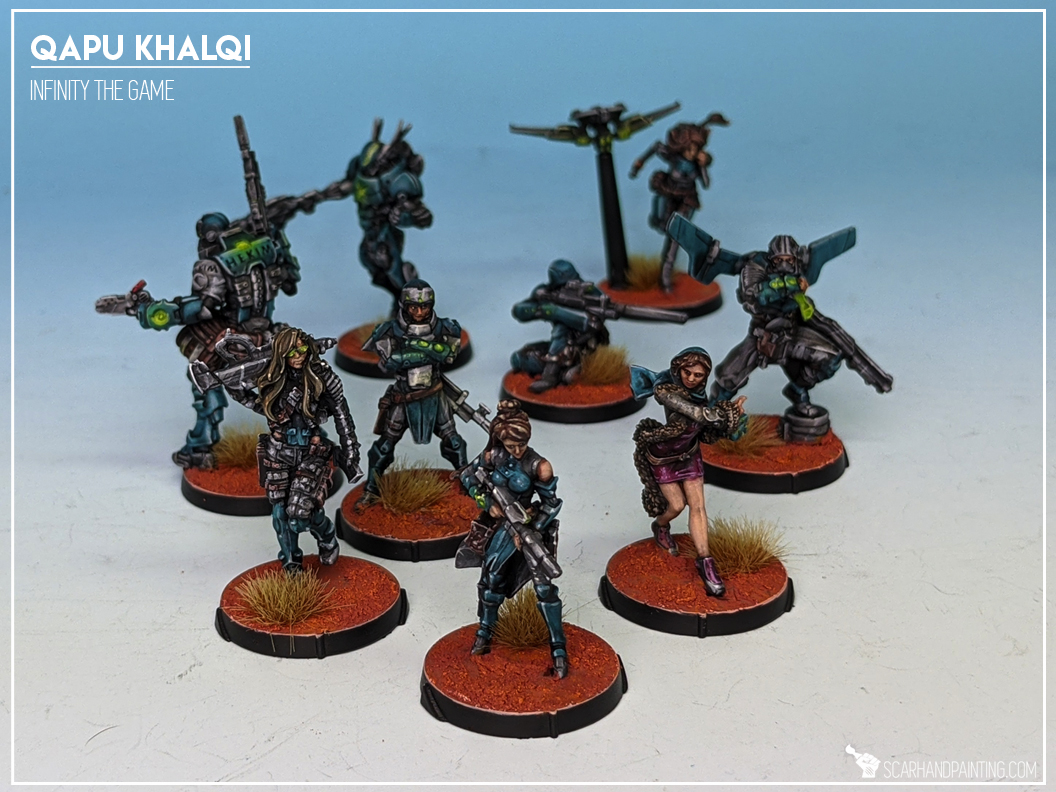
MARTIAN BASES:
German Red Brown (Val),
Martian Ironcrust (GW t),
Martian Ironearth (GW t),
Orange Fire (Val), drbr
AP Mountain Tufts & Paint Forge Steppe Tufts 12mm

l&p – lines and points,
p – points,
dl – deep lining,
bl – blend,
gl – glaze,
drbr – drybrush,
fltbr – flatbrush,
lobr – loaded brush,
stpl – stippling,
*Airbrushed (with multiple layers and mixes)

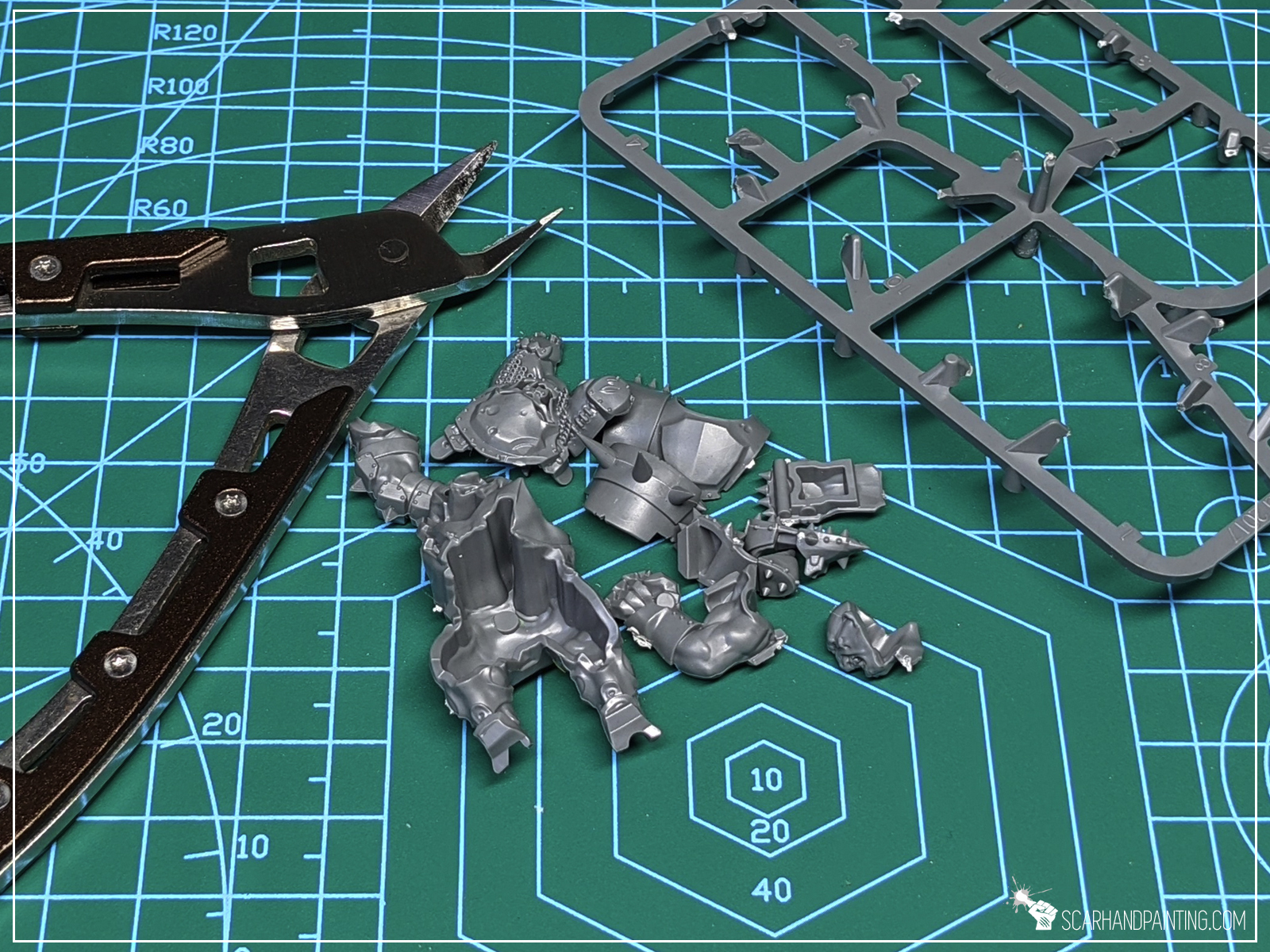
Removing Flash and Seam Lines – a pain of a task, yet such important one. You can be a painting god, but all your fancy brush work will be ruined if miniature wasn’t prepared properly. Running a miniatures painting service I have prepared thousands of miniatures. Below I will share with you some tricks I learned along the way.
Before we start, the usual note

I know, I know – theory is such a pain – “where are real life examples?!”. I will keep this short and easy.
Hobby Knife:

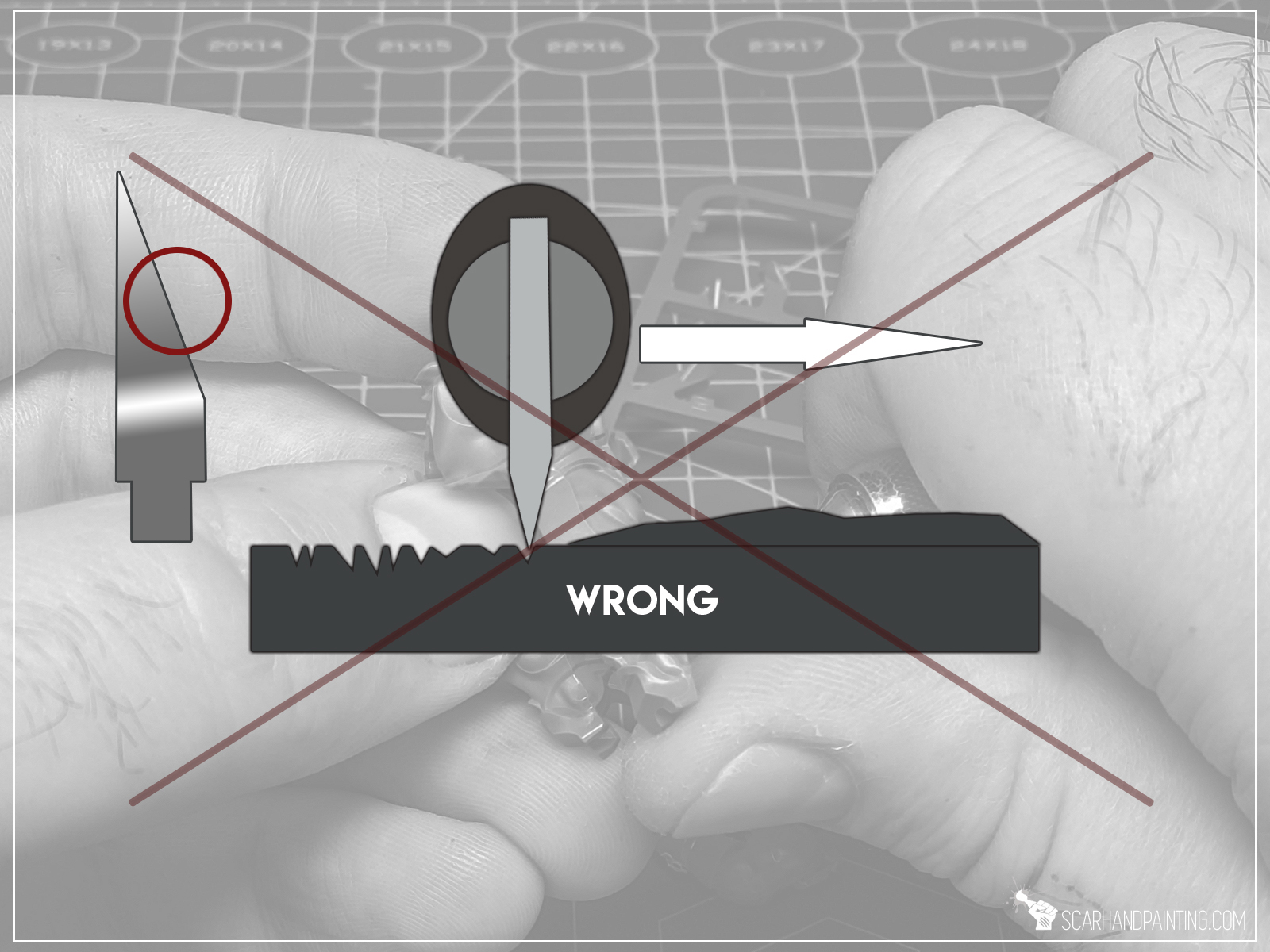
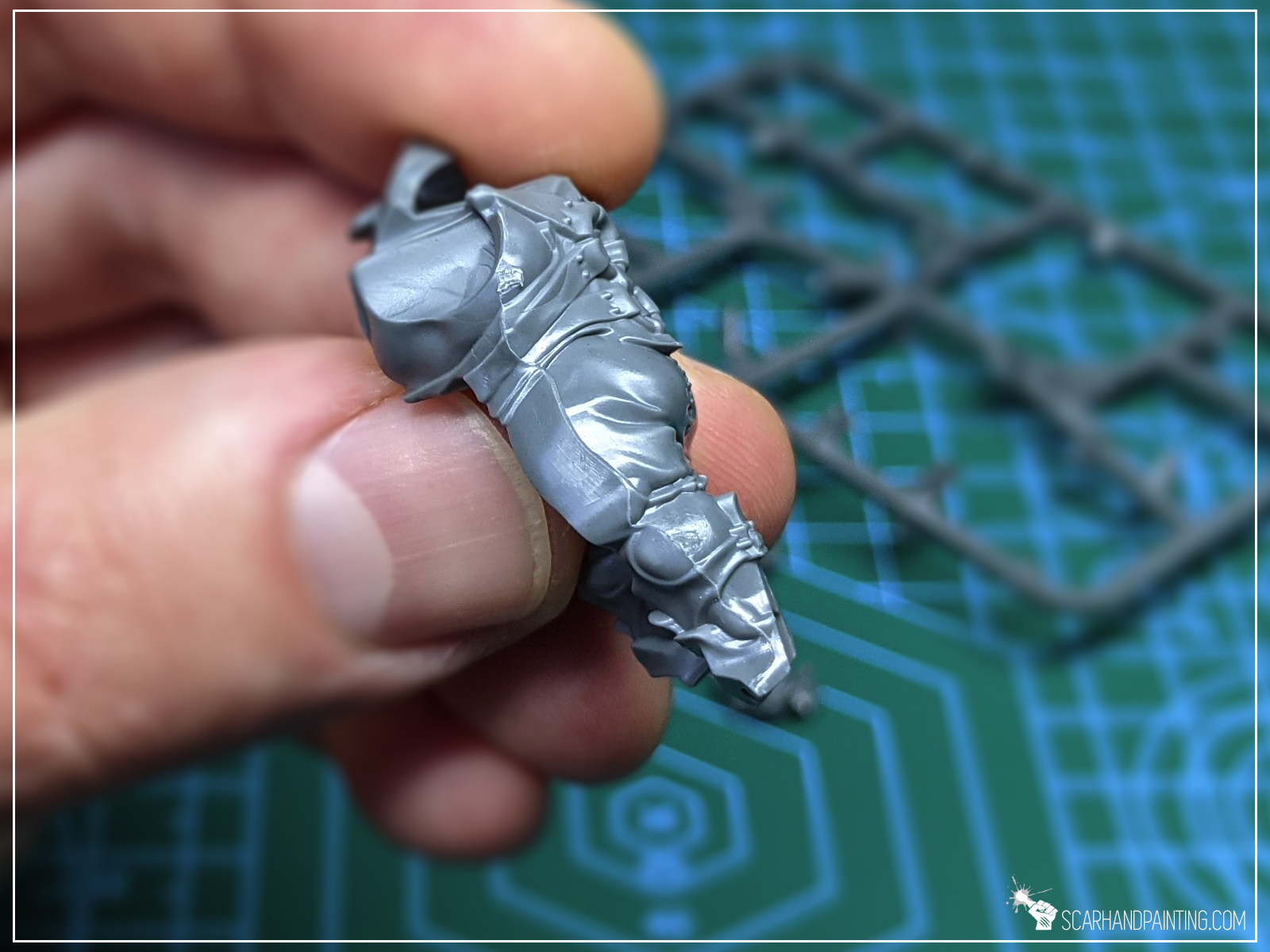
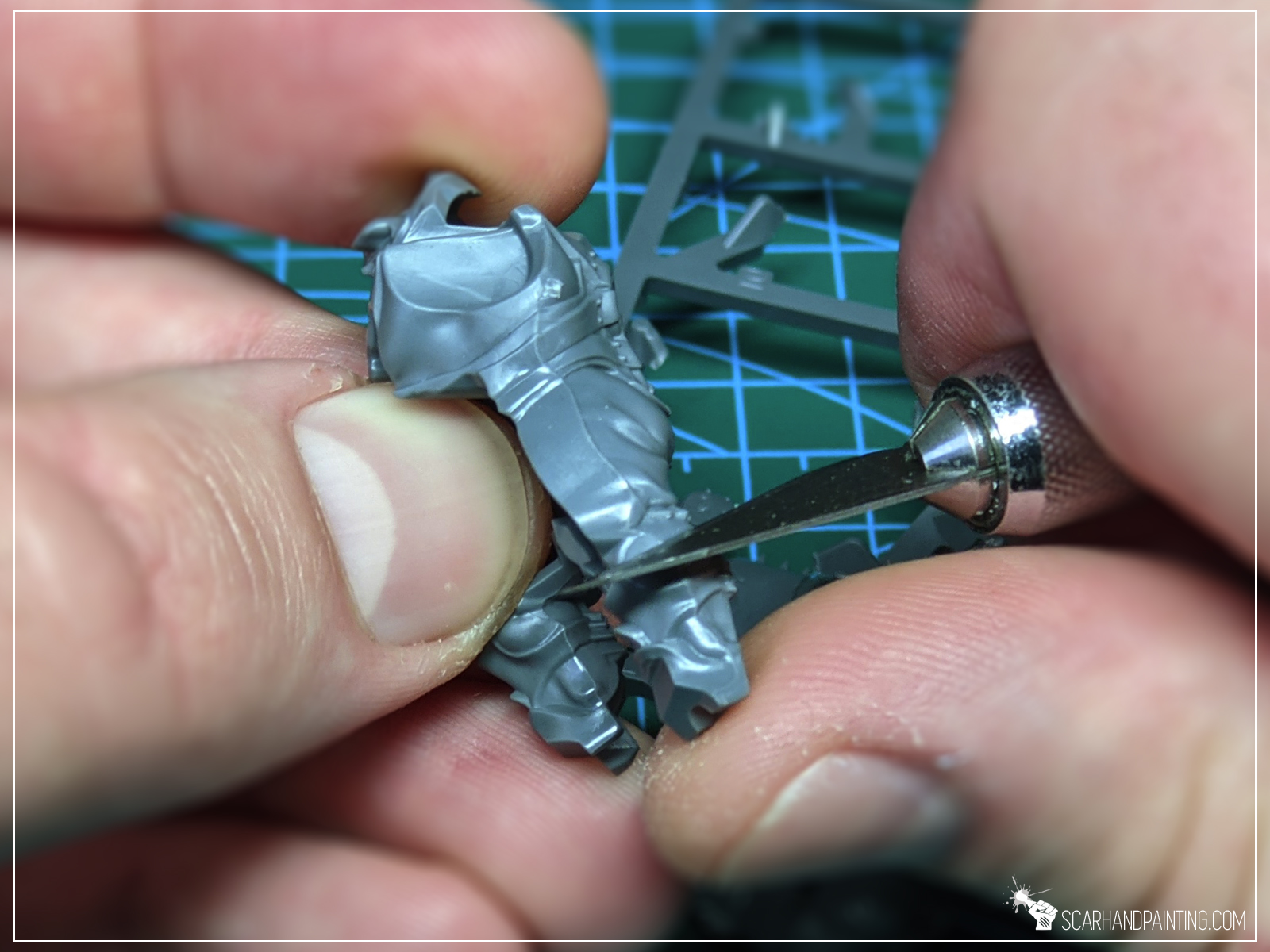
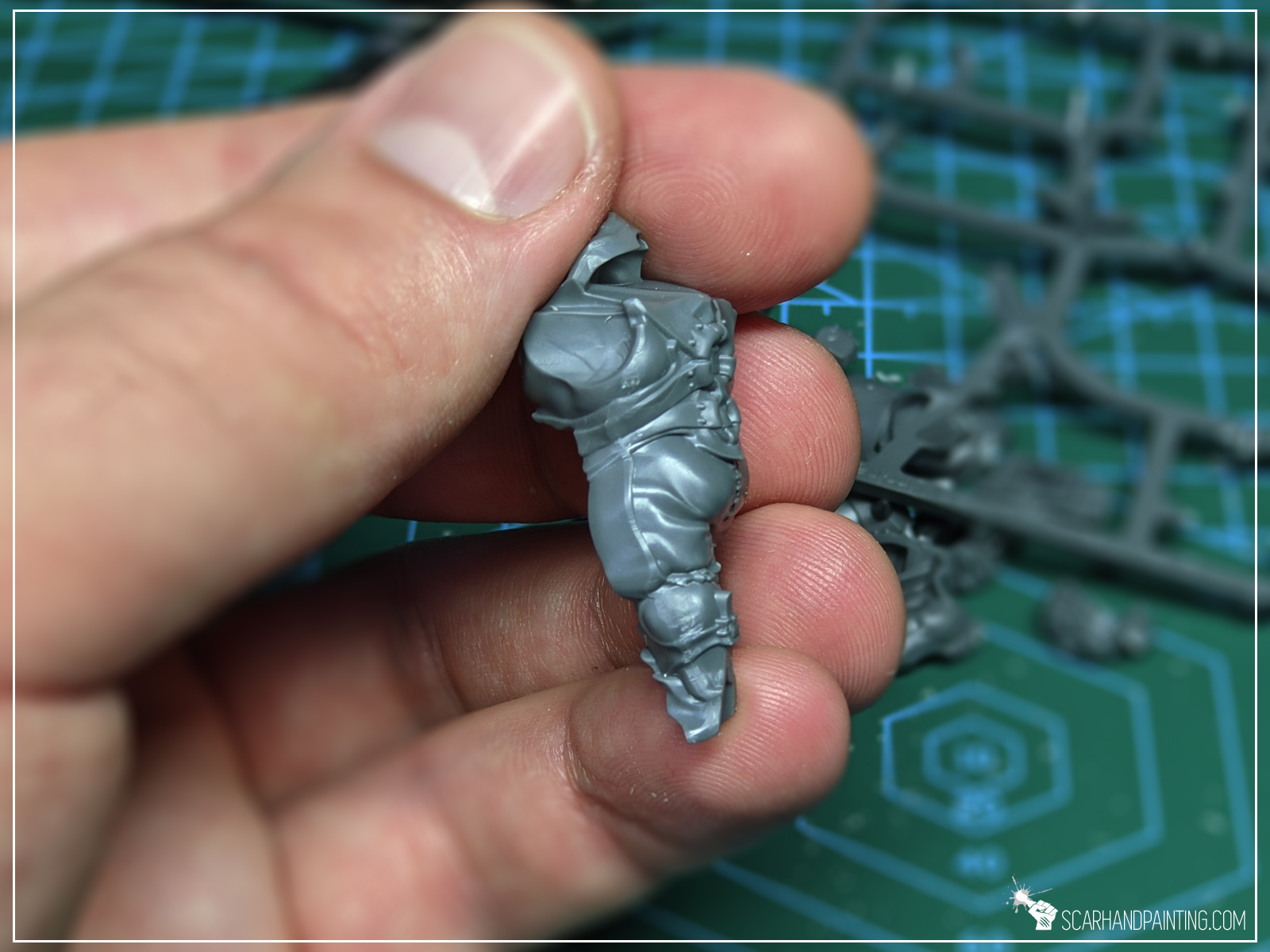
A Hobby Knife is my go to, when it comes to Seam Lines removal. When using a Hobby Knife I hold it in the fold of all fingers, except for thumb, which will be used to support a miniature and allows me for better control over the knife itself. I don’t want to cut myself so I tilt the blade about 45 degrees outwards from the thumb. This also prevents smooth surface from being scrapped (and roughed) by the sharp edge. Tiny consecutive movements are better than one smooth movement, unless I deal with long smooth areas. Somewhere in the middle of the blade is my sweet spot for cleaning accessible Seam Lines.
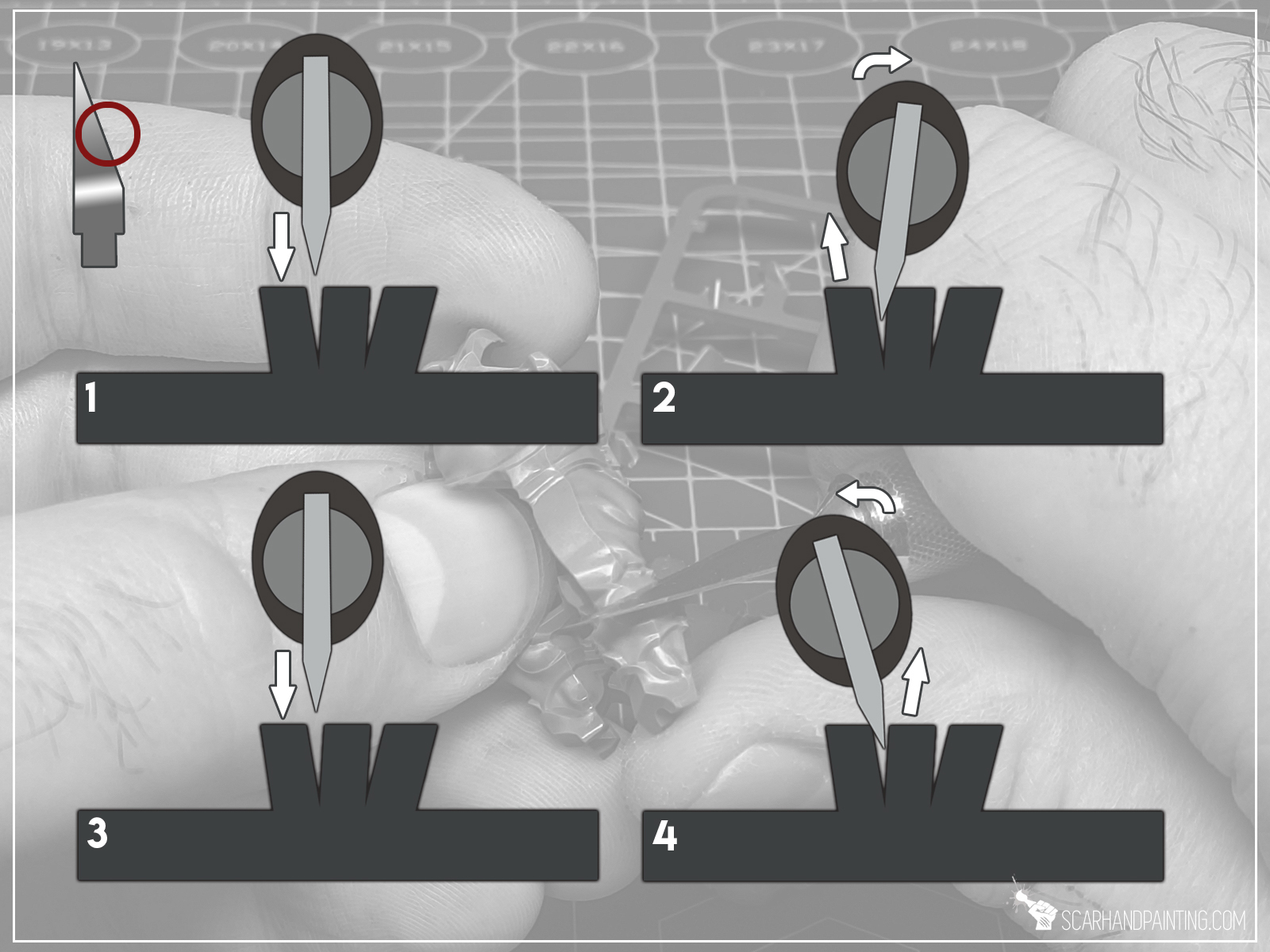
When dealing with sharp recesses, I put the edge inside, tilt it and go back along one edge, then do the same for the other side. Again I use the middle of the blade (if possible) to do this.
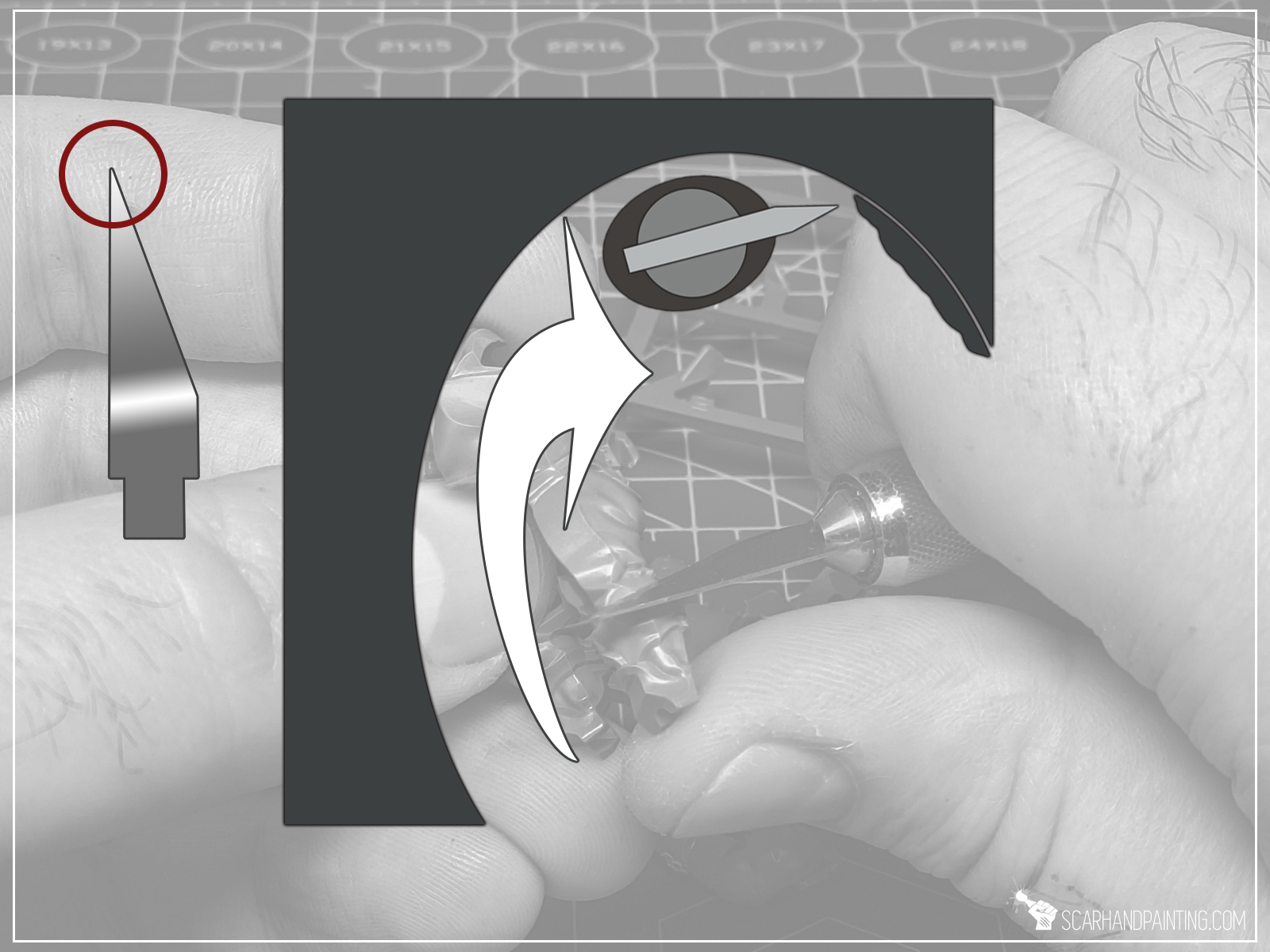
When dealing with rounded elements like inside of a wheel, or in a fold of a cloak, I switch the angle so that the blade faces direction of movement. I then make sure to hide my thumb behind the miniature and use the very tip of the blade to peel off the excess material. I do this with a single rounded movement of the blade.
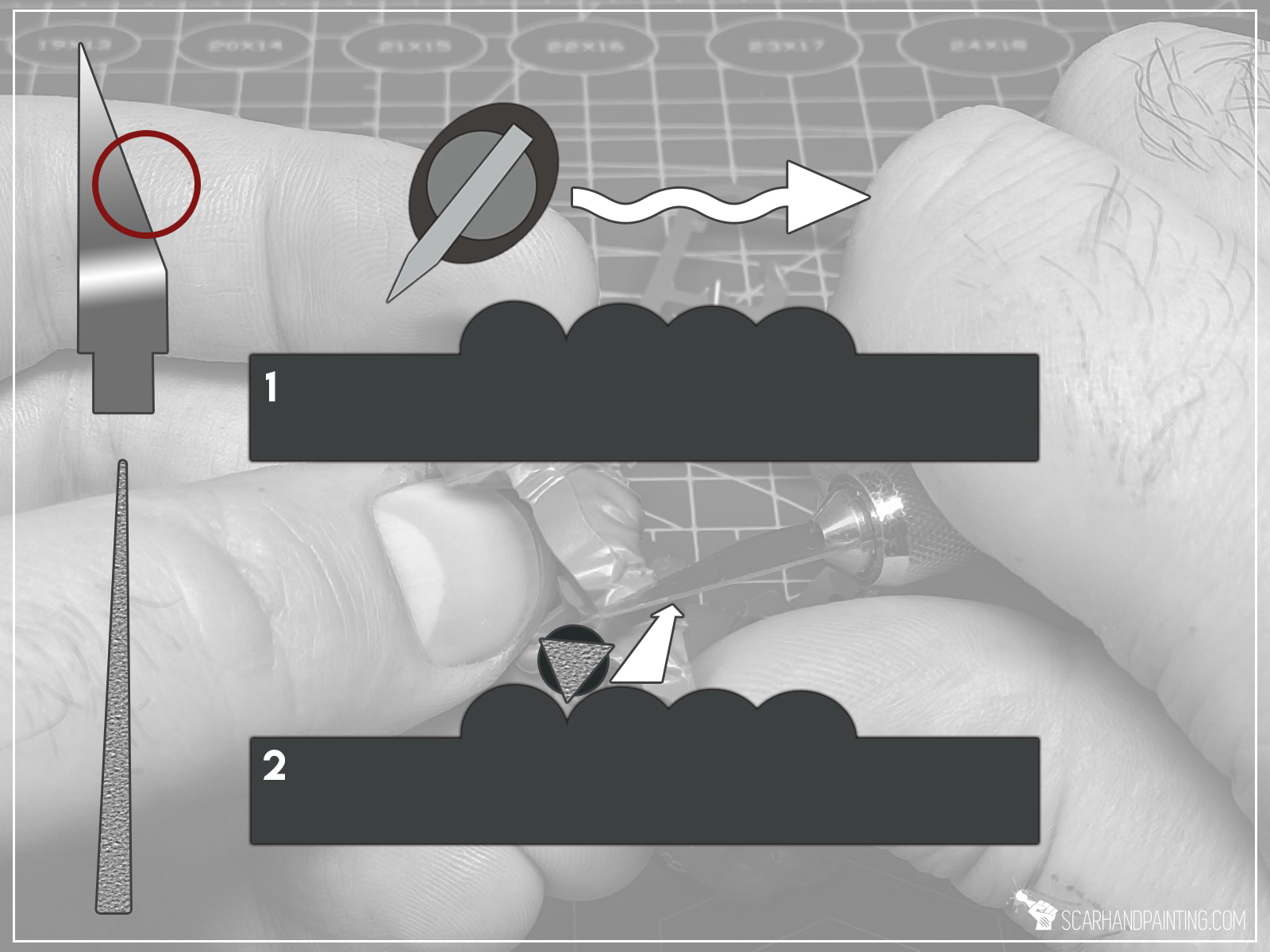
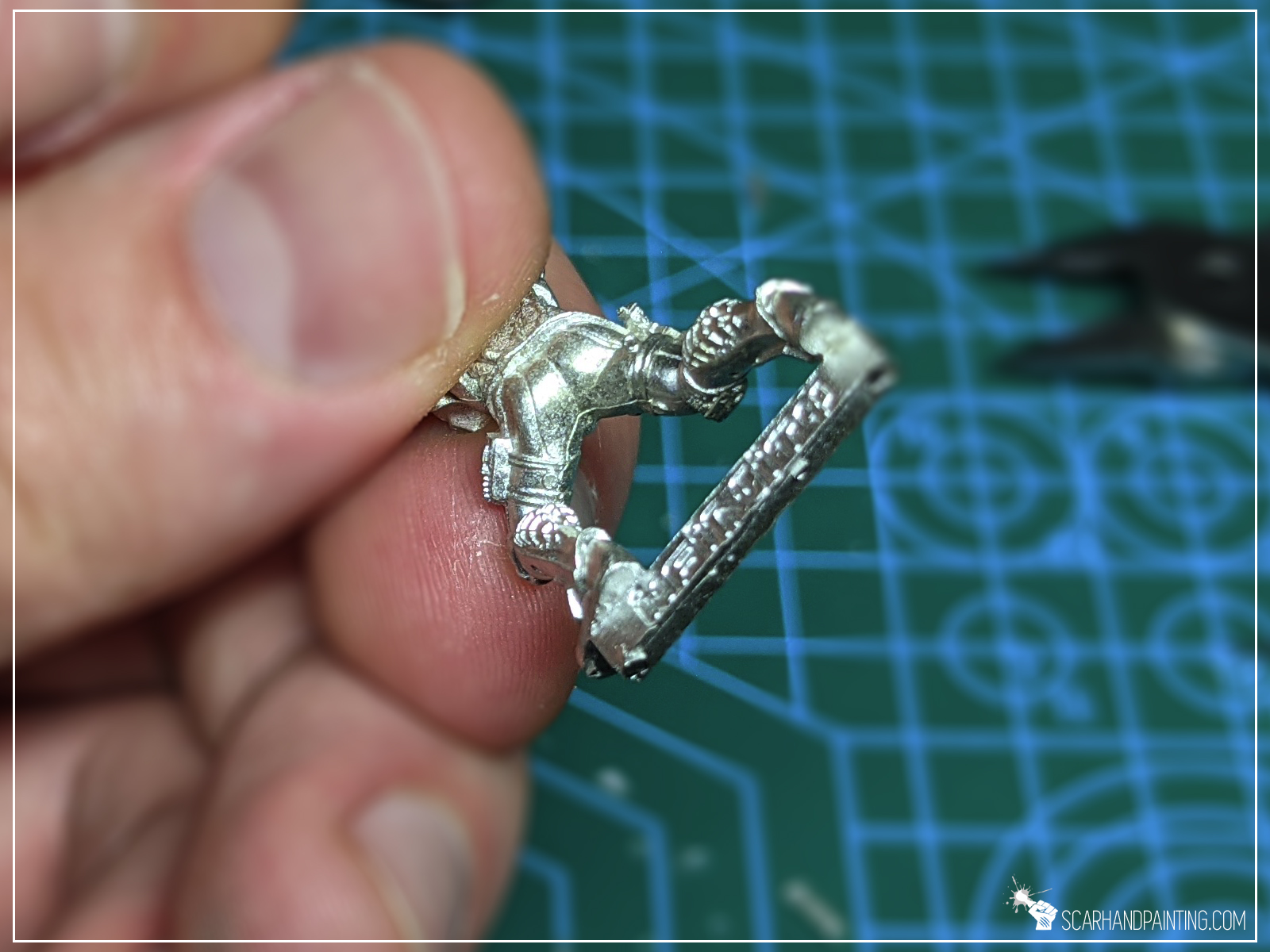
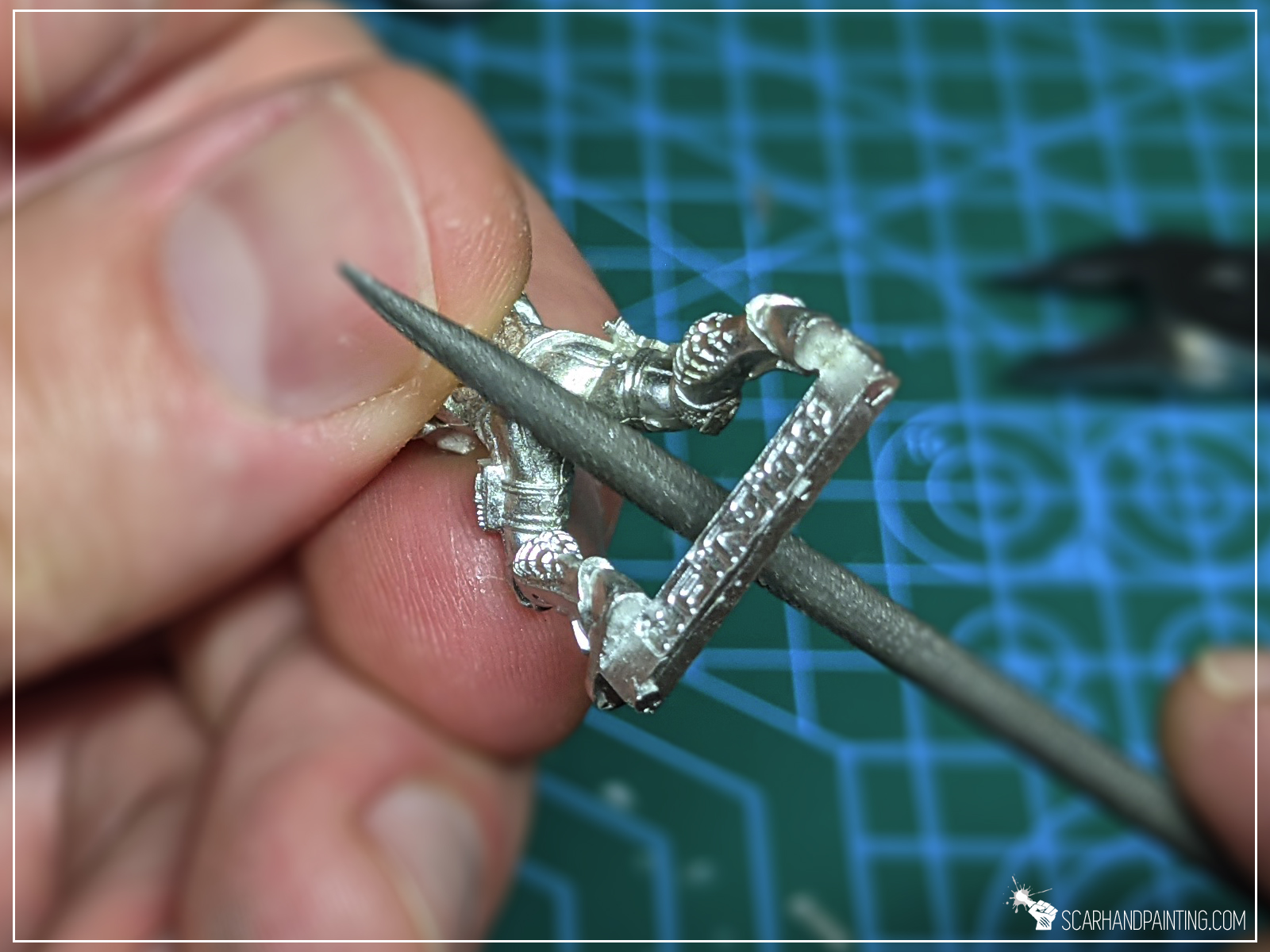
Finally, when dealing with tiny rounded bumps (like fingers of a fist for example) I start with a single, light movement of a blade, then switch to a sharp edge file…
Hobby File:
I have a lot of Hobby Files, but when I think of it – only two of them are what matters. Fully Rounded and Triangle Sharp Edged.
Back to the example picture above, I use Triangle Sharp Edged file to make a single, long, smooth movement between each bump.
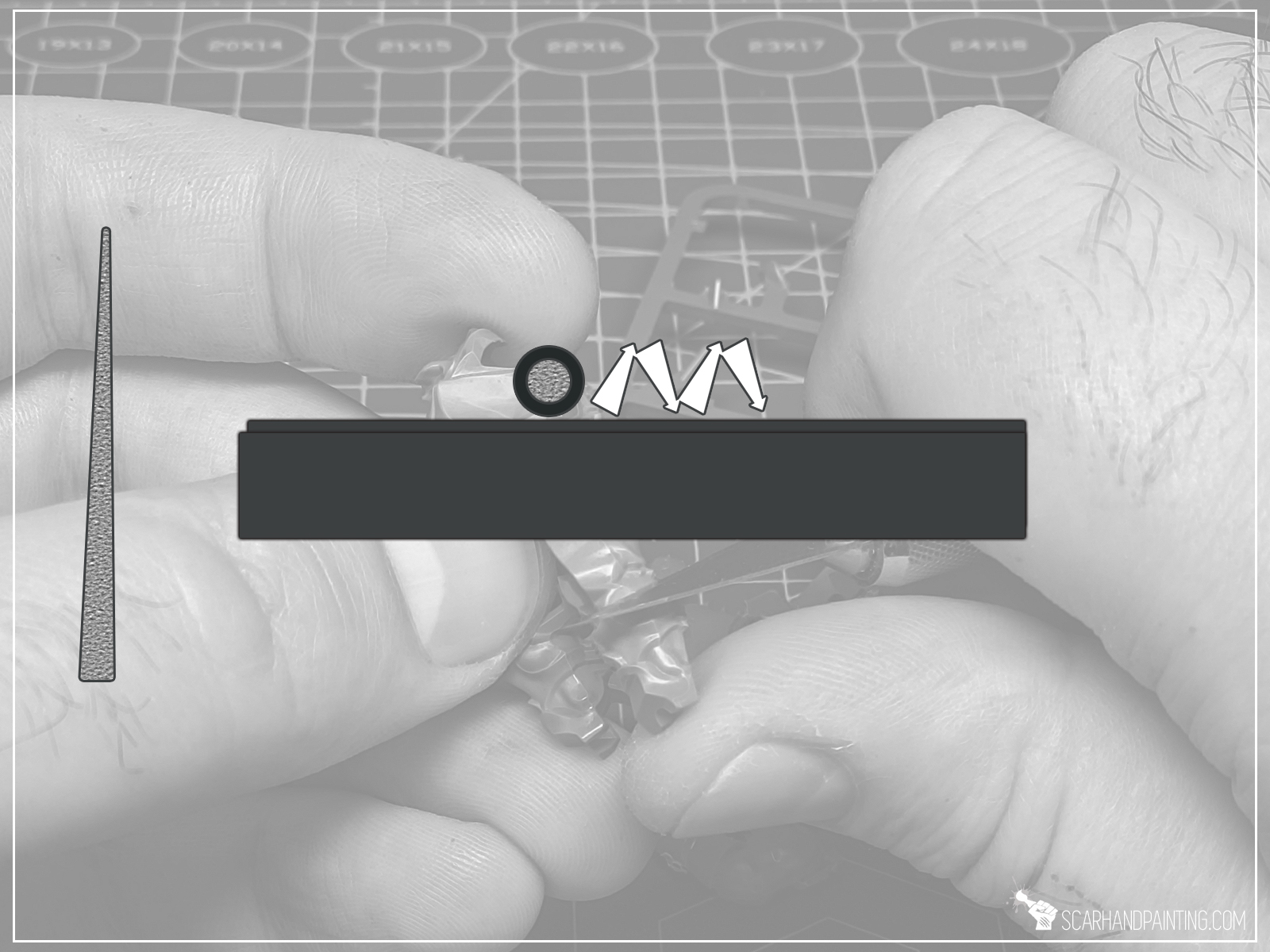
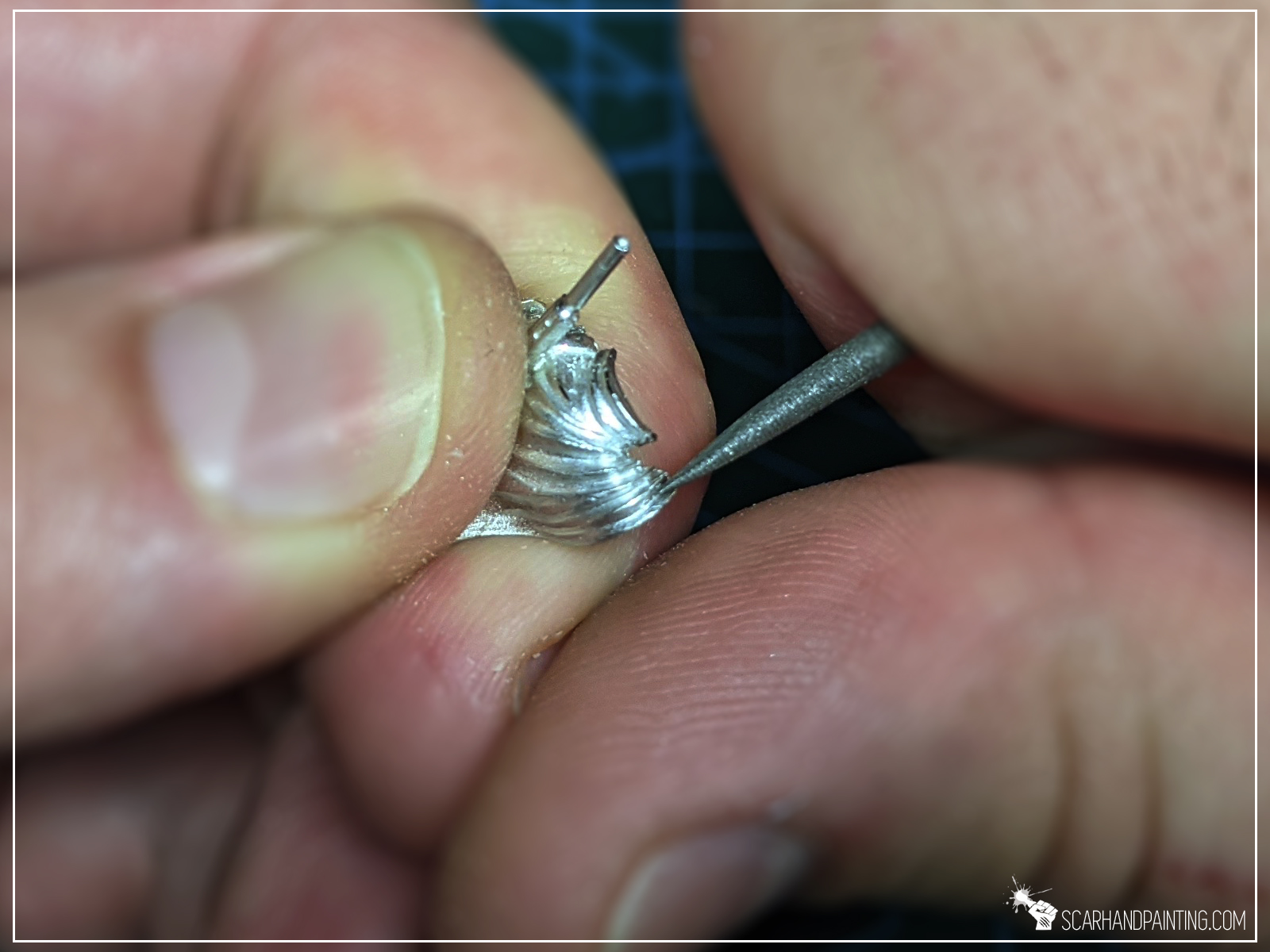
Finally Fully Rounded file is being used to smooth up any Mold Lines irregularities (when two halves of a miniature does not align properly).

Hobby Cutters:

These are pretty straightforward. I use them to cut pieces of miniatures off the sprues and to cut off any large chunks of excess material. One thing to remember is to align a flat side of the cutting edge with the area you want to cut stuff off from. This will keep the surface smooth.
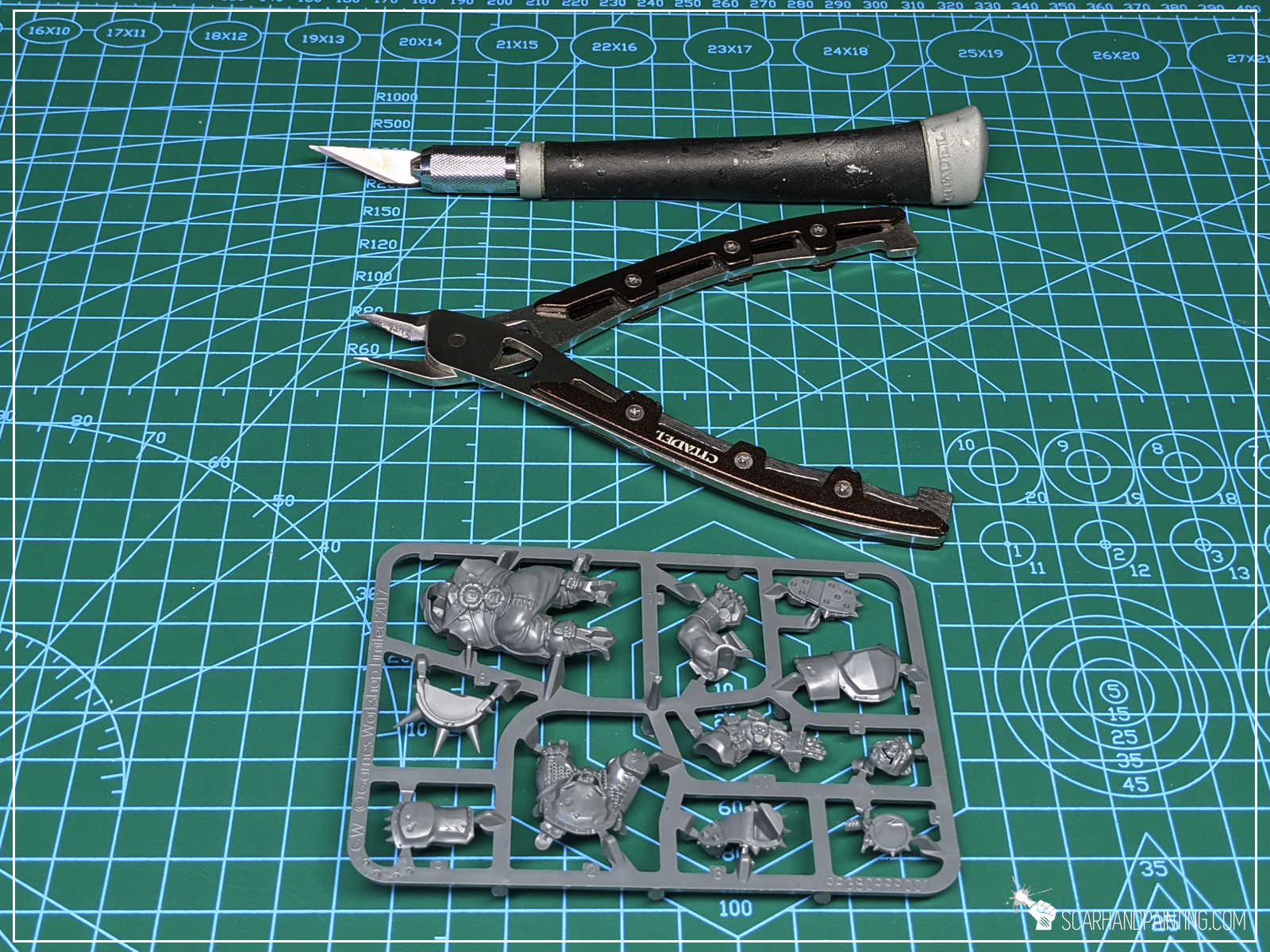
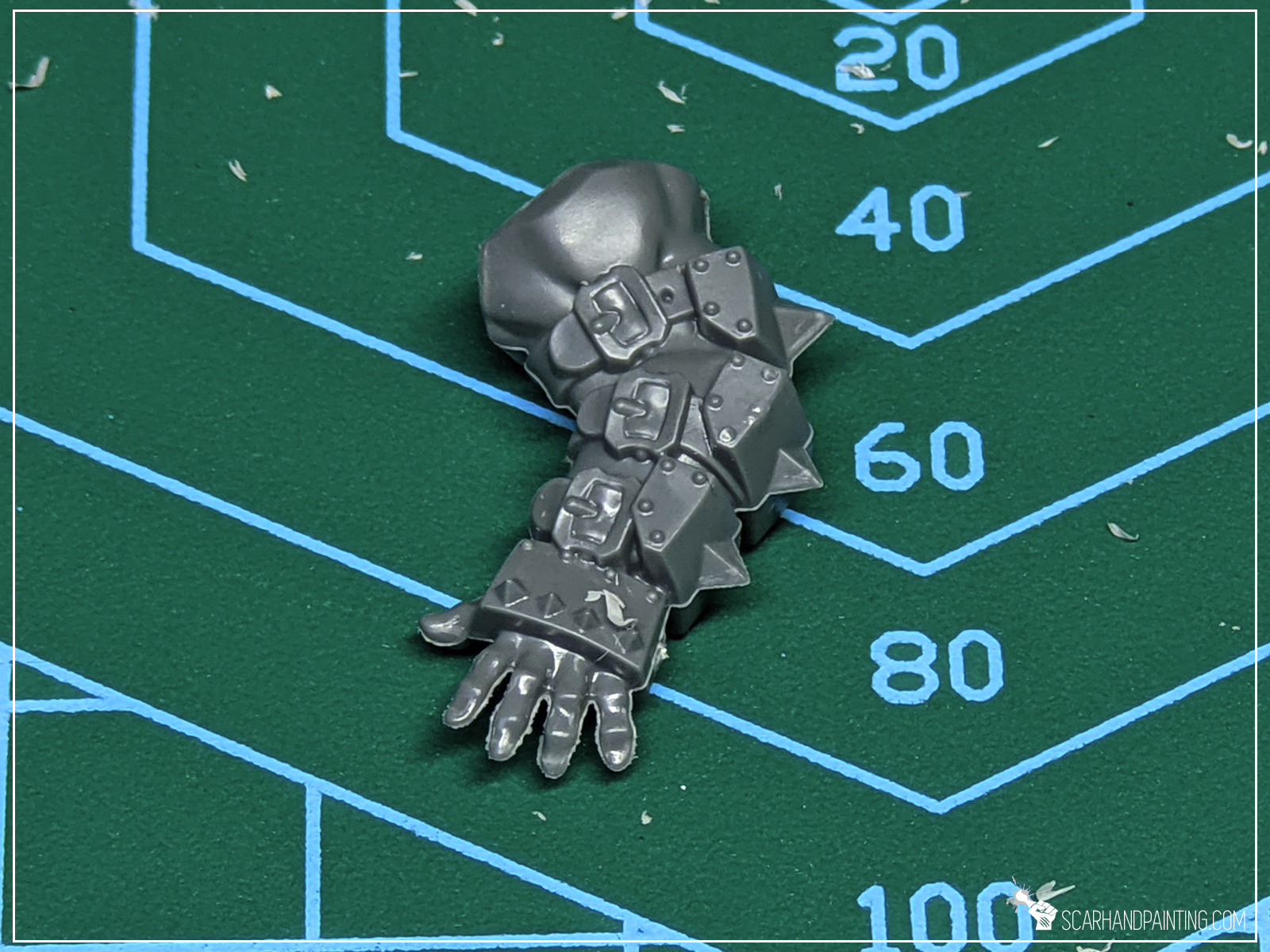
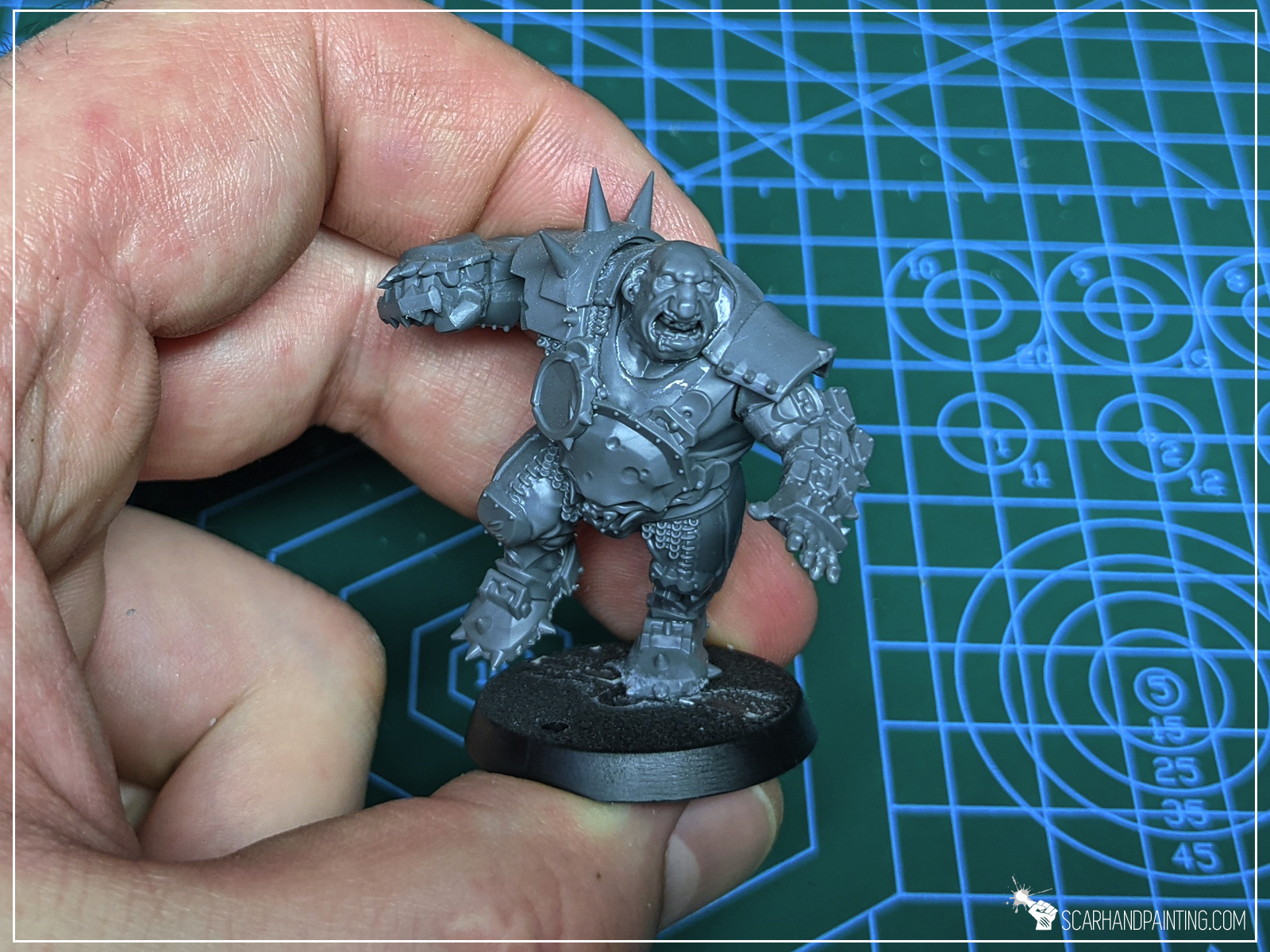
Plastic: is the most common material one might face while toying with miniatures, so let’s start with this one. There are two main kinds of plastic. Standard Plastic, which can be colored, is a high quality durable and elastic material with crisp detail and no bubbles. Worst issues are mold halves not aligned properly, but this can usually be dealt with by applying more force to a hobby knife. I rarely use files to deal with plastic and prefer to work with Hobby Cutters ands Knife instead.
Board Game Plastic, which is a total gummy disaster and cannot be filed (leaves tiny strains) unless put to a refrigerator for couple of hours. My personal rule is to leave it be, bad material and I just do not prep it at all.

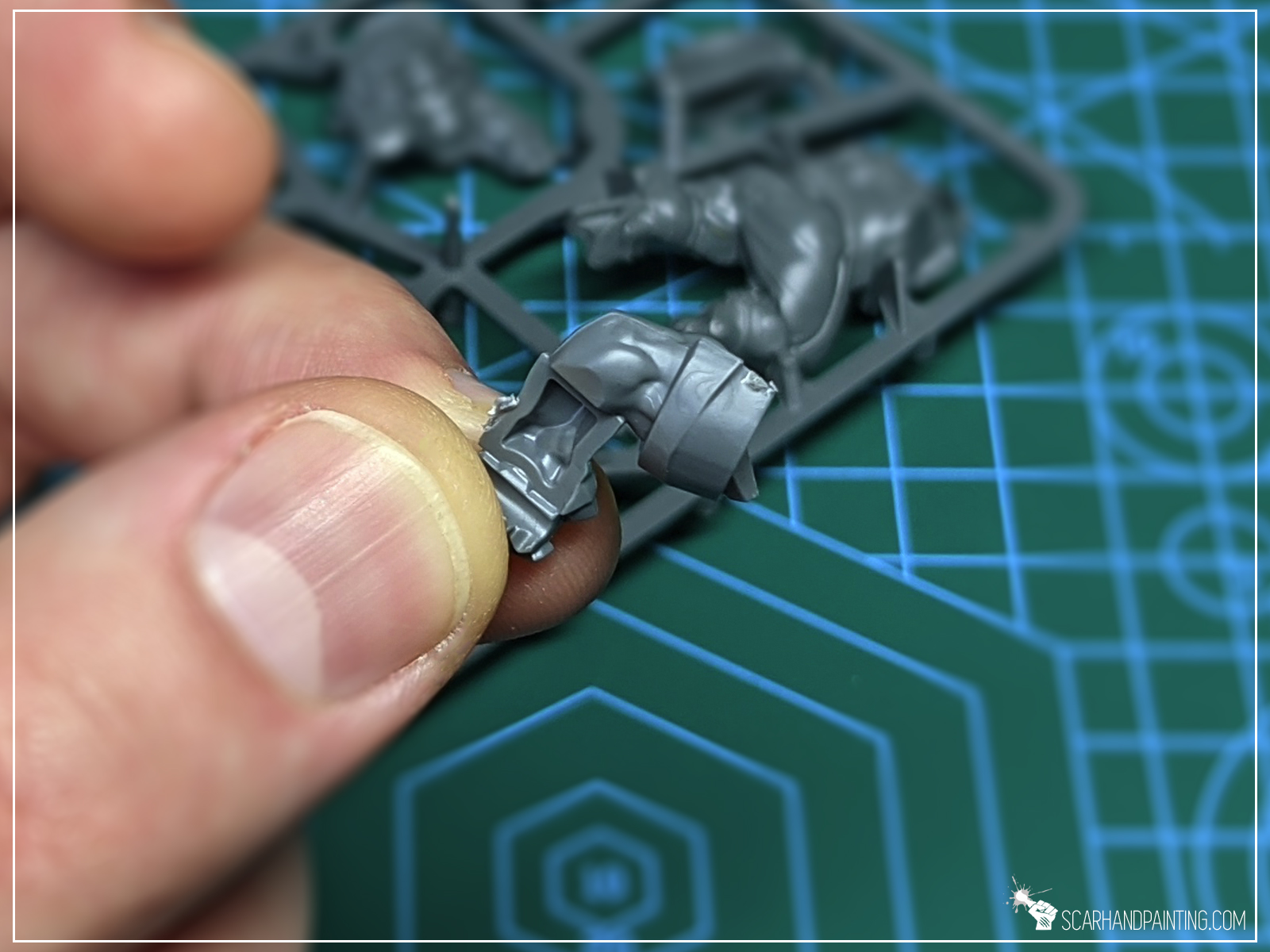


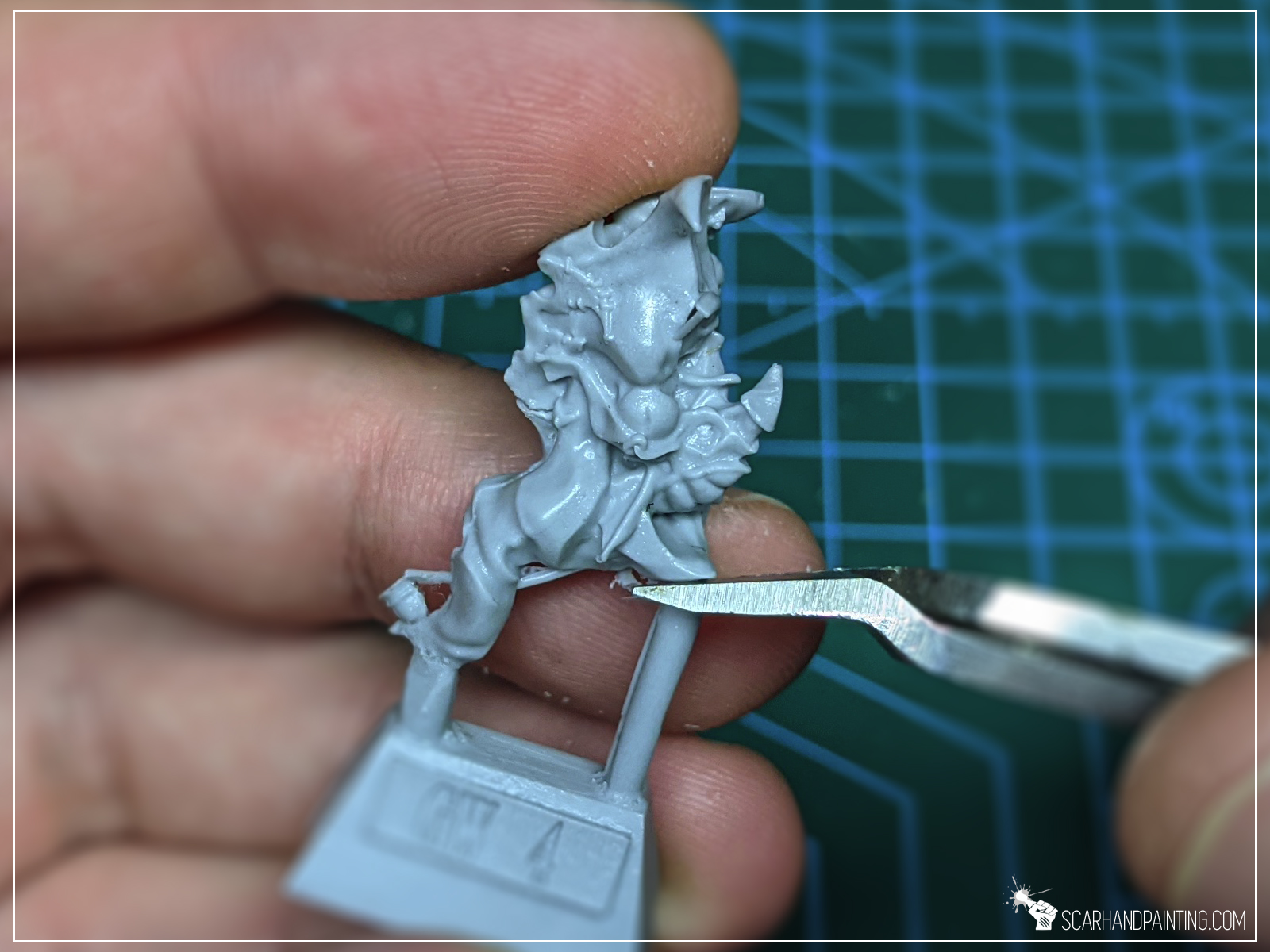
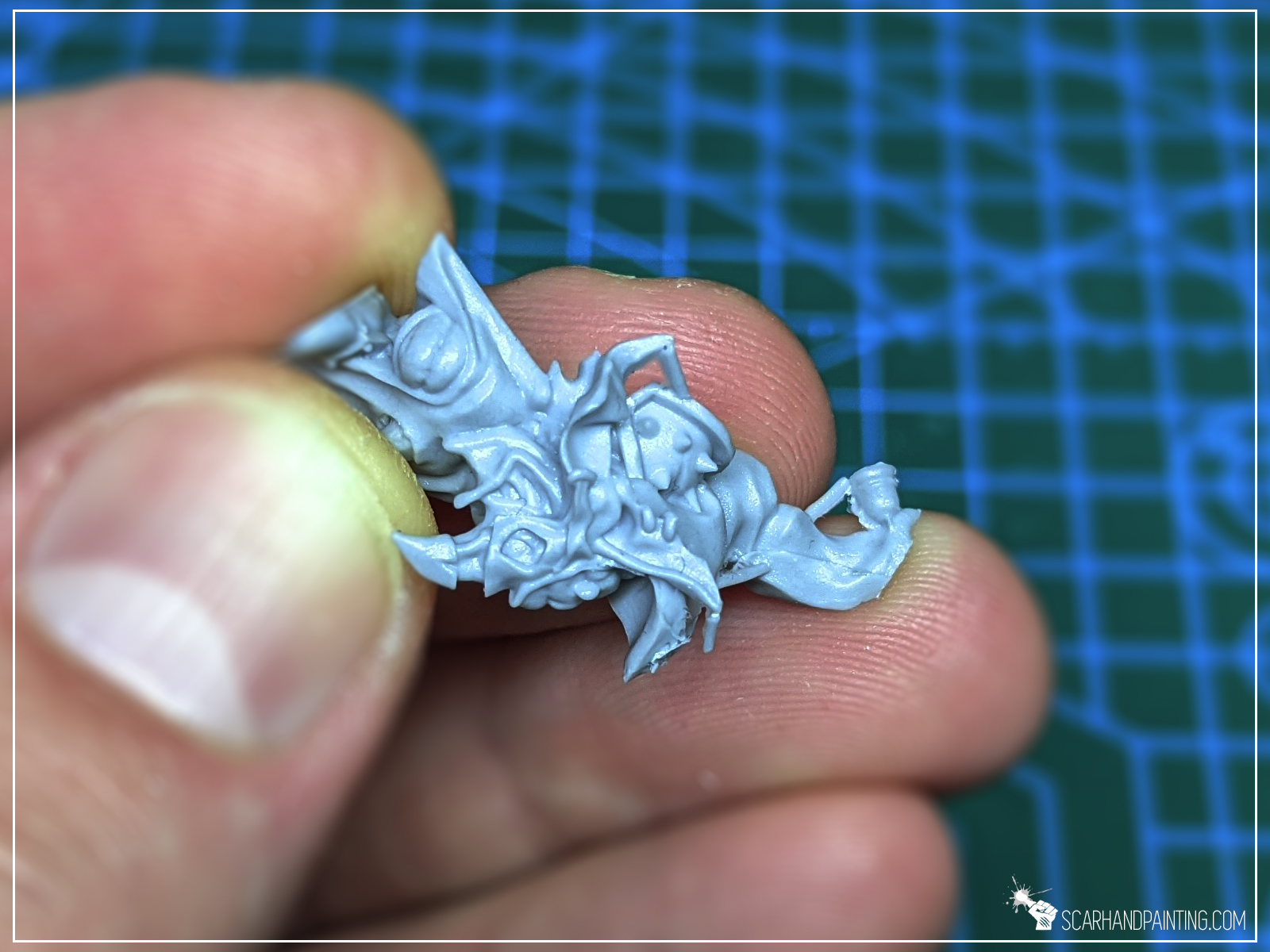
Resin: is the most problematic of the three main materials I have worked with. Resin is fragile, easy to break, tends to have hidden air bubbles plus it is common for mold halves to not be aligned properly. On top of that resin miniatures are sparkled with a lot of supports (tiny excess elements). On a bright side, a properly casted resin has a very sharp detail and texture, is easy to glue together if broken and can be modelled easy with a knife.
When dealing with resin I prefer Hobby Cutters and Knife over files, using the latter only in case of emergency.
Important note: wear a face mask when filing resin. You don’t want to breathe it in.
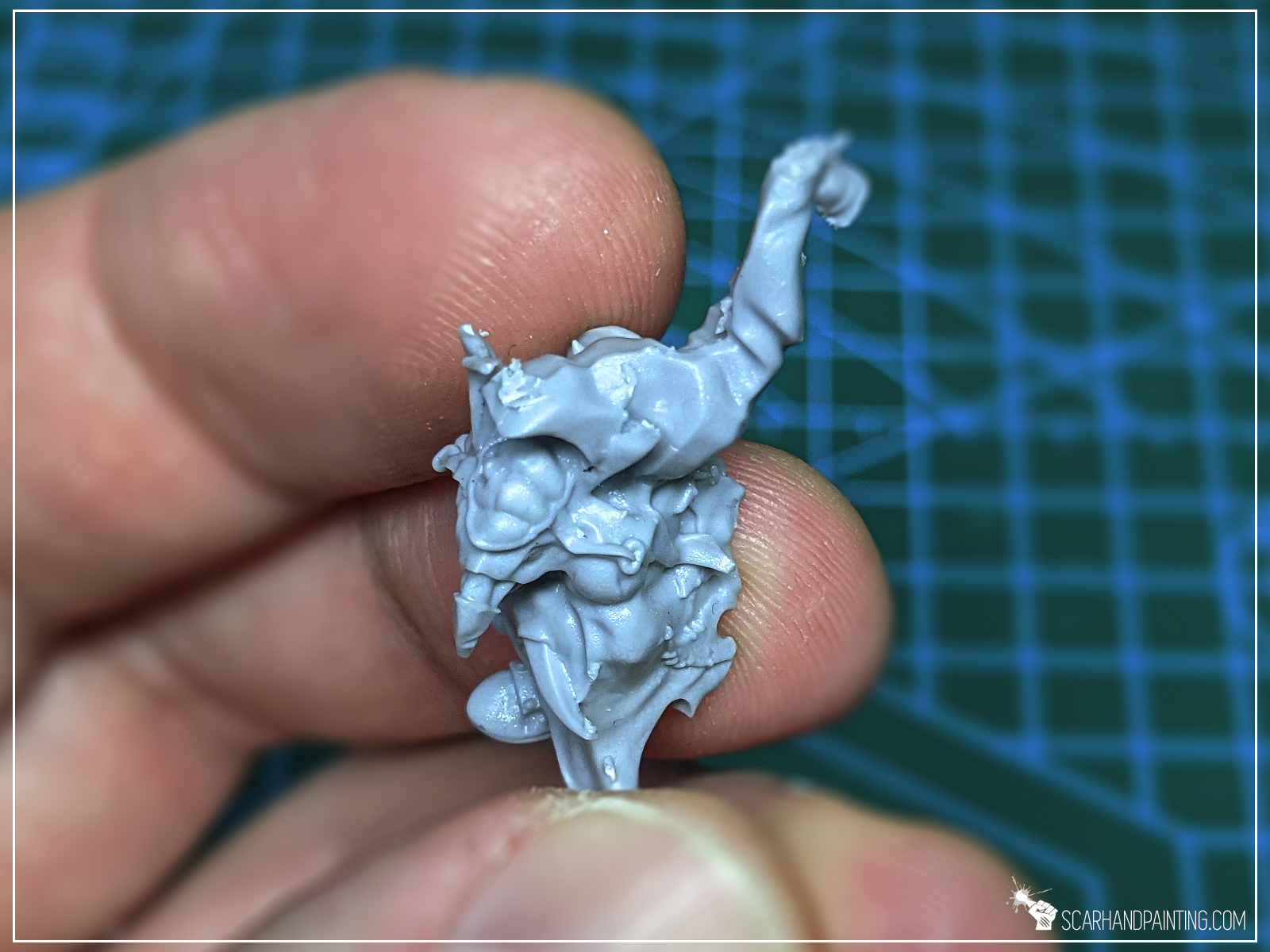
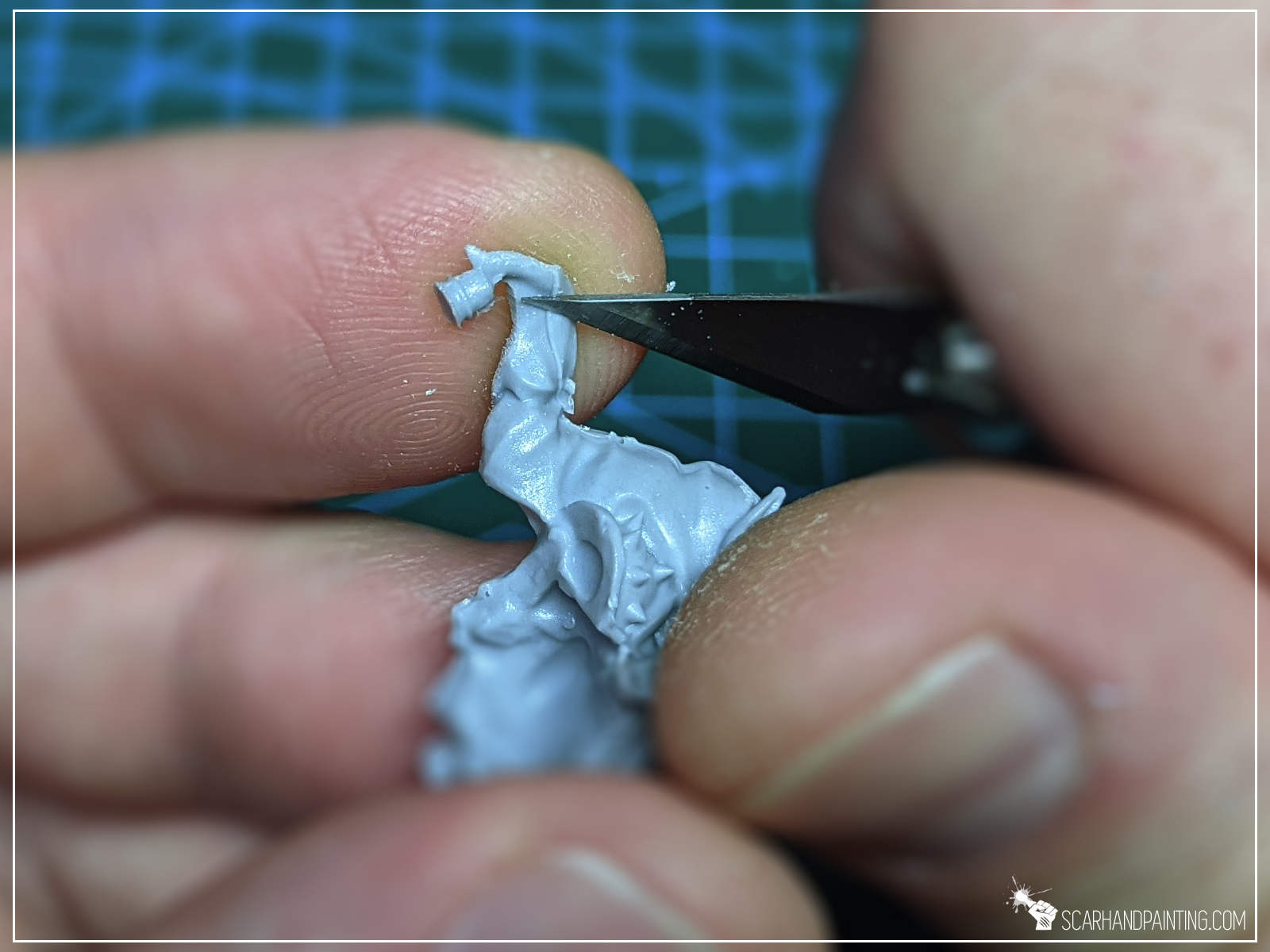
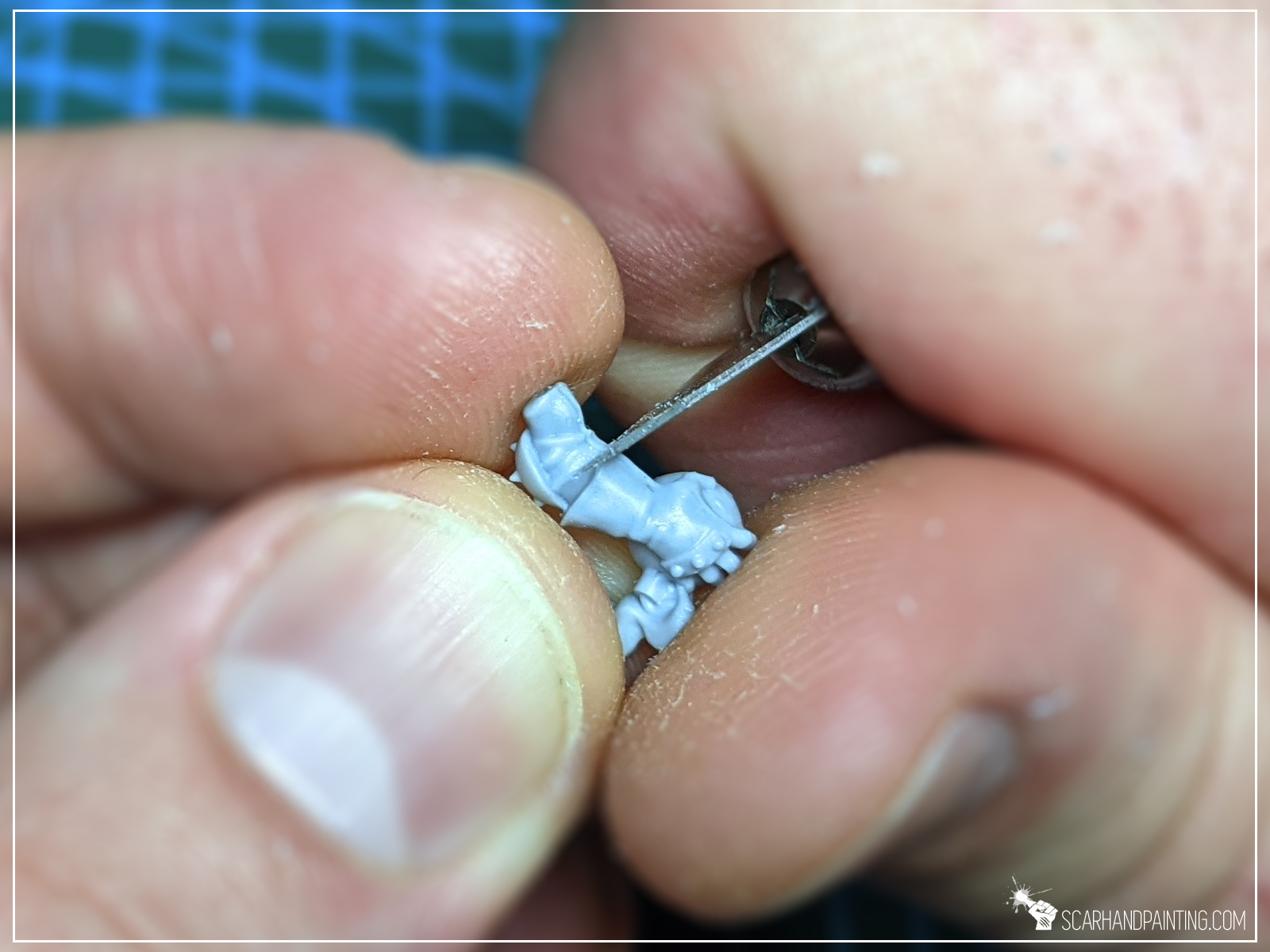
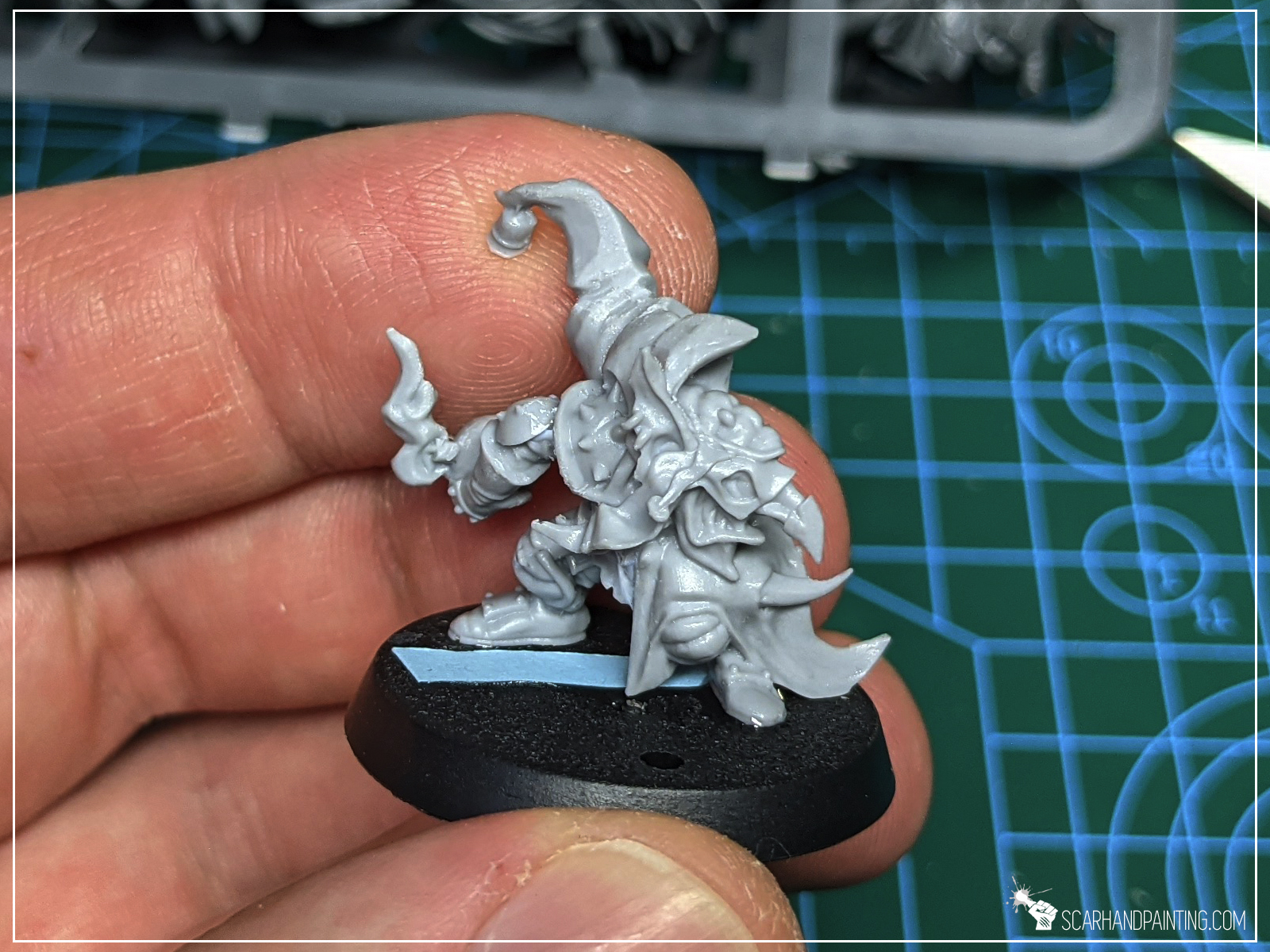
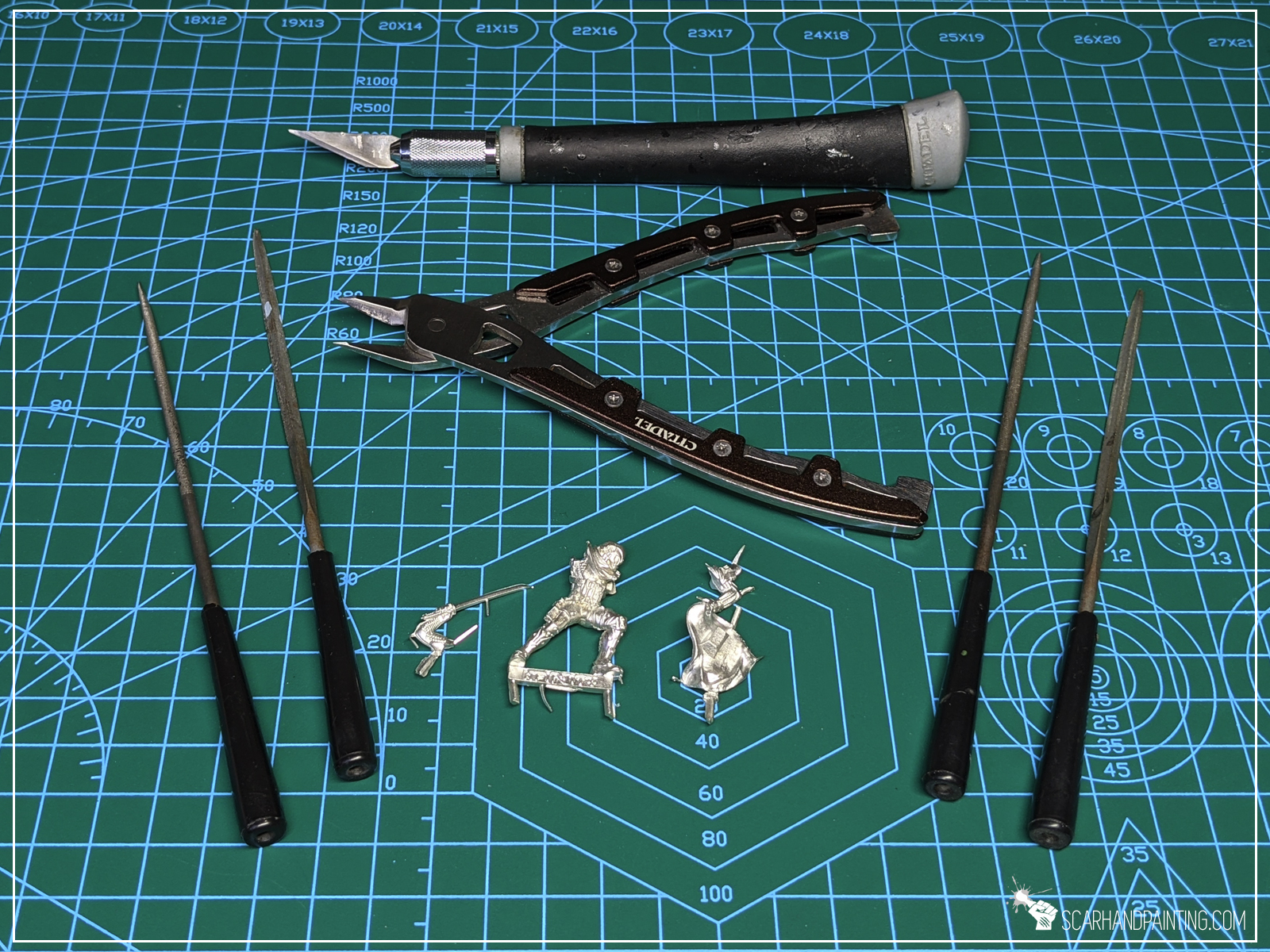
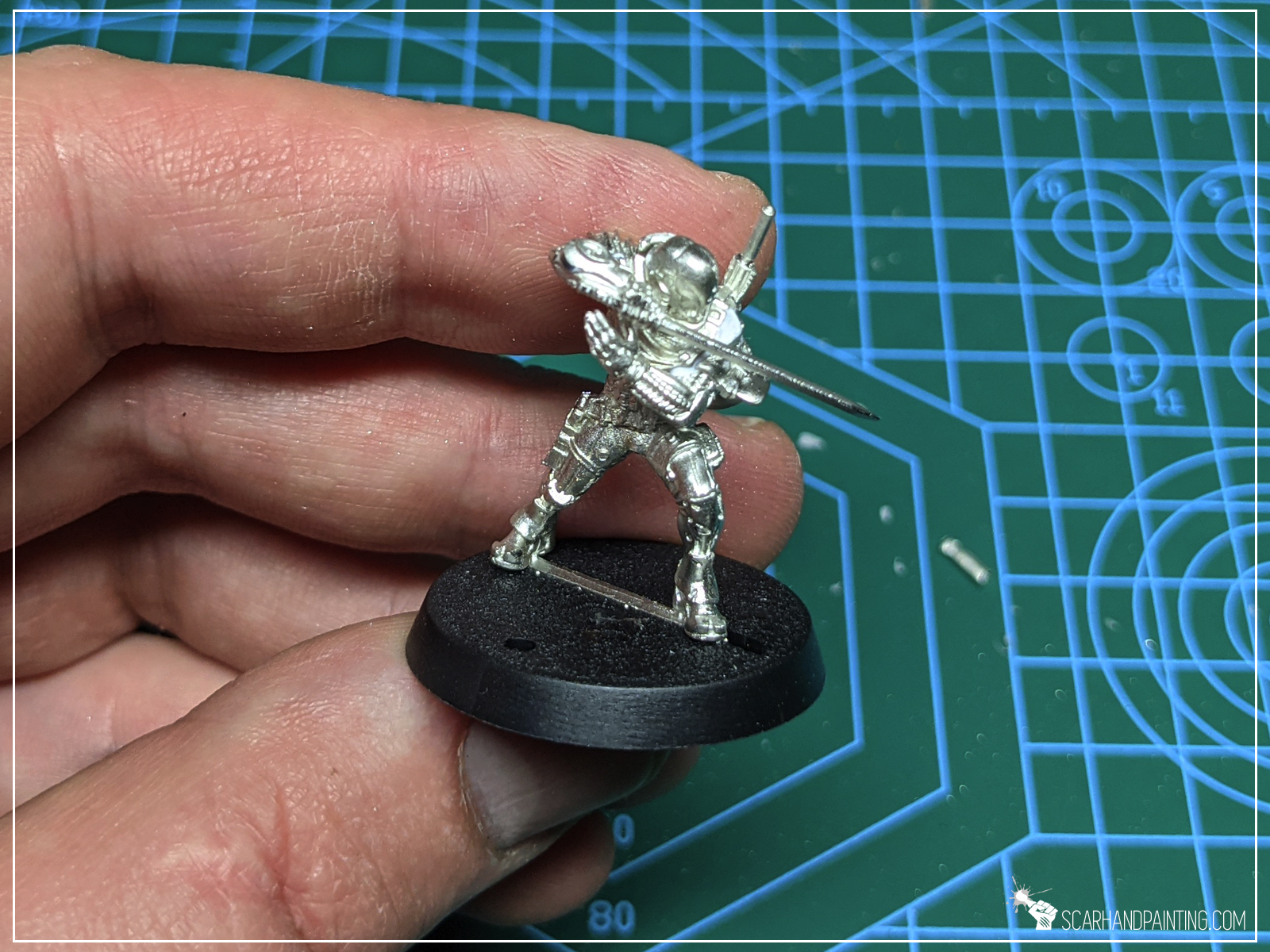
Metal: is pretty easy to work with. It is usually the softest of all three, can be bent easily, is very easy to file. I do prioritize Files over Knife when working with this material, except for long flat areas and fragile elements (swords etc.). Whereas scratches on plastic and resin are prominent, metal can be intentionally scratched with a tip of a File to remove Seam Lines from detailed surfaces like between hair and on a face.
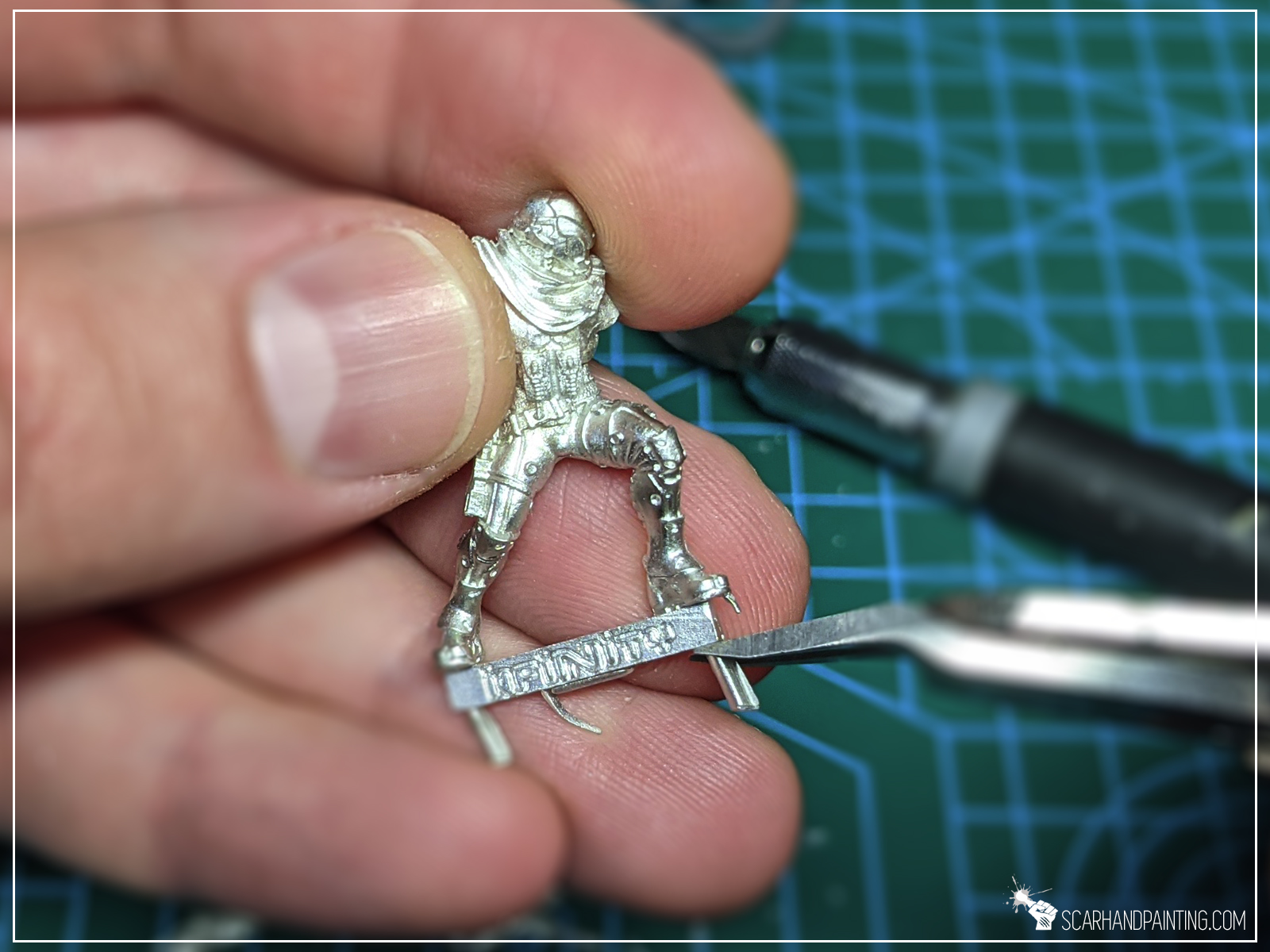
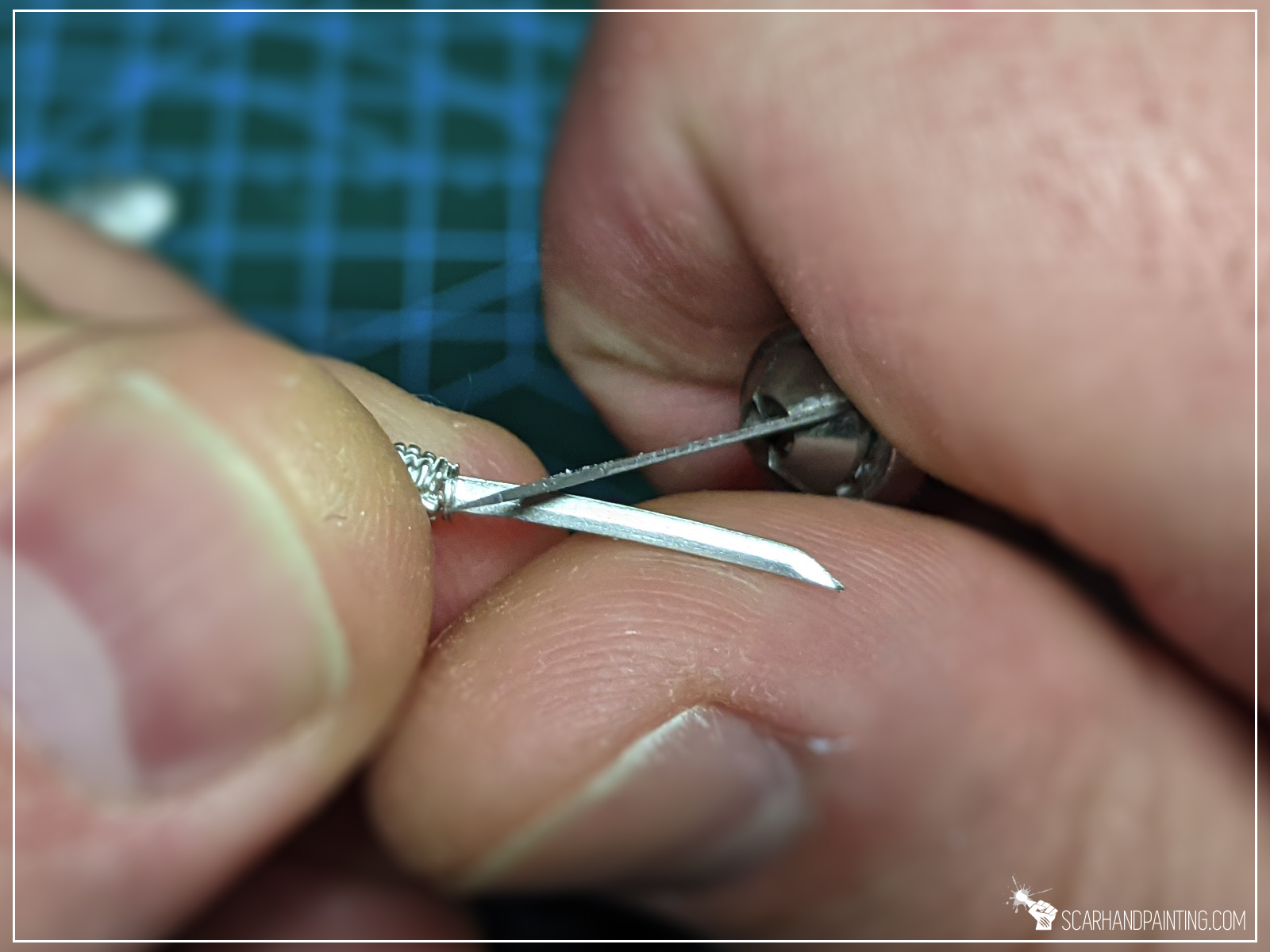
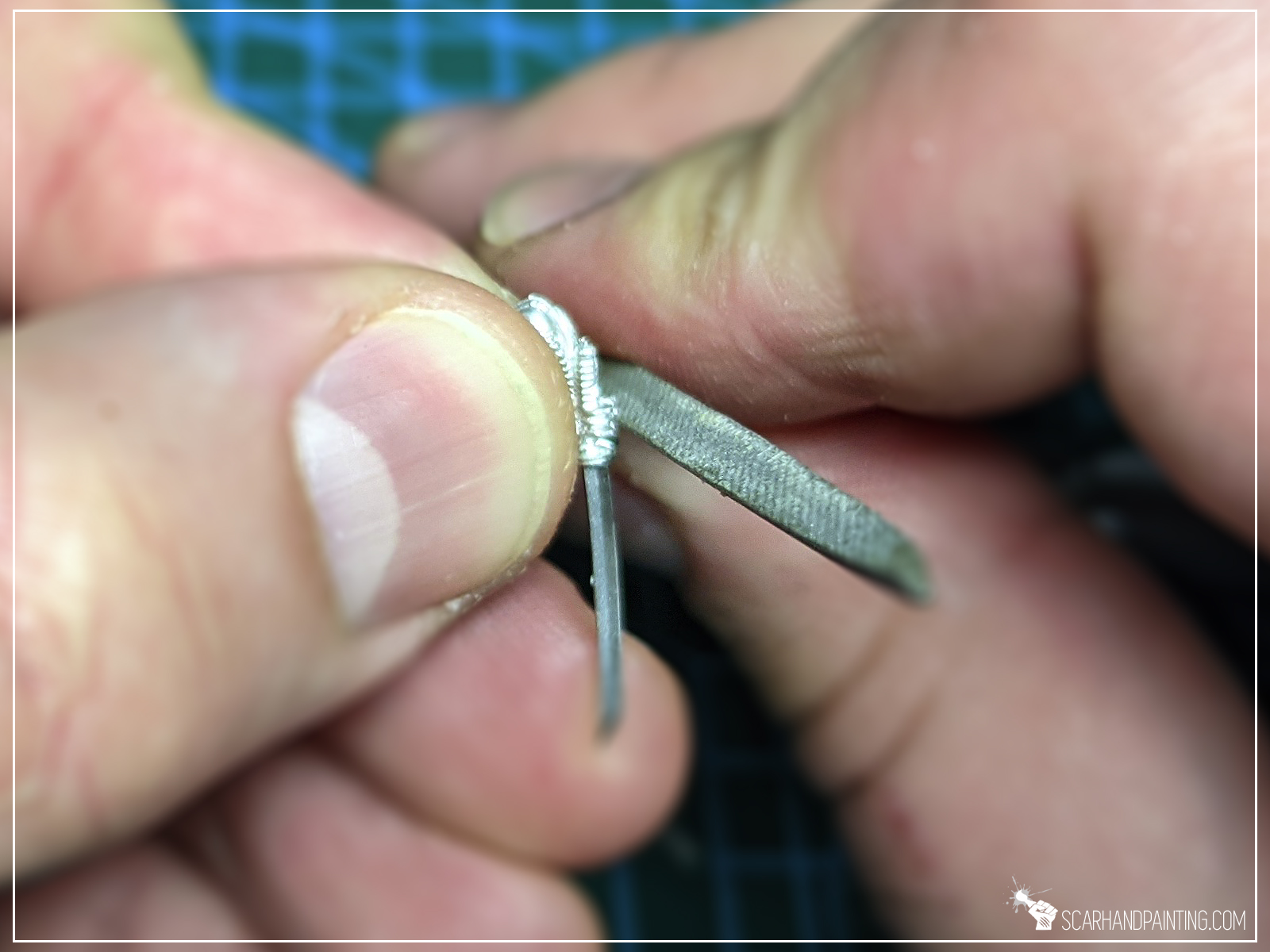
Apart from pics, you can see me in action in this Youtube video:
Thanks for reading. If this tutorial helped you, be sure to let me know either in the comments below or at my facebook profile.
Please link this tutorial to anyone who likes to learn new hobby tricks.
Lastly I also invite you to follow me at Instagram, where I drop some nice pictures from time to time.

2020 right? How to even begin? I feel like 2020 was all about the extremes. I had my share of some of the worst and some of the best things to happen to me in my entire career. No middle ground. I was seriously considering sharing with you, dear readers, some of the sad stuff that I had to overcome last year, but scrapped the idea. We all had our share of weight to lift. I bet you’re fed up with sad stories. Let us focus on the bright side.
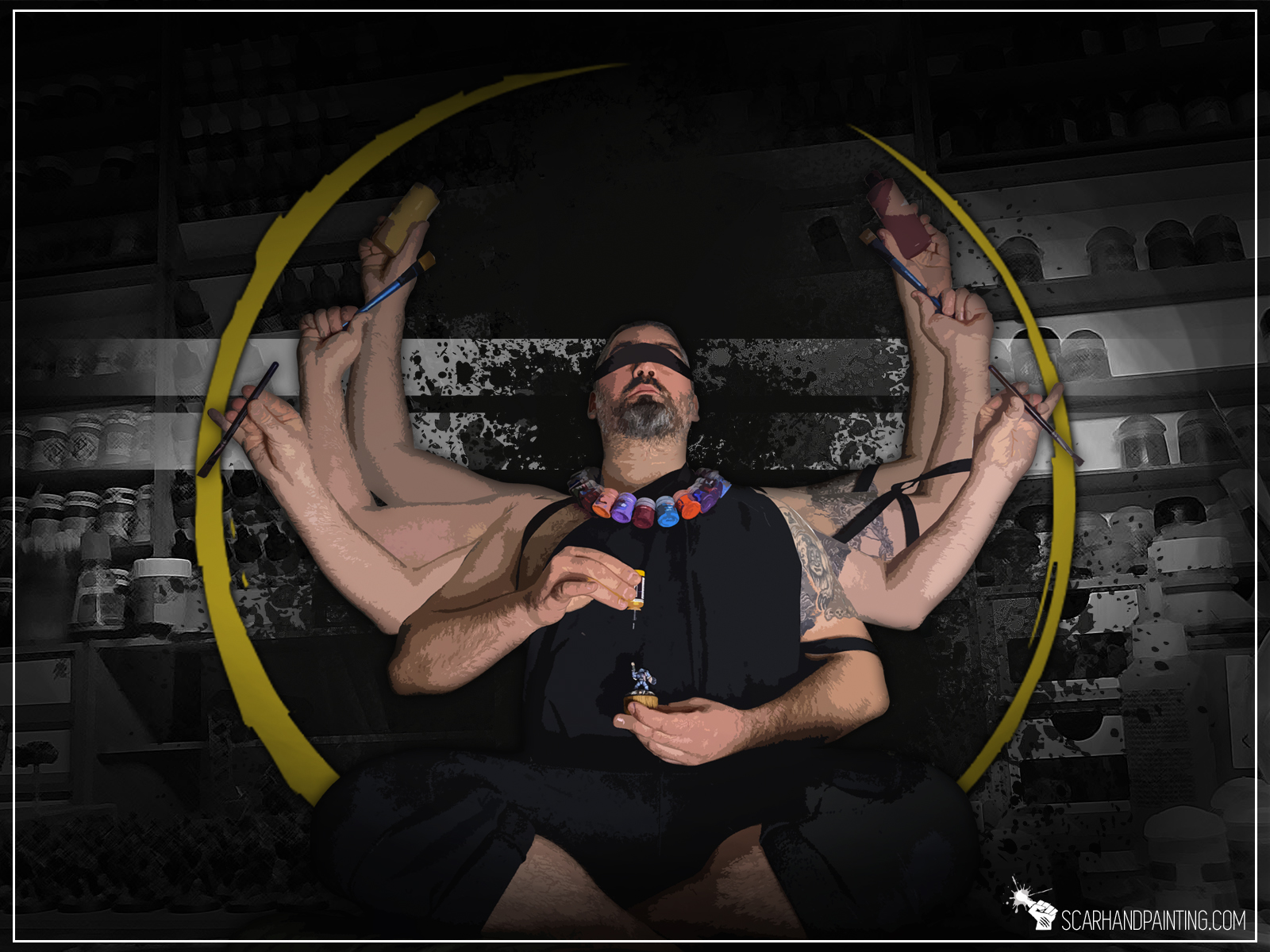
Being at once a dad and a commission painter is hardcore to say the least. I worked from home before it gone mainstream, you know… and I used to love it. Nowadays, with a one year old kiddo running around the place… I miss these 12 hours straight painting marathons. Was something primordial about it. This special mood, unbroken concentration – made me feel whole. It is in the past now. No longer being a master of my own time, somewhere along the road I lost my daily rhythm.
I had to paint this image before you, this emotional setting. Bare with me – it is in these conditions, that some of the most exciting, awesome works of my life came into being! Last year was full of variety, demanding display pieces, high level collections…you name it! All I could hope for as a painter and it really kept me going. Pushed me to the limit, but also helped me grow as a hobbyist, allowed me to focus on plans to improve my business. Finally, motivated me to explore brand new things.
Still I wouldn’t make it without help and support from amazing people I’ve met along the way.
And on that note I want to thank all of my customers and friends, who entrusted me with their miniatures. Especially: Andreas, Bettina, Clemens, Jek, Laurent, Max, Michael, Olo, Romana, Thomas – thank you for sticking with me and helping me stay on this path, I so recklessly chose to walk.
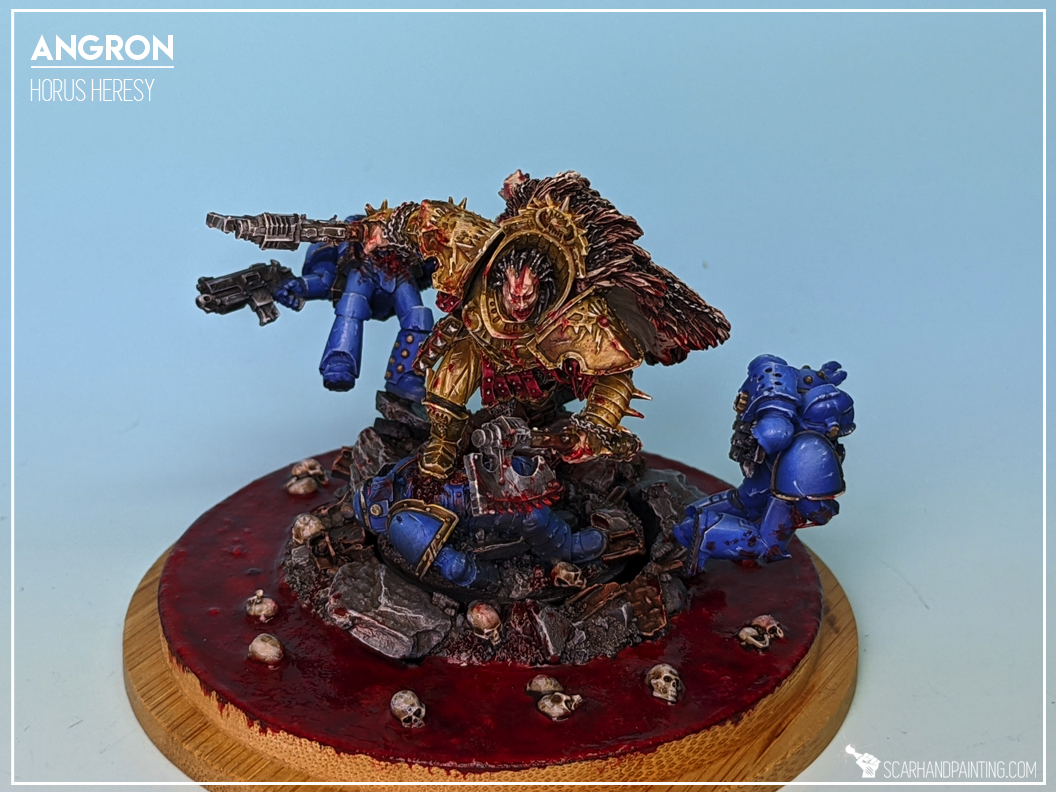
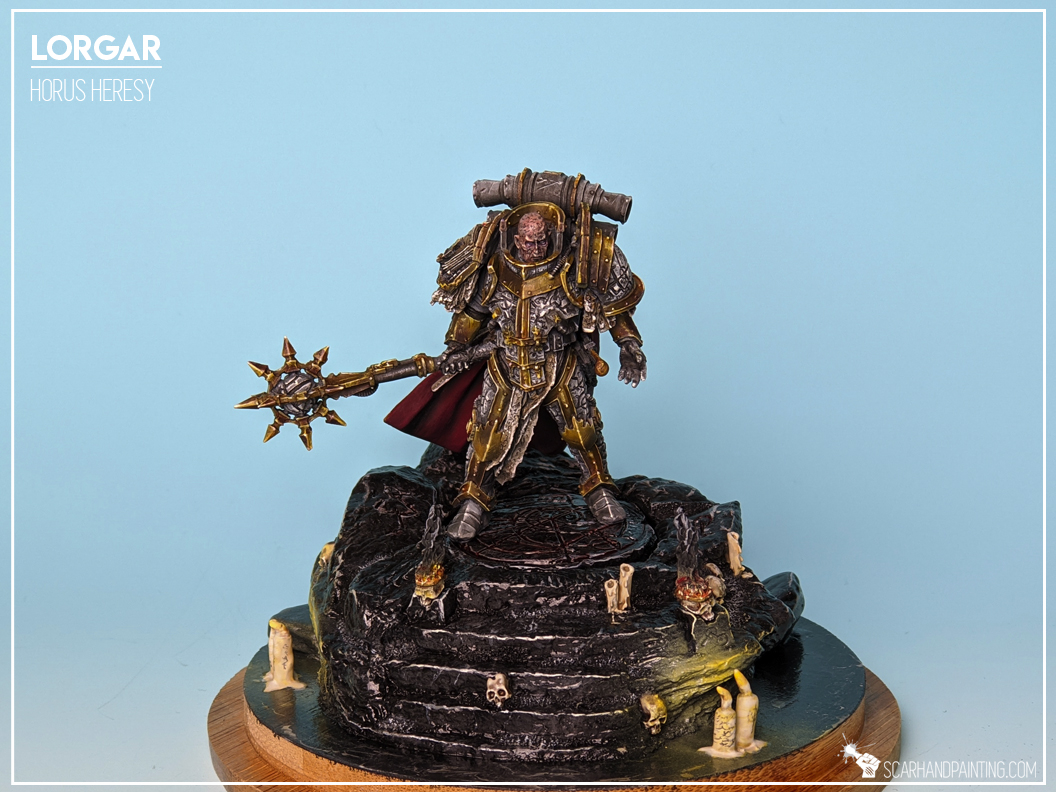
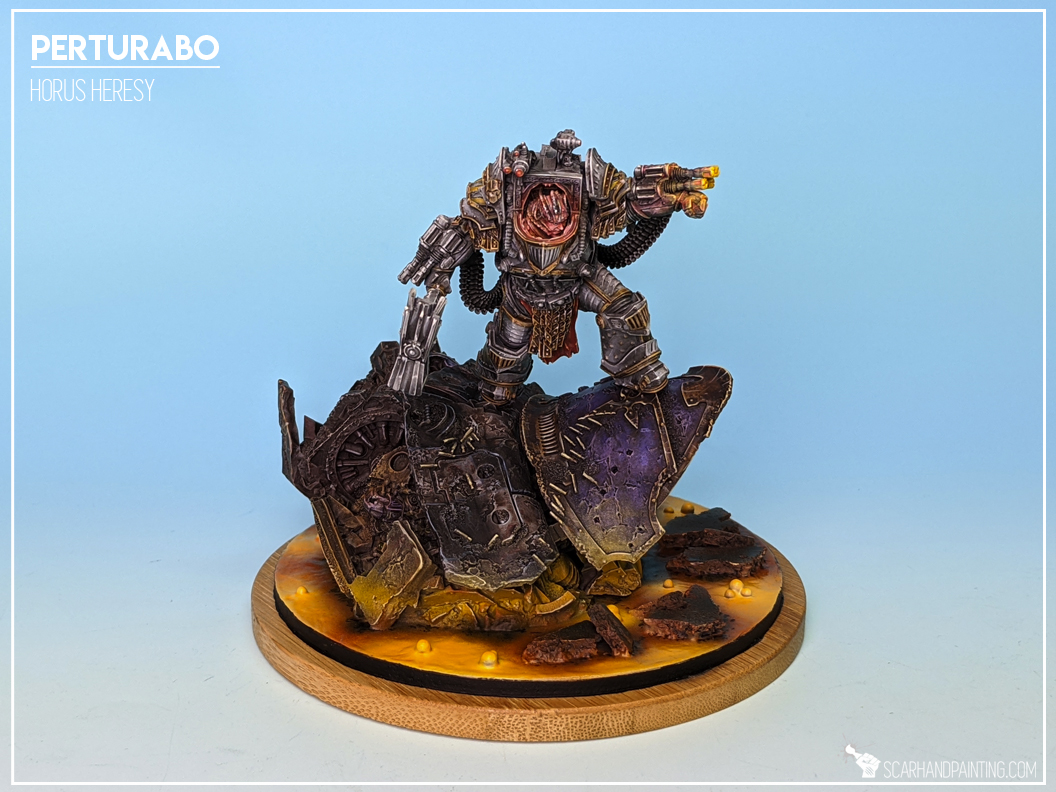
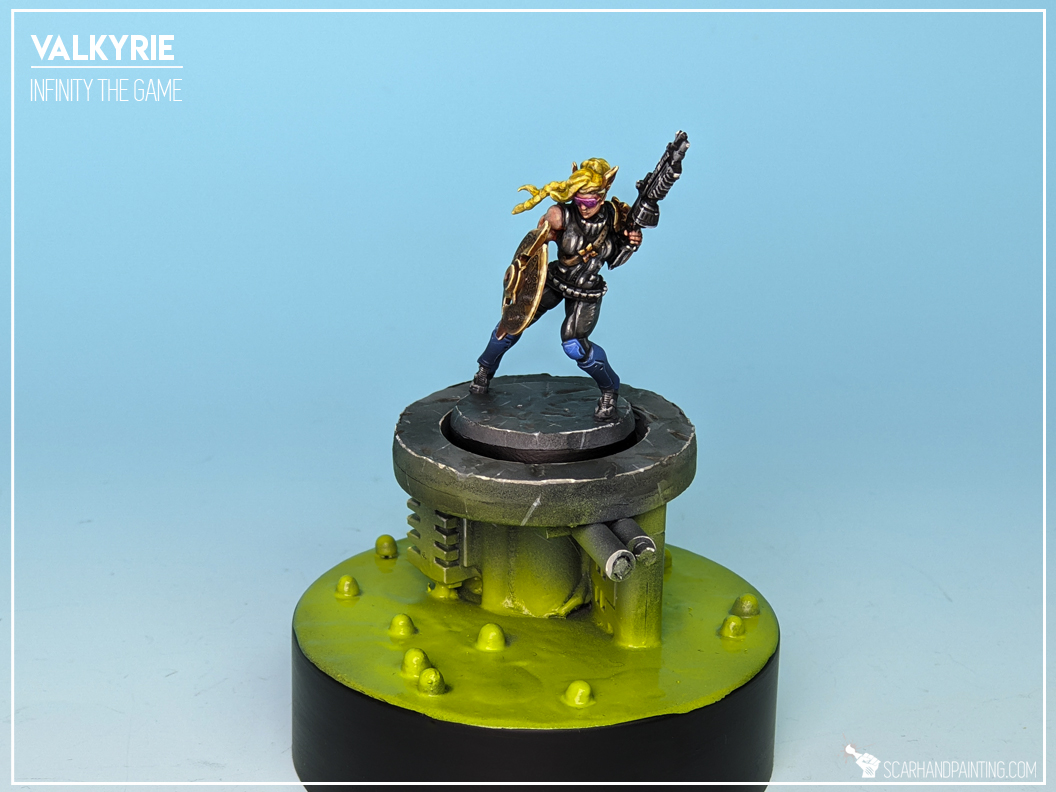
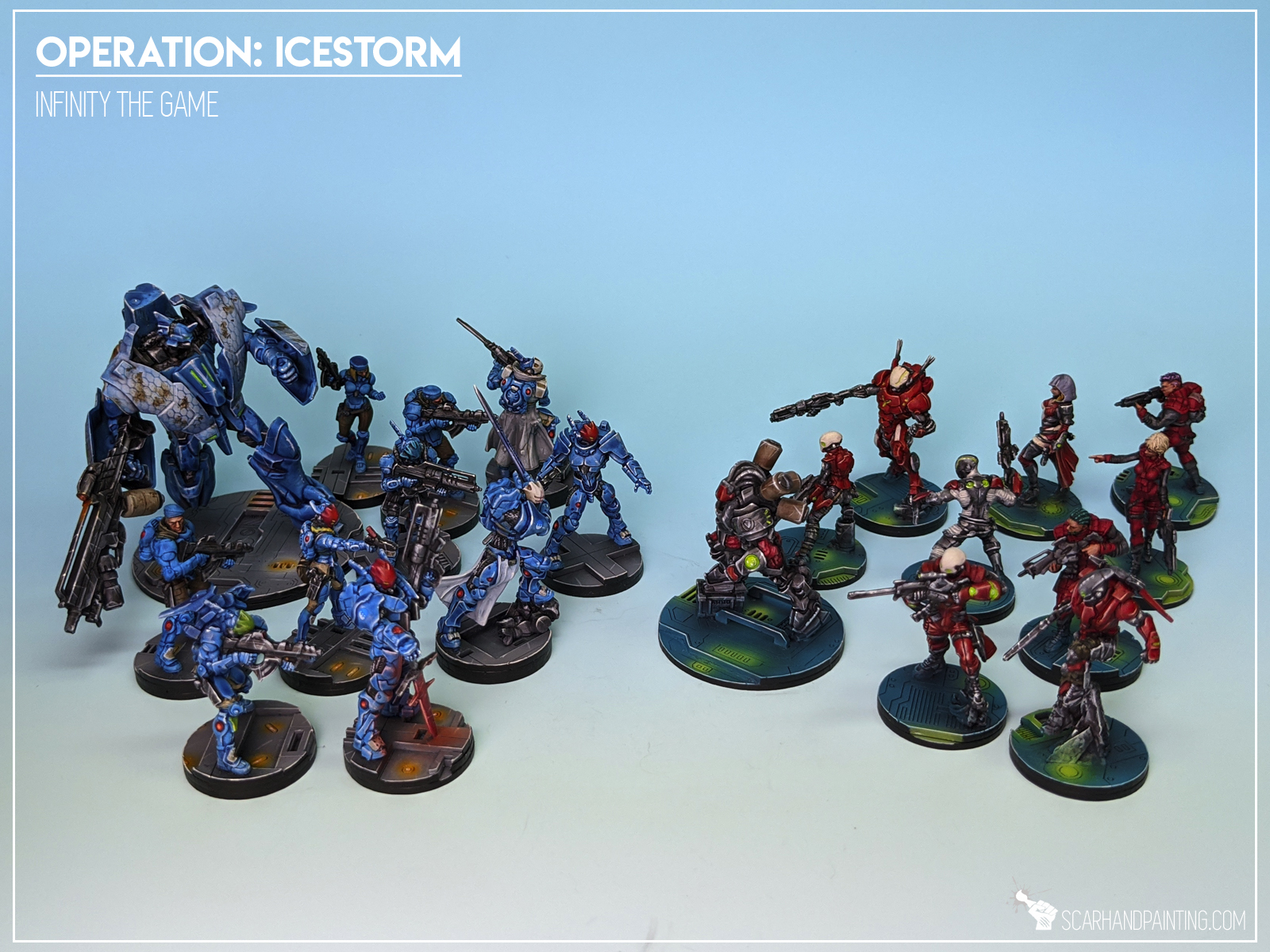
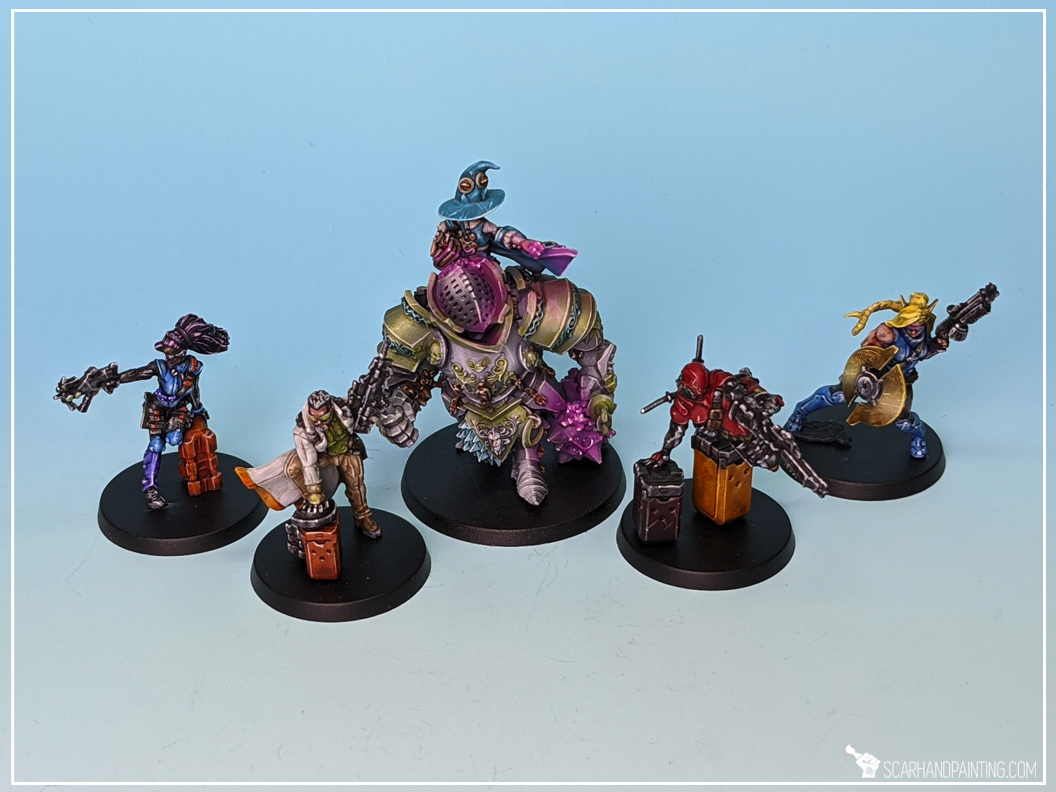
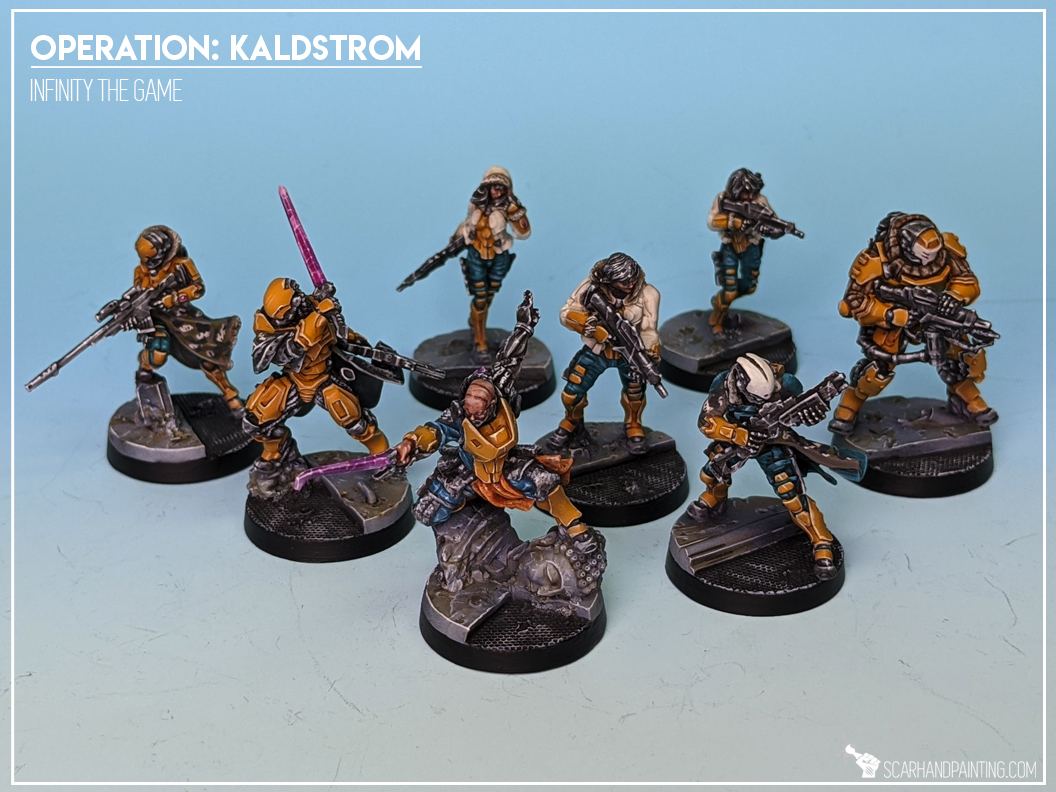
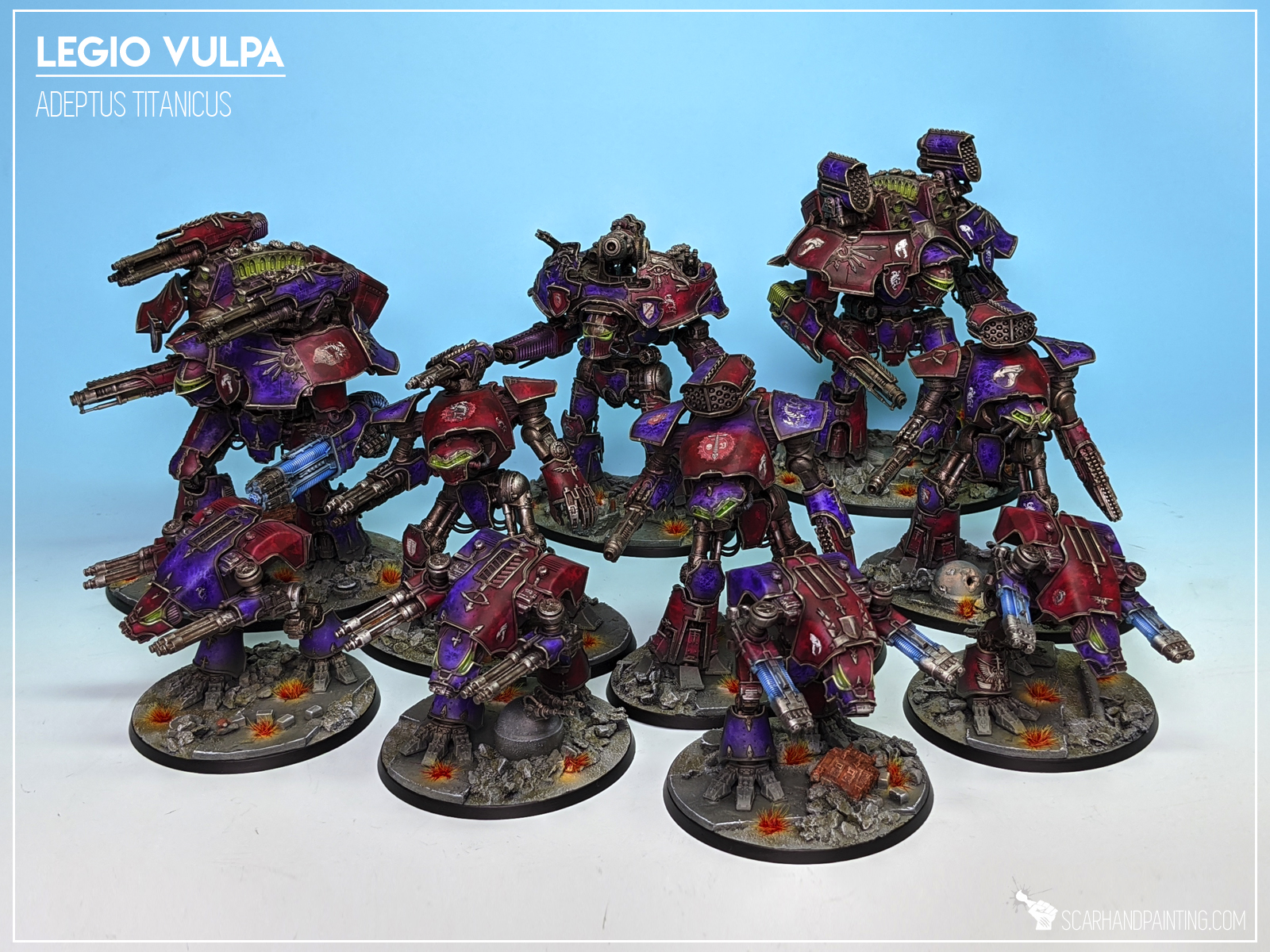
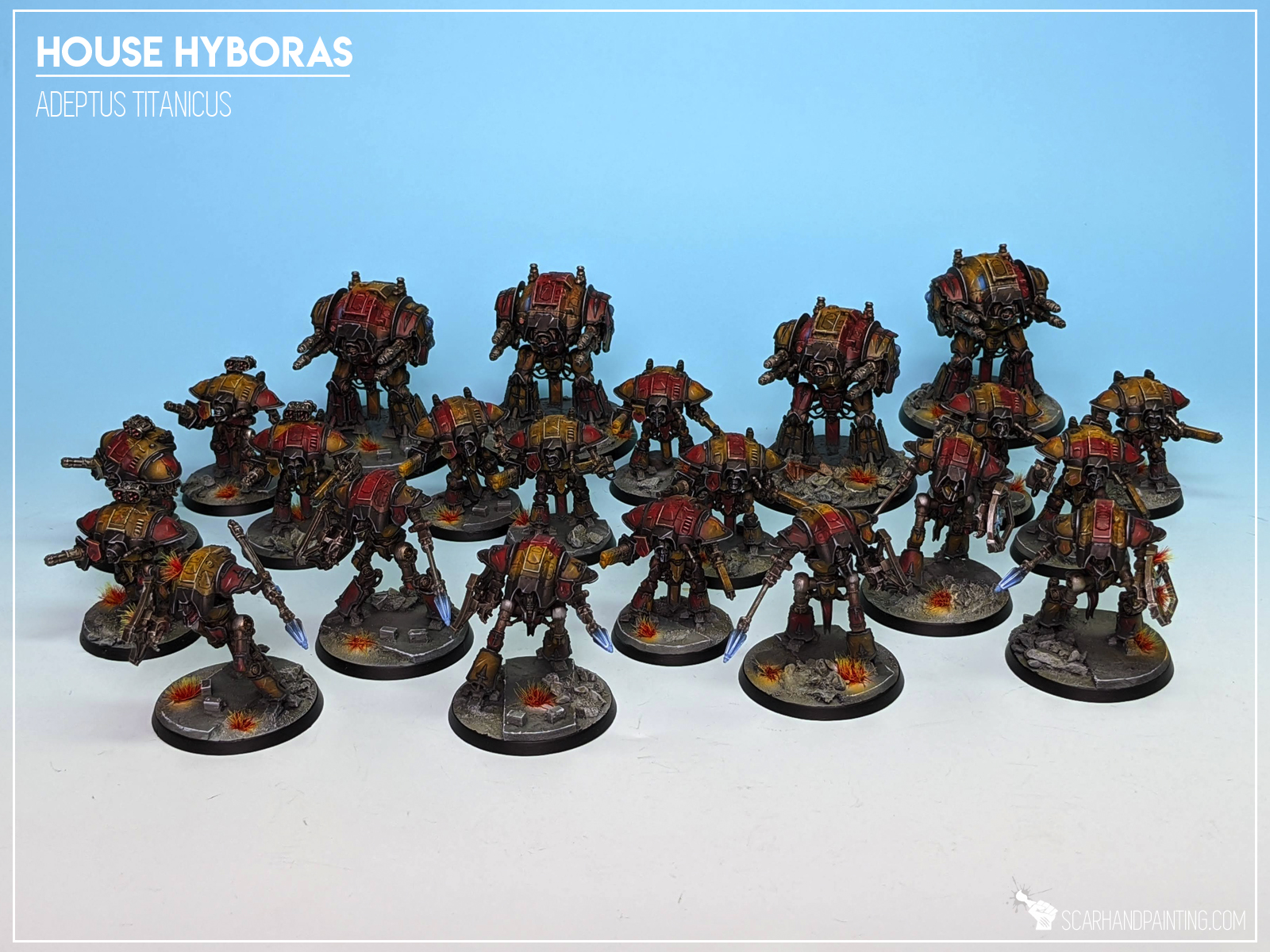
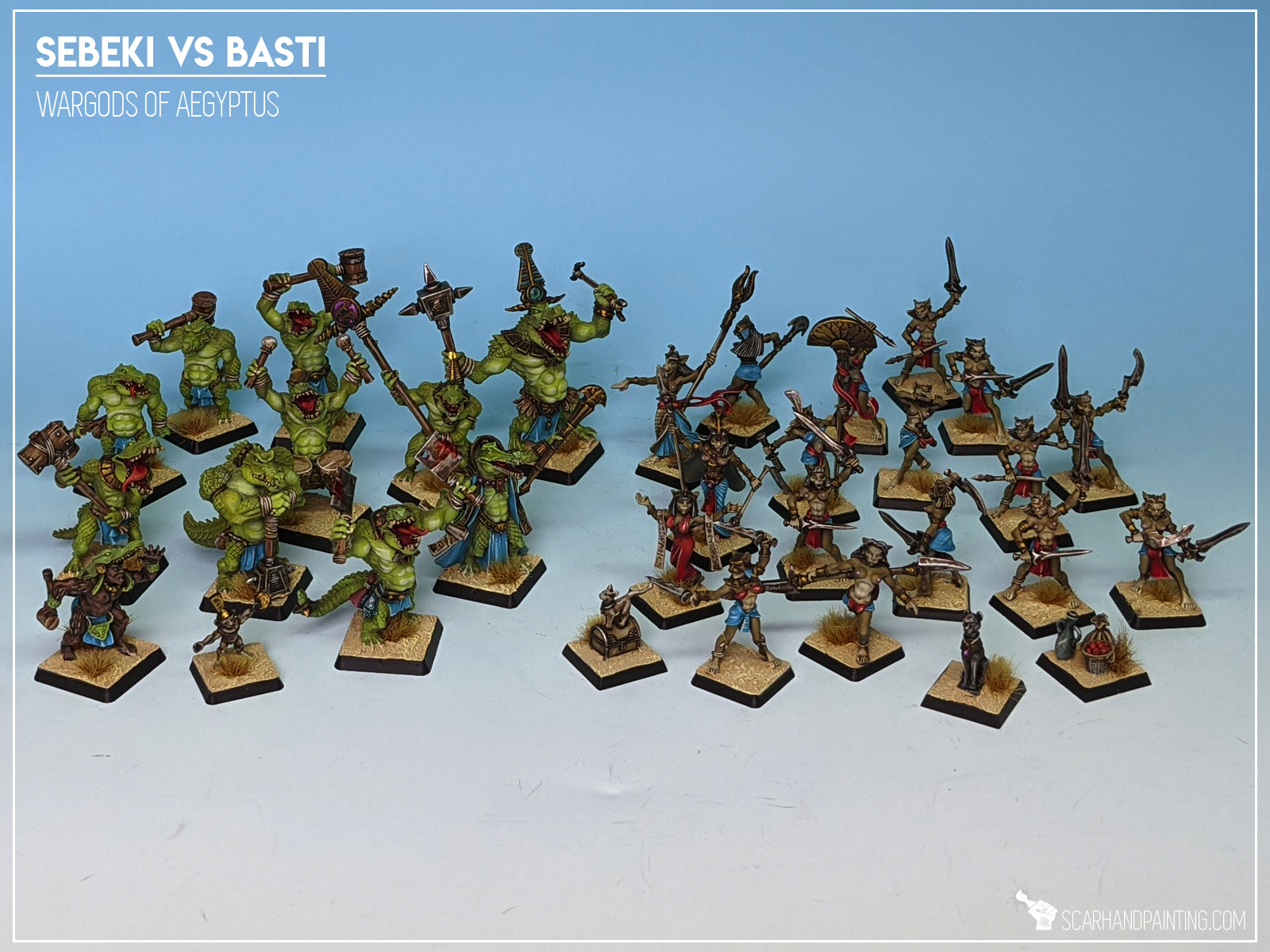

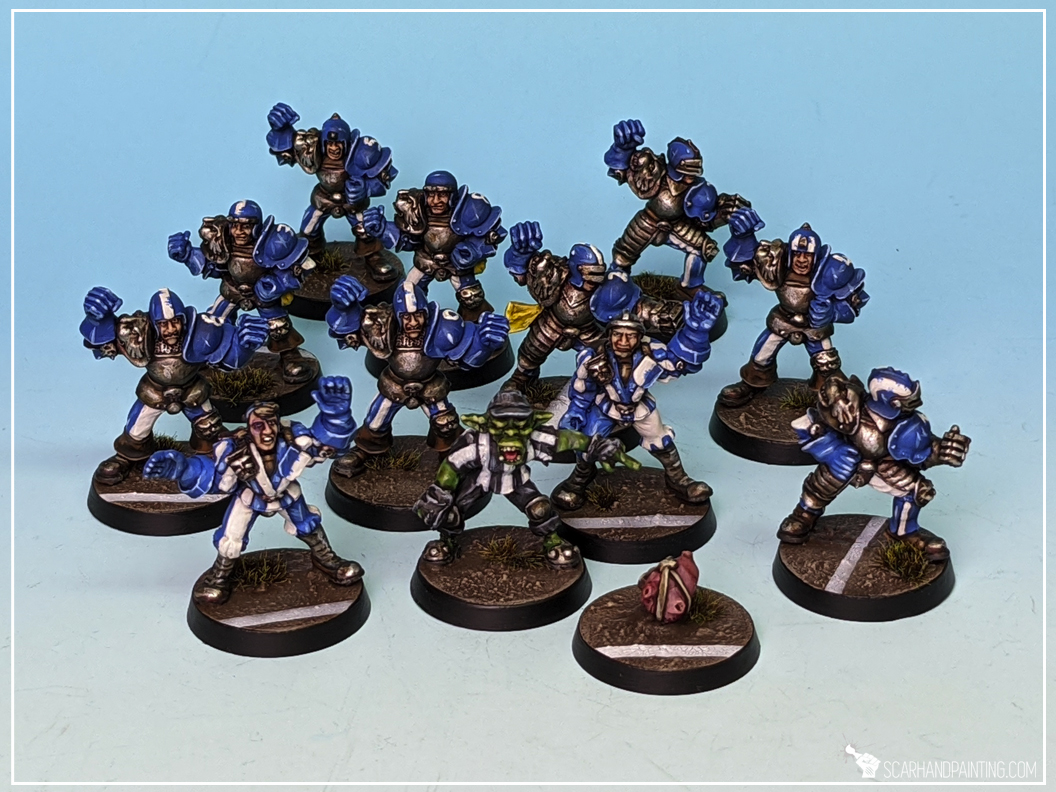

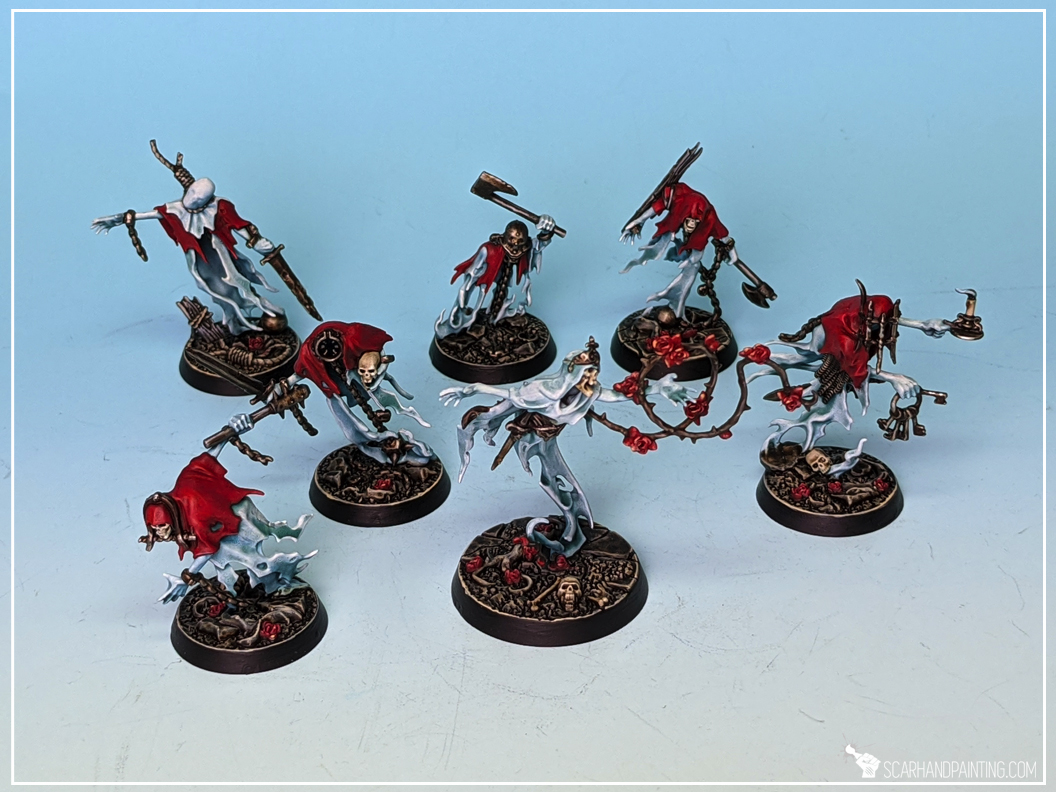
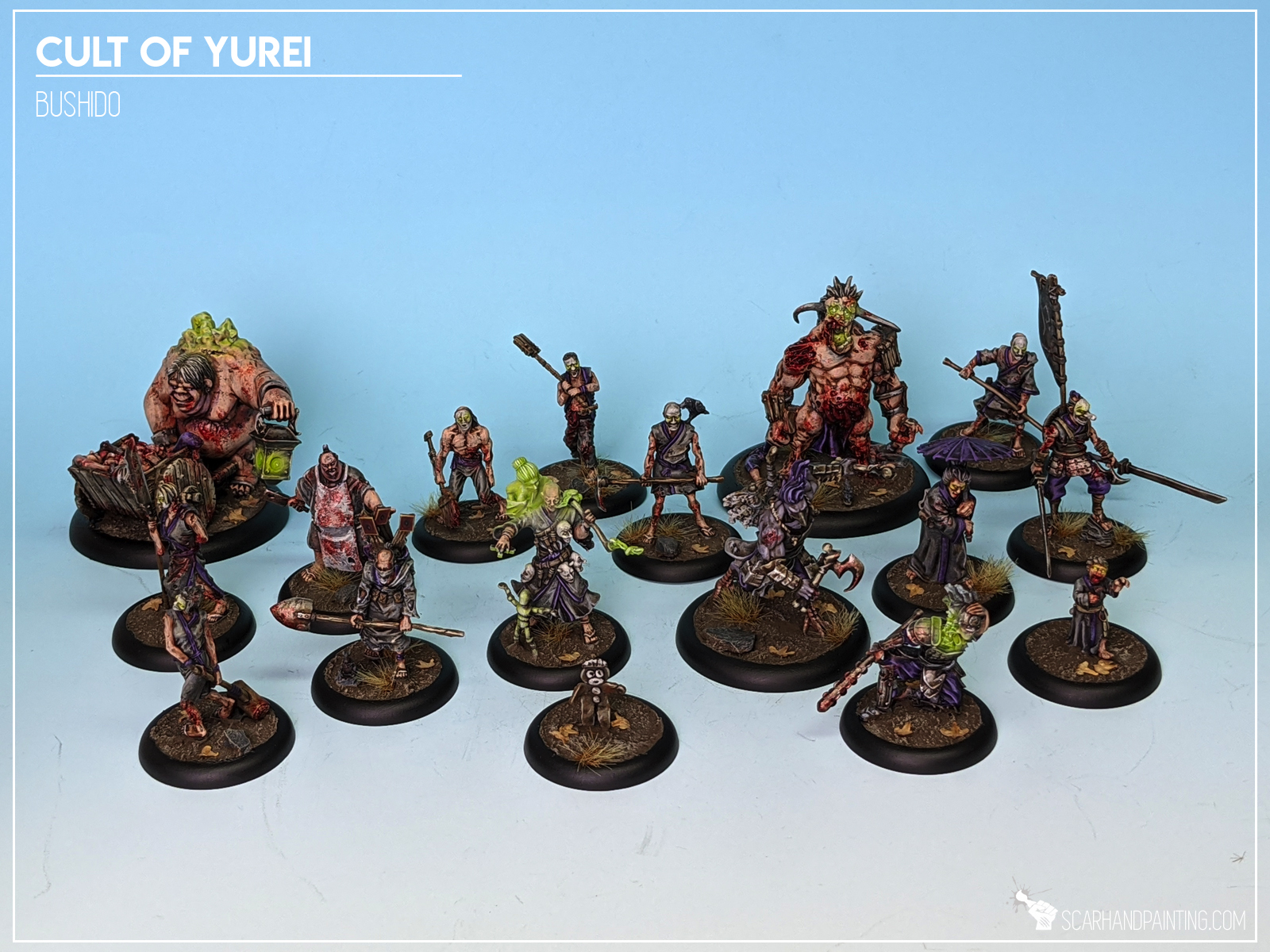
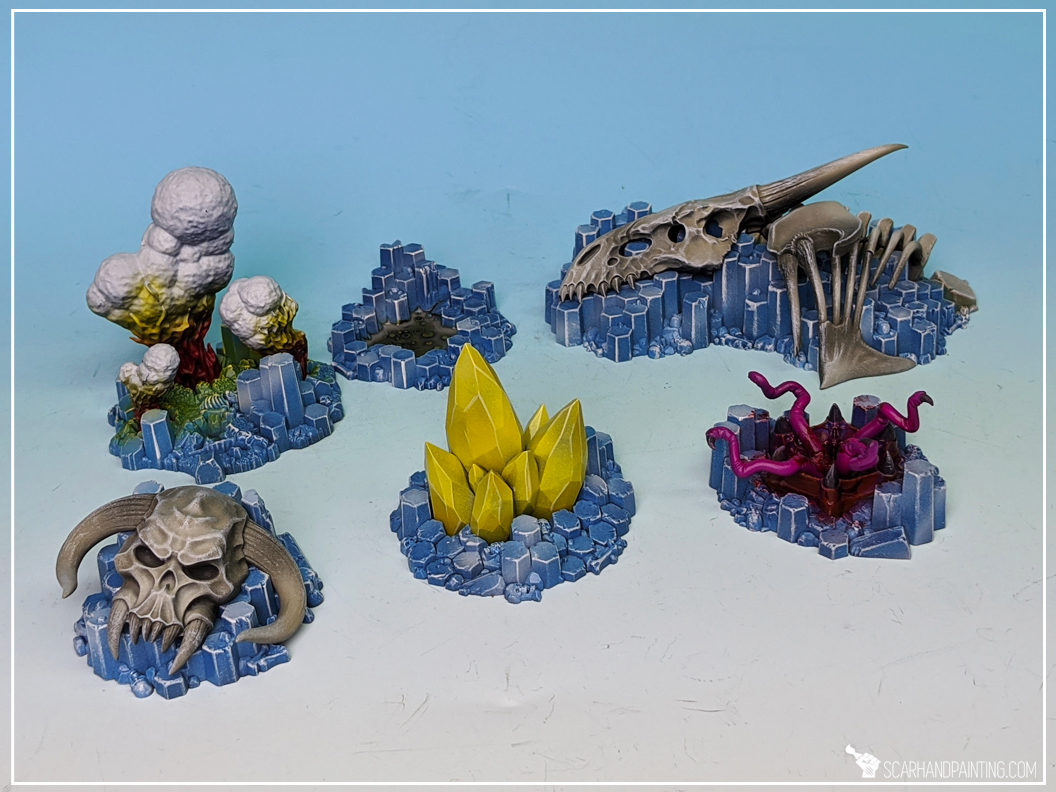
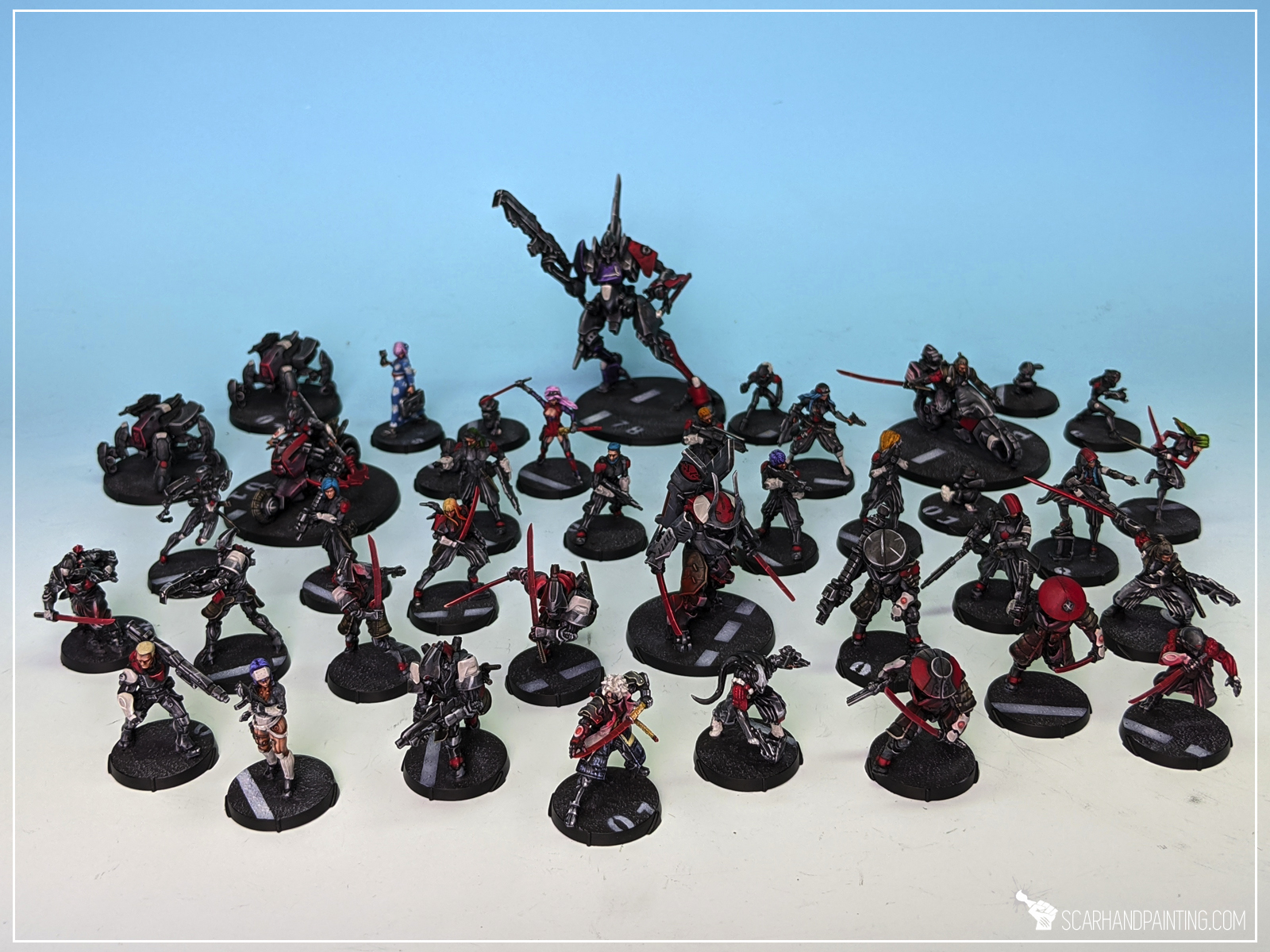
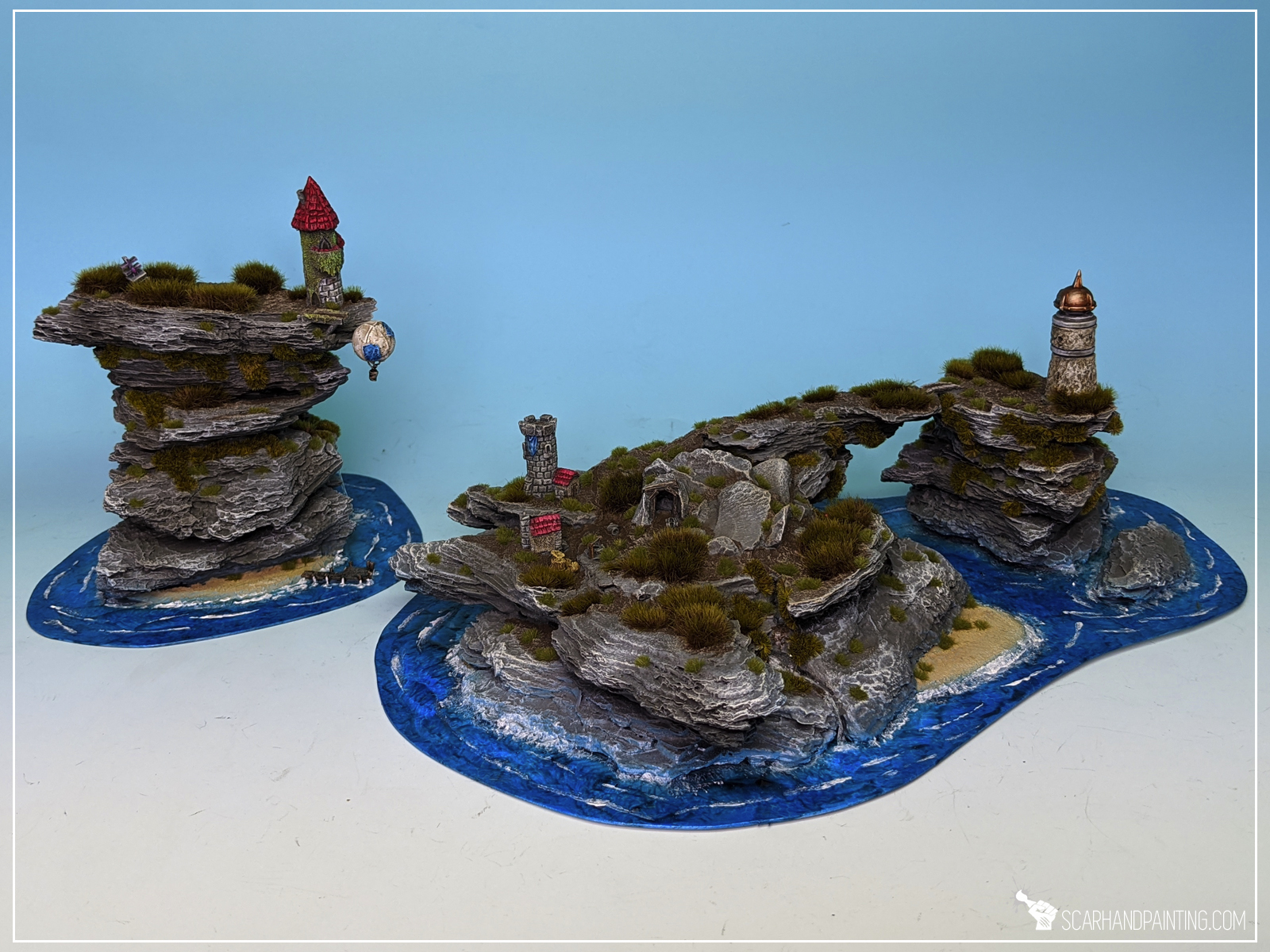
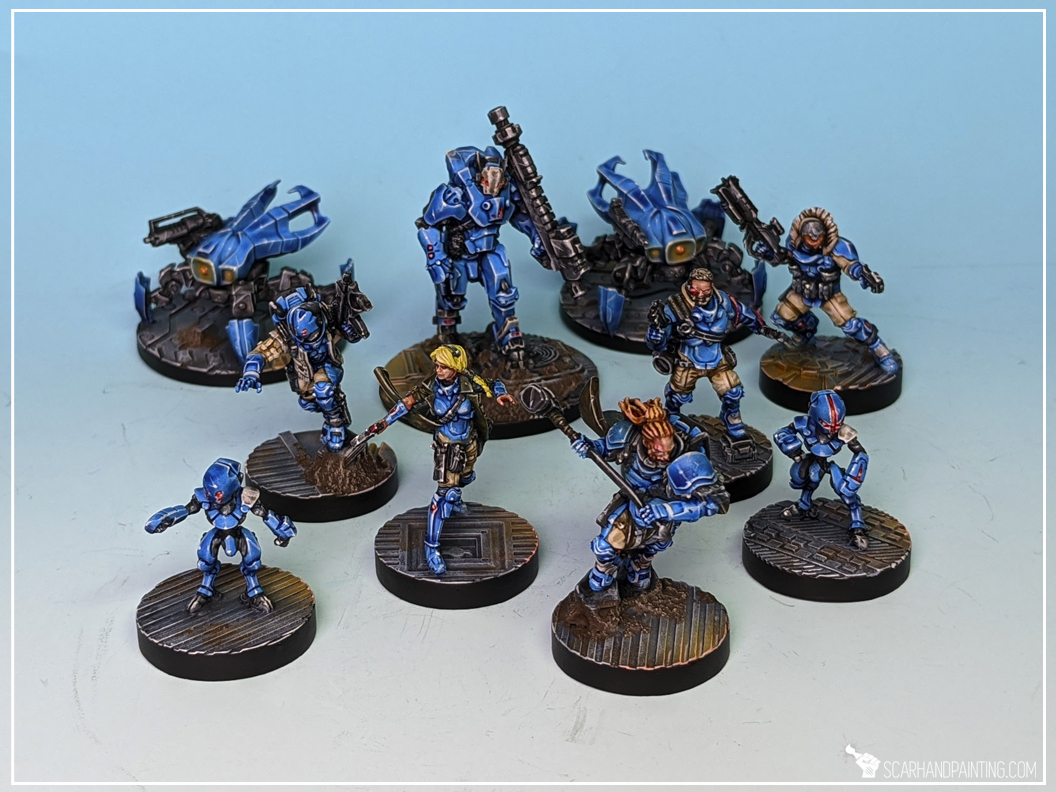
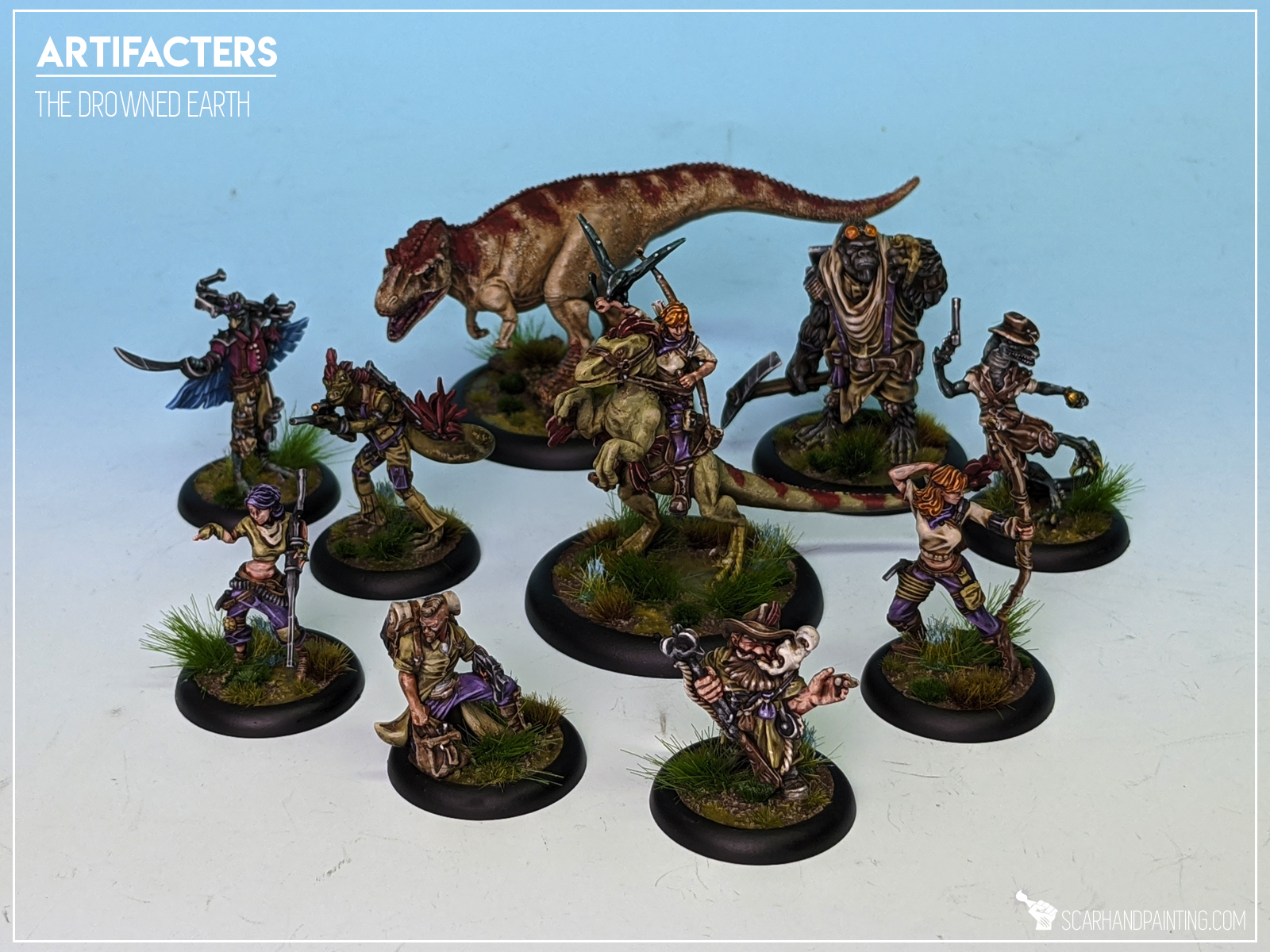
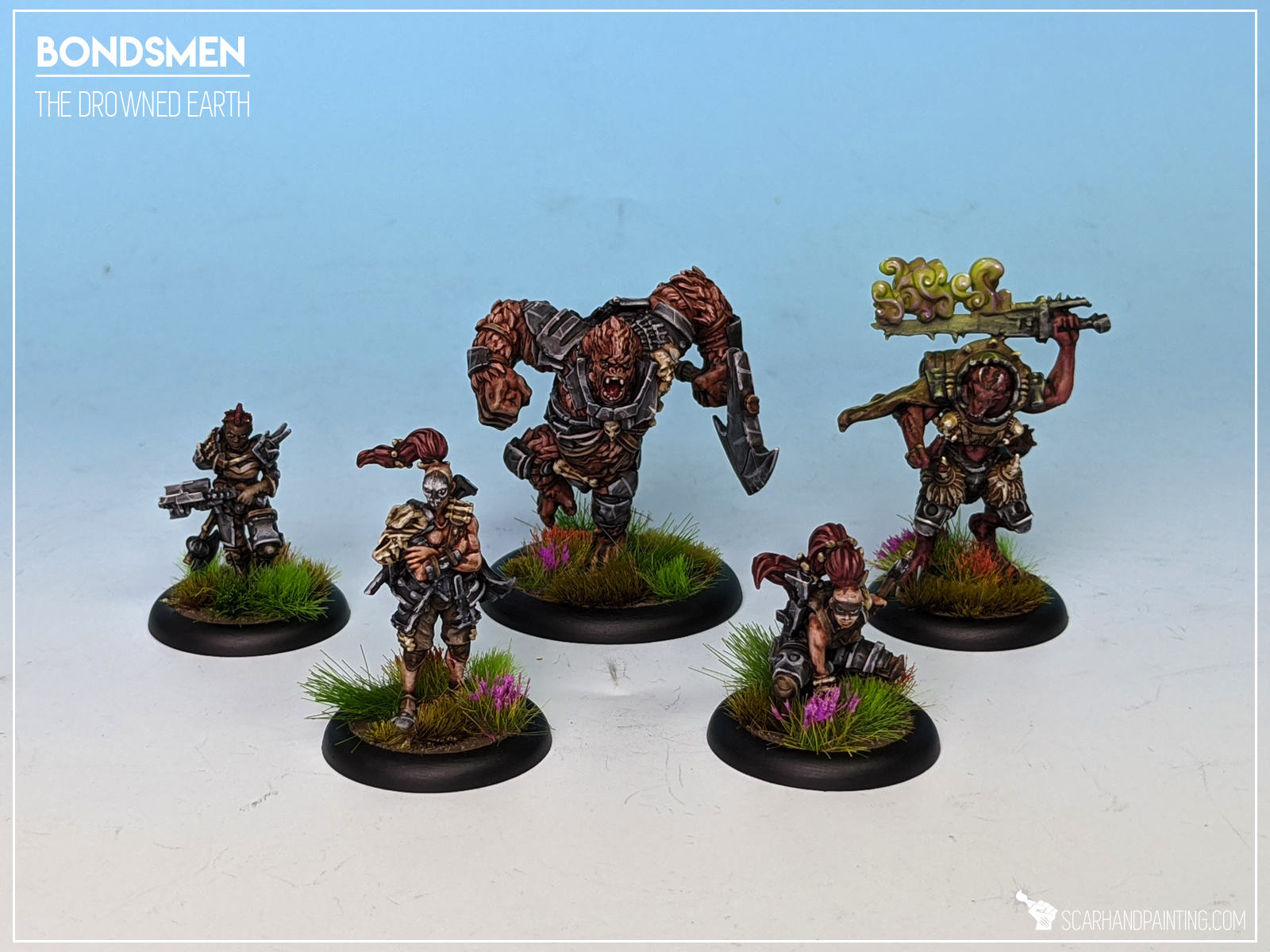
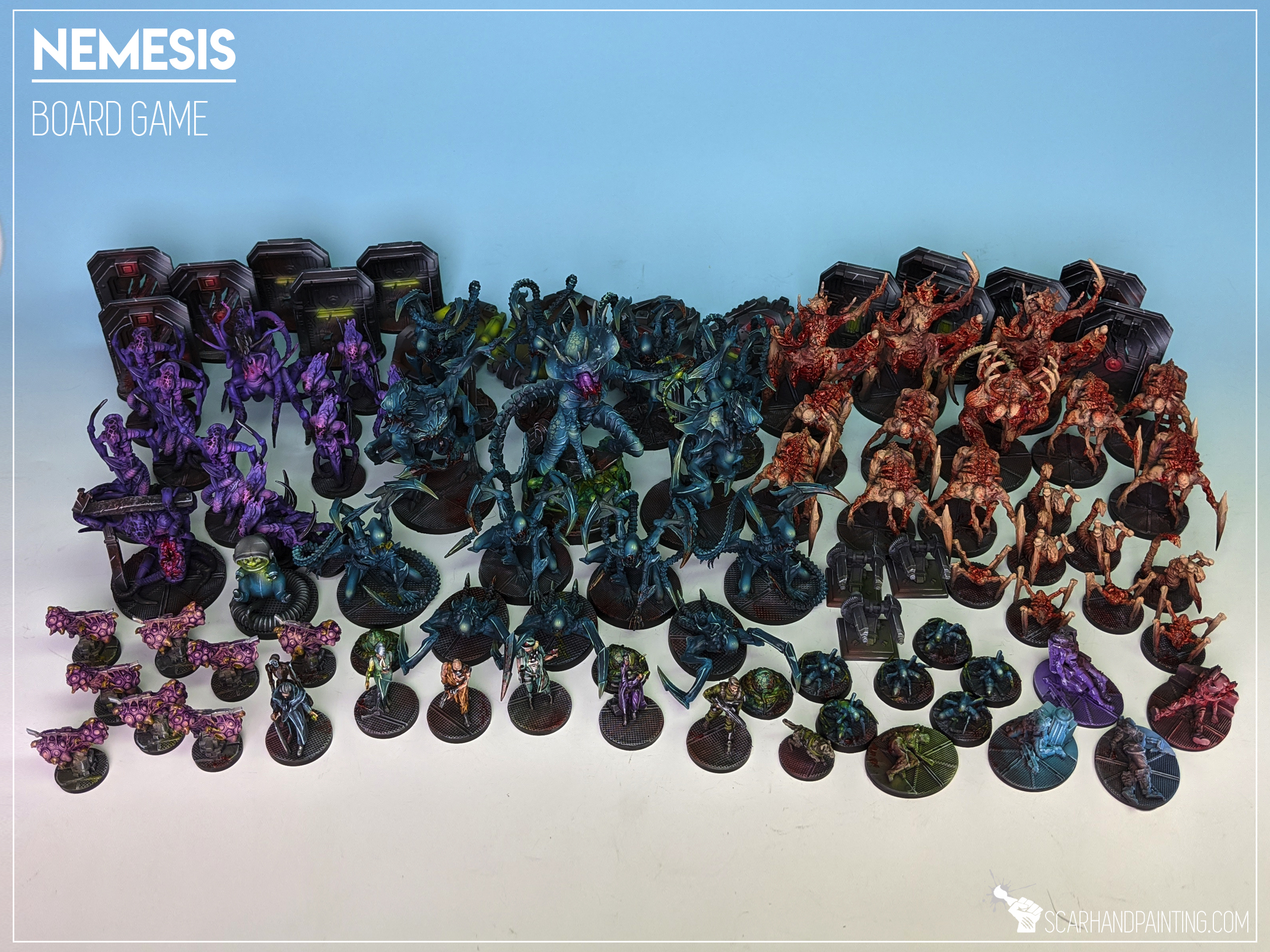
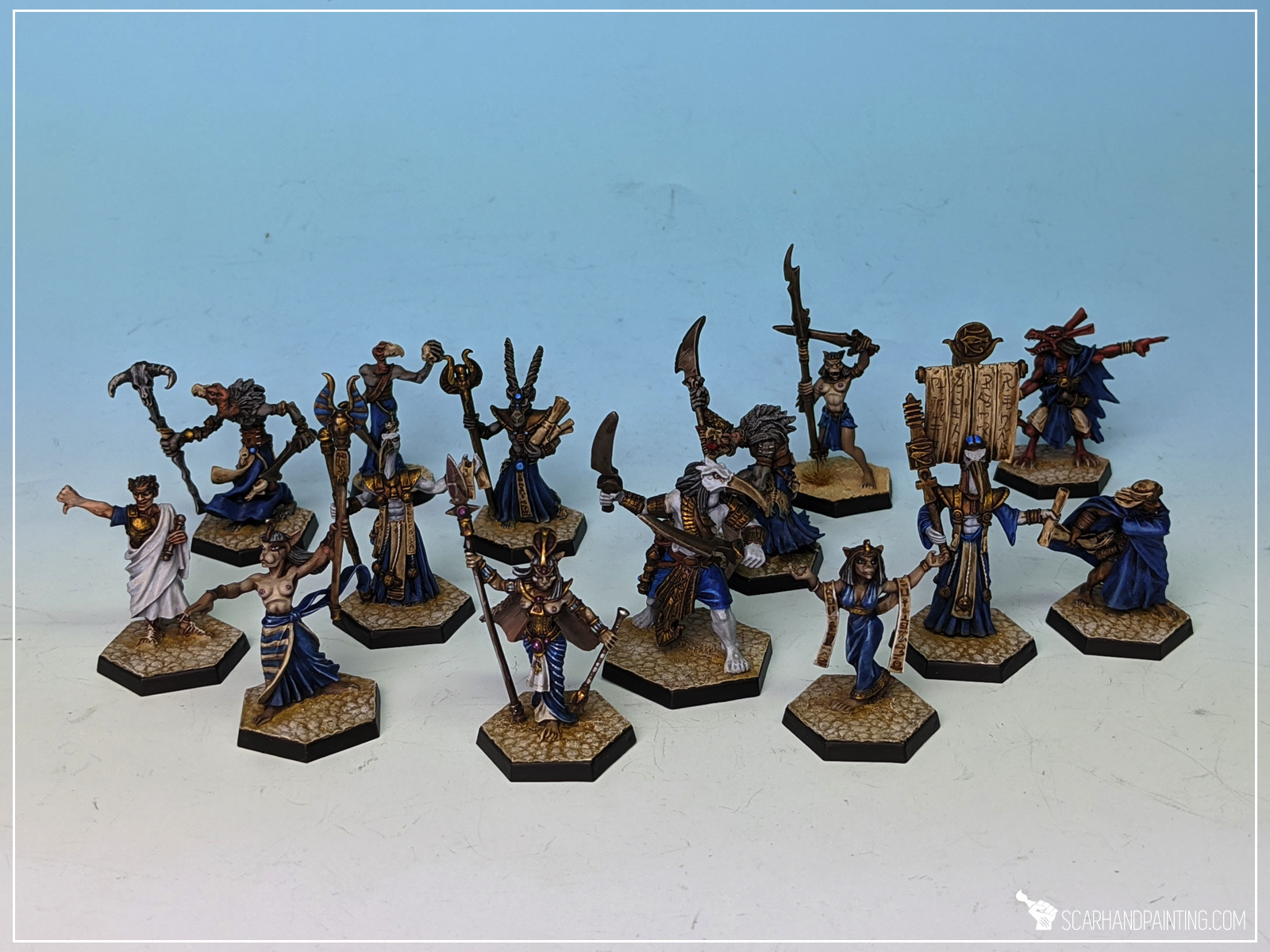

I’ve been such a scarhandpainting/blog slacker this last year. You know it’s true. With a one year old feeding on my sanity and scraps of free time, 16 articles is all I’ve got to show for entire 2020. So no kudos for me. That being said – huge kudos to you folks, for keeping the blog flying with over 140000 views, which is a lot more than last year! Seeing how popular the blog is makes me happy but also humbled. Thank you for reading and sharing my articles. It means a lot.
19 new articles got published. These are the ones you found the most interesting…
Tutorial: Kings of War Armada Islands
Review: AK Interactive Diorama Series
Tutorial: Unlimited Painting Holders
Tutorial: Modelling Temple Bases with Gamers Grass
Colour Recipes: Shadespire Thorns of the Briar Queen
…and the Undefeated TOP 3 of all time favorites:
Tutorial: Painting Marble 22,8k views!
Tutorial: DIY Infinity Console 13,3k views
Tutorial: DIY Infinity Gaming Terrain 9k views
Pragmatic part of me wants to say “survival”, “patience”. 2020 showed that even solid plans can go south pretty fast. It also showed that bad stuff might lead to some unexpected positive results. Dreamer part of me is all about “growth”, “perfecting”. Putting scarhandpainting logo on stickers, magnets and mugs, starting an Instagram account, was just a first step. I have grand plans. I want to surprise my customers and friends. I want to get better and evolve. There have been some issues my business was struggling for the past few weeks, but it’s behind now. A lot of things is already set in to motion. That’s all I can reveal for now. In the meantime the paint flows as usual and that’s what matters the most!

If by any chance you find yourself in need of a painter – do not hesitate to contact me at contact@scarhandpainting.com
Would also appreciate if you recommend me to your hobby friends who bring bare plastic to the gaming club – it keeps my paint flowing.
Cheers!